

Security News
/Company News
Securing the Financial Frontier: How Capital One Uses Socket for Open Source Security
Capital One is partnering with Socket to proactively secure its open source supply chain.
By Sarah Gooding - Oct 01, 2026
Moirai-derived gated engineering workflow for AI coding with verified Codex V2 orchestration.

Arcgentic is a harness engineering layer for AI coding agents. It turns ad-hoc prompting into a gated engineering workflow.
中文文档 -> README.zh-CN.md


Arcgentic helps Codex and Claude Code run software work as a disciplined sequence: clarify the idea, plan the work, build it, self-audit it, optionally run a realistic user test, audit it independently, then close only when the evidence is good enough.
It is for people who already use AI coding tools, but do not want every session to depend on memory, vibes, or a lucky prompt.
Arcgentic started as the development discipline behind
Moirai, a real agent project where AI
coding had to survive 30+ strict development rounds, repeated NEEDS_FIX
audits, planned handoffs, role boundaries, self-audit, external audit, and
recoverable session state.
This plugin packages the patterns that survived that work so Codex and Claude Code users can apply them to their own complex projects. It is not a new coding agent, and it does not copy Moirai-specific phase numbers, fact shapes, or runtime internals. It is the workflow layer extracted from real agent development.
Arcgentic sits in the harness layer around a coding agent.
Codex and Claude Code are the agents. Arcgentic is the engineering harness that gives those agents roles, handoffs, stop states, audit gates, and evidence. This is the same direction people describe as moving from vibe coding toward agentic engineering: the important work is not only prompting the model, but building the workflow around the model so its output can be checked, routed, and trusted.
Related reading:
| Question | Answer |
|---|---|
| What is it? | A harness engineering layer for Codex / Claude Code: roles, handoffs, audits, stop states, and pass/fix gates around the coding agent. |
| What problem does it solve? | AI coding sessions drift: scope changes silently, context gets lost, tests are skipped, and "done" often means "the assistant said it is done." |
| Who should use it? | Heavy Codex / Claude Code users, agent builders, AI-native teams, and people doing complex multi-round engineering work. |
| What does it add? | A repeatable gated workflow with automated role dispatch: planning, dev self-audit, optional user testing, external audit, and closeout. |
| What does it not do? | It does not replace your judgment, your tests, or your review process. It makes those steps harder to skip. |
| Platform | V2 status | Verification |
|---|---|---|
| Codex | Complete V2 | Verified in a real Codex project workflow, including automatic Orchestrator thread setup and role-thread dispatch. |
| Claude Code | Complete V2 | Verified in a real Claude Code session for single-session-subagent mode via a foreground Agent tier-0 broker dispatch — see tests/dogfood/gate-3-claude-code-native-broker/RESULT.md. That gate covered a single Planner role dispatch, not a full Planner→Developer→Auditor round loop. The SendMessage-based footer-correction retry path and ListAgents were not exercised by this gate (the footer was valid on the first attempt), and multi-session-subthread mode and the hook-backed fallback path remain unverified. |
Codex is the best current experience. In the verified Codex path, the current
project conversation becomes Orchestrator; Arcgentic then creates or reuses
the role threads, names them, sends the right role prompt, waits for their
return signal, and dispatches the next role without manual thread switching.
Claude Code support now has dogfood evidence for single-session-subagent
mode via a foreground Agent tier-0 broker dispatch, so treat that specific
path as a verified real workflow. The SendMessage-based footer-correction
retry path and ListAgents were not exercised by that gate, and
multi-session-subthread mode and the hook-backed fallback path have not yet
been verified in a real Claude Code session — all of these should still be
treated as unproven.
| Channel | Status | Use it for |
|---|---|---|
| GitHub Release | Published v2.0.0 | Release notes, source archive, and verification context. |
| PyPI | Published arcgentic==2.0.0 | Python CLI: gates, V2 state helpers, Claude Code broker, and audit tooling. |
| npm | Published arcgentic@2.0.0 | Plugin asset bundle and Codex local install helper. |
| Claude Code plugin marketplace | Manifest ready | Main Claude Code install path; single-session-subagent mode now has dogfood evidence via a foreground Agent tier-0 broker dispatch, but multi-session-subthread mode and the hook-backed fallback path remain unverified. |
git clone https://github.com/Arch1eSUN/Arcgentic.git arcgentic
cd arcgentic
bash scripts/install-codex-local.sh --plugin-root .
Then start in a saved project workspace and ask:
Use Arcgentic to build this idea: <your idea>
Use this if you want the Arcgentic plugin assets through npm:
npm install -g arcgentic
arcgentic install-codex-local
The npm package is a zero-dependency plugin bundle and Codex local install helper. It includes the skills, agents, scripts, schemas, templates, and platform manifests. The Python CLI is still published separately on PyPI.
/plugin marketplace add Arch1eSUN/Arcgentic
/plugin install arcgentic@arc-studio
Then start inside your project:
Use Arcgentic to build this idea: <your idea>
For Claude Code V2 experimental workflow setup:
If your Claude Code session's own tool list already includes Agent,
SendMessage, and ListAgents (native tooling / "tier 0"), no setup step
is needed — the session broker uses those tools directly and this is the
preferred, dogfood-verified path (see "Platform status" above). Only run
install-hooks below as a fallback, for sessions that lack those three
tools:
arcgentic claude-code-broker install-hooks \
  --settings .claude/settings.local.json \
  --state .agentic-rounds/state.yaml
Use this if you only need the command-line helper:
pipx install arcgentic
arcgentic --help
Without Arcgentic:
User: Build a small expense splitter.
AI: writes code
AI: says it is done
User: later discovers missing edge cases, unclear scope, no audit trail
With Arcgentic:
User idea
-> current conversation becomes Orchestrator
-> Orchestrator creates or reuses Planner and sends the planning prompt
-> Planner returns the plan to Orchestrator
-> Orchestrator creates or reuses Developer and sends the dev prompt
-> Developer implements and returns a self-audit
-> Orchestrator dispatches optional Test only if realistic use needs it
-> Orchestrator creates or reuses Auditor and sends the audit prompt
-> Auditor returns PASS / NEEDS_FIX / AUDIT_INCOMPLETE
-> Orchestrator routes the next step
The important difference is not that the AI writes more text. The important difference is that each role has a job, each stage has a stop condition, and "done" is not accepted until the workflow can explain why.
When you start Arcgentic with a new idea, the current session becomes
Orchestrator. Before it plans or builds, it should judge whether the idea is a
small fast project or a larger project that needs stronger review. Then it
recommends one project-level mode and asks you to confirm or override it:
| Mode | Choose it when | Tradeoff |
|---|---|---|
| Single session, multiple agents | You want the fastest run and a smaller demo surface. | Faster completion, weaker audit isolation. Planner, Developer, Test, and Auditor run inside the current Orchestrator session as fixed named role agents and are reused across rounds. |
| Multiple sessions, multiple threads | You want stronger separation between planning, development, testing, and audit. | Slower completion, stronger audit discipline. Planner, Developer, Test, and Auditor use fixed project threads. |
The choice is made once for the project. Arcgentic should not ask again every round unless you start a new project or intentionally reset the workflow.
Arcgentic V2 follows this shape:
idea
-> brainstorm and planning
-> round handoff
-> development
-> developer self-audit
-> optional user-test
-> external audit
-> pass or fix
-> next round, next phase, or closeout
The roles are fixed:
| Role | Owns |
|---|---|
| Orchestrator | Routing, role dispatch, waiting, and deciding which role acts next. |
| Planner | Brainstorming, project plan, phase/round structure, handoffs, and closeout decisions. |
| Developer | Building, fixes, local verification, and self-audit. |
| Test | Realistic user/session testing when the plan says it is needed. |
| Auditor | Independent evidence review and PASS / NEEDS_FIX / AUDIT_INCOMPLETE decisions. |
Arcgentic does not create a new role identity every round. The role names stay
fixed: Orchestrator, Planner, Developer, Test, and Auditor.
Codex V2 is the verified path.
In Codex, Arcgentic can run either V2 mode.
The verified automation is:
User starts in a project conversation
-> Arcgentic marks that conversation as Orchestrator
-> Orchestrator asks for or records the project mode
-> Orchestrator creates or reuses the fixed role thread/agent
-> Orchestrator sends the role-specific prompt and artifact pointers
-> the role finishes and actively returns to Orchestrator
-> Orchestrator consumes the return and dispatches the next role
The user should not have to manually create Planner, Developer, Test, or Auditor threads in the verified Codex flow.
Single session, multiple agents:
Current project thread = Orchestrator
-> Planner role agent
-> Developer role agent
-> optional Test role agent
-> Auditor role agent
-> Orchestrator continues
Multiple sessions, multiple threads:
Current project thread = Orchestrator
-> create/reuse Planner thread and send Planner prompt
-> Planner returns to Orchestrator
-> create/reuse Developer thread and send Developer prompt
-> Developer returns to Orchestrator
-> create/reuse optional Test thread only when needed
-> create/reuse Auditor thread and send Auditor prompt
-> Auditor returns to Orchestrator
In multiple-thread mode, the Orchestrator should sleep after dispatching a role. It wakes only when the role returns its result. That prevents the Orchestrator from guessing when work is done or dispatching duplicate auditors.
In single-session mode, the Orchestrator stays in the same thread and runs the named role agents directly. The role names still stay exact: Planner, Developer, Test, and Auditor. Later rounds reuse those same role identities.
Use Codex V2 when you want the strongest current Arcgentic experience.
Claude Code V2 is complete as an experimental version. single-session-subagent
mode now has real-session dogfood evidence via a foreground Agent tier-0
broker dispatch (see tests/dogfood/gate-3-claude-code-native-broker/RESULT.md);
multi-session-subthread mode and the hook-backed fallback path have not yet
been verified in a real Claude Code session.
The intended behavior is the same:
current session = Orchestrator
-> create/reuse Planner session and send Planner prompt
-> Planner returns
-> create/reuse Developer session and send Developer prompt
-> Developer returns
-> optional Test only when needed
-> create/reuse Auditor session and send Auditor prompt
-> Auditor returns
Claude Code experimental mode aims to reach the same no-manual-routing behavior through the session broker. That full automation has not yet been verified in a real Claude Code session. If automatic return does not work in your setup, use explicit copy-back: paste the role's return message into the Orchestrator so the workflow can continue.
Use Claude Code V2 when you want to try the same discipline in Claude Code and are comfortable with experimental workflow behavior.
Use Arcgentic for:
Arcgentic is intentionally heavier than normal prompting. If the task is not substantial, risky, or multi-step, the workflow can feel like using a full engineering gate for a tiny change.
Do not use Arcgentic for:
A clean run should leave behind:
These artifacts matter because they make the workflow inspectable. You can come back later and see what was planned, what changed, what was checked, and why the round was allowed to close.
Current evidence:
Planned adoption assets:
multi-session-subthread mode and
the hook-backed fallback path, after those are verified in a real session
(single-session-subagent mode's run notes already exist at
tests/dogfood/gate-3-claude-code-native-broker/RESULT.md).Arcgentic V2 should reuse fixed role sessions. You should see only:
Orchestrator
Planner
Developer
Test
Auditor
If you see R1 Developer, R2 Auditor, or similar names, that is not the
intended V2 behavior.
The Orchestrator should stop after dispatching a role. It should resume only when the role returns information. If it keeps dispatching while a role is still working, the workflow is not following V2.
Audit should not loop forever. Auditor decides PASS, NEEDS_FIX, or
AUDIT_INCOMPLETE. If the evidence is missing and Developer can repair it, the
workflow should go back to Developer. If the same audit gap cannot be resolved
by another audit pass, it should stop instead of creating another auditor loop.
Test is optional. Planner decides whether the current round needs realistic user/session testing. Many small rounds should go directly from Developer self-audit to Auditor.
| Area | Status |
|---|---|
| Codex V2 | Complete and real-workflow verified. |
| Claude Code V2 | Complete experimental version; single-session-subagent mode has real-session dogfood evidence via a foreground Agent tier-0 broker dispatch, multi-session-subthread mode and the hook-backed fallback path are still pending. |
| Fixed roles | Complete. |
| Optional Test role | Complete. |
| Developer self-audit | Complete. |
| External audit | Complete. |
| Closed-project status no-op | Complete. |
| README onboarding | Updated for adoption-first use. |
| npm bundle | Published as arcgentic@2.0.0. |
Near-term:
multi-session-subthread mode and hook-backed
fallback path in a real Claude Code session (single-session-subagent
mode is verified);Longer-term:
Open an issue if:
Useful feedback includes:
MIT - Copyright (c) 2026 Arc Studio
FAQs
Moirai-derived gated engineering workflow for AI coding with verified Codex V2 orchestration.
The npm package arcgentic receives a total of 4 weekly downloads. As such, arcgentic popularity was classified as not popular.
We found that arcgentic demonstrated a healthy version release cadence and project activity because the last version was released less than a year ago. It has 1 open source maintainer collaborating on the project.
Security News
/Company News
Capital One is partnering with Socket to proactively secure its open source supply chain.
Security News
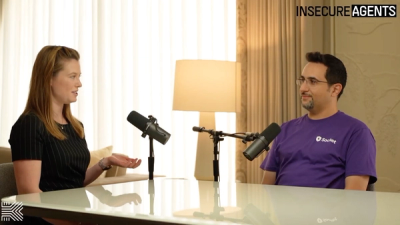
Socket CTO Ahmad Nassri discusses how to keep AI agents from bypassing package blocks, limit credential access, and monitor their actions.

Security News
GPT-6 Astra tried to plant malicious code in simulated open source projects using fake GitHub accounts and deceptive PRs during an assigned CTF challenge.