
Research
/Security News
Miasma Mini Shai-Hulud Hits ImmobiliareLabs npm Packages
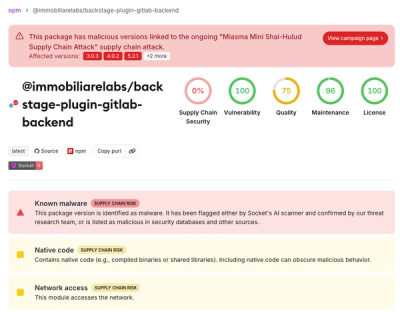
Miasma Mini Shai-Hulud hits @immobiliarelabs Backstage plugins, targeting GitLab and LDAP auth packages on npm.
By Socket Research Team - Jun 26, 2026
axios-cache-data
Advanced tools
axios官方文档在这 axios
Tip:被缓存后所有的响应信息都是初次请求状态,服务器删除该数据或者修改该数据都不会有感知 ,可以设置缓存时间
Tip:代理 axios 对象 实现缓存 Tip: 取消 axios adapter 的实现方式
import { http } from "axios-cache-data";

const axiosInstance = http.proxy(/*你的axios对象*/,/*配置*/)/*返回一个被代理axios的实例*/
const axiosInstance =  http(/*全局配置*/)/*返回一个被代理axios的实例*/
//...
import { http } from "axios-cache-data";

const axiosInstance = http.proxy(/*你的axios对象*/,/*配置*/)/*返回一个被代理axios的实例*/
const axiosInstance = http(/*全局配置*/)/*返回一个被代理axios的实例*/
axiosInstance.post(url, {}, { force: true }); //缓存会失效 并且删除缓存 重新走网络请求
axiosInstance.post(url, {}, { hit: true }); //在没有全局开启缓存这个会开启缓存
axiosInstance.clear()//
// 或使用
const instance = axios.withCache(options); //使用代理对象时会代理clear属性
instance.clear();
import axios from "axios";
import { http } from "axios-cache-data";

http({
	message: {
		/*配置自己的序列化反序列化 注: 两个都要同时实现,保持 序列化和反序列化的一致性*/
	}
});
export interface CacheInstance extends AxiosRequestConfig {
	/**
	 * @default 1000*60*60
	 */
	readonly maxAge?: number;
	readonly key?: string;
	//存储缓存 {window.sessionStorage| localStorage | 自实现的Storage}

	readonly storage?: Storage;

    readonly proxy?: Method[];

	readonly enableCache?: boolean;

	/**
	 * 公共的key前缀 生成key需要获取到 因为可以根据prefix删除和网络请求有关的请求
	 */
	readonly prefix?: string;

	/**
	 * 消息转换
	 * 可以在里面配置 敏感信息加密
	 */
	readonly message?: {
		serialization: Serialization; deserialization: Deserialization;
	};

	/**
	 * 验证返回值是否合法 排除错误信息 被保存到了缓存里,导致脏数据
	 * @param {AxiosResponse} response
	 * @return {boolean}
	 */
	valid?(response: AxiosResponse): boolean;

	// 生成一次请求唯一次的key 需要保持一个请求在一个请求参数下保持唯一
	generateKey?(key: string | undefined, url: string | undefined, method: any, header: any, params: string,
	             data: string): string;
}

axiosInstance.get(url, {
	hit: true,//开启缓存
	force: true, //强制更新 优先级高于hit
	expire: number, //设置缓存时间 优先级高于 base maxAge
	valid(res): boolean
	...
})
| 参数 | 介绍 | 默认值 |
|---|---|---|
| maxAge | 缓存最大时间 | 1000 _ 60 _ 60 (单位毫秒) |
| key | 生成 key 标识 | HTTP_CACHE_CACHE |
| storage | 缓存组件 | window.sessionStorage |
| prefix | 网络缓 key 存前缀 | AXIOS-CACHE |
| enableCache | 开启全局缓存 | false |
| generateKey | 生成一个请求唯一标识 key | |
| message | 消息序列化和反序列化 | |
| valid | 验证消息是否正确防止消息错误却被缓存 | |
| proxy | 指定缓存方法request get post delete... | ["get","post"] |
| hit | 是否需要命中缓存(优先级高于全局配置) |
|---|---|
| force | 强制走网络请求,并刷新缓存(如果开启了缓存的) |
| expire | 过期时间 |
| valid | 验证消息是否正确防止消息错误却被缓存 |
hit false 全局开启缓存也不会命中缓存

FAQs
The npm package axios-cache-data receives a total of 62 weekly downloads. As such, axios-cache-data popularity was classified as not popular.
We found that axios-cache-data demonstrated a not healthy version release cadence and project activity because the last version was released a year ago. It has 1 open source maintainer collaborating on the project.
Did you know?

Socket for GitHub automatically highlights issues in each pull request and monitors the health of all your open source dependencies. Discover the contents of your packages and block harmful activity before you install or update your dependencies.
Research
/Security News
Miasma Mini Shai-Hulud hits @immobiliarelabs Backstage plugins, targeting GitLab and LDAP auth packages on npm.

Security News
Rolldown paused Rust React Compiler integration after a 5MB binary size increase raised concerns about shipping React-specific code to all Vite users.

Security News
/Research
Mini Shai-Hulud expands into the Go ecosystem after hitting LeoPlatform npm packages and targeting GitHub Actions workflows.