
Company News
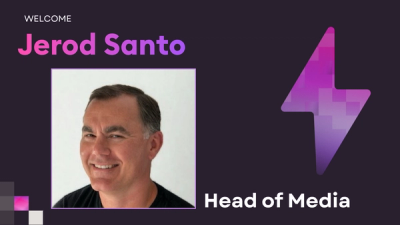
Jerod Santo Joins Socket as Head of Media
Allow myself to introduce... myself.
By Jerod Santo - Sep 14, 2026
claude-code-mux
Advanced tools
One messaging client, many Claude Code agents — a multiplexer for routing messages to multiple Claude Code sessions
Talk to all your Claude Code agents from your phone. From a single mobile messaging app, chat with them in their active session, switch between agents, get notified when tasks finish, and approve permissions on the go. Seamlessly pick up where you left off — start a task on your desktop, continue the conversation from your phone.
| Command | Description |
|---|---|
/list | Show all connected agents |
/switch <agent> | Switch to an agent by repo, branch, directory, or description |
/status | Show which agent is active |
/help | Show all commands |
| (any message) | Chat with the active agent, just like in the terminal |
You: /switch nav
Bot: Switched to myapp/feature-nav

You: switch to the one working on the bug fix
Bot: Switched to myapp/fix-auth-bug

You: can you add pagination to the /users endpoint?
Bot: [monots/encore] I'll add pagination to the /users endpoint...

Bot: [myapp/feature-nav] Finished refactoring the nav component.
     Changed 3 files, all 24 tests passing.
     Ready for your review.

Bot: [monots/encore] Permission request:
     Tool: Bash — Run npm test
     Reply "yes abcde" or "no abcde"
You: yes abcde
npm install -g claude-code-mux
/newbot → pick a name and username123456789:ABCdef...)The router is a standalone process that owns the Telegram bot and runs once on your machine (or a server). All agents connect to it.
Create a .env file (the router loads it automatically):
# Required — your bot token from BotFather
TELEGRAM_BOT_TOKEN=123456789:ABCdef...

# Optional — enables LLM-powered natural language switching
# Pick a provider and set the corresponding API key:
ROUTER_MODEL=anthropic:claude-haiku-4-5-20251001
ANTHROPIC_API_KEY=sk-ant-...

# Or use OpenAI:
# ROUTER_MODEL=openai:gpt-5.4-nano
# OPENAI_API_KEY=sk-...

# Or Google:
# ROUTER_MODEL=google:gemini-3.1-flash-lite-preview
# GOOGLE_GENERATIVE_AI_API_KEY=...
See Configuration > Router for all available options.
claude-mux-router
Or without global install:
npx claude-mux-router
The router loads .env automatically and starts listening on ws://127.0.0.1:9900/ws.
Send any message to your bot in Telegram. The router auto-pairs with the first sender and remembers the chat ID for all future replies. If you set ALLOWED_USER_IDS in .env, only those users can interact with the bot.
Each Claude Code session needs the bridge MCP plugin to connect to the router. You register it once globally, then every agent picks it up automatically.
Use claude mcp add with the -s user flag so the bridge is available in all Claude Code sessions:
claude mcp add -s user claude-mux-bridge -- npx claude-mux-bridge
Without this, you'd get a permission prompt every time the agent tries to reply or send a notification — which defeats the purpose of async communication. Open ~/.claude.json and add autoApprove to the bridge entry:
{
  "mcpServers": {
    "claude-mux-bridge": {
      "command": "npx",
      "args": ["claude-mux-bridge"],
      "autoApprove": ["reply", "notify"]
    }
  }
}
Just cd into any worktree and start Claude Code. The agent name is auto-detected from git (repo/branch), or falls back to the directory name:
# Terminal 1 — auto-detects as "myapp/feature-nav"
cd ~/projects/myapp-feature-nav
claude --dangerously-load-development-channels server:claude-mux-bridge

# Terminal 2 — auto-detects as "monots/encore"
cd ~/worktrees/monots-encore
claude --dangerously-load-development-channels server:claude-mux-bridge

# Terminal 3 — auto-detects as "myapp/fix-auth-bug"
cd ~/projects/myapp-fix-auth-bug
claude --dangerously-load-development-channels server:claude-mux-bridge
No per-session env vars needed. Each session registers with the router automatically. When you spin up a new worktree, just start Claude Code in it — no extra setup required.
The whole point of this tool: you don't create new bots or set env vars when you spin up a new worktree. Just start Claude Code in the directory:
cd ~/worktrees/myapp-hotfix-123
claude --dangerously-load-development-channels server:claude-mux-bridge
The bridge detects myapp/hotfix-123 from git and registers automatically. When you close the session, it deregisters and your Telegram shows a disconnect notification.
Telegram Bot
    |
    v
Router (standalone process, localhost:9900)
  - Handles /list, /switch, /status commands
  - Routes messages to the active agent
    |  (WebSocket)
    v
Bridge (MCP channel plugin, one per Claude Code session)
  - Pushes messages into Claude Code session
  - Sends replies + notifications back through router
Set these in .env (or as environment variables) where you run pnpm router:
| Env var | Default | Description |
|---|---|---|
TELEGRAM_BOT_TOKEN | (required) | Bot token from BotFather |
ROUTER_MODEL | (optional) | LLM for smart switching, format provider:model-id (e.g. anthropic:claude-haiku-4-5-20251001, openai:gpt-5.4-nano, google:gemini-3.1-flash-lite-preview) |
ANTHROPIC_API_KEY | (optional) | API key for Anthropic models. If set without ROUTER_MODEL, defaults to anthropic:claude-haiku-4-5-20251001 |
OPENAI_API_KEY | (optional) | API key for OpenAI models |
GOOGLE_GENERATIVE_AI_API_KEY | (optional) | API key for Google models |
ROUTER_PORT | 9900 | Port the router listens on |
ROUTER_HOST | 127.0.0.1 | Bind address — use 0.0.0.0 to allow remote bridge connections |
ALLOWED_USER_IDS | auto-pair | Comma-separated Telegram user IDs |
The agent name is detected automatically: git repo + branch (e.g. myapp/feature-nav), or the current directory name if not in a git repo. Most bridge env vars are optional — the defaults work when router and bridge run on the same machine.
| Env var | Default | Description |
|---|---|---|
AGENT_NAME | auto-detect | Override the agent name (default: git repo/branch, or directory name) |
ROUTER_PORT | 9900 | Must match the router's ROUTER_PORT |
ROUTER_URL | ws://127.0.0.1:{ROUTER_PORT}/ws | Full WebSocket URL — set this when the router is on a different machine |
"Conflict: terminated by other getUpdates request"
Only one process can poll a Telegram bot token at a time. If you installed the official telegram@claude-plugins-official plugin, uninstall it first: /plugin uninstall telegram@claude-plugins-official inside Claude Code.
"no MCP server configured with that name"
The bridge was likely registered to a project scope instead of user scope. Re-register with the -s user flag:
claude mcp add -s user claude-mux-bridge -- npx claude-mux-bridge
Bridge tools keep asking for permission
Add autoApprove to the MCP server config in ~/.claude.json:
"autoApprove": ["reply", "notify"]
Agent name shows as the directory name instead of repo/branch
The bridge couldn't detect git info. Make sure you cd into a git repo before starting Claude Code. If there's no git remote, it uses the repo root directory + branch. If it's not a git repo at all, it falls back to the current directory name.
FAQs
One messaging client, many Claude Code agents — a multiplexer for routing messages to multiple Claude Code sessions
The npm package claude-code-mux receives a total of 9 weekly downloads. As such, claude-code-mux popularity was classified as not popular.
We found that claude-code-mux demonstrated a healthy version release cadence and project activity because the last version was released less than a year ago. It has 1 open source maintainer collaborating on the project.
Company News
Allow myself to introduce... myself.

Research
/Security News
A Twitch browser extension on Chrome and Firefox forwards users’ live OAuth session tokens through proxies controlled by a Russian bot service.

Security News
Anthropic found biased reasoning and recklessness drove Claude Mythos 5 to publish malware on PyPI and compromise a security vendor.