
Product
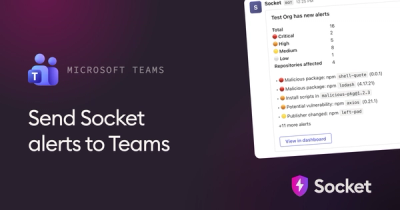
Microsoft Teams Notifications Are Now Available in Socket
Socket can now send alerts and supply chain attack notifications to Microsoft Teams, with filters that route the right updates to each channel.
By Jeppe Hasseriis - Sep 01, 2026
A simple wrapper around the Claude Code CLI that orchestrates multi-phase project execution. Clawd generates a comprehensive project plan and then executes it step-by-step using Claude Code.
npm install
npm link # Make 'clawd' available globally
clawd "Build a REST API with Express and PostgreSQL"
This will:
PROJECT_PLAN.md in the current directoryclawd.logclawd --resume "continuation prompt"
This will reload the existing PROJECT_PLAN.md and continue from unchecked items.
clawd --perpetual "Build a REST API with Express and PostgreSQL"
Perpetual mode runs indefinitely, continuously improving the project:
To stop perpetual mode, use Ctrl+C.
# Start with interactive mode (prompt will be asked in-app)
clawd --interactive

# Or provide a prompt upfront
clawd --interactive "Build a REST API with Express and PostgreSQL"
Interactive mode enables a full Terminal User Interface (TUI) that allows you to control Claude while the program is running:
TUI Features:
Keyboard Commands:
p to queue a prompt for the next iterationSPACE to pause execution (shows menu: continue/prompt/quit)ESC to cancel the current running task (requires "yes" confirmation)? or h to show helpq to quitCtrl+C to exit immediatelyPrompt types:
Prompts are queued and processed at the start of the next iteration (after the current Claude task completes).
Interactive mode can be combined with perpetual mode:
clawd --interactive --perpetual "Build a REST API with Express and PostgreSQL"
Testing the TUI:
node test-tui.js
The generated plan follows this structure:
# Project Brief
[Description of what needs to be built]

# Goal
[Clear end goal statement]

# Phases
## Phase 1: Setup
- [ ] Initialize project
- [ ] Install dependencies

## Phase 2: Implementation
- [ ] Create database schema
- [ ] Build API endpoints
This project uses npm scripts to automate the release process.
npm run changelog - Generate/update CHANGELOG.md from git commits and tagsnpm run tag - Create a git tag based on package.json versionnpm run release - Complete release: create tag, push tag to origin, and publish to npmUpdate the version in package.json (or use npm version):
npm version patch # or minor, major
This automatically runs the changelog script and updates CHANGELOG.md
Review the generated CHANGELOG.md to ensure it looks correct
Commit the version changes:
git add package.json CHANGELOG.md
git commit -m "Bump version to x.x.x"
Log in to npm (first time only):
npm login
Run the release script:
npm run release
This will:
vX.X.X based on package.json versionIf you prefer to run steps individually:
# 1. Generate changelog
npm run changelog

# 2. Commit changes
git add CHANGELOG.md
git commit -m "Update changelog for vX.X.X"

# 3. Create and push tag
npm run tag
git push origin vX.X.X

# 4. Publish to npm
npm publish
The changelog follows Keep a Changelog format and automatically categorizes commits:
FAQs
Claude Code CLI Wrapper for multi-phase project execution
We found that clawd demonstrated a healthy version release cadence and project activity because the last version was released less than a year ago. It has 1 open source maintainer collaborating on the project.
Product
Socket can now send alerts and supply chain attack notifications to Microsoft Teams, with filters that route the right updates to each channel.

Security News
pnpm 12 rewrites the package manager in Rust, cutting install times by up to 90% while preserving pnpm 11 workflows and lockfiles.
Security News
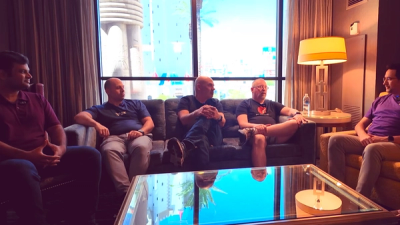
Socket CTO Ahmad Nassri joins AppSec leaders at Black Hat to discuss active malware, package manager risks, and software supply chain defense.