
Product
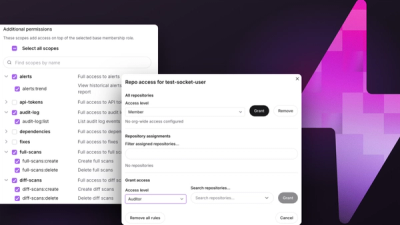
Introducing Repository Access Permissions and Custom Roles
Socket now supports Custom Roles and Repository Access Permissions so organizations can control who can access specific repositories and actions.
By Joe Werle - Jun 19, 2026
cq-mcp-server
Advanced tools
MCP Server for CloudQuery platform — list databases, list tables, inspect columns, and execute SQL via MCP tools.
本 MCP Server 连接 CloudQuery 平台,提供五个工具,让 AI 能够探索数据库结构并执行 SQL 查询。
npm install -g cq-mcp-server
# 直接运行,默认 stdio
CQ_BASE_URL=http://10.10.2.73 CQ_USERNAME=xxxxx CQ_PASSWORD=xxxx cq-mcp-server
s
Dify 只支持 HTTP 传输,通过环境变量切换:
MCP_TRANSPORT=http MCP_PORT=8080 cq-mcp-server
启动后 MCP 端点为:http://<服务器IP>:8080/mcp
Dify 添加步骤:
http://<服务器IP>:8080/mcpconnect / list_databases / list_tables / get_table_columns / execute_sql 五个工具HTTP 模式下的认证:无需配置环境变量,在 workflow 中第一步调用 connect 工具传入地址和账密即可(适合多租户场景)。
connect(可选)→ list_databases → list_tables → get_table_columns → execute_sql
connect:动态传入连接参数时需要先调用(如 Dify 等场景)。若已通过环境变量 CQ_BASE_URL / CQ_USERNAME / CQ_PASSWORD 配置,可跳过。connection_id、connection_type、database、schema 参数,都只能从前面的工具返回结果中获取,不能凭空猜测。connect — 设置连接参数(动态场景必须首先调用)| 参数 | 说明 |
|---|---|
base_url | CloudQuery 平台地址,如 http://10.10.2.73 |
username | 登录账号 |
password | 登录密码(明文,服务端自动加密) |
返回:连接配置成功确认。调用后原 Session 失效,下次请求自动重新登录。
Dify 配置示例:在 workflow 开始节点调用 connect,将用户输入的 base_url / username / password 传入,后续工具调用无需再传。
list_databases — 查询数据库清单无需任何参数。
返回所有数据库连接及其下的数据库列表,格式如下:
## 连接: pg-prod  (connection_id=1, connection_type=PostgreSQL)
  - pam
  - postgres
从返回结果中记录:
connection_id(数字)connection_type(字符串,如 PostgreSQL)pam)list_tables — 查询表清单参数(全部必填):
| 参数 | 来源 | 说明 |
|---|---|---|
connection_id | list_databases 返回 | 数字 |
connection_type | list_databases 返回 | 如 PostgreSQL |
database | list_databases 返回 | 数据库名,如 pam |
schema | 推断或尝试 | PostgreSQL 常用 public 或与库同名(如 pam);若 public 无结果,改用库名 |
返回该 schema 下所有表名列表。
从返回结果中记录: 目标表名(如 auth_role)
get_table_columns — 查询表字段参数(全部必填):
| 参数 | 来源 |
|---|---|
connection_id | list_databases |
connection_type | list_databases |
database | list_databases |
schema | list_tables 调用时使用的 schema |
table | list_tables 返回 |
返回字段名、数据类型、长度、是否可空、业务注释,格式:
字段名                    类型            长度     可空   注释
---------------------------------------------------------------------------
id                        int8            19       否     主键
role_name                 varchar         64       否     角色名称
role_code                 varchar         32       否     角色编码
从返回结果中记录: 字段名列表,用于编写 SQL。
execute_sql — 执行 SQL参数:
| 参数 | 来源 | 说明 |
|---|---|---|
connection_id | list_databases | |
connection_type | list_databases | 默认 PostgreSQL |
database | list_databases | |
schema | 同 list_tables | 作为 SQL 的 search_path |
sql | 根据字段结构编写 | 一次只执行一条语句 |
SELECT 返回格式:
id | role_name | role_code | description
----------------------------------------
1  | 超级管理员  | SUPER_ADMIN | 系统最高权限
2  | 普通用户   | USER        | 默认角色

共 8 行  耗时 12ms
DML 返回格式:
执行成功
影响行数: 1
耗时: 5ms
以下是完整的 6 步流程示例:
Step 1 — 调用 list_databases(无参数)
connection_id=1, connection_type=PostgreSQL,数据库列表包含 pamStep 2 — 调用 list_tables
{ "connection_id": 1, "connection_type": "PostgreSQL", "database": "pam", "schema": "pam" }
auth_roleStep 3 — 调用 get_table_columns
{ "connection_id": 1, "connection_type": "PostgreSQL", "database": "pam", "schema": "pam", "table": "auth_role" }
id, role_name, role_code, description, ...Step 4 — 根据字段编写 SQL:
SELECT id, role_name, role_code, description FROM pam.auth_role LIMIT 20
Step 5 — 调用 execute_sql
{
  "connection_id": 1,
  "connection_type": "PostgreSQL",
  "database": "pam",
  "schema": "pam",
  "sql": "SELECT id, role_name, role_code, description FROM pam.auth_role LIMIT 20"
}
schema 选择:PostgreSQL 数据库的 schema 名通常与数据库同名(如数据库 pam 对应 schema pam),而不是 public。若 public 无结果,改用数据库名作为 schema。
单条执行:execute_sql 每次只能执行一条 SQL 语句,不支持批量执行。
结果上限:SELECT 查询最多返回 500 行。
SQL 写法:建议在表名前加 schema 前缀(如 pam.auth_role),避免歧义。
参数不能猜测:connection_id 和 connection_type 必须通过 list_databases 获取,不能假设固定值。
FAQs
MCP Server for CloudQuery platform — list databases, list tables, inspect columns, and execute SQL via MCP tools.
We found that cq-mcp-server demonstrated a healthy version release cadence and project activity because the last version was released less than a year ago. It has 1 open source maintainer collaborating on the project.
Did you know?

Socket for GitHub automatically highlights issues in each pull request and monitors the health of all your open source dependencies. Discover the contents of your packages and block harmful activity before you install or update your dependencies.
Product
Socket now supports Custom Roles and Repository Access Permissions so organizations can control who can access specific repositories and actions.
Product
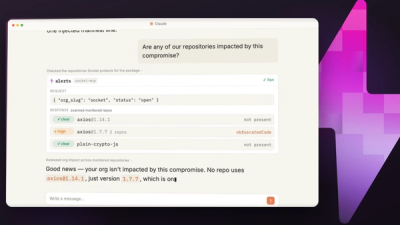
Socket MCP now lets AI assistants review org alerts, investigate threats using the Socket threat feed, and inspect package files in addition to dependency scoring.
Product
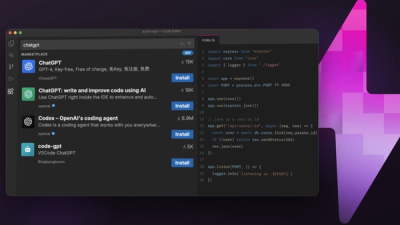
Socket Firewall blocks malicious VS Code and Open VSX extensions before install, protecting developers from compromised editor marketplaces.