
Product
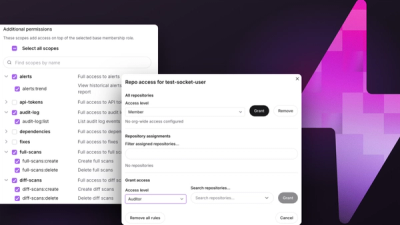
Introducing Repository Access Permissions and Custom Roles
Socket now supports Custom Roles and Repository Access Permissions so organizations can control who can access specific repositories and actions.
By Joe Werle - Jun 19, 2026
CrawClaw is a multi-channel AI gateway with extensible messaging integrations
English · 简体中文




CrawClaw is a self-hosted Gateway for AI agents. It runs one local or server process that connects chat channels, Gateway clients, model providers, tools, memory, automation, and plugins through a runtime you control.
Use CrawClaw when you want an always-available assistant that can answer from Feishu, DingTalk, QQ Bot, Weixin, WebChat, a terminal UI, or your own Gateway client while keeping configuration and runtime state on your machine.
Requirements:
Install with the recommended script:
curl -fsSL https://crawclaw.ai/install.sh | bash
Windows PowerShell:
iwr -useb https://crawclaw.ai/install.ps1 | iex
Run onboarding and install the local Gateway service:
crawclaw onboard --install-daemon
Verify the Gateway and start chatting:
crawclaw gateway status
crawclaw tui
Docs:
If you already manage Node yourself, npm and pnpm installs are also supported:
npm install -g crawclaw@latest
crawclaw onboard --install-daemon
pnpm add -g crawclaw@latest
pnpm approve-builds -g
crawclaw onboard --install-daemon
For contributors:
git clone https://github.com/qianleigood/crawclaw.git
cd crawclaw
pnpm install
pnpm build
pnpm crawclaw onboard
Docker is optional and useful for isolated or headless deployments:
./scripts/docker/setup.sh
docker compose run --rm crawclaw-cli tui
More install paths:
CrawClaw is channel-first. QuickStart and the main channel picker prioritize China-focused channels:
Optional and legacy channels are still available for explicit setup, including BlueBubbles, Discord, Google Chat, iMessage, IRC, LINE, Matrix, Mattermost, Microsoft Teams, Nextcloud Talk, Nostr, Signal, Slack, Synology Chat, Telegram, Tlon, Twitch, Voice Call, WebChat, WhatsApp, Zalo, and Zalo Personal.
Start here:
Useful references:
flowchart LR
  Channels["Chat channels"] --> Gateway["Gateway"]
  Clients["CLI, TUI, WebChat, custom clients"] --> Gateway
  Nodes["Paired nodes"] --> Gateway
  Gateway --> Agent["Agent runtime"]
  Agent --> Tools["Typed tools and policy"]
  Agent --> Providers["Model providers"]
  Agent --> Memory["Memory runtime"]
  Agent --> Automation["Tasks, cron, hooks"]
  Plugins["Plugin SDK"] --> Channels
  Plugins --> Tools
  Plugins --> Providers
The Gateway is the central boundary. Clients and channels connect to it; the agent runtime sits behind it; tools, providers, memory, automation, plugins, and nodes integrate through explicit runtime contracts.
Key docs:
| Path | Purpose |
|---|---|
| src/gateway | Gateway control plane, protocol, auth, health, pairing, and runtime services |
| src/agents | Agent runtime, tools, subagents, sandboxing, provider execution, and events |
| src/memory | Durable memory, recall, summaries, compaction, and context assembly |
| src/workflows | Workflow registry, n8n bridge, execution records, and workflow operations |
| src/channels | Core channel implementation behind the channel/plugin boundary |
| src/plugins | Plugin discovery, manifests, loading, registry, and contract enforcement |
| src/plugin-sdk | Public SDK contracts for plugin-facing code |
| extensions | Bundled plugins for channels, providers, browser backends, speech, media, and tools |
| packages | Workspace support packages |
| skills | Shipped runtime skills |
| docs | Mintlify documentation source |
| test | Shared test infrastructure and fixtures |
| scripts | Install, build, Docker, release, generated baseline, and maintenance scripts |
Maintainer docs:
Install dependencies:
pnpm install
Run the CLI from source:
pnpm crawclaw --help
pnpm crawclaw gateway status
Common local checks:
pnpm check
pnpm test
pnpm build
Docs and generated baselines:
pnpm check:docs
pnpm docs:check-links
pnpm config:docs:check
pnpm plugin-sdk:api:check
More:
CrawClaw is MIT licensed. See LICENSE.
FAQs
CrawClaw is a multi-channel AI gateway with extensible messaging integrations
We found that crawclaw demonstrated a healthy version release cadence and project activity because the last version was released less than a year ago. It has 1 open source maintainer collaborating on the project.
Did you know?

Socket for GitHub automatically highlights issues in each pull request and monitors the health of all your open source dependencies. Discover the contents of your packages and block harmful activity before you install or update your dependencies.
Product
Socket now supports Custom Roles and Repository Access Permissions so organizations can control who can access specific repositories and actions.
Product
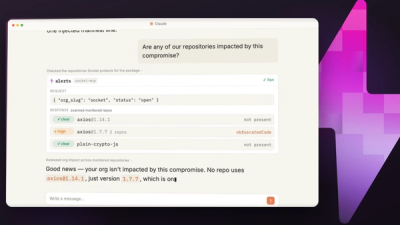
Socket MCP now lets AI assistants review org alerts, investigate threats using the Socket threat feed, and inspect package files in addition to dependency scoring.
Product
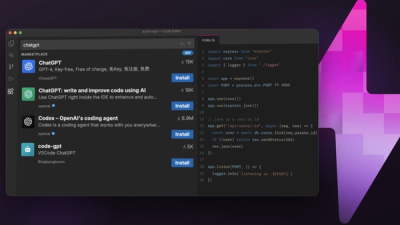
Socket Firewall blocks malicious VS Code and Open VSX extensions before install, protecting developers from compromised editor marketplaces.