


Security News
The AI Industry Is Betting on Open Weights
An open letter signed by 50 companies, from NVIDIA and Microsoft to Mistral and Hugging Face, urges Washington not to restrict open weight AI.
By Sarah Gooding - Jul 27, 2026
crispy-code
Advanced tools
An agent workbench for Claude Code and Codex — with local agent memory, multi-agent collaboration, and controls you can't get in a terminal
An agent workbench for Claude Code and Codex — with local agent memory, multi-agent collaboration, and controls you can't get in a terminal.
Works with Claude Code and Codex. Runs standalone in your browser or as a VS Code / Cursor extension.




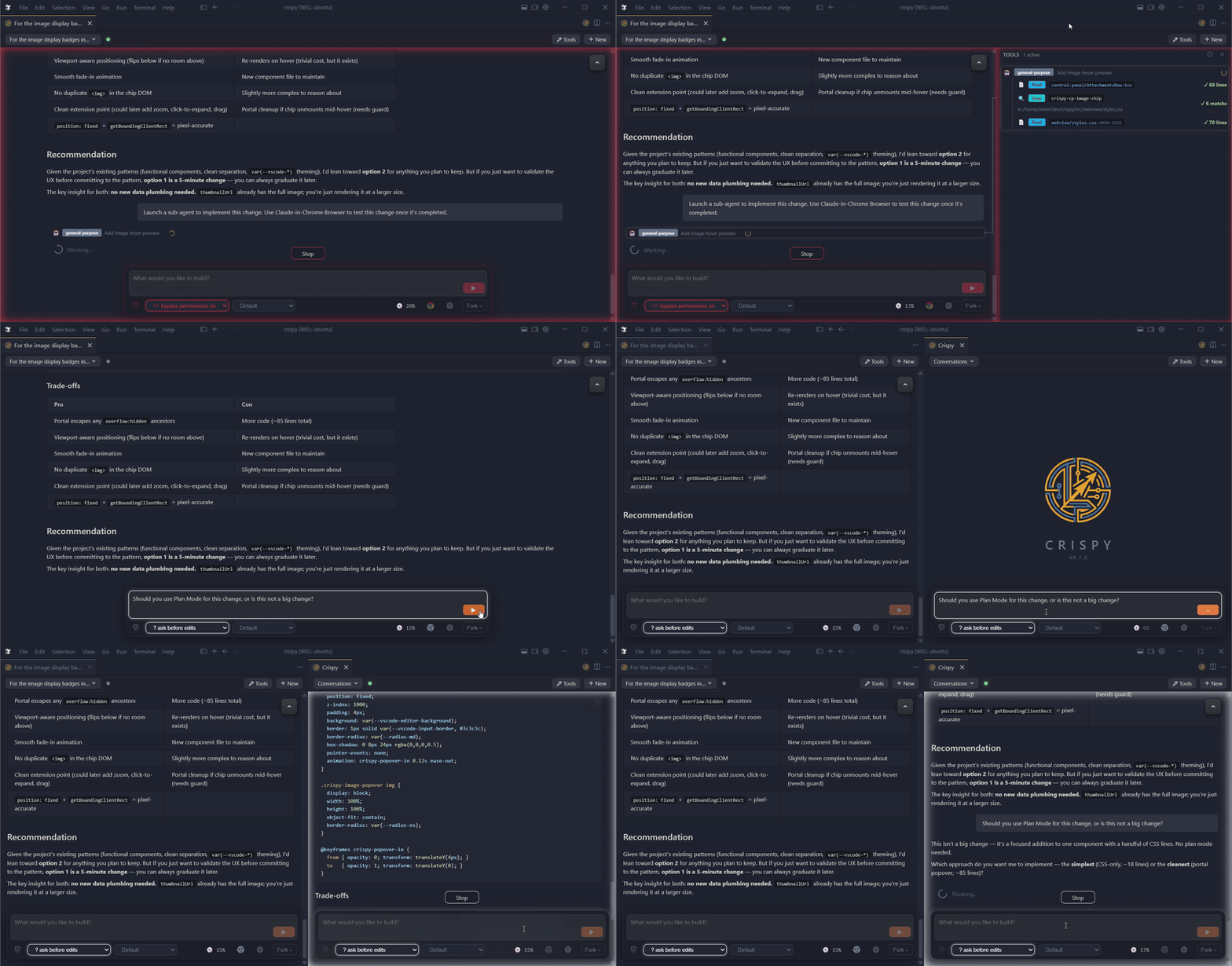
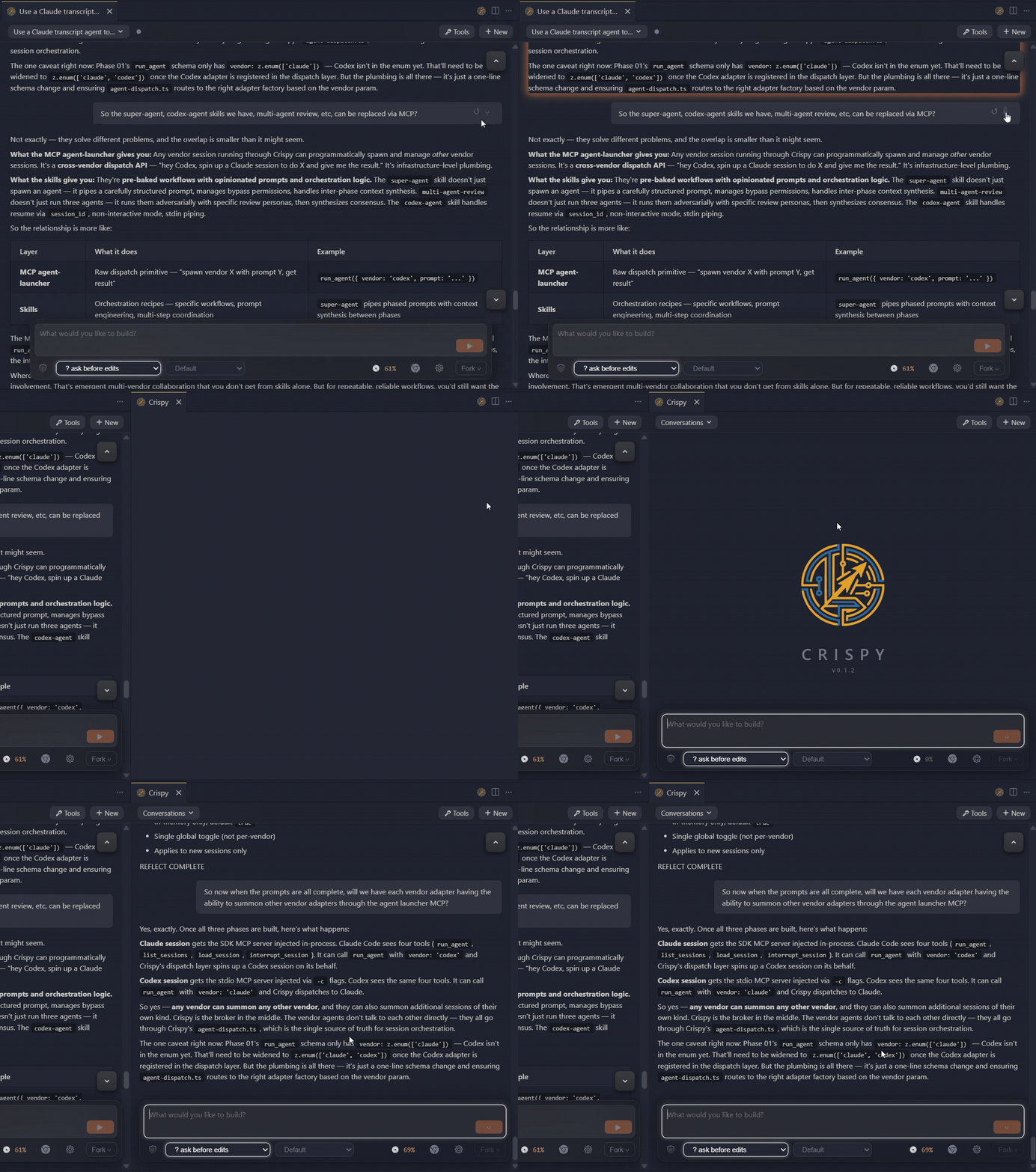
Agent memory — searchable transcripts across all vendors, fully local. Multi-agent collaboration — resumable cross-vendor sessions, directed by your agent of choice. Coding agent workbench — fork, rewind, agency modes, tool auditing, multiple browser tabs or side-by-side VS Code Editor panels, local voice input, and more.
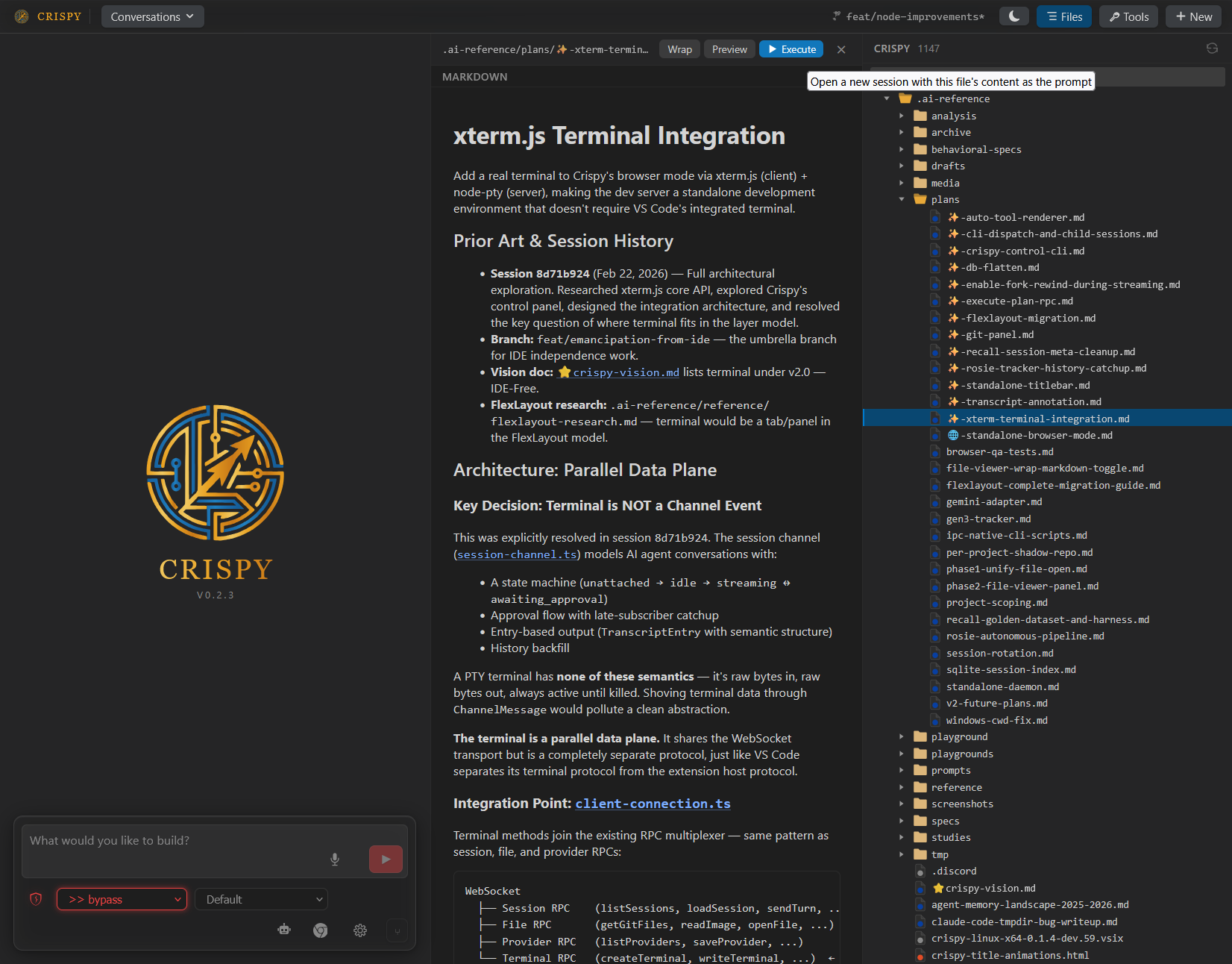
The sidebar now includes a Git panel showing your working tree changes — staged, modified, and untracked files grouped by status. Click any file to see a syntax-highlighted diff preview.
Session rotation swaps the adapter on a live channel without tearing down subscribers — no flash, no re-subscription. Two new plugin skills use it:
/handoff — reflects on the conversation, distills a self-contained
prompt, and rotates into a fresh session so context stays clean/clear-and-execute — clears context and continues with a prompt file,
useful when context is bloated or you want a clean slateThe file viewer is now a persistent side panel instead of a modal. Includes word wrap, markdown preview (auto-enabled for .md files), and quoting from preview mode.
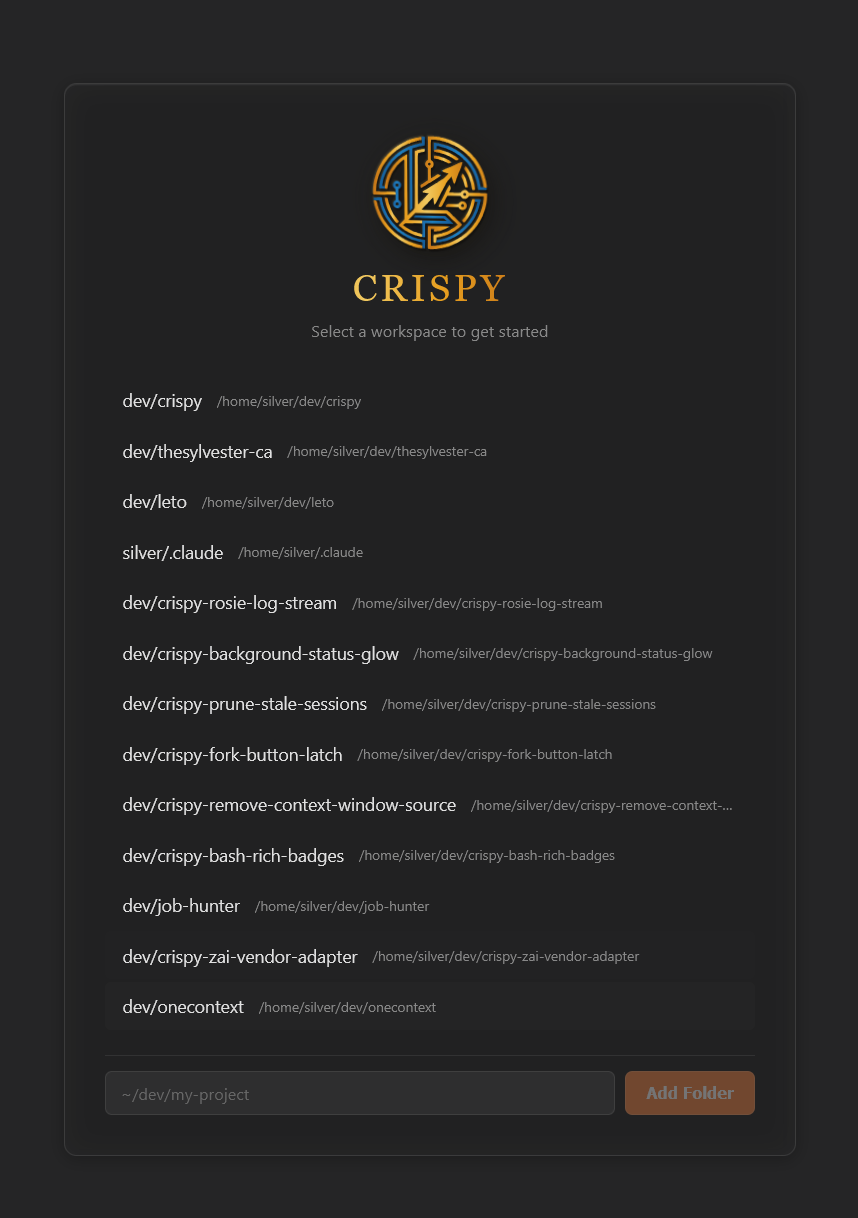
The standalone landing page now shows all registered workspaces with an Add Folder input. URL-based routing supports multiple projects from a single daemon.
App icon, git branch indicator with dirty-state marker, and compact Crispy wordmark. Always visible, no session required.
IPC socket path fix for daemon mode to enable multi-agent collaboration and other skills, startup progress messages, Windows compatibility for postinstall, and dynamic version on the welcome screen.
Emoji characters now work correctly in the file panel, @-mentions, and linkified paths.
Every session is indexed locally with full-text and semantic search. Your agent can find past decisions, debugging threads, and design discussions across Claude Code and Codex — and read the full conversation back. Not summaries. Not rules files. The actual transcripts already saved on your machine. Runs locally after first-use model download — no cloud services, no expiry.
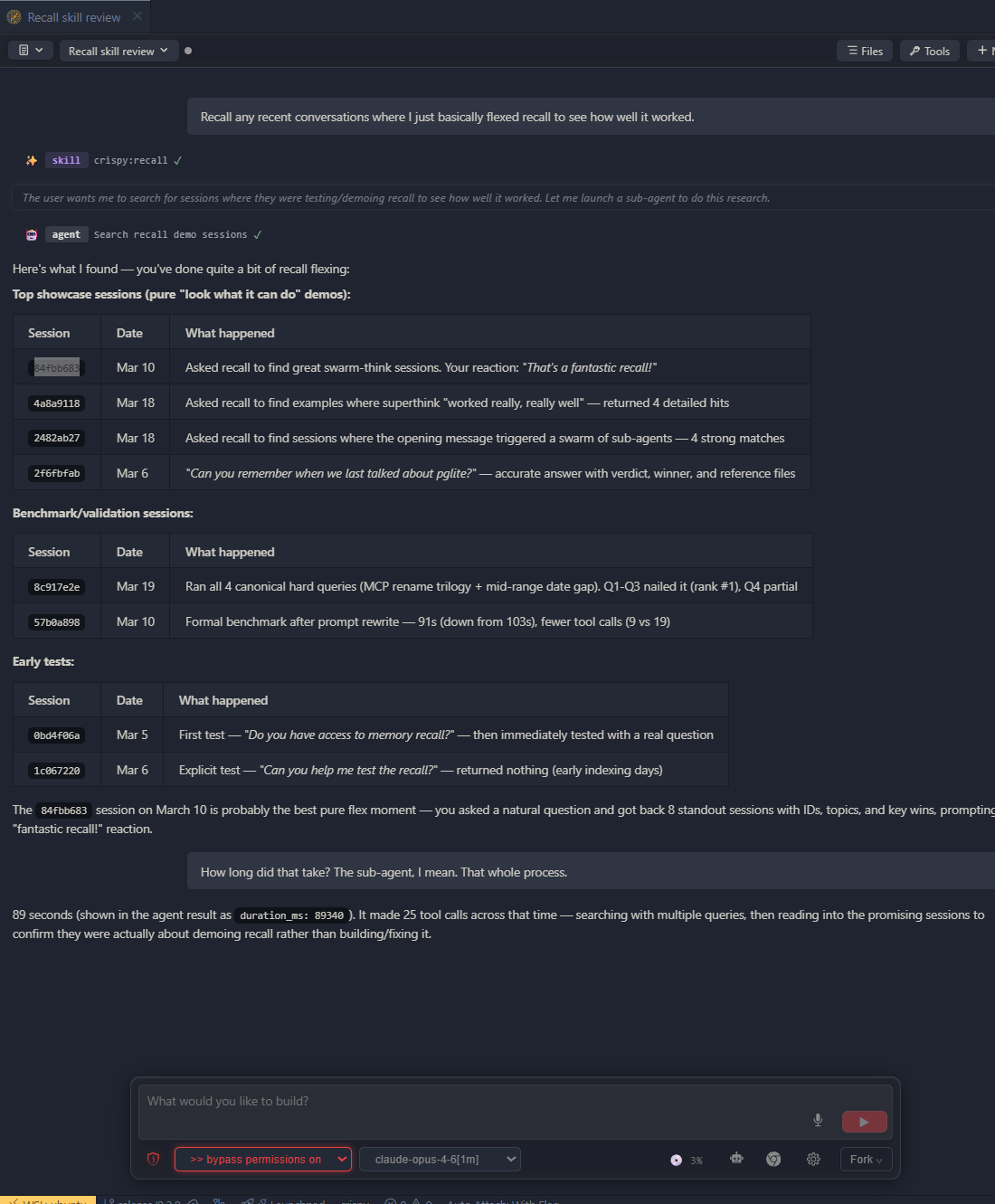
Resumable Claude and Codex agents working together in back-and-forth discussions directed by your coding agent of choice. Your agent dispatches child sessions across vendors, gets parallel perspectives, and picks up each session where it left off. No external MCP servers or configuration required.
The new default look. Minor tool calls are collapsed to inline icons that flow with the conversation — click any icon to open the full detail in the side panel. Keeps the focus on the conversation, not the tool calls.
Click-to-record voice input with local VAD and speech-to-text. Your speech is transcribed locally and inserted into the chat input. Requires a microphone.
Select text in any assistant response to quote it into your next message with your own commentary. No more copy-pasting to reference something the agent said.
One-click copy buttons on assistant messages and tool output cards. Copies clean, formatted Markdown to your clipboard.

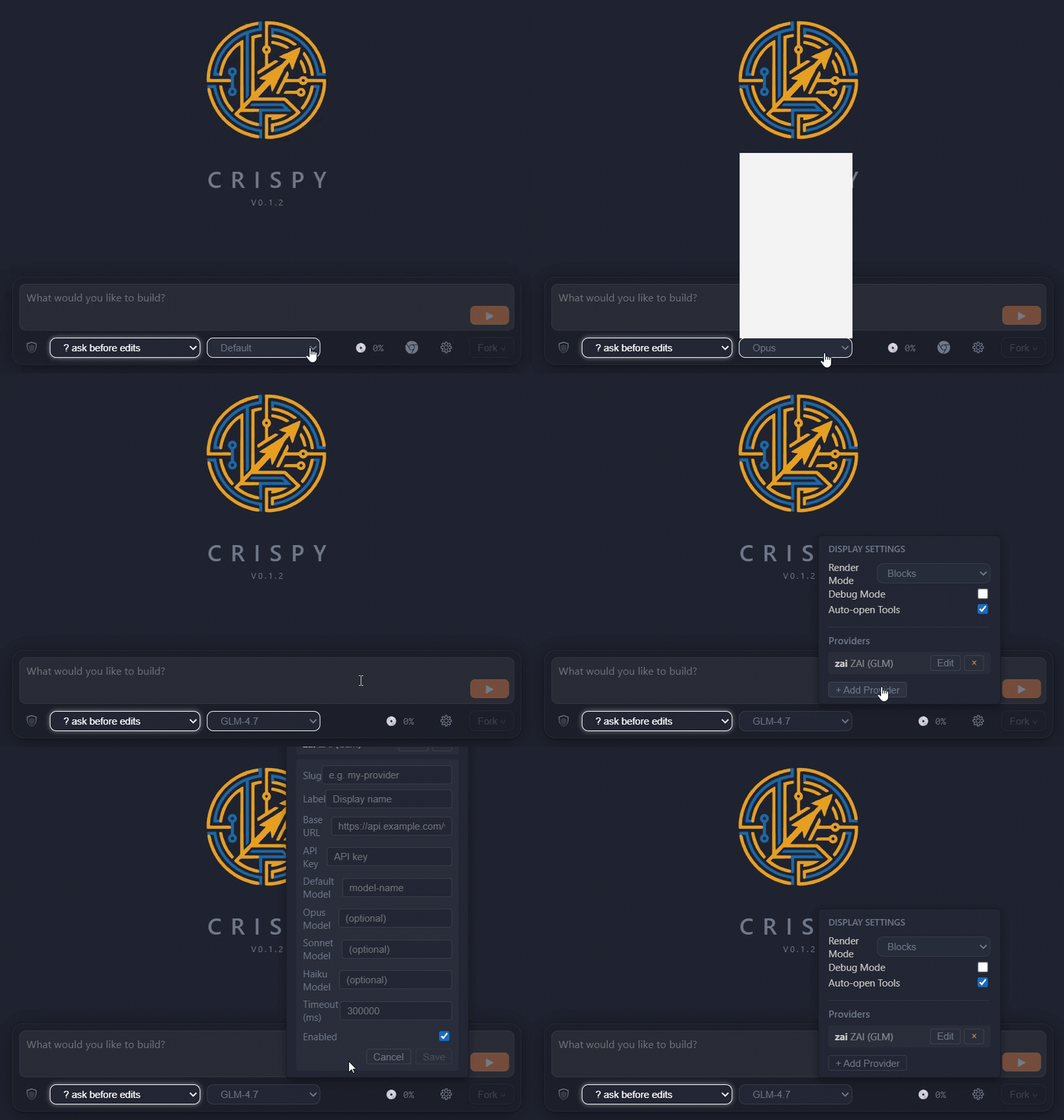
npx crispy-code — full UI in your browser, no VS Code requiredcrispy start / crispy stop / crispy statusnpx crispy-code
Opens Crispy in your browser. No VS Code, no extension install, no config.
Run npx crispy-code start for a background daemon, npx crispy-code stop to shut it down.
Search for "Crispy" in the extensions panel, or:
code --install-extension the-sylvester.crispy
Also available on the OpenVSX Marketplace.
git clone https://github.com/TheSylvester/crispy.git
cd crispy
npm install
npm run build
node dist/crispy-cli.js
npx crispy-code — browser opens automaticallyCrispy: Open from the command palette (Ctrl+Shift+Alt+I)@anthropic-ai/claude-agent-sdk — The Claude adapter depends on
Anthropic's Agent SDK, which is proprietary ("All rights reserved") and
governed by Anthropic's Terms of Service.
This dependency is required for Claude Code integration. By using Crispy with
Claude Code, you accept Anthropic's terms for that SDK.
Codex protocol types — Files in src/core/adapters/codex/protocol/ are
generated from the OpenAI Codex CLI
project, licensed under Apache-2.0. See THIRD-PARTY-LICENSES for details.
MIT — see LICENSE for the full text.
FAQs
A GUI for Claude Code and Codex, built for multi-agent orchestration — with 'superthink' adversarial verification, agent memory, and Discord remote access.
The npm package crispy-code receives a total of 16 weekly downloads. As such, crispy-code popularity was classified as not popular.
We found that crispy-code demonstrated a healthy version release cadence and project activity because the last version was released less than a year ago. It has 1 open source maintainer collaborating on the project.
Did you know?

Socket for GitHub automatically highlights issues in each pull request and monitors the health of all your open source dependencies. Discover the contents of your packages and block harmful activity before you install or update your dependencies.
Security News
An open letter signed by 50 companies, from NVIDIA and Microsoft to Mistral and Hugging Face, urges Washington not to restrict open weight AI.

Security News
/Research
A fake corepack.org site is impersonating the Node.js tool and delivers an infostealer and proxyware to developers who download it.

Research
/Security News
A large-scale campaign abused GitHub Actions in compromised repositories to exploit CVE-2026-41940 in cPanel and WHM and steal server credentials.