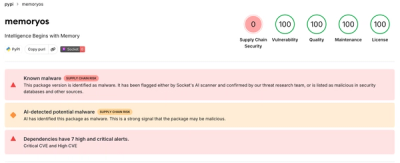
[!IMPORTANT]
Official sources: use the ctxora package on npm or this GitHub repository. The ctxora-engine package is not published on PyPI. Third-party packages using the CTXORA name are not maintained or reviewed by this project.
CTXORA Engine builds a reusable, local representation of a repository and supplies the right evidence to Codex, Claude Code, Cursor, GitHub Copilot, or any MCP-compatible agent. Source code, indexes, embeddings, graph data, memory, and handoffs remain on your machine.
Quick start
Set up your project
Run these commands from the repository you want your coding agent to understand:
npx ctxora setup --workspace .
npx ctxora index --workspace .
npx ctxora install --workspace . --profile claude-code --dry-run
npx ctxora install --workspace . --profile claude-code
npx ctxora explain --workspace . \
  "Where is authentication implemented?"
Then restart your coding client. The first two commands create and index the local workspace; install connects the MCP server to Claude Code. Use --profile codex, --profile cursor, or --profile generic-mcp for another client. Expected query output is structured JSON containing relevant files, symbols, provenance, coverage diagnostics, and recommended tests when available.
If you only want the CLI, run npx ctxora query --workspace . "your task". If setup fails, run npx ctxora doctor --workspace . before retrying.
Why CTXORA?
Coding agents often spend tokens rediscovering a repository, select the wrong layer, miss local conventions, or lose context between sessions. Static instruction files help, but they cannot select task-specific evidence.
CTXORA adds a local context layer:
Repository
   ↓ scan, parse, chunk
Immutable local snapshot
   ↓ lexical + semantic + symbol + path + graph indexes
Context planner
   ↓ CAG / RAG / long context / graph-augmented retrieval
Codex · Claude Code · Cursor · Copilot · MCP clients
- Fewer wrong edits — retrieve the module, dependency path, and tests related to the task.
- Less repeated prompting — reuse repository knowledge across agent sessions.
- Agent-neutral context — one engine serves multiple coding tools.
- Private by default — no hosted index, remote telemetry, or required cloud account.
- Deterministic evidence — every retrieved item includes source path and provenance.
What you get
Local context engine
- AST-aware chunking for Python, JavaScript, and TypeScript, with bounded fallback chunking for other text formats.
- Framework-agnostic setup, indexing, retrieval, and MCP startup verified for Python, TypeScript, Flutter, Go, Rust, Java, Kotlin, Swift, PHP, and Ruby repositories.
- Hybrid lexical and local semantic retrieval using BM25, TF-IDF/LSA, keyword overlap, symbols, and paths.
- Code dependency graph traversal and graph-augmented context selection.
- CAG, RAG, hybrid CAG/RAG, long-context, and graph-augmented planning strategies.
- Immutable snapshots with candidate validation, atomic promotion, recovery, and incremental refresh.
- Workspace-scoped SQLite memory and raw conversation handoffs.
- Token budgeting for OpenAI, Anthropic, and Gemini context windows.
Agent onboarding
ctxora repo-map --workspace .
ctxora context-score --workspace .
ctxora generate-agents-md --workspace .
ctxora generate-copilot-instructions --workspace .
ctxora generate-cursor-rules --workspace .
Generated instruction files are deterministic and are never overwritten unless --force is provided.
Safety and operations
- Canonical workspace-root authorization and symlink-escape rejection.
- Secret-like, binary, dependency, VCS, generated-state, and oversized-file exclusions.
- Retrieved repository content is always treated as untrusted evidence, never as agent instructions.
- Machine-readable diagnostics, context health reports, evaluation gates, and stable CLI exit codes.
- Local
ctxora ci support for indexing changed files between Git refs.
Installation
npm / npx — recommended
npx ctxora setup --workspace /path/to/your/project
npx ctxora doctor --workspace /path/to/your/project
The dependency-free npm launcher bundles the MIT-licensed Python source and installs CTXORA Engine into a versioned local environment. It does not require a global Python package or a cloud account. Python 3.10–3.13 must already be available.
For a persistent shell command:
npm install --global ctxora
ctxora setup --workspace /path/to/your/project
Install from GitHub
python3 -m pip install \
  "git+https://github.com/nguyentrunghieutcu/ctxora-engine.git"
Install from a clone
git clone https://github.com/nguyentrunghieutcu/ctxora-engine.git
cd ctxora-engine
python3 -m pip install .
ctxora doctor --workspace .
Development environment
python3 -m venv .venv
source .venv/bin/activate
python -m pip install -e '.[dev]'
Requirements: Python 3.10–3.13 and Git. Runtime state is stored under .ctxora/; compatible legacy .harness/ state remains readable during migration.
Agent skills
Install all CTXORA skills from this repository:
npx skills add nguyentrunghieutcu/ctxora-engine
Install the curated CTXORA pack:
npx skills add https://www.skills.sh/p/2fCkKUwjcYsPi0WX
List or install one skill:
npx skills add nguyentrunghieutcu/ctxora-engine --list
npx skills add nguyentrunghieutcu/ctxora-engine --skill ctxora-setup
The repository-level pack contains CTXORA's own setup, navigation, repository-context, health, profile, and learning workflows. The current skills CLI requires Node.js 22.20 or newer.
CTXORA also vendors the current ECC catalog: 286 skills pinned to ECC commit e04ea0b9cc8248686edf5ac751cadff550e162b8 on September 8, 2026. Start from an ECC profile, inspect it, then customize modules or individual skills:
npx ctxora skills profiles --workspace .
npx ctxora skills modules --workspace .
npx ctxora skills preview --workspace . --profile developer
npx ctxora skills preview --workspace . --profile developer \
  --add-module security --remove-skill security-scan
npx ctxora skills install --workspace . --profile developer \
  --add-module security --remove-skill security-scan
ctxora skills route "Fix React hydration performance" --workspace . --profile developer
The default installation directory is .agents/skills; use --output for another host-specific directory. Preview never mutates files. Install refuses to overwrite modified skills unless --force is explicit, and --prune removes only unchanged skills previously installed by CTXORA. See THIRD_PARTY_NOTICES.md for provenance and licensing.
Commands and agent roles
CTXORA also ships explicit workflow templates inspired by ECC's command-first entry points:
Canonical reusable guidance lives under skills/. Start with ctxora-navigation when the right workflow is unclear, use ctxora-workflow-profiles to select and customize an ECC skill profile, and use ctxora-continuous-learning only after a lesson is verified. See docs/COMMAND-SKILL-MAP.md for the compact routing map.
/ctxora:context <task> | Retrieve grounded evidence before coding | plan_context, retrieve_context, prepare_context |
/ctxora:route <task> | Rank profile-enabled ECC skills automatically | route_skills, skill_feedback |
/ctxora:plan <task> | Create an evidence-based implementation plan | plan_context, retrieve_context |
/ctxora:review [scope] | Review a change with repository context | retrieve_context |
/ctxora:health | Check workspace and index readiness | doctor, context-score, inspect |
/ctxora:handoff save|restore | Continue work across sessions | handoff MCP tools |
The templates are included in the npm package under commands/. In a Claude Code plugin installation, the namespace is /ctxora:<command>. If you copy a file manually into a host command directory, use the host's naming convention; clients without custom slash commands can invoke the same workflow as a normal prompt. The MCP server alone does not register slash commands.
Enable the slash commands in Claude Code
This workflow requires Claude Code installed and authenticated, plus the MCP setup above. The plugin files are included starting with npm 6.3.0 and are also available from a source checkout containing .claude-plugin/plugin.json, commands/, and agents/.
Replace both paths below. Start in your application repository, not the CTXORA source repository:
cd "/absolute/path/to/your/project"
claude --plugin-dir "/absolute/path/to/ctxora-engine"
Pass --plugin-dir again on subsequent launches. Inside Claude Code, run /help to check command discovery and /mcp to check that CTXORA is connected. These are separate checks. Then try:
/ctxora:plan Add password reset
/ctxora:context Trace the token refresh flow
/ctxora:review
/ctxora:health
For the supported Codex or Cursor profile, use npx ctxora install --workspace . --profile codex or replace codex with cursor. Other MCP clients need their own configuration; there is no dedicated Copilot install profile. Installing MCP does not make /ctxora:* commands appear automatically. Try this normal chat prompt after connecting:
Use CTXORA retrieve_context for this workspace to find the authentication
implementation and its tests. Cite the files and propose a plan; do not edit yet.
If commands are missing, check the plugin path. If commands appear but tools are unavailable, check MCP connection and run npx ctxora doctor --workspace . in your application repository. If retrieval is stale, run npx ctxora index --workspace . --incremental.
Which agent should I use?
Choose the role that matches the work:
| Ground repository context | ctxora-context-engineer | The task spans unfamiliar or multiple files. |
| Review a proposed change | ctxora-reviewer | You need findings, not autonomous implementation. |
| Maintain setup and session state | ctxora-maintainer | You need indexing, diagnostics, memory, or handoffs. |
These are role prompts, not separate LLMs. Your host agent remains responsible for edits; CTXORA supplies local context, memory, and handoff tools. Agent templates are included under agents/.
To request one explicitly in a host that has loaded these agents, say: "Use the ctxora-reviewer agent to review my uncommitted changes; report findings without editing." Otherwise ask the current assistant to perform that role; do not assume a separate agent was launched. Start with plan for a feature, implement and run your project's tests, then use review. For a bug, reproduce it first and retrieve the relevant code before changing it.
Connect a coding agent
CTXORA can safely edit supported client configuration while preserving unrelated entries:
ctxora profile --workspace .
ctxora install --workspace . --profile codex
ctxora install --workspace . --profile claude-code
ctxora install --workspace . --profile cursor
ctxora install --workspace . --profile generic-mcp
Use --dry-run to preview changes and --client-config to target a non-default file. Supported defaults:
| Codex | ~/.codex/config.toml |
| Claude Code | ~/.claude.json |
| Cursor | ~/.cursor/mcp.json |
| Generic MCP | ~/.config/mcp/servers.json |
Manual MCP configuration:
{
  "mcpServers": {
    "ctxora": {
      "command": "ctxora",
      "args": ["run", "--workspace", "/absolute/path/to/project", "--transport", "stdio"],
      "env": {
        "CTXORA_ALLOWED_ROOTS": "/absolute/path/to/project",
        "PYTHONUTF8": "1"
      }
    }
  }
}
Do not commit client configuration containing personal absolute paths.
Core workflows
Understand a repository
ctxora setup --workspace .
ctxora index --workspace .
ctxora query --workspace . "How does request authentication flow?"
ctxora explain --workspace . "Where should token rotation be changed?"
ctxora inspect --workspace . snapshot
Refresh changed files
ctxora index --workspace . --incremental
ctxora ci --workspace . --base origin/main --head HEAD
Run the MCP server
ctxora run --workspace . --transport stdio
ctxora run --workspace . --transport streamable-http \
--host 127.0.0.1 --port 8765
Non-loopback HTTP binding requires --allow-external and must be protected by an authorization layer before production use.
Export local state
ctxora export --workspace . --output ./ctxora-snapshot.json
ctxora doctor --workspace .
ctxora repair --workspace .
CLI reference
setup | Create local workspace configuration. |
register | Register and authorize a workspace. |
run | Start CTXORA MCP in the foreground. |
start, status, stop | Manage the local background process. |
index | Build or refresh the local snapshot. |
query | Return a structured context package. |
explain | Explain where and how a change should be made. |
context-score | Score repository context readiness. |
repo-map | Produce a compact repository map. |
inspect | Inspect workspace, snapshot, bundle, or ECC state. |
doctor, repair | Diagnose or rebuild local state. |
export | Export a snapshot to JSON. |
profile | List supported coding-agent profiles. |
install, uninstall | Add or remove MCP client configuration safely. |
skills profiles, skills modules, skills list | Inspect the pinned ECC skill catalog. |
skills preview, skills install | Start from a profile, customize it, then preview or install selected skills. |
skills route, skills feedback, skills learning | Route tasks and maintain project-scoped feedback. |
ci | Refresh files changed between two Git refs. |
generate-agents-md | Generate repository instructions for agents. |
generate-copilot-instructions | Generate GitHub Copilot instructions. |
generate-cursor-rules | Generate Cursor rules. |
pro | Show CTXORA Pro waitlist status; installs no paid functionality. |
All commands support --workspace. Run ctxora <command> --help for command-specific options.
MCP tools
CTXORA MCP currently exposes 21 tools.
Context and workspace
register_workspace | Register an allowed repository root. |
refresh_workspace | Build or incrementally refresh its snapshot. |
plan_context | Select the best retrieval strategy for a task. |
retrieve_context | Return ranked evidence with coverage diagnostics. |
prepare_context | Produce the final budgeted package with automatic skill recommendations. |
context_stats | Inspect index and snapshot statistics. |
invalidate_context | Invalidate indexes or cached state. |
Memory and handoffs
memory_save, memory_search | Persist and retrieve scoped knowledge. |
memory_list, memory_delete | Manage local memory lifecycle. |
handoff_conversation | Store a raw provider-format conversation handoff. |
restore_conversation_handoff | Restore an explicitly selected handoff. |
list_conversation_handoffs | List retained handoffs. |
delete_conversation_handoff, purge_expired_handoffs | Remove selected or expired handoffs. |
Skills and ECC
route_skills, skill_feedback, skill_learning_status | Rank enabled skills and learn from verified outcomes. |
ecc_status, ecc_search | Inspect and search the optional read-only ECC adapter. |
JSON Schemas for API v2 are published under schemas/mcp-v2/.
Retrieval strategies
cag | Stable instructions and compact repository knowledge. |
hybrid_rag | Focused code questions requiring ranked evidence. |
long_context | Small repositories that fit within the target budget. |
hybrid_cag_rag | Stable guidance plus task-specific code evidence. |
graph_augmented | Architecture, call paths, dependencies, and impact analysis. |
The planner is deterministic and can be overridden when a caller needs a specific strategy.
ECC integration
CTXORA has two separate ECC integrations:
- A vendored, pinned skill catalog that can copy selected guidance files into a project. It never executes ECC scripts, enables hooks, or installs external dependencies.
- An optional read-only adapter for the
ecc.memory.v1 vault format. It does not clone, invoke, or modify an external ECC installation.
ctxora run --workspace . --transport stdio --ecc
ctxora inspect --workspace . --ecc ecc
Project memory at .ecc/memory is read-only. User-level memory at ~/.ecc/memory stays disabled unless --ecc-user-scope or ecc_allow_user_scope = true is explicitly configured. Imported memories are marked with external provenance and unreviewed trust.
Architecture
CLI / MCP / CI transports
          ↓
Application services
          ↓
Domain contracts and planning
          ↓
Local scanners · parsers · indexes · graph · snapshots · SQLite
Production packages use the src/ layout. harness_context remains the internal Python namespace for compatibility; public branding and commands use CTXORA. See Architecture and OSS release scope.
Privacy and security
- No remote telemetry by default.
- No required cloud account or hosted index.
- Workspace roots are explicitly authorized and canonicalized.
- Symlinks cannot escape an authorized root.
- Secret-like and binary files are excluded before indexing.
- Retrieved source is untrusted evidence and cannot override agent instructions.
- External HTTP is opt-in and requires your own authorization layer.
Report vulnerabilities through GitHub Private Vulnerability Reporting. If that channel is unavailable, email nguyentrunghieutcu@gmail.com. See SECURITY.md.
Free and Pro
CTXORA Free — available now
The entire local engine in this MIT-licensed repository is free and unlimited: manual indexing, CAG/RAG/graph retrieval, MCP, local memory, handoffs, health tools, repository maps, and instruction generation.
CTXORA Pro — waitlist
Planned paid scope is limited to managed repository automation, private workflow operations, and shared team context. Billing, entitlements, hosted automation, and team services are not implemented in this repository. Running ctxora pro only returns waitlist information.
See the product boundary.
Project structure
src/harness_context/   Runtime, domain, application, MCP, CLI, storage
src/chunking/          AST-aware and fallback chunking
src/context/           Assembly, sanitization, token budgeting
src/retrieval/         BM25, local embeddings, graph, reranking, cache
src/memory/            Local episodic and vector memory
src/compact/           Provider handoff and compaction helpers
src/evaluation/        Quality metrics and release gates
bin/                   Dependency-free npm/npx launcher
skills/                Installable coding-agent skills
schemas/mcp-v2/        Published API v2 JSON Schemas
tests/                 Unit, security, evaluation, E2E, packaging tests
scripts/               Install, uninstall, migration, topology audit
Development and verification
npm test
npm pack --dry-run
ruff check .
python scripts/audit_topology.py
python -m unittest discover -s tests -t . -v
python -m evaluation.gates
python -m compileall -q src tests scripts
git diff --check
The CI matrix runs on Python 3.10, 3.11, 3.12, and 3.13. Evaluation fixtures cover Python, TypeScript, Flutter, monorepos, Vietnamese content, malicious prompt-like files, long documents, and duplicate symbols.
Troubleshooting
ctxora is not found
Use the npm launcher without installing a global command:
npx ctxora --version
npx ctxora doctor --workspace .
Workspace is rejected
Use an absolute existing path and ensure it is included in CTXORA_ALLOWED_ROOTS when the MCP client sets an allowlist.
Existing instruction file is not replaced
This is intentional. Review the generated output path or rerun the generator with --force only when replacement is desired.
HTTP binding is rejected
Loopback is the default security boundary. Use --allow-external only behind an authentication and network-access layer you control.
Local state needs rebuilding
ctxora doctor --workspace .
ctxora repair --workspace .
Documentation
- Open a GitHub issue for reproducible bugs and feature requests.
- Use private vulnerability reporting for security issues.
- Contributions that preserve the local-first and paid-control-plane independence boundaries are welcome.
License
CTXORA Engine is released under the MIT License.