

Company News
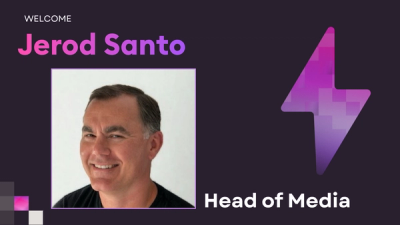
Jerod Santo Joins Socket as Head of Media
Allow myself to introduce... myself.
By Jerod Santo - Sep 14, 2026
disclosures
Advanced tools
Corporate-disclosure research across 12 official sources (SEC EDGAR, GLEIF, UK Companies House, DART, EDINET, cninfo, BSE, TWSE, CVM, BaFin, filings.xbrl.org) behind ten intent-based tools, as a TypeScript library and MCP server.
Corporate-disclosure research for AI agents and TypeScript — filings, insiders, owners, financials, and ownership chains from 16 official sources across 13 jurisdictions.





disclosures is a free, open-source Model Context Protocol server and a TypeScript library. It answers questions like "who are NVIDIA's directors?", "who owns 5% of Samsung Electronics?", or "show me Vale's last three annual results" — with every answer linked back to the official source document.
jurisdiction parameter; three register tools add filed-document, secured-charge, and person-appointment lookups. Tool names and schemas never change as coverage grows.Requires Node 18+. The only required configuration is a descriptive User-Agent for SEC EDGAR (their fair-access policy) — set it to your name/org and contact email.
npx -y disclosures
claude mcp add --transport stdio disclosures \
  --env DISCLOSURES_USER_AGENT="Your Organization your-email@example.com" \
  -- npx -y disclosures
Add to claude_desktop_config.json (Settings → Developer → Edit Config):
{
  "mcpServers": {
    "disclosures": {
      "command": "npx",
      "args": ["-y", "disclosures"],
      "env": {
        "DISCLOSURES_USER_AGENT": "Your Organization your-email@example.com"
      }
    }
  }
}
Add the same mcpServers block as Claude Desktop to ~/.cursor/mcp.json (or per-project .cursor/mcp.json).
Add to .vscode/mcp.json:
{
  "servers": {
    "disclosures": {
      "type": "stdio",
      "command": "npx",
      "args": ["-y", "disclosures"],
      "env": {
        "DISCLOSURES_USER_AGENT": "Your Organization your-email@example.com"
      }
    }
  }
}
Windsurf (~/.codeium/windsurf/mcp_config.json) uses the same mcpServers JSON as Claude Desktop.
Codex CLI (~/.codex/config.toml):
[mcp_servers.disclosures]
command = "npx"
args = ["-y", "disclosures"]
env = { DISCLOSURES_USER_AGENT = "Your Organization your-email@example.com" }
Gemini CLI (~/.gemini/settings.json) uses the same mcpServers JSON as Claude Desktop.
Any other client: run npx -y disclosures as a stdio command with the DISCLOSURES_USER_AGENT environment variable set. The server speaks newline-delimited JSON-RPC on stdout. It is also listed on the official MCP registry as io.github.carrotly-ai/disclosures.
The same server also speaks the MCP streamable-HTTP transport, for hosted or networked deployments. Pass --http (stdio remains the default with no flag):
disclosures --http --port 8080 # or: node dist/server.mjs --http
127.0.0.1 by default; pass --host 0.0.0.0 to expose it. Port comes from --port, else the PORT env var, else 8080.POST /mcp (the transport also answers the streamable-HTTP GET/DELETE handshake). Runs stateless — no session id, a fresh server instance per request.GET /healthz → 200 {"name","version","tools"}.Connect any streamable-HTTP MCP client at http://127.0.0.1:8080/mcp.
Restart the client after changing its configuration, then try:
"Use disclosures to list Apple's board of directors and their latest Form 4 activity." "Who holds 5% or more of NVIDIA? Link the filings." "Resolve Samsung Electronics in Korea and show its latest annual financials." "What's the GLEIF ownership chain above Apple Operations India?"
| Tool | What it answers | Coverage |
|---|---|---|
CompanyResolve | "Which company is this?" — canonical name plus CIK, ticker, LEI, ISIN, SIREN, and local registry identifiers; GB adds previous names with date ranges and status/accounts detail. | US, GB, EU (ESEF filers), KR, JP, CN, IN, TW, BR, DE, FR + global LEI/ISIN |
CompanyFilings | "What has it filed?" — dates, types, descriptions, direct source links; a latest annual/quarterly report mode, plus a GB insolvency-history mode. | US, GB, EU (ESEF/UKSEF annual reports), KR, JP, CN, IN, TW, BR, FR (info-financiere OAM) |
CompanyInsiders | "Who runs it?" — directors, officers, titles, and 10%+ owners from insider registers. | US, GB (incl. ECCTA identity status), KR, TW, DE (MAR Art. 19) |
CompanyOwners | "Who owns it?" — major-shareholder filers with thresholds, dates, and filing links. | US (13D/13G), GB (PSC + TR-1), KR (5% rule), JP (5% rule / 大量保有報告書), TW (>10%), DE (§§33 ff. WpHG), FR (franchissement de seuil — best-effort extraction from the newest notification PDFs, else link-only) |
CompanyFinancials | "What are its numbers?" — annual as-filed revenue, income, balance sheet, EPS, cash flow by fiscal period. | US (XBRL), GB/EU (ESEF/UKSEF IFRS), KR, JP (EDINET XBRL), TW (latest-period general-industry statements, NT$), BR |
OwnershipChain | "Who consolidates it?" — GLEIF direct/ultimate accounting-consolidation parents and children. | 🌐 Global (any LEI or legal name) |
PrivateRaises | "Has it raised privately?" — Form D exempt offerings, amounts, investor counts, named related persons. | US only in v1 |
CompanyDocument | "What does the filing actually say?" — fetches a filed document's content: extracted iXBRL/HTML/DART-XML text or the source PDF saved to disk (image-only / pre-inline / XBRL-archive / PDF-only filings are reported honestly, never faked). | GB (Companies House), US (SEC EDGAR), JP (EDINET), KR (OpenDART), FR (info-financiere OAM) |
CompanyCharges | "What's secured against it?" — registered charges/mortgages with status, dates, persons entitled, and fixed/floating/negative-pledge particulars. | GB (Companies House) |
PersonAppointments | "Where else does this person sit?" — person search, cross-company role history, and disqualification / enforcement lookups (linked to the safe public register). | GB (Companies House), US (SEC EDGAR), DE (BaFin DealingsInfo), FR (recherche-entreprises dirigeants) |
The first seven tools dispatch across jurisdictions via jurisdiction. Of the last three, CompanyDocument accepts a jurisdiction of GB (default), US, JP, KR, FR, or HK; PersonAppointments accepts US, GB (default), DE, or FR; CompanyCharges is Companies House-specific and takes no jurisdiction — it always queries the UK register.
Every company input accepts a name or a local identifier — ticker, CIK, LEI, or ISIN (US/global), Companies House number (GB), OpenDART corp/stock code (KR), EDINET/securities/corporate code (JP), A-share or HK code (CN), BSE scrip (IN), TWSE listing code (TW), CVM registration code (BR), BaFin-Id or ISIN (DE), SIREN/ISIN/LEI (FR), 4/5-digit HKEX stock code (HK), Singapore UEN (SG). Pass jurisdiction: "US" | "GB" | "EU" | "KR" | "JP" | "CN" | "IN" | "TW" | "BR" | "DE" | "FR" | "HK" | "SG" (default US).
| Intent | US | GB | EU | KR | JP | CN | IN | TW | BR | DE | FR | HK | SG |
|---|---|---|---|---|---|---|---|---|---|---|---|---|---|
CompanyResolve | ✅ | ✅ | ✅ | ✅ | ✅ | ✅ | ✅ | ✅ | ✅ | ✅ | ✅ | ✅ | ✅ |
CompanyFilings | ✅ | ✅ | ✅ | ✅ | ✅ | ✅ | ✅ | ✅ | ✅ | — | ✅ | ✅ | — |
CompanyInsiders | ✅ | ✅ | — | ✅ | — | — | — | ✅ | — | ✅ | — | — | — |
CompanyOwners | ✅ | ✅ | — | ✅ | ✅ | — | — | ✅ | — | ✅ | ⚠️ | — | — |
CompanyFinancials | ✅ | ✅ | ✅ | ✅ | ✅ | — | — | ✅ | ✅ | — | — | — | — |
PrivateRaises | ✅ | — | — | — | — | — | — | — | — | — | — | — | — |
OwnershipChain | 🌐 global via GLEIF — jurisdiction-independent |
✅ supported · ⚠️ partial (FR CompanyOwners: threshold-crossing notifications with a best-effort structured extraction — holder, direction, threshold(s) and resulting % parsed from the notification PDF's text layer for the newest few; scanned/non-standard PDFs and older notifications stay a link-only list) · — returns an honest unsupported-jurisdiction explanation, never an empty or fabricated result
Each jurisdiction has a full reference page — data source, credentials, accepted identifiers, per-intent behavior, and caveats — under docs/jurisdictions/.
US and global lookups work with just the User-Agent. Non-US sources are keyless where the upstream allows it; the two that need keys are free. Provide only the keys for jurisdictions you query — everything else keeps working without them, and a missing credential produces a readable error naming the exact variable to set.
| Source | Jurisdiction | Key required | Notes |
|---|---|---|---|
| SEC EDGAR | US (default) | None — set DISCLOSURES_USER_AGENT | Filings, insiders, 13D/13G owners, XBRL financials, Form D. |
| GLEIF | 🌐 global | None | LEI/ISIN resolution, ownership chain. |
| Companies House | GB | COMPANIES_HOUSE_API_KEY (free) | Resolution, filings, officers, PSC — incl. ECCTA identity-verification status. |
| FCA NSM | GB | None — inject-only | DTR5/TR-1 ~3%+ major holdings inside CompanyOwners; activates only when you inject a fetchFn (no public read API). |
| filings.xbrl.org | GB, EU | None | ESEF/UKSEF normalized annual IFRS financials (FY2020+). |
| DART / OpenDART | KR | OPENDART_API_KEY (free) | Resolution, reports, executive ownership, 5% mass holdings, financials. |
| EDINET | JP | EDINET_API_KEY (free, search only) | Resolution is keyless; document search needs the key. |
| cninfo | CN | None | SSE/SZSE (+ HKEX mirror) resolution and announcement PDFs. |
| BSE India | IN | None | Resolution and announcement PDFs; anti-bot host — inject a fetchFn if throttled. |
| TWSE OpenAPI | TW | None | Resolution, material information, directors/supervisors, >10% shareholders. |
| CVM open data | BR | None | Resolution, IPE disclosure index, DFP annual financials in BRL. |
| BaFin AnteileInfo + DealingsInfo | DE | None | Resolution, §§33 ff. WpHG major holdings, Art. 19 MAR directors' dealings. |
| info-financiere.gouv.fr (OAM) | FR | None | Regulated-filing index with direct PDFs, threshold-crossing notifications, filed documents. |
| recherche-entreprises | FR | None | Resolution (SIREN), officers (dirigeants), person→companies. |
| HKEXnews | HK | None | Resolution, title-search filings with keyless PDFs, CompanyDocument by FILE_LINK path. |
| ACRA (data.gov.sg) | SG | None | Resolution only — UEN, status, incorporation date, former names, auditors (Singapore Open Data Licence). |
# Required (SEC fair-access policy — your name/org and contact email)
export DISCLOSURES_USER_AGENT="Your Organization your-email@example.com"

# Optional, per jurisdiction
export COMPANIES_HOUSE_API_KEY="..."   # GB
export OPENDART_API_KEY="..."          # KR
export EDINET_API_KEY="..."            # JP document search
SEC_EDGAR_USER_AGENT is accepted as a fallback for compatibility; DISCLOSURES_USER_AGENT wins.
The same package imports cleanly without starting stdio — every adapter takes injectable { fetchFn?, env?, cache? }, so it embeds and tests deterministically.
import { createTools } from "disclosures";

const tools = createTools({
  env: { DISCLOSURES_USER_AGENT: "Your Organization your-email@example.com" },
});

const resolve = tools.find((tool) => tool.name === "CompanyResolve")!;
const result = await resolve.handler({ company: "NVDA" });
Handlers never throw — every failure comes back as a readable MCP-shaped result. Individual adapters are also exported as namespaces (secEdgar, gleif, companiesHouse, openDart, edinet, cninfo, bseIndia, fcaNsm, xbrlFilings, twseOpenApi, cvmOpenData) if you want the raw normalized records instead of Markdown.
The OpenDART corp-code list (KR) and EDINET code list (JP) are multi-megabyte archives that regenerate about daily. Without a cache they are memoized per process; supply one to persist across restarts:
import { FileCache, createTools } from "disclosures";

const tools = createTools({
  env: { OPENDART_API_KEY: process.env.OPENDART_API_KEY },
  cache: new FileCache("/var/cache/disclosures"), // TTL-aware, survives restarts
});
cache is any DisclosuresCache (get/set). InMemoryCache and FileCache ship in the box; a corrupt, expired, or missing entry degrades to a normal refetch — a broken cache never breaks a lookup.
import { gleif } from "disclosures";

gleif.isIsin("US0378331005");                               // true — validates the check digit
const issuer = await gleif.resolveLeiByIsin("US0378331005"); // → issuer's GLEIF Entity (with .lei)
const isins = await gleif.getIsinsForLei("HWUPKR0MPOU8FGXBT394"); // → every ISIN for that LEI
CompanyResolve already accepts a bare ISIN and routes it through this cross-walk; the helpers are for building your own identifier maps.
import { createDisclosuresServer } from "disclosures";

const server = createDisclosuresServer(); // McpServer with all ten tools registered
Importing the package never opens stdio; only the CLI entry point connects the transport.
Responses are designed for the way an MCP client actually consumes them:
structuredContent mirroring the Markdown facts, so a client chains calls without parsing prose: CompanyResolve ranked candidates with full identifier sets, CompanyFilings and register records with a ready-to-use transactionId, PersonAppointments people with their officerId, plus CompanyInsiders, CompanyOwners, CompanyFinancials (per-concept facts labelled by fiscal period end), OwnershipChain, PrivateRaises, and CompanyCharges — each tagged with its sourceJurisdiction. OwnershipChain also declares an MCP outputSchema; the multi-jurisdiction tools keep their honest-miss text-only paths and so emit structure additively without a declared schema._Next: …_ hint naming the tool and parameter to call next.openWorldHint and idempotentHint; all but CompanyDocument (whose pdf mode writes a local file) declare readOnlyHint, so clients can parallelize and skip confirmation prompts.CompanyDocument mode xhtml reads in 50,000-character windows via text_offset — long filings are fully readable, not head-truncated.<<<BEGIN/END UNTRUSTED DOCUMENT TEXT>>> sentinels (with lookalikes inside the document defanged), so clients can quarantine it programmatically.disclosures://jurisdictions and disclosures://jurisdictions/{code} MCP resources describing each jurisdiction's source, credential, accepted identifiers, and caveats — check requirements without a failed tool call.These tools report public disclosures, faithfully — they are not KYC, UBO, or cap-table products:
Resolution misses come back as plain "Could not find…" text; configuration, upstream, and rate-limit failures come back as flagged errors naming the fix. Every link is a real, resolvable source URL.
| Page | Contents |
|---|---|
docs/jurisdictions/ | Per-jurisdiction reference: sources, credentials, accepted identifiers, per-intent behavior, caveats, and the coverage matrix. |
docs/TESTING.md | Offline test isolation plus the separate credential-aware live end-to-end suite. |
PUBLISHING.md | npm trusted publishing and MCP-registry release automation. |
CHANGELOG.md | Release history. |
Requires Bun for development; the published artifact runs on Node 18+.
bun install
bunx tsc --noEmit     # strict typecheck
bun test              # 371 tests, fully offline — no live HTTP
bun run build         # bundles dist/server.mjs (zero runtime deps)
bun run test:stdio    # stdio integration against the built artifact
The default suite never touches the network: routed fetch stubs throw on any unmatched request. A separate live end-to-end suite builds the real Node artifact, drives it over MCP stdio, and uses whichever credentials are present in .env.local:
bun run test:live       # missing jurisdiction keys are reported as skips
bun run test:live:all   # strict: require User-Agent + GB/KR/JP keys
Live assertions are drift-tolerant (identity, identifier shape, source host, and response structure rather than volatile counts or dates), transient failures retry once, calls are time-bounded, and diagnostics redact configured keys. The live files use a .live.ts suffix so bare bun test cannot discover them. See the full testing discipline. The smaller bun run smoke:live SEC/GLEIF diagnostic remains available for quick checks.
stdio rule: the server reserves stdout for JSON-RPC — contributor diagnostics must go to stderr, since console.log corrupts the MCP transport.
Existing tool names and schemas stay stable — the collection only ever grows additively. The seven cross-jurisdiction intents absorb new sources and deeper data behind the same shapes; where a register offers primitives with no cross-jurisdiction equivalent (filed-document retrieval, secured-charge registers, person-level appointment history), a focused tool is added rather than contorting an intent. GB (Companies House) now goes deep: CompanyDocument, CompanyCharges, and PersonAppointments join CompanyResolve previous-name history and a CompanyFilings insolvency mode (GB.md). US (SEC EDGAR) now answers CompanyDocument (filing document manifests + inline HTML/XBRL text) and PersonAppointments (reporting-owner CIK search, cross-issuer Section 16 role history, and a safe SALI enforcement-lookup link) alongside the seven core intents (US.md). JP (EDINET) and KR (OpenDART) now answer CompanyDocument too — JP downloads a filing's PDF (with page count) and lists its XBRL archive members by docID; KR lists a filing's DART documents and extracts the main document's text by receipt number (JP.md, KR.md). DE (Germany) resolves issuers and returns §§33 ff. WpHG major holdings and Art. 19 MAR directors' dealings over BaFin's free databases, and now answers PersonAppointments too — a person-name search over the BaFin DealingsInfo notifying-persons index, then that person's issuers by BaFin meldepflichtigerId (DE.md). FR (France) resolves listed issuers and lists their regulated filings with direct PDFs over the official OAM's keyless OpenDataSoft JSON API, fetches those documents (CompanyDocument), returns franchissement de seuil threshold-crossing notifications with a best-effort structured extraction from the newest notification PDFs' text layer — holder, crossing direction/date, threshold(s) crossed, and resulting capital/voting-rights % (CompanyOwners, partial — scanned/non-standard PDFs and older notifications stay link-only), and resolves non-listed companies and their officers over DINUM's keyless recherche-entreprises registry (CompanyResolve, PersonAppointments) — implemented from the live-verified FR-FEASIBILITY.md finding (FR.md). Secured-charge registers remain a GB-only open-data primitive. Also ahead: CN/IN ownership and financials currently locked inside report PDFs. Suggestions and issues welcome on GitHub.
Apache-2.0. Copyright Carrotly AI.
FAQs
Corporate-disclosure research across 26 official sources and 21 jurisdiction routes behind ten intent-based tools, as a TypeScript library and MCP server.
The npm package disclosures receives a total of 49 weekly downloads. As such, disclosures popularity was classified as not popular.
We found that disclosures demonstrated a healthy version release cadence and project activity because the last version was released less than a year ago. It has 1 open source maintainer collaborating on the project.
Company News
Allow myself to introduce... myself.

Research
/Security News
A Twitch browser extension on Chrome and Firefox forwards users’ live OAuth session tokens through proxies controlled by a Russian bot service.

Security News
Anthropic found biased reasoning and recklessness drove Claude Mythos 5 to publish malware on PyPI and compromise a security vendor.