
Research
/Security News
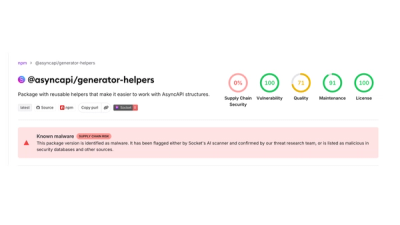
Compromised npm Packages in the AsyncAPI Namespace Deliver Miasma Botnet Loader
4 compromised asyncapi packages deliver miasma botnet loader on macOS, Linux and Windows.
By Socket Research Team - Jul 14, 2026
discord-cross-ratelimit
Advanced tools
A package, which syncs ratelimits of your Discord Bot on all Machines/Clusters






An efficient package, which syncs ratelimits of your Discord Bot on all Machines/Clusters.
Private Community for Verified Bot Developers. Meet new big bot and small bot developers and have a nice exchange...

When Sharding/Scaling your Bot over many processes or even machines, every client has it own ratelimits, which are not synced with shards/clusters or machines.
Bots which encounter a high load, often hit the (global) ratelimit, because the Shards are not informed about existing ratelimits in other Shards.
Hitting less Global Ratelimits is essential, inorder to not get "cooldowned" by the ratelimit or even getting banned on too many requests.
This Package syncs the ratelimits of your Bot over Machines and Clusters with no Breaking Changes, when using Discord.js v13
Note:
discord-hybrid-sharding, which just needs some small changes and even allow Clustering and resource saving and has all functions of the ShardingManager.Discord.js v13.5 and higher (can be compatible with older versions v13 versions, but not tested => fork and test it)Discord.jsdiscord-hybrid-sharding & discord-cross-hostingTodo:
restGlobalRateLimitWhen doing a rest request on the Discord Api, the package fetches Hashes and Handlers from the Manager, which can be a Bridge (discord-cross-hosting) or a Cluster.Manager (discord-hybrid-sharding)
The Manager saves on which route a request has been done and caches the sublimit, method, route and the remaining requests, which can be done without a ratelimit.
When executing a rest request and a hash/handler exists on the manager, the request will be queued inorder to not hit a ratelimit.
This is very similar to Discord.js Rest Ratelimits handling, the only difference is that it is saved globally instead locally.
If you need help feel free to join our discord server. We will provied you all help ☺
You can download it from npm:
npm i discord-cross-ratelimit
1. Using the Package just with Discord-Hybrid-Sharding
2. Using the Package with Discord-Cross-Hosting
3. Api Reference
Discord-Hybrid-Sharding:cluster.js) and one for the Client (bot.js).Cluster.js:
const Cluster = require("discord-hybrid-sharding");
let {token} = require("./config.json");
const manager = new Cluster.Manager(`${__dirname}/bot.js`,{
//Check the Package's Readme for more options
                                       totalShards: 8 ,
                                       shardsPerClusters: 2,
                                       mode: "process" ,
                                       token: token,
                                    })

//Cache the Hashes and Handlers:
const {RatelimitManager} = require("discord-cross-ratelimit");
new RatelimitManager(manager);

manager.on('clusterCreate', cluster => console.log(`Launched Cluster ${cluster.id}`));
manager.spawn({timeout: -1});
Bot.js:
const Cluster = require("discord-hybrid-sharding");
const Discord = require("discord.js");
const client = new Discord.Client({
   //@ts-ignore
 	shards: Cluster.data.SHARD_LIST,        //  A Array of Shard list, which will get spawned
	shardCount: Cluster.data.TOTAL_SHARDS, // The Number of Total Shards
});
client.cluster = new Cluster.Client(client);

///Overwrite Request Manager for accounting global ratelimits:
const {RequestManager} = require("discord-cross-ratelimit");
client.rest = new RequestManager(client, client.cluster); //Init the Request Manager

client.login("Your_Token");
node cluster.js, all ratelimits should now be synced between all Clusters in the Cluster Manager.Discord-Cross-Hosting:server.js), the Cluster Manager (cluster.js) and one for the Client (bot.js).Server.js:
    const {Bridge} = require('discord-cross-hosting');

    const server = new Bridge({
        port: 4444, //The Port of the Server | Proxy Connection (Replit) needs Port 443
        authToken: 'Your_auth_token_same_in_cluster.js',
        totalShards: 40, //The Total Shards of the Bot or 'auto'
        totalMachines: 2, //The Total Machines, where the Clusters will run
        shardsPerCluster: 2, //The amount of Internal Shards, which are in one Cluster
        token: 'Your_Bot_Token',
    });

    //Cache the Handlers and Hashes:
    const {RatelimitManager} = require("discord-cross-ratelimit");
    new RatelimitManager(server);

    server.on('debug', console.log)
    server.start();
    server.on('ready', (url) => console.log('Server is ready' + url));
Cluster.js:
const client = new Client({
    agent: 'bot',
    host: "localhost", ///Domain without https
    port: 4444, ///Proxy Connection (Replit) needs Port 443
    //handshake: true, When Replit or any other Proxy is used
    authToken: 'theauthtoken',
    rollingRestarts: false, //Enable, when bot should respawn when cluster list changes.
});
client.on('debug', console.log)
client.connect();

const Cluster = require("discord-hybrid-sharding");
const manager = new Cluster.Manager(`${__dirname}/bot.js`,{totalShards: 1 ,totalClusters: 'auto'}) //Some dummy Data
manager.on('clusterCreate', cluster => console.log(`Launched Cluster ${cluster.id}`));
manager.on('debug', console.log)

client.listen(manager);
client.requestShardData().then(e => {
    if(!e) return;
    if(!e.shardList) return;
    manager.totalShards = e.totalShards;
    manager.totalClusters = e.shardList.length;
    manager.shardList = e.shardList;
    manager.clusterList = e.clusterList;
    manager.spawn({timeout: -1})
}).catch(e => console.log(e));
Bot.js:
const Cluster = require("discord-hybrid-sharding");
const Discord = require("discord.js");
const client = new Discord.Client({
    intents: ['GUILDS'], //Your Intents
 	shards: Cluster.data.SHARD_LIST,        //  A Array of Shard list, which will get spawned
	shardCount: Cluster.data.TOTAL_SHARDS, // The Number of Total Shards
});

client.cluster = new Cluster.Client(client);

const {Shard}= require('discord-cross-hosting');
client.machine = new Shard(client.cluster); //Initalize Cluster

/***********************************************************/
///Overwrite Request Manager for accounting global ratelimits:
const {RequestManager} = require("discord-cross-ratelimit");
client.rest = new RequestManager(client, client.machine); //Init the Request Manager
/***********************************************************/
client.on('ready', () => console.log('ready'))

client.login(process.env.token);
node Server.js and node Cluster.jsnew RatelimitManager(manager | bridge, options)| Option | Type | Default | Description |
|---|---|---|---|
| manager | class | required | The Bridge/Cluster Manager to send the Ratelimit Data over the IPC |
| options | object | { inactiveTimeout: 240000, requestOffset: 500 } | Options, which should be respected, when saving and sending hashes/handers |
new RequestManager(client, ClusterClient | MachineShard)| Option | Type | Default | Description |
|---|---|---|---|
| client | class | required | The Discord.js Client, which is required for the http.options |
| instance | class | required | The ClusterClient/MachineShard for requesting the Hashes and Handlers via the IPC |
If you encounter any problems feel free to open an issue in our github repository or join the discord server.
All Credits goes to Azuma, since the Base Code is from it, which has been slightly modified and the discord.js libary (See the Changes.md, Owner_License of Azuma & Djs License)
FAQs
A package, which syncs ratelimits of your Discord Bot on all Machines/Clusters
The npm package discord-cross-ratelimit receives a total of 10 weekly downloads. As such, discord-cross-ratelimit popularity was classified as not popular.
We found that discord-cross-ratelimit demonstrated a not healthy version release cadence and project activity because the last version was released a year ago. It has 1 open source maintainer collaborating on the project.
Did you know?

Socket for GitHub automatically highlights issues in each pull request and monitors the health of all your open source dependencies. Discover the contents of your packages and block harmful activity before you install or update your dependencies.
Research
/Security News
4 compromised asyncapi packages deliver miasma botnet loader on macOS, Linux and Windows.
Research
/Security News
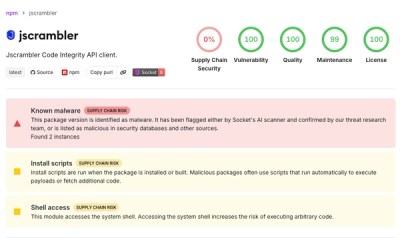
A compromised jscrambler npm release added a malicious preinstall hook that runs hidden native binaries on Linux, macOS, and Windows.

Research
/Security News
A malicious .NET package is typosquatting the Braintree SDK to steal live payment card data, merchant API keys, and host secrets from production apps.