
Company News
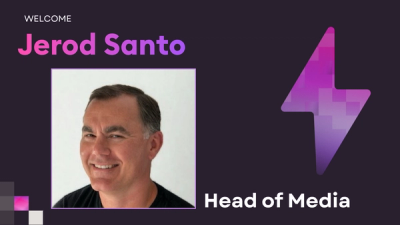
Jerod Santo Joins Socket as Head of Media
Allow myself to introduce... myself.
By Jerod Santo - Sep 14, 2026
dsh-plugin-shortcuts
Advanced tools
Fully customizable keyboard shortcuts for the dsh web client: 34 pre-registered features across session, view, clipboard, model, permission and system groups, recordable bindings, and permission cycling that leaves no trace in the transcript.
English · 中文
Keyboard shortcuts for the dsh web client. Every reachable feature is registered
in one table: the ones with a sensible default are bound out of the box
(macOS-first — Ctrl replaces ⌘ elsewhere), and the rest start unbound for
you to record. Bindings live in the browser's localStorage, so they survive a
reload and a restart.
Vendored from Ricketts-Guo/dsh-shortcuts (MIT, v1.1.4, commit
bf39241) and maintained here. See what changed.
| Group | Feature (default binding) |
|---|---|
| Session | New session ⌘N · Session switcher ⌘K · Archive current ⌘⇧A · Focus composer ⌘⇧K · Stop the running task ⌘. |
| View | Toggle sidebar ⌘B · Toggle detail panel ⌘⇧D · Toggle theme ⌘⇧L · Fullscreen · Scroll to top/bottom · Focus session search |
| Clipboard | Copy the last assistant message · Copy session title · Copy session id |
| Model | Pick model 1–9 ⌘1–⌘9 · Reasoning effort 1–5 Tab+1–Tab+5 (hold Tab) · Cycle effort |
| Permission | Cycle permission — read-only / workspace-write / full access ⇧Tab |
| System | Open settings ⌘, · Cheatsheet ⌘/ · Cycle interface language |
Features without a default binding start unbound: open Settings → 快捷键 and record any combination. The effort steps depend on the current model, and the permission cycle follows whatever preset table the deployment configures.
[!NOTE] The settings page and cheatsheet are currently labelled in Chinese; the feature set and bindings are the same whatever interface language you use.
dsh plugin --profile web add dsh-plugin-shortcuts
Then restart dsh. A ⌘K 快捷键 button next to the settings button in the
sidebar footer means it loaded.
Settings → 快捷键:
Backspace clears a binding,
Esc cancels recordingThe cheatsheet (⌘/) ends with a diagnostic panel — current session id, ⇧Tab
binding state, whether the permission service is reachable, the last permission
switch and its outcome, and the last 12 keypresses with whether the plugin
claimed them. It is there so you can tell "not bound" from "bound but the
service is missing" without opening devtools.
One FEATURES table drives everything — the settings page, the cheatsheet,
conflict detection, persistence and key dispatch are all derived from it, so a
new feature is one entry:
{ id: 'stopTask', group: '会话', label: '停止当前任务',
  description: '中断正在运行的 agent 回合', defaultCombo: 'Meta+.',
  run: () => { /* any client-side logic */ } }
Actions go through the official client services (layout, workspaces,
theme, locale, sessions, modelDirectories, session projections) rather
than private DOM structure — only "open settings" locates its trigger by a
semantic attribute.
Tab+<digit> is recognised by tracking whether Tab is held, which keeps a bare
Tab working for normal focus navigation.
Why the plugin has a host half. The official permission switcher routes
through the /permission slash command, whose lifecycle is durably logged as
command nodes — cycling permissions with a hotkey would spam the transcript.
The host half exposes a loopback route that writes through the same
permissionPresets service the command handler uses, minus the transcript
noise. The route validates the session id against the live session store and
lets permissionPresets.set reject an unknown preset, and it is not mounted at
all unless the deployment provides the permission service. dsh's web server
binds to loopback; keep it that way.
Presentation mode. This plugin extends the web client, so it is unaffected by whether tools are dispatched natively or through Code Mode.
dsh-plugin-shortcuts for this repository's naming
convention, which also changes the client bundle's loader id (it must match
the package name) and the plugin row in cordis.patch.ymlname export the loader uses for diagnosticsdsh.category, repository.directory and this bilingual README pairinstall.sh bootstrap and its shell test with the standard
dsh plugin add installnode:test: upstream drove a DOM sandbox and resolved
React through a locally installed dsh, which made them unrunnable anywhere
else. The key-resolution helpers are exported from the bundle and asserted
directly, and the shipped artifact itself is loaded through a fake module
loader.Upstream's copyright and MIT licence are kept in LICENSE.
MIT — see LICENSE.
FAQs
Fully customizable keyboard shortcuts for the dsh web client: 34 pre-registered features across session, view, clipboard, model, permission and system groups, recordable bindings, and permission cycling that leaves no trace in the transcript.
The npm package dsh-plugin-shortcuts receives a total of 17 weekly downloads. As such, dsh-plugin-shortcuts popularity was classified as not popular.
We found that dsh-plugin-shortcuts demonstrated a healthy version release cadence and project activity because the last version was released less than a year ago. It has 1 open source maintainer collaborating on the project.
Company News
Allow myself to introduce... myself.

Research
/Security News
A Twitch browser extension on Chrome and Firefox forwards users’ live OAuth session tokens through proxies controlled by a Russian bot service.

Security News
Anthropic found biased reasoning and recklessness drove Claude Mythos 5 to publish malware on PyPI and compromise a security vendor.