

Security News
US Government Forces Anthropic to Pull Claude Fable Days After Launch
Anthropic says the directive cited national security concerns over a narrow jailbreak, but offered no specific technical details.
By Sarah Gooding - Jun 13, 2026
grouter-auth
Advanced tools
Universal AI router — OAuth + API Key providers (Claude, GitHub Copilot, Gemini, Kimi, Kiro, Qwen, Cursor, OpenRouter, Groq…) behind one OpenAI-compatible local proxy
██████╗ ██████╗ ██████╗ ██╗ ██╗████████╗███████╗██████╗
██╔════╝ ██╔══██╗██╔═══██╗██║ ██║╚══██╔══╝██╔════╝██╔══██╗
██║ ███╗██████╔╝██║ ██║██║ ██║ ██║ █████╗ ██████╔╝
██║ ██║██╔══██╗██║ ██║██║ ██║ ██║ ██╔══╝ ██╔══██╗
╚██████╔╝██║ ██║╚██████╔╝╚██████╔╝ ██║ ███████╗██║ ██║
╚═════╝ ╚═╝ ╚═╝ ╚═════╝ ╚═════╝ ╚═╝ ╚══════╝╚═╝ ╚═╝
Universal AI router — OAuth + API Key providers behind one OpenAI-compatible endpoint. Run Claude Code, GitHub Copilot, Gemini CLI, Kiro, Kimi, KiloCode, Cursor and 15+ more through a single local proxy. No certificates, no MITM.





bunx grouter-auth setup
Or install globally:
bun install -g grouter-auth
grouter setup
Requires Bun ≥ 1.0
# 1. Add a connection — wizard walks you through OAuth or API key per provider
grouter add

# 2. Start the proxy daemon (router on 3099, providers on 3100+)
grouter serve on

# 3. Wire your tool to it interactively
grouter up openclaude       # arrow-key picker → provider → model
Open the dashboard at http://localhost:3099 to manage everything visually — add/remove connections, see live token usage per account, swap rotation strategy, tail logs.
Any OpenAI-compatible client works:
import OpenAI from 'openai'

const client = new OpenAI({
  baseURL: 'http://localhost:3099/v1',
  apiKey: 'any-value',
})

const res = await client.chat.completions.create({
  model: 'claude-sonnet-4-6',
  messages: [{ role: 'user', content: 'Hello!' }],
})
Anthropic SDK clients (Claude Code, Cursor's anthropic mode, @anthropic-ai/sdk, etc.) work too via POST /v1/messages — same translation/rotation/retry pipeline, native Anthropic response shape:
import Anthropic from '@anthropic-ai/sdk'

const client = new Anthropic({
  baseURL: 'http://localhost:3099',
  apiKey: 'any-value',
})

const msg = await client.messages.create({
  model: 'anthropic/claude-sonnet-4-6',
  max_tokens: 1024,
  messages: [{ role: 'user', content: 'Hello!' }],
})
Both endpoints (/v1/chat/completions and /v1/messages) are also available on every per-provider port (:3100+) — when you hit a pinned port, you can drop the provider/ prefix from the model name.
Every provider gets its own dedicated port so requests never get misrouted. The router on :3099 picks any active account; the per-provider ports (:3100, :3101, …) pin the request to that provider's pool.
| Provider | Flow | Notes |
|---|---|---|
| Qwen Code | device_code | deprecated — existing accounts still work |
| GitHub Copilot | device_code | uses your Copilot subscription |
| Kimi Coding | device_code | FREE |
| KiloCode | device_code | FREE |
| Kiro (AWS SSO) | device_code | FREE — AWS Builder ID |
| Claude | auth_code + PKCE | Claude.ai subscription |
| Codex (OpenAI) | auth_code + PKCE | fixed port 1455 callback |
| GitLab Duo | auth_code + PKCE | bring your own OAuth app |
| iFlow | auth_code | FREE — returns a long-lived API key |
| Qoder | auth_code | device-token OAuth |
| Cline | auth_code | browser redirect |
| Cursor | import_token | paste token from Cursor IDE |
| OpenCode | free / no-auth | FREE — public shared endpoint |
OpenRouter · Groq · DeepSeek · OpenAI · Anthropic · Google Gemini · NVIDIA NIM — add multiple keys per provider; all of them can round-robin.
Providers marked FREE need no credit card. Free-tier API keys (OpenRouter, NVIDIA, Gemini) are flagged with a badge in the dashboard.
grouter setup             # Interactive onboarding (add → test → serve → openclaude)
grouter add               # Wizard — arrow-key pick a provider, run the right flow
grouter list              # Table: ID, email, status, priority, expiration
grouter remove <id>       # Remove by ID prefix or email
grouter enable <id>       # Re-enable a disabled connection
grouter disable <id>      # Skip a connection without deleting it
grouter test [id]         # Check upstream reachability
grouter serve on          # Start in background
grouter serve off         # Stop the daemon
grouter serve             # Show status (router port + per-provider ports)
grouter serve restart     # Restart (kills stale processes holding the port)
grouter serve logs        # Tail the log
grouter serve fg          # Run in foreground (blocks terminal)
grouter models                 # All providers, their ports, and model IDs
grouter models <provider>      # Zoom into one + copy-paste OPENAI_* examples
                             #   e.g. grouter models claude
grouter up openclaude          # Wizard: pick provider (↑/↓) → pick model → write settings.json
grouter up openclaude --provider kiro --model claude-sonnet-4.5
grouter up openclaude --remove # Undo the integration
The wizard writes the env block to ~/.claude/settings.json and injects export lines into .bashrc / .zshrc / config.fish (or a PowerShell profile on Windows).
grouter status            # Token totals, estimated cost, active locks
grouter unlock [id]       # Clear rate-limit locks on one or all accounts
grouter config                            # Show current settings
grouter config --strategy round-robin     # fill-first (default) | round-robin
grouter config --port 3099                # Change router port
grouter config --sticky-limit 5           # Requests before rotating (round-robin)
When you add the first connection for a provider, grouter allocates a dedicated port starting at :3100. This isolates provider routing cleanly:
$ grouter serve
  ● Proxy running   →  http://localhost:3099
  providers  kimi-coding:3100   claude:3101   kiro:3102
Point your tool at the specific port if you want to pin a provider:
OPENAI_BASE_URL=http://localhost:3100/v1   # forces Kimi
OPENAI_MODEL=kimi-k2.5
Or use the router (:3099) and grouter picks from all active accounts using the configured rotation strategy.
Visit http://localhost:3099/dashboard once the proxy is running.
src/auth/providers/*.ts) implement device-code / auth-code + PKCE / auth-code / import flows; one file per provider keeps diffs small.:1455 for Codex) to catch the OAuth redirect, then shuts it down.provider_ports gets its own Bun.serve instance that forces the provider on every request.provider_data.fill-first (stay on highest-priority until it rate-limits) or round-robin (cycle with configurable stickiness).~/.grouter/grouter.db (SQLite).Want to hack on grouter? Runtime is Bun only.
git clone https://github.com/GXDEVS/grouter.git
cd grouter
bun install

bun run dev           # hot-reload, foreground proxy (bun --hot index.ts serve fg)
bun run start         # foreground proxy, no hot-reload
bun run build         # embeds logos, bundles to dist/grouter
bun run deploy        # build + bun link (refresh the globally-linked binary)
bun test              # Bun test runner
Alternative one-shot setup (installs deps + bun link in one step):
bash setup.sh
Project layout:
index.ts              # CLI entry — commander wiring
src/
├── commands/         # one file per subcommand (add, serve, list, …)
├── auth/
│   ├── orchestrator.ts
│   └── providers/    # one adapter per provider (device_code / auth_code + PKCE / import)
├── providers/
│   └── registry.ts   # single source of truth for provider metadata
├── proxy/            # Bun.serve listeners, upstream builder, translators
├── rotator/          # account selection + strategies
├── token/            # OAuth refresh
├── db/               # SQLite schema + silent migrations
├── web/              # dashboard + wizard (served as text imports)
└── update/           # update banner
scripts/
└── embed-logos.ts    # prebuild — emits src/web/logos-embedded.ts
See CLAUDE.md for the full architecture guide — request flow, provider-registry rules, database migration conventions, and Bun-first runtime defaults.
PRs are welcome. The project ships with a skill at .claude/skills/contribute/ that walks contributors through the full flow if you use Claude Code; the summary below is the same contract.
<type>/<short-kebab-description>
Lowercase, kebab-case, under 60 chars. Types:
| Prefix | Use for |
|---|---|
feat/ | new user-visible capability (new provider, CLI command, dashboard view) |
fix/ | bug fix |
hotfix/ | urgent production fix |
refactor/ | internal restructuring, no behavior change |
perf/ | performance improvement |
chore/ | deps, build, tooling |
docs/ | README, CLAUDE.md, comments |
test/ | tests only |
ci/ | .github/workflows, release pipelines |
release/ | release prep (e.g. release/v4.8.0) |
Examples: feat/add-zai-provider, fix/token-refresh-race, perf/sqlite-wal-mode, chore/bump-commander.
<type>(<scope>): <short imperative description>

<optional body — why, not what>

<optional footer — BREAKING CHANGE: …, Refs: …, Closes #123>
Rules:
git add -A.Co-Authored-By: <AI assistant> / "Generated with …" footers.auth, auth/<provider>, proxy, proxy/upstream, rotator, token, db, providers, commands, commands/<cmd>, web, web/dashboard, update, cli, build.Commit types: feat, fix, refactor, perf, chore, docs, style, test, build, ci, revert. Use wip only on private branches that will be squashed before merge.
PROVIDERS in src/providers/registry.ts (models, colors, auth type, deprecation flag).src/auth/providers/<id>.ts exporting an OAuthAdapter (device_code / auth_code + optional PKCE / import_token).src/auth/providers/index.ts.src/proxy/upstream.ts.src/public/logos/<id>.png — the prebuild step picks it up on the next bun run build.New columns on accounts go in the silent-migration ALTER TABLE block in src/db/index.ts, not in the initial CREATE TABLE — existing users already have their database.
Push: git push -u origin <branch>.
Open PR: gh pr create (title mirrors the primary commit).
PR body:
## Summary
- what changed, in plain terms
- why this approach
- anything reviewers should look at first

## Test plan
- [ ] concrete manual or automated check
- [ ] `bun test` passes (or note why it's not relevant)
- [ ] `bun run build` succeeds
Do not force-push to main. Do not --no-verify commit hooks. Do not amend a commit that was already pushed.
CI must be green before merge.
For non-trivial changes (new provider with odd OAuth flow, schema migration, rotator behavior), open an issue first so we can align on the approach before you invest time in the PR.
API.md covers /v1/chat/completions, /v1/messages, /v1/models, error envelopes, CORS, and integration recipes.CLAUDE.md covers the request flow, DB schema, and provider-registry contract.bun uninstall -g grouter-auth
# Remove stored accounts and data (optional)
rm -rf ~/.grouter
MIT © gxdev
FAQs
Universal AI router — OAuth + API Key providers (Claude, GitHub Copilot, Gemini, Kimi, Kiro, Qwen, Cursor, OpenRouter, Groq…) behind one OpenAI-compatible local proxy
We found that grouter-auth demonstrated a healthy version release cadence and project activity because the last version was released less than a year ago. It has 1 open source maintainer collaborating on the project.
Did you know?

Socket for GitHub automatically highlights issues in each pull request and monitors the health of all your open source dependencies. Discover the contents of your packages and block harmful activity before you install or update your dependencies.
Security News
Anthropic says the directive cited national security concerns over a narrow jailbreak, but offered no specific technical details.

Security News
A network of 152 Chrome live wallpaper extensions hid ad tracking and made extension-driven traffic look like Google search clicks.
Company News
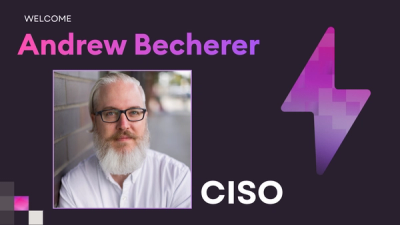
Socket’s first CISO brings deep experience securing high-growth SaaS companies as open source supply chain threats accelerate.