
Company News
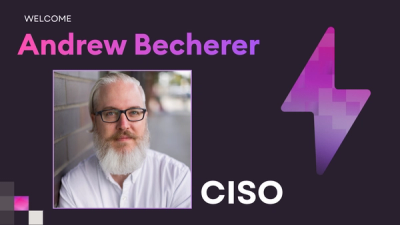
Andrew Becherer Joins Socket as Chief Information Security Officer
Socket’s first CISO brings deep experience securing high-growth SaaS companies as open source supply chain threats accelerate.
By Sarah Gooding - Jun 11, 2026
kxco-pq-cli
Advanced tools
CLI for KXCO post-quantum institution key management: generate ML-DSA-65 keypairs, rotate keys with optional on-chain anchoring, sign files, and verify signatures without writing any code.



CLI for KXCO post-quantum institution key management. Generates ML-DSA-65 keypairs, rotates institution keys with optional on-chain anchoring, signs files, and verifies signatures — without writing any code.
If you need to do any of this programmatically in your own application, use kxco-post-quantum or kxco-post-quantum-webhook instead.
npm install -g kxco-pq-cli
kxco-pq --help
You also need kxco-post-quantum available as a peer dependency:
npm install -g kxco-post-quantum
kxco-pq keygenGenerate a deterministic ML-DSA-65 keypair from a 32-byte master secret and an info label. Writes hex files to --out-dir.
kxco-pq keygen \
  --master 'ab83...64 hex chars...e7' \
  --info   'my-institution-v1' \
  --out-dir ./keys
Outputs:
keys/secret-key.hex — 4032-byte secret key, hex-encoded. Store in a secrets manager, chmod 600. Never commit.keys/public-key.hex — 1952-byte public key, hex-encoded.keys/kid.txt — 16-character hex fingerprint. This is what receivers pin.The keypair is deterministic: same --master + same --info always produces the same kid. Restore from master; never lose a key.
kxco-pq fingerprintCompute the kid for a public key without spinning up any application code.
kxco-pq fingerprint @./keys/public-key.hex
Accepts a hex string directly or a @file reference. Prints the 16-char hex kid.
kxco-pq rotateRotate to a new keypair. Derives the new keypair, builds a signed rotation manifest (signed by the outgoing key so existing receivers can verify the handoff), and produces an updated .well-known/kxco-pq-pubkey document.
kxco-pq rotate \
  --old-secret @./current-keys/secret-key.hex \
  --old-kid    a1b2c3d4e5f60718 \
  --new-master '<32-byte master for the new key, hex>' \
  --info       'my-institution-v2' \
  --issuer     'chain.kxco.ai' \
  --out-dir    ./rotated-keys
Outputs (in --out-dir):
secret-key.hex, public-key.hex, kid.txt — new keypairmanifest.json — RFC 8785 JCS-canonical rotation manifest, signed by the old kidwell-known.json — ready to publish at https://<issuer>/.well-known/kxco-pq-pubkeyAfter running:
well-known.json at the well-known URL.manifest.json at https://<issuer>/.well-known/kxco-pq-rotation/<new-kid>.json.pinnedKids[] alongside the old one.kxco-pq attest signSign any file with ML-DSA-65 and emit a self-contained JSON attestation envelope.
kxco-pq attest sign \
  --secret-key @./keys/secret-key.hex \
  --public-key @./keys/public-key.hex \
  --file       payload.json \
  --out        payload.attestation.json
The envelope contains algorithm, signerKid, issuedAt, payload (base64url), and signature (base64url ML-DSA-65). Any counterparty can verify it without trust delegation.
kxco-pq attest verifyVerify an attestation envelope against a known public key.
kxco-pq attest verify \
  --public-key  @./keys/public-key.hex \
  --attestation payload.attestation.json
Prints VALID with signer kid, issue timestamp, and payload size — or INVALID with a reason and exits 1.
Pass --relay and --identity-file to anchor the rotation to the KXCO chain in the same operation:
kxco-pq rotate \
  --old-secret    @./current-keys/secret-key.hex \
  --old-kid       a1b2c3d4e5f60718 \
  --new-master    '<new master hex>' \
  --info          'my-institution-v2' \
  --issuer        'chain.kxco.ai' \
  --out-dir       ./rotated-keys \
  --relay         https://relay.kxco.ai \
  --identity-file ./identity.json
--identity-file must be a JSON file containing { "kid": "<hex>", "secretKey": "<hex>" } — the institution identity used to sign the chain transaction. On success the command prints the transaction hash and block number alongside the standard rotation output.
kxco-post-quantum.| Package | Purpose |
|---|---|
kxco-post-quantum | Core ML-DSA-65 primitives (keygen, sign, verify, fingerprint) |
kxco-post-quantum-webhook | Runtime webhook signing and verification for Node.js frameworks |
kxco-pq-cli | Operator CLI — keygen, rotation, attestation; no application code required |
All cryptographic operations delegate to kxco-post-quantum, which wraps @noble/post-quantum — audited by Cure53 (2024). Private key bytes are never echoed to stdout.
To report a vulnerability, open a private security advisory or email security@kxco.ai.
Apache 2.0. See LICENSE.
Shayne Heffernan and John Heffernan — KXCO by Knightsbridge
FAQs
CLI for KXCO post-quantum institution key management: generate ML-DSA-65 keypairs, rotate keys with optional on-chain anchoring, sign files, and verify signatures without writing any code.
The npm package kxco-pq-cli receives a total of 46 weekly downloads. As such, kxco-pq-cli popularity was classified as not popular.
We found that kxco-pq-cli demonstrated a healthy version release cadence and project activity because the last version was released less than a year ago. It has 1 open source maintainer collaborating on the project.
Did you know?

Socket for GitHub automatically highlights issues in each pull request and monitors the health of all your open source dependencies. Discover the contents of your packages and block harmful activity before you install or update your dependencies.
Company News
Socket’s first CISO brings deep experience securing high-growth SaaS companies as open source supply chain threats accelerate.
Company News
Replit is integrating Socket Firewall into its AI-powered development experience to help protect builders from malicious open source packages.
Security News
npm confirmed a tooling bug incorrectly marked several one-character packages as security holders and said it was working on a rollback.