
Product
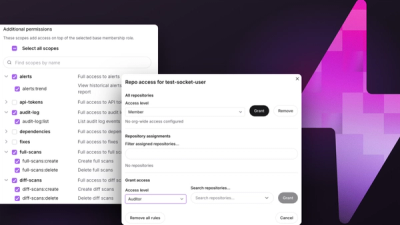
Introducing Repository Access Permissions and Custom Roles
Socket now supports Custom Roles and Repository Access Permissions so organizations can control who can access specific repositories and actions.
By Joe Werle - Jun 19, 2026
A JavaScript/TypeScript library for reading, manipulating, and writing LiPD (Linked Paleo Data) files.
LiPD (Linked Paleo Data) is a standardized data format for storing paleoclimate data. It uses a combination of JSON metadata and CSV data tables in a structured format, packaged as a zip archive with BagIt compliance.
npm install lipdjs
import { LiPD } from 'lipdjs';

// Create a new LiPD instance
const lipd = new LiPD();

// Load a LiPD file or directory of LiPD files
await lipd.load('path/to/file.lpd');
// or
await lipd.loadFromDir('path/to/directory');

// Get all datasets
const datasets = await lipd.getDatasets();

// Work with datasets
console.log(datasets[0].getName());
import { LiPD, Dataset, PaleoData, DataTable, Variable, ArchiveTypeConstants, PaleoUnitConstants } from 'lipdjs';

// Create a new dataset
const dataset = new Dataset();
dataset.setName('MyDataset');
dataset.setArchiveType(ArchiveTypeConstants.LakeSediment);

// Add paleo data
const paleoData = new PaleoData();
const table = new DataTable();
table.setFileName('mydata.csv');

// Add variables
const timeVar = new Variable();
timeVar.setName('Year');
timeVar.setUnits(PaleoUnitConstants.yr_BP);
timeVar.setValues("[1000, 2000, 3000, 4000, 5000]");

const tempVar = new Variable();
tempVar.setName('Temperature');
tempVar.setUnits(PaleoUnitConstants.degC);
tempVar.setValues("[12.5, 13.2, 11.8, 10.5, 9.2]");

// Add variables to table
table.addVariable(timeVar);
table.addVariable(tempVar);

// Add table to paleoData
paleoData.addMeasurementTable(table);

// Add paleoData to dataset
dataset.addPaleoData(paleoData);

// Create a new LiPD object and add the dataset
const lipd = new LiPD();
lipd.loadDatasets([dataset]);

// Create a LiPD file
await lipd.createLipd('MyDataset', 'MyDataset.lpd');
import { LiPD, LipdToRDF } from 'lipdjs';

// Load a LiPD file
const lipd = new LiPD();
await lipd.load('path/to/file.lpd');

// Convert to RDF
const converter = new LipdToRDF();
converter.convert('path/to/file.lpd');

// Serialize to Turtle format
await converter.serialize('output.ttl', 'turtle');
import { LiPD } from 'lipdjs';

const lipd = new LiPD();
await lipd.load('path/to/file.lpd');

// Filter by dataset name
const filtered = await lipd.filterByDatasetName('MyDataset');

// Filter by time range
const timeFiltered = await lipd.filterByTime([1000, 2000], 'any');

// Get a time series
const series = lipd.toLipdSeries();
lipdjs works seamlessly in both Node.js and browser environments. The library automatically detects the environment and uses appropriate APIs.
import { LiPD } from 'lipdjs';

const lipd = new LiPD();
await lipd.load('https://example.com/data/myfile.lpd');
// or from relative path if served
await lipd.load('/static/data/myfile.lpd');

const datasets = await lipd.getDatasets();
For loading files directly from the user's local file system, use the loadFromFile() method with HTML5 File API:
<!-- HTML file input -->
<input type="file" id="lipdFileInput" accept=".lpd" />
import { LiPD } from 'lipdjs';

// Handle file selection
document.getElementById('lipdFileInput').addEventListener('change', async (event) => {
  const files = event.target.files;
  if (files && files.length > 0) {
    const file = files[0];

    const lipd = new LiPD();
    try {
      await lipd.loadFromFile(file);

      // Process the loaded data
      const datasets = await lipd.getDatasets();
      console.log(`Loaded ${datasets.length} datasets`);

      // Access dataset information
      for (const dataset of datasets) {
        console.log('Dataset:', dataset.getName());
        const paleoData = dataset.getPaleoData();
        // ... work with the data
      }
    } catch (error) {
      console.error('Error loading LiPD file:', error);
    }
  }
});
// Load multiple files sequentially
const fileInput = document.getElementById('multipleFiles') as HTMLInputElement;
fileInput.addEventListener('change', async (event) => {
  const files = event.target.files;
  if (files) {
    const lipd = new LiPD();

    for (const file of Array.from(files)) {
      if (file.name.endsWith('.lpd')) {
        await lipd.loadFromFile(file);
      }
    }

    const datasets = await lipd.getDatasets();
    console.log(`Total datasets loaded: ${datasets.length}`);
  }
});
import React, { useState } from 'react';
import { LiPD } from 'lipdjs';

function LiPDLoader() {
  const [datasets, setDatasets] = useState([]);
  const [loading, setLoading] = useState(false);

  const handleFileLoad = async (event: React.ChangeEvent<HTMLInputElement>) => {
    const files = event.target.files;
    if (!files || files.length === 0) return;

    setLoading(true);
    try {
      const lipd = new LiPD();
      await lipd.loadFromFile(files[0]);
      const loadedDatasets = await lipd.getDatasets();
      setDatasets(loadedDatasets);
    } catch (error) {
      console.error('Error loading file:', error);
    } finally {
      setLoading(false);
    }
  };

  return (
    <div>
      <input
        type="file"
        accept=".lpd"
        onChange={handleFileLoad}
        disabled={loading}
      />
      {loading && <p>Loading...</p>}
      {datasets.length > 0 && (
        <div>
          <h3>Loaded Datasets:</h3>
          {datasets.map((dataset, index) => (
            <div key={index}>{dataset.getName()}</div>
          ))}
        </div>
      )}
    </div>
  );
}
The library exports multiple classes that can be used to work with LiPD data:
LiPD - Main class for working with LiPD filesDataset - Represents a paleoclimate datasetPaleoData - Contains measurement tables for paleoclimate proxiesChronData - Contains chronology measurement tablesDataTable - Represents a data table with variablesVariable - Represents a column of data with metadataLipdToRDF - Converts LiPD files to RDF graphsRDFToLiPD - Converts RDF graphs to LiPD filesContributions are welcome! Please feel free to submit a Pull Request.
This library is licensed under the MIT License.
LiPDJS is developed by the LinkedEarth team. It is a JavaScript/TypeScript port of the Python PyLiPD library.
FAQs
A JavaScript library for reading and writing LiPD (Linked Paleo Data) files
The npm package lipdjs receives a total of 23 weekly downloads. As such, lipdjs popularity was classified as not popular.
We found that lipdjs demonstrated a healthy version release cadence and project activity because the last version was released less than a year ago. It has 1 open source maintainer collaborating on the project.
Did you know?

Socket for GitHub automatically highlights issues in each pull request and monitors the health of all your open source dependencies. Discover the contents of your packages and block harmful activity before you install or update your dependencies.
Product
Socket now supports Custom Roles and Repository Access Permissions so organizations can control who can access specific repositories and actions.
Product
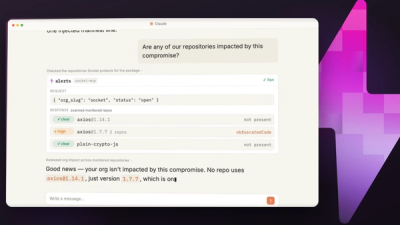
Socket MCP now lets AI assistants review org alerts, investigate threats using the Socket threat feed, and inspect package files in addition to dependency scoring.
Product
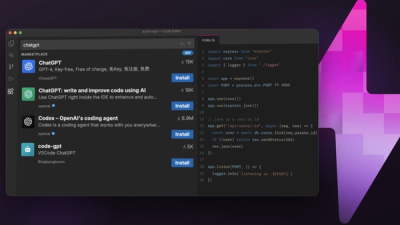
Socket Firewall blocks malicious VS Code and Open VSX extensions before install, protecting developers from compromised editor marketplaces.