

Security News
/Company News
Securing the Financial Frontier: How Capital One Uses Socket for Open Source Security
Capital One is partnering with Socket to proactively secure its open source supply chain.
By Sarah Gooding - Oct 01, 2026
RFC-2822, RFC-2045 and RFC-2049 compliant raw email message generator. Refer to https://muratgozel.github.io/MIMEText/ for full api docs.
npm i mimetext
// cjs
const {createMimeMessage} = require('mimetext')
// es
import {createMimeMessage} from 'mimetext'

// create a simple plain text email
const msg = createMimeMessage()
msg.setSender({name: 'Lorem Ipsum', addr: 'lorem@ipsum.com'})
msg.setRecipient('foobor@test.com')
msg.setSubject('🚀 Issue 49!')
msg.addMessage({
    contentType: 'text/plain',
    data: `Hi,
I'm a simple text.`
})
const raw = msg.asRaw()
/*
Date: Sun, 24 Oct 2021 04:50:32 +0000
From: "Lorem Ipsum" <lorem@ipsum.com>
To: <foobor@test.com>
Message-ID: <is6jcakaj6p-1635051032602@ipsum.com>
Subject: =?utf-8?B?8J+agCBJc3N1ZSA0OSE=?=
MIME-Version: 1.0
Content-Type: text/plain; charset=UTF-8

Hi,
I'm a simple text.
*/
There are more than one method and format to add recipients:
// adds recipient to To field by default
msg.setRecipient('Firstname Lastname <first@last.com>')
// you can specify To, Cc, Bcc
msg.setRecipient('Firstname Lastname <first@last.com>', {type: 'Cc'})
// as object, only addr is required
msg.setRecipient({addr: 'first@last.com', name: 'Firstname Lastname', type: 'Bcc'})
// shortcut methods
msg.setTo('first@last.com')
msg.setCc('first@last.com')
msg.setBcc('first@last.com')
// multiple recipient at once
msg.setRecipients('test@mail.com', 'Firstname Lastname <first@last.com>', {addr: 'multiple@mail.com'})

// similarly you can set the sender
msg.setSender('First Last <sender@mail.com>')
msg.setSender({name: 'First Last', addr: 'sender@mail.com'})
You can set html and plain text messages both and recipients mail client will render however they think appropriate.
The example below demonstrates more sophisticated email content including inline attachments and regular attachments.
const msg = createMimeMessage()
msg.setSender('sender@mail.com')
msg.setRecipients('recipient@mail.com')
msg.setSubject('Testing MimeText 🐬 (Plain Text + HTML With Mixed Attachments)')
msg.addMessage({
    contentType: 'text/plain',
    data: 'Hello there,' + EOL + EOL +
        'This is a test email sent by MimeText test suite.'
})
// specify inline attachment's content id inside img src tag. <img src="cid:[ID]">
msg.addMessage({
    contentType: 'text/html',
    data: 'Hello there,<br><br>' +
        'This is a test email sent by <b>MimeText</b> test suite.<br><br>' +
        'The term MimeText above supposed to be bold. Are you able to see it?<br><br>' +
        'Below, there should be a small image that contains little black dots:<br><br>' +
        '<img src="cid:dots123456"><br><br>' +
        'Best regards.'
})
msg.addAttachment({
    filename: 'sample.jpg',
    contentType: 'image/jpg',
    data: '...base64 encoded data...'
})
msg.addAttachment({
    filename: 'sample.txt',
    contentType: 'text/plain',
    data: '...base64 encoded data...'
})
// this is inline attachment!
msg.addAttachment({
    inline: true,
    filename: 'dots.jpg',
    contentType: 'image/jpg',
    data: '...base64 encoded data...',
    headers: {'Content-ID': 'dots123456'}
})
const raw = msg.asRaw()
/*
Date: Sun, 26 Mar 2023 13:27:15 +0000
From: <sender@mail.com>
To: <recipient@mail.com>
Message-ID: <vrye3zjqd@gozel.com.tr>
Subject: =?utf-8?B?VGVzdGluZyBNaW1lVGV4dCDwn5CsIChQbGFpbiBUZXh0ICsgSFRNTCBXaXRoIE1peGVkIEF0dGFjaG1lbnRzKQ==?=
MIME-Version: 1.0
Content-Type: multipart/mixed; boundary=giev1zqo579

--giev1zqo579
Content-Type: multipart/related; boundary=hl6rtnn5jq

--hl6rtnn5jq
Content-Type: text/html; charset=UTF-8
Content-Transfer-Encoding: 7bit

Hello there,<br><br>This is a test email sent by <b>MimeText</b> test suite.<br><br>The term MimeText above supposed to be bold. Are you able to see it?<br><br>Below, there should be a small image that contains little black dots:<br><br><img src="cid:dots123456"><br><br>Best regards.

--hl6rtnn5jq
Content-ID: <dots123456>
Content-Type: image/jpg; name="dots.jpg"
Content-Transfer-Encoding: base64
Content-Disposition: inline; filename="dots.jpg"

/9j/4AAQSkZJRgABAgEASABIAAD/2wCEAAEBAQEBAQEBAQEBAQEBAQ...........BPwAp/9k=
--hl6rtnn5jq--
--giev1zqo579
Content-Type: image/jpg; name="sample.jpg"
Content-Transfer-Encoding: base64
Content-Disposition: attachment; filename="sample.jpg"

/9j/4AAQSkZJRgABAg...........befPb4N8Hn4A/9k=

--giev1zqo579
Content-Type: text/plain; name="sample.txt"
Content-Transfer-Encoding: base64
Content-Disposition: attachment; filename="sample.txt"

SGVsbG8gdGhlcmUu
--giev1zqo579--
*/
If you ever need to get base64-websafe encoded version of the raw data, you can use asEncoded() method.
// it first gets the raw version and then encodes it.
msg.asEncoded()
MIMEText is useful for email sending platforms and end-user apps whose email clients require raw email messages.
Below you can find some examples for Amazon SES or Google Gmail.
ses client v1:
// install with npm i @aws-sdk/client-ses

// init aws sdk
const { SESClient, SendRawEmailCommand } = require('@aws-sdk/client-ses')
const ses = new SESClient({ region: 'YOUR_REGION' })
const { Buffer } = require('node:buffer')

// init mimetext
const { createMimeMessage } = require('mimetext')
const message = createMimeMessage()

// create email message
message.setSender('sender@email.com')
message.setTo('person1@email.com')
message.setSubject('Weekly Newsletter 49 Ready 🚀')
message.addAttachment({
  filename: 'bill.pdf',
  contentType: 'application/pdf',
  data: '...base64 encoded data...'
})
message.addMessage({
  contentType: 'text/html',
  data: 'Hello <b>John</b>.'
})

// send email with aws sdk
const params = {
  Destinations: message.getRecipients({type: 'to'}).map(mailbox => mailbox.addr),
  RawMessage: {
    Data: Buffer.from(message.asRaw(), 'utf8') // the raw message data needs to be sent as uint8array
  },
  Source: message.getSender().addr
}
const result = await ses.send(new SendRawEmailCommand(params))
// result.MessageId
ses client v2:
// install with npm i @aws-sdk/client-sesv2

// init aws sdk
const { SESv2Client, SendEmailCommand } = require('@aws-sdk/client-ses')
const ses = new SESv2Client({ region: 'YOUR_REGION' })
const { Buffer } = require('node:buffer')

// init mimetext
const { createMimeMessage } = require('mimetext')
const message = createMimeMessage()

// create email message
message.setSender('sender@email.com')
message.setTo('person1@email.com')
message.setSubject('Weekly Newsletter 49 Ready 🚀')
message.addAttachment({
    filename: 'bill.pdf',
    contentType: 'application/pdf',
    data: '...base64 encoded data...'
})
message.addMessage({
    contentType: 'text/html',
    data: 'Hello <b>John</b>.'
})

const params = {
    FromEmailAddress: message.getSender().addr,
    Destination: {
        ToAddresses: message.getRecipients().map((box) => box.addr)
    },
    Content: {
        Raw: {
            Data: Buffer.from(message.asRaw(), 'utf8')
        }
    }
}
const result = await ses.send(new SendEmailCommand(params))
// result.MessageId
// init google api sdk
const {google} = require('googleapis')

// create email message
const {createMimeMessage} = require('mimetext')
const message = createMimeMessage()
message.setSender('sender@email.com')
message.setTo('person1@email.com')
message.setSubject('Weekly Newsletter 49 Ready 🚀')
message.addAttachment({
    filename: 'bill.pdf',
    contentType: 'application/pdf',
    data: '...base64 encoded data...'
})
message.addMessage({
    contentType: 'text/html',
    data: 'Hello <b>John</b>.'
})

// send email
google.auth
  .getClient({scopes: ['https://www.googleapis.com/auth/gmail.send']})
  .then(function(client) {
    client.subject = 'sender@email.com'

    const gmail = google.gmail({ version: 'v1', auth: client })

    gmail.users.messages
      .send({
        userId: 'me',
        requestBody: {
          raw: message.asEncoded()
        }
      })
      .then(function(result) {
        // result.id
      })
      .catch(function(err) {

      })
  })
Most of the methods raises MIMETextError in case of invalid input. You can catch them and handle them accordingly.
try {
  message.setTo({prop: 'invalid'})
} catch (e) {
  e instanceof MIMETextError === true
}
If you're interested in contributing, read the CONTRIBUTING.md first, please.
Version management of this repository done by releaser 🚀
Thanks for watching 🐬

FAQs
RFC-5322 compliant, fully typed and documented email message generator for javascript runtimes
The npm package mimetext receives a total of 1,731,936 weekly downloads. As such, mimetext popularity was classified as popular.
We found that mimetext demonstrated a healthy version release cadence and project activity because the last version was released less than a year ago. It has 1 open source maintainer collaborating on the project.
Security News
/Company News
Capital One is partnering with Socket to proactively secure its open source supply chain.
Security News
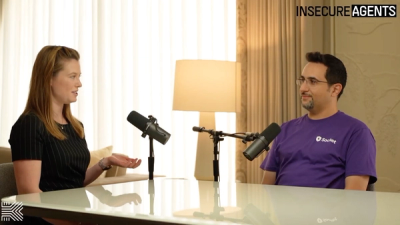
Socket CTO Ahmad Nassri discusses how to keep AI agents from bypassing package blocks, limit credential access, and monitor their actions.

Security News
GPT-6 Astra tried to plant malicious code in simulated open source projects using fake GitHub accounts and deceptive PRs during an assigned CTF challenge.