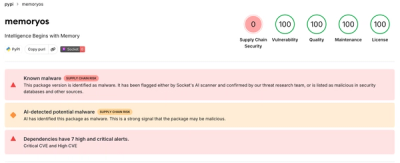
Mojulo
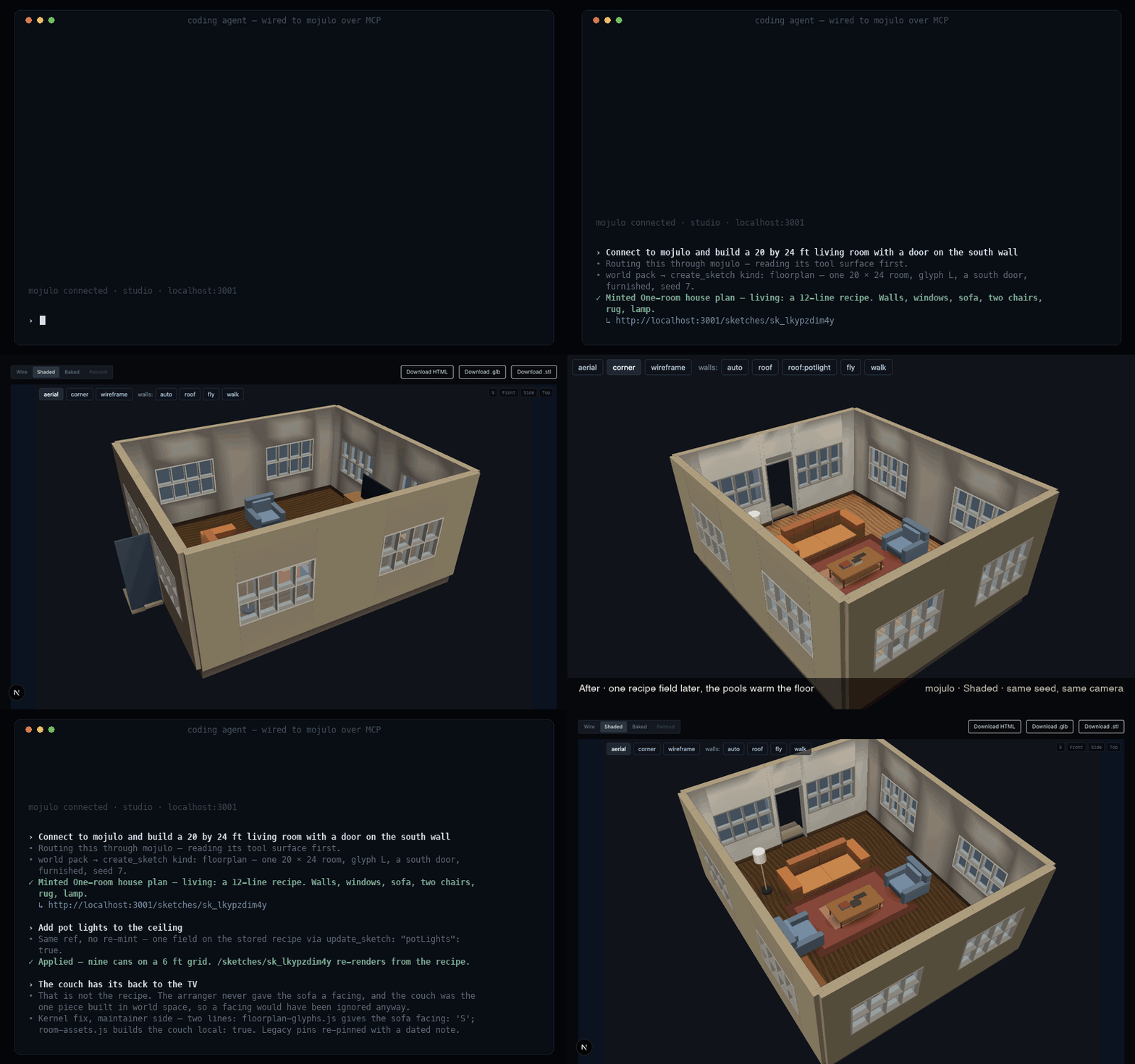
Mojulo is a 3D compiler for coding agents: an MCP server that runs wherever your agent runs, on your machine or in the throwaway Linux box it gives itself, where everything your agent makes is stored as a small recipe (the source), compiled back to the same geometry on every read, and emitted to Godot, Blender, STL and more. A compiler, not a generator; a recipe minted in a box re-mints byte for byte at home.
npx mojulo init
That wires mojulo into the coding agents on this machine (Claude Code, Codex, Claude Desktop — one yes/no each) and opens the dashboard. Node 22.12+. No API key; your agent is the reasoning loop.
You talk to the agent you already run; it does the reasoning, and mojulo is the machine it works in. Build objects, worlds, and games by conversation. An object blocks out at literal scale, a world is a place you can walk, a level is a world under a game contract, a game composes the levels — and music folds in as an asset, synthesized from seeded math with no samples. Each rung is a small deterministic recipe: readable, seeded to regenerate identically, never a render.
Two pipelines out. DIGITAL: worlds, levels and scenes render dependency-free in the browser and export to Godot as a real project, to Unity and Unreal as a data pack plus importer (each with an advisory gate when the engine is installed), and to Blender as an art-pass pack — with .glb and OpenUSD for everything else. PHYSICAL: objects, vehicles and wordmarks export as print-ready STL or 3MF at true scale — mm units, z-up, slicer-ready, with a slicer gate that stamps what it measured.
Mojulo is the upstream that feeds the tools you already use. It does not try to out-render a game engine, and it is not just an exporter: the recipe is where the thing is born and re-renders; the engine or the printer is where it is optionally finished. Every handoff carries a ledger of what did not travel.
Not a second brain — a body. Your agent is the only intelligence in the loop. Mojulo holds state, runtime, and the audit trail, and needs no LLM credentials of its own. Optional local workers — Blender, a slicer, a mesh sculptor — are yours to host and never dependencies.
The bins, one install:
mojulo — stdio MCP server (npx -y mojulo, wired into Claude Code, Codex, or any other MCP host); also the installer and a CLI front door (below).mojulo-ui — local dashboard (npx -y -p mojulo mojulo-ui).mojulo-config — provider key CLI, only needed for directed images or the optional chatbot pack.
mojulo and mojulo-ui share the same ~/.mojulo/ state, so anything you mint from your agent shows up in the dashboard immediately.
Quickstart
Prerequisite: Node.js 22.12+ (node --version). Everything below runs through
npx, which ships with Node — if you don't have it, install it from
nodejs.org, or ask your coding agent to install it for you.
No provider key: your agent is the reasoning loop. Verified on macOS (Apple Silicon),
on native Windows (init and a first render, under Claude Code), and, for a cold
install, on Linux x64 and arm64.
npx mojulo init
First install is the big one: npx pulls a ~27 MB tarball plus its native dependencies
(about 590 MB on disk; 2.0.6 measured 885 MB before the embedding runtime became opt-in,
below). Measured sizes, lazy downloads, and what each engine leg
needs: docs/tech-requirements.md.
Why these dependencies. The install is mostly two things, and all of them run on your machine.
puppeteer-core drives a local headless Chrome for stills and bakes; the browser
itself is fetched on first use, or skipped if you already have Chrome. better-sqlite3 is the one
database file under ~/.mojulo/. The local search model behind semantic_search
(@huggingface/transformers on onnxruntime-node, which ships binaries for every platform in one
package) is the opt-in mojulo install recall; without it semantic_search ranks lexically over the
same index. Nothing in that list reaches the network on its own. The per-dependency sheet, with
sizes, is in the same tech-requirements page.
CLI
The same mojulo bin doubles as a command-line front door over the same
engine and data — no agent, no dashboard, no API key required. Useful for
spot checks, cron jobs, and CI:
npx mojulo tools
npx mojulo tools pack_object
npx mojulo packs
npx mojulo help export_model
npx mojulo call version
npx mojulo call export_model --json '{"ref":"sk_…","format":"3mf"}'
npx mojulo pack_object
Arguments can be inline JSON (--json '{…}', @file.json, or - for
stdin) or per-property flags derived from the tool's schema
(--theme dungeon --seed 7; flags win over --json). --timeout <ms>
bounds long-poll tools (exit code 124), --quiet keeps only the exit code
(0 success, 1 tool error, 2 usage). Results print to stdout as-is, so
npx mojulo call version | jq . works; diagnostics go to stderr. Bare
npx mojulo remains the stdio MCP server.
Where it runs
Mojulo runs wherever your agent runs, and a recipe minted in one place re-mints byte for byte in the
other. Two shapes, one install.
In your agent's box, nothing on your machine. One sentence to the agent installs mojulo in the
throwaway Linux box it gives itself:
- Claude Code on the web, Grok chat: Open a Linux box and install the mojulo npm package in it.
- ChatGPT: On work mode, open a Linux box and install the mojulo npm package in it.
All three have been run this way. You get the same recipes and the same exports, handed back as
files: the export result names this host's door, an artifact, a PR or a file card. The box has no
dashboard you can reach, a scene-to-PNG bake needs a browser it may not be allowed to fetch, and it is
gone when the session ends, so ask for the bundle (one zip: world.html, mesh, print STL for
literal-scale objects, recipe.json, README) and keep the recipe. Claude Code on the web built a
47-part phone at true scale this way and handed back the glTF; Grok chat's sandbox minted a city from
the shell. Blender installs in those boxes too.
On your machine: macOS, Windows, Linux. npx mojulo init wires mojulo into the agents it finds,
opens the dashboard at localhost:3001, keeps everything under ~/.mojulo/, and probes your PATH for
the optional local workers (Blender, a slicer, OpenSCAD, the game engines). This is the whole loop, and
where a recipe from a box comes home to.
Three add-ons, the same choice in both places:
| creative (on by default) | plain npm install | worlds, audio, wordmark fonts, exact booleans, OpenSCAD in-process, sharp for skins and sprite sheets. npm install --omit=optional sheds it; the kernel still mints diagrams, floorplans and workbench solids and exports GLB and STL. |
| recall | mojulo install recall | the embedding model behind semantic_search. Without it, search still answers by the words in your ask, and most sessions never need more: the agent reads the tool index and the vocab cards directly. About 480 MB plus a 130 MB model, kept under ~/.mojulo/ across upgrades. |
| chatbot | mojulo install chatbot | the bot factory: build, deploy and operate chatbots. Needs an LLM key of its own and Docker for the default deploy, so it is for your machine, not a temporary box. Installs recall first. |
mojulo install with no argument prints which are present.
What you can make
- "Model me a bracket that fits this shelf" → a solid at literal scale on the workbench: lathes, sweeps, extrudes, fields; a hole is a line in the recipe; parts seat by declared relation. Measured without exporting, then out as print-ready STL or 3MF with process-aware print advisories — the conversation ends at the printer.
- "A posed archer" / "a wolf, mid-stride" → figures and animals on one armature, with gaits and emotes; rigs export as glTF clips, skinned meshes, or VRM humanoids.
- "A six-storey building with a set-back penthouse" / "a walkable city at dusk" → furnished floorplans that stack, bespoke buildings, caves and dungeons, cities, transit hubs, campuses, landscapes — every one a place you can walk, and every one exportable.
- "Make me a game" → composition: levels, music, and figures bound to a typed store with rules — playable standalone, or exported as a Godot project, a Unity pack, or an Unreal pack. 2D reducer games land in the built-in Arcade.
- "An ambient loop for it" → music and SFX from seeded math, never samples; worlds opt in to soundtracks and footsteps; a score exports as WAV or MIDI.
- "Here's a photo of the room" → your agent is the vision adapter: it recovers a room's perspective, a figure's pose, or an object's part-graph as a scaffold. No vision key; the image never reaches mojulo.
Iterate in place — update_sketch changes a field on the stored recipe; nothing is re-minted — and keep what you tuned: save_recipe writes it to a cookbook of plain files in a local git repo with no remote, recallable by intent in a later session. Attach the public recipe book to add chapters and whole new kinds from disk.
Also in the box, present by default and never in the way: diagrams and charts, directed images an external model paints, publications, research, plans, local apps whose inference parks back on your agent, and connected services over the MCPs you already run. The chatbot factory is opt-in.
Why it's different
- Keyless. Installed from npm, runs on your machine, nothing to sign up for. The stdio MCP has no network surface; the HTTP route is bearer-gated and 404s without a key.
- Recipes, not renders. Every artifact is a seeded deterministic recipe — diffable, replayable, re-mintable on any mojulo host. Exports and painted renders are derived files with provenance, never the sovereign artifact.
- Two gates, never conflated. A machine gate imports the pack headless when the engine or slicer is installed and stamps what it measured; a human looking at the result is the eyes gate. Gates advise; none refuse, and none claim the other one passed.
- It remembers why — where that matters. Connected services and apps are sealed beside an append-only record of intent (the contextmap), so a fresh session improves the existing wiring instead of minting a stranger next to it. Studio artifacts are recalled by ref, by semantic search, and by their cookbook card.
- Pay for what you install. The kernel plus the creative studio is the default; the embedding model behind vector search (
mojulo install recall) and the chatbot factory (mojulo install chatbot) are opt-in. Uninstalled packs neither list nor run, so your agent's context isn't spent on tools this host doesn't have.
Dashboard
npx -y -p mojulo mojulo-ui
npx -y -p mojulo mojulo-ui --port 3999
npx -y -p mojulo mojulo-ui --no-open
Same primitives as the MCP, different face: Studio leads and opens by default — browse the Library, walk your worlds, play your games in the Arcade, review motion, beats, and voice at a glance — with Ideate (research, plans, stashes) beside it and Operate tiles appearing only once something actually runs there. It renders state and hands authoring back to your agent — the workshop is driven from the conversation.
The dashboard starts in English but ships fully translated in every locale under messages/, including right-to-left scripts — switch anytime under Settings → Language; the choice is remembered per browser.
Stability
The five paradigm loops (media · game · connected service · app · bot) and the recipe format are the stable surface: additive-only DB migrations, deterministic re-render of stored recipes, loopback-only transport. A kernel's output for given params is a compatibility promise over already-minted rows. The creative vocabularies keep growing in minor releases. See the changelog.
More
- Full repo and docs: https://github.com/zombico/mojulo
- What it needs: docs/tech-requirements.md (footprint, engine legs, slicers, workers, platform notes)
- The handoff doctrine: docs/bicycles.md (machine gate, eyes gate); the Unreal worked example: docs/examples/unreal-night-run/
- Optional workers: Blender, slicers, mesh sculptors, image, voice
- Architecture: docs/MCP-ARCHITECTURE.md (the headless control surface), docs/AGENT-REFERENCE.md (the creative substrate, data layout), docs/POLYGONIZER-SYNTHESIS.md (the geometry substrate)
- MCP integration: docs/mcp-integration.md; catalysts: docs/catalysts.md; the optional chatbot pack: docs/chatbot/
- Terms & responsibility model: TERMS.md, docs/responsibility-model.md
License
Apache License 2.0