

Security News
/Company News
Securing the Financial Frontier: How Capital One Uses Socket for Open Source Security
Capital One is partnering with Socket to proactively secure its open source supply chain.
By Sarah Gooding - Oct 01, 2026
Open-source CLI extension for Claude Code, OpenCode, Antigravity, Kimi Code, and Codex. Adds an MCP server with a codebase knowledge graph, persistent memory, multi-agent coordination, and reusable slash commands. Apache 2.0 licensed. See https://github.c

An open-source MCP server that extends Claude Code with a codebase knowledge graph, persistent memory, and multi-agent coordination.
Apache 2.0 licensed · Monomind keeps its own state on your machine; the AI tools it drives send prompts and code to their model providers — see [Trust & Security](#trust--security)





🏢 Orgs · 🚀 Quickstart · ⚡ Mastermind · 🧩 Agents & Skills · 📋 Commands · 🏗️ Architecture
Monomind is an open-source CLI and MCP server that plugs into Claude Code, OpenCode, Antigravity, Kimi Code, and Codex via the standard Model Context Protocol. It adds capabilities these assistants don't ship with out of the box:
monomind org run starts a real SDK-backed daemon with policy-gated role agents and a live dashboard.[PICK] line, and monomind pick or the pick MCP tool return it on request. See Agents & Skills and Routing./mastermind:* commands inside Claude Code.npm install -g monomind # Apache 2.0 licensed; runs locally and keeps its state locally
cd your-project && monomind init
claude mcp add monomind -- npx -y monomind@latest mcp start
monomind init installs the core pack: the everyday /mastermind:* workflows (plan, execute, review, debug, do, …), 20 core agents and the memory, GitHub and browser toolkits, small enough that Claude Code shows every description. Everything else ships as opt-in packs (orgs, org-admin, swarm, github, testing, specialists, business, extras): pick them with monomind init --packs orgs,github or --all-packs, or add one later with monomind packs add <pack>. monomind packs list shows each pack and how much of the listing it uses.
monomind init sets up only the coding systems installed on your machine: Claude Code, Antigravity, OpenCode, Kimi Code and Codex each count when their CLI is on your PATH or their config directory is in your home, and Claude Code is the default when none is found. A re-run also keeps every system the project already has. It prints what it detected; --platforms claude,codex names the systems yourself and --all-platforms writes all five. It never runs npm install or edits your package.json: the code graph uses the @monoes/monograph copy bundled with the CLI.
monomind init itself writes .mcp.json (and the configs of the other coding systems it sets up) pinned to the installed version, so a start reuses the npx cache instead of re-resolving @latest; --pin latest keeps the floating monomind@latest, and monomind init --force re-pins after an upgrade.
Nothing extra to do when Antigravity is installed (agy/gemini on PATH or ~/.gemini): monomind init then writes GEMINI.md, .gemini/rules/, and a live status bar wired through .gemini/settings.json. The MCP server config is shared with Claude Code (.mcp.json). See Antigravity guide →.
monomind init --target opencode # initialize only OpenCode
monomind init sets up the coding systems it detects on your machine (CLI on PATH or config directory in your home), OpenCode included when it is installed. --target opencode initializes only OpenCode; the legacy --opencode flag remains an alias. You get the same MCP tools, agent roster, commands, skills, and security gates, plus a /monomind-status command. See OpenCode guide →.
monomind init --target kimicode # initialize only Kimi Code
monomind init includes Kimi Code when it is installed (kimi on PATH or ~/.kimi). --target kimicode initializes only Kimi Code; the legacy --kimicode flag remains an alias. You get the same MCP tools, agent roster, skills, and commands (as project-level flow skills). Install the generated plugin once for /monomind:* slash commands and security gates: /plugins install ./.kimi-code/plugin. See Kimi Code guide →.
codex login
monomind init --codex
This emits a project-scoped .codex/config.toml that registers Monomind's MCP
server, plus AGENTS.md with Codex-specific guidance. Codex must trust the
project before it loads project-scoped configuration. To run persistent
Monomind organizations through Codex, set "runtime": "codex" in the org
definition.
Plain monomind init sets up only the coding systems installed on your machine (Codex when codex is on PATH or ~/.codex exists), and Claude Code when it finds none; --all-platforms sets up all five and --platforms claude,codex names them. Init never runs npm install in your project.
Use monomind init --target codex (or --codex) to initialize only Codex. See Codex guide →.
| Concern | Answer |
|---|---|
| License | Apache 2.0 — use it however you want |
| Data privacy | Monomind runs locally and stores its state locally: memory, code graph, document index and org state, embedded by a local model. The AI tools it drives (Claude Code, Codex, OpenCode, Kimi Code, Antigravity, and org roles, whose model calls monomind makes itself when a role uses an AI-SDK provider) send your prompts and code to their model providers, including the memory and Second Brain excerpts injected into those prompts. Monomind itself also makes a few outbound calls: the one-time embedding model download, the first-use installs of the Claude SDK and (without an installed browser) Chrome, the npm update check, and opt-in features; launching it through npx monomind@latest adds an npm registry lookup on every start, and opening the dashboard loads its scripts and fonts from public CDNs. See doc/privacy.md for the complete list of what's sent, when, and how to opt out of each. |
| Dependencies | Standard npm packages. A fresh npm install monomind (Linux x64) adds 263 packages and 938 MB of node_modules, most of it onnxruntime-node (548 MB, local embeddings) and onnxruntime-web (141 MB). Four packages run install scripts, and two of them download binaries: onnxruntime-node (CUDA libraries from NuGet on Linux x64; ONNXRUNTIME_NODE_INSTALL=skip skips them) and better-sqlite3 (a prebuilt addon from GitHub). Two heavy pieces are installed on first use instead, once, into ~/.monomind/deps and never into your project: the Claude Agent SDK with its Claude binary (about 300 MB, on the first Claude org role or agent exec --runtime claude), and Chrome for monomind browse (about 400 MB, only when no Chrome, Chromium or Edge is installed). MONOMIND_NO_AUTO_INSTALL=1 turns that off and prints the install command instead. Native addons: better-sqlite3 and onnxruntime-node; tree-sitter (web-tree-sitter) and sql.js are WASM. Full breakdown: doc/privacy.md. |
| Permissions | Registers as an MCP server — Claude Code controls what tools are available and prompts you before executing anything sensitive. |
| Source | Fully open. Read every line at github.com/monoes/monomind. |
| Maintenance | Active development, regular releases on npm. |
This is the headline feature.
monomind org runstarts a persistent, SDK-backed daemon that runs an autonomous agent organization — roles, hierarchy, policy-gated tool access, a live dashboard — until you stop it.
Every business function needs a team. Define the org once as a JSON file — goal, roles, who reports to whom, per-role tool/file/budget policy — then run it as a real background daemon backed by the Claude Agent SDK. It persists across sessions, streams live into the dashboard Claude Code auto-starts for the project, and can discover and message other Monomind orgs running on the same machine.
flowchart TD
    U(["You"])
    DEF["org.json\nGoal + roles + policy"]
    RUN["monomind org run\nStart SDK daemon"]
    BOSS["Boss Agent\nAgent SDK session"]
    W["Writer"]
    S["SEO Specialist"]
    R["Reviewer"]
    DASH[("Dashboard\n:4242\nauto-started by\nClaude Code hook")]
    XORG[("Other orgs\ncross-process")]

    U --> DEF --> RUN --> BOSS
    BOSS -->|spawns| W
    BOSS -->|spawns| S
    BOSS -->|spawns| R
    RUN -->|forwards events| DASH
    RUN <-.->|--cross-process| XORG

    style BOSS fill:#00D2AA22,stroke:#00D2AA
    style DASH fill:#F59E0B22,stroke:#F59E0B
    style XORG fill:#8B5CF622,stroke:#8B5CF6
# .monomind/orgs/<name>.json defines the org: goal, roles, policy.
# See .monomind/orgs/sample-team.json in a fresh `monomind init` for a working example.
# Open the project in Claude Code first — a SessionStart hook auto-launches
# the dashboard at http://localhost:4242 if it isn't already running.

monomind org run content-team --task "Build and publish 3 blog posts per week"

# ✓ Boss agent (Claude Agent SDK session) spawns, reads the org goal,
#   assigns work to role agents, coordinates until the task completes
#   or you stop it. Every event streams into the dashboard above.

monomind org status content-team    # runtime state (detects crashed daemons)
monomind org stop content-team      # request a graceful stop
monomind org list                   # every org + roles, schedule, status
monomind org logs content-team --follow      # live event stream in the terminal
monomind org report content-team             # outcome, per-role tokens vs budget, assets
monomind org questions content-team          # what agents asked via ask_human
monomind org answer content-team q-123 "yes" # answer live or queued — no dashboard needed
monomind org create blog --template content-team --goal "3 posts/week"   # scaffold from a template
monomind org validate blog                   # schema + structural checks before running
monomind org run blog --dry-run              # preview each role's exact briefing
Orgs carry context between runs: the coordinator records every run's outcome (org_complete), the next run is briefed on it, and all agents can query accumulated cross-run memory with org_recall — a scheduled org starts each cycle with what earlier cycles recorded instead of starting cold. Crashed agent sessions restart automatically with backoff.
| What | How |
|---|---|
| OrgDaemon | Hosts one or more orgs in a single process; real Claude Agent SDK sessions per role, not simulated |
| PolicyEngine | Per-role gates on tool access, file read/write scope, web access, token budget — enforced, with a full audit trail |
| Dashboard | org run forwards every event to the control server on :4242 (found via .monomind/control.json) — that server is auto-launched by a Claude Code SessionStart hook, not by any CLI command; there's no separate per-org dashboard process |
| Cross-process comms | --cross-process (default on) lets orgs on different monomind processes/projects discover and message each other |
| Scheduling | monomind org serve hosts orgs whose definition has a schedule field, running them on interval |
monomind org run <name> [--task "..."] [--cross-process]  # start a daemon
monomind org stop <name>            # request a running org to stop
monomind org status [name]          # runtime state for one or all orgs
monomind org list                   # list every org + status
monomind org serve [--cross-process]  # host-only mode, runs scheduled orgs
monomind org delete <name>          # remove an org
monomind org memory <name>          # cross-run KG memory: stats (default) | search <q> | rules | rollback <run-ref>
org has 39 subcommands total (skills, run, stop, pause, resume, reload, status, serve, supervisor, test-loop, logs, events, watch, report, memory, costs, inbox, flow, questions, approvals, answer, approve, deny, gates, gate-approve, gate-reject, replay, resume-from, branch, decisions, create, validate, migrate, list, delete, mark-complete, role, sign, approve-paths).
Note:
/mastermind:runorgdelegates directly to the Org Runtime daemon (the same path asmonomind org run) — there is no boss agent, no monotask board, and no manual curl calls in this path./mastermind:runorgconverts legacy-format org config files withmonomind org migratebefore starting the daemon. New orgs should usemonomind org run(or/mastermind:runorg) against a hand-authored.monomind/orgs/<name>.json.
For code, the /mastermind:* workflows can loop instead of running once. Add --tillend to /mastermind:review, /mastermind:improve, /mastermind:debug and most other workflows (/mastermind:help lists them) to repeat until a round finds nothing left to do.
/mastermind:review --tillend                     # review → fix → verify until a round finds nothing
/mastermind:improve --repeat 3 the auth flow     # exactly 3 improvement passes
/mastermind:plan add rate limiting               # then /mastermind:execute the plan
| Flag | Purpose |
|---|---|
--tillend | Repeat until an empty round (zero findings, zero actions) |
--repeat <N> | Repeat exactly N times |
--maxruns <N> | Safety cap for --tillend (default 50) |
--wait <seconds> | Pause between runs |
# 1. Install
npm install -g monomind

# 2. Initialize in your project
cd your-project
monomind init

# 3. Wire into Claude Code as an MCP server
claude mcp add monomind -- npx -y monomind@latest mcp start

# 4. Health check
monomind doctor --fix
Semantic routing (opt-in download): embedding-based task routing needs a local model (~88 MB,
Snowflake/snowflake-arctic-embed-xsvia transformers.js).monomind initasks interactively whether to download it — the default is No, and non-interactive/CI installs never download it silently. Declining is fine: agent picking (monomind pick, the[PICK]hook line,hooks route) never needs the model; onlyroute semantic,hooks_route_semanticandagent spawn --taskuse it, after the picker, and fall back to keyword and hash matching without it. Fetch it any time withmonomind download-embeddings(ornode scripts/download-embedding-model.mjson a source checkout).
Native module install blocked? If
doctorreports a missingbetter-sqlite3binding (Could not locate the bindings file, or npm logs an install script that was "blocked because it is not covered by allowScripts"), your npm'sallowScriptspolicy blocked its native build — this isn't a Monomind bug. Runnpm install-scripts approve better-sqlite3 && npm rebuild better-sqlite3, then re-runmonomind doctor --fix.
Open Claude Code. The core /mastermind:* workflows are available (all 40 come with monomind packs add or init --all-packs):
/mastermind:review --tillend      # review and fix until nothing is left
monomind org run sample-team      # run your first AI org (init writes a runnable sample-team.json — edit it, or run it as-is)
/mastermind:help                  # show all commands
Drop documents (Markdown, TXT, PDF, DOCX) anywhere in your project and run monomind init — the Second Brain activates itself. No flags, no configuration, no accounts. Indexing and search run on your machine: a local embedding model (Alibaba-NLP/gte-modernbert-base, 768-dim, via transformers.js) and a local SQLite vector store. Your notes are indexed and stored locally — but the excerpts search returns are injected into your AI tool's prompts, and go to its model provider with the rest of the prompt.
From then on, every substantive prompt you type in Claude Code is automatically answered with your own knowledge in context — a hook retrieves the most relevant excerpts semantically (the always-on dashboard keeps the model warm, ~60ms per lookup) and injects them before Claude starts thinking. Ask "when do new parents get time off" and the parental-leave section of your handbook is already on the table, even though you never used the word "leave".
monomind doc ingest ./notes        # index documents (init + session-start do this automatically)
monomind doc search -q "pricing psychology in checkout"   # semantic search, by meaning not keywords
monomind doc list                  # what's indexed
monomind doc export                # portable OKF bundle — move your brain between machines
Optional spreadsheet support:
monomind initnever downloads SheetJS. To extract.xlsx,.xls, or.odsfiles, install it only when you need it: runpnpm add xlsxin a project using a local/npx Monomind install, ornpm install -g xlsxwhen Monomind is installed globally. Until then, spreadsheet files are skipped while the rest of document ingestion continues.
And it follows you across projects. Ingest a path from outside the current project (monomind doc ingest ~/notes, or add --global) and it lands in your personal global brain at ~/.monomind/global-brain (override with MONOMIND_GLOBAL_BRAIN_DIR) — kept as a sibling of ~/.monomind/projects specifically so monomind cleanup --data can never prune it — searchable from every project on the machine. All retrieval (CLI search, per-prompt injection, the dashboard) merges both stores automatically, with project knowledge winning ties and global hits labeled [global]. doc export --global moves your whole brain between machines as an OKF bundle — a file you move yourself, with no cloud service involved.
Retrieval quality is a tested invariant, not a hope: a golden-set eval (paraphrase queries against notes written in different vocabulary) runs in CI with an 80% recall bar.
Privacy note: the embedding model (~90MB) is fetched once from HuggingFace's CDN when your first document is indexed, then cached locally forever. That download is the only outbound request the Second Brain's indexing and search make — your documents and queries are processed locally. Excerpts injected into a prompt are a different matter: they go to your AI tool's model provider with that prompt. Offline at first index? Search degrades gracefully to keyword matching and
monomind doctortells you how to warm up later.
Which model where? Monomind uses two local embedding models.
Snowflake/snowflake-arctic-embed-xs(~88MB) serves semantic task routing only. Everything the memory bridge embeds — both the Second Brain document index and the persistent memory store, which share that one bridge — usesAlibaba-NLP/gte-modernbert-base(768-dim, ~90MB); there is no separate document model. See Embeddings for the per-subsystem detail.
Every session, every agent, every org writes to a persistent memory store that survives across sessions — text plus embedding vectors in local SQLite (better-sqlite3, pure-WASM fallback), embedded by a local model. No cloud vector database and no API keys; the store itself uploads nothing. Entries recalled into a prompt go to your AI tool's model provider with that prompt. The next time you run anything, the store holds what earlier sessions recorded about what was built, what failed, and which patterns worked.
graph TD
    L0["L0 - In-flight\nCurrent session drawers\nephemeral"]
    L1["L1 - Working\nCross-session memory\nBM25 K1=1.5, B=0.75"]
    L2["L2 - Long-term\nEpisodic store\nSemantic recall"]
    L3["L3 - Shared\nCross-agent namespace\nFederated swarm reads"]

    L0 -->|promoted| L1 --> L2 --> L3

    style L0 fill:#00D2AA11,stroke:#00D2AA
    style L1 fill:#F59E0B11,stroke:#F59E0B
    style L2 fill:#8B5CF611,stroke:#8B5CF6
    style L3 fill:#EF444411,stroke:#EF4444
monomind memory store --key "key insight" --value "…" --namespace my-project
monomind memory search "auth implementation"     # semantic (local embeddings) with keyword fallback
Before touching any file, Monomind queries Monograph — a SQLite-backed knowledge graph of your entire codebase. Nodes are files, classes, and functions. Edges are imports, calls, and dependencies.
/mastermind:understand          # build the graph
/mastermind:graph-status        # nodes · edges · freshness

# Inside Claude Code, Monograph runs automatically:
# → "what files does auth.ts import?"
# → "what breaks if I change UserService?"
# → "find all callers of validateToken()"
19 default MCP tools (+27 advanced via MONOGRAPH_MCP_ADVANCED=1). Impact analysis. Community detection. Zero grep.
Monomind wires 28 hook subcommands into Claude Code across edit, task, command, and session lifecycle events — logging edits and outcomes to local pattern files and picking agents.
flowchart LR
    CE["Claude Code\nEvent"] --> H["Hook Router"]
    H --> P["pre-edit\npre-task\npre-command"]
    H --> SS["session-start\nsession-end\nnotify"]
    H --> I["route\nlog outcomes"]
    H --> T["teammate-idle\ntask-completed"]

    I --> DB[("patterns.json\nmemory store")]
    DB -->|next session| CE
9 on-demand workers run at session start (staleness-gated, refreshed when older than 6 hours): health · ddd · security · cache · progress · map · audit · consolidate · reflexion.
Every agent boundary is defended by monofence-ai — real-time detection of prompt injection, jailbreaks, homoglyphs, base64 evasion, multi-turn escalation, and PII leakage.
import { isSafe, createMonoDefence } from 'monofence-ai';

isSafe('Ignore all previous instructions');  // → false (~0.04ms)

const fence = createMonoDefence({ enableContextTracking: true });
const result = await fence.detect(userInput);
// result.safe · result.threats · result.overallRisk
In Claude Code, the live pre-bash/pre-write gate is wired up via its own lazy-loaded integration in .claude/helpers/handlers/gates-handler.cjs (MONOMIND_MONOFENCE_GATE=off to disable) — not via monofence-ai's registerSecurityHooks() API, which is a separate integration point consumed only by @monoes/hooks' in-process HookExecutor.
Everything runs from inside Claude Code via slash commands. Here's the highlight reel:
| Command | What it does |
|---|---|
/mastermind:plan | Comprehensive implementation plan |
/mastermind:execute | Execute a written plan step by step, then hand off to review |
/mastermind:review | Iterative review until zero findings |
/mastermind:debug | Systematic root-cause debugging |
/mastermind:improve | Analyze a component and write improvement tasks |
/mastermind:release | Versioning, changelog, deployment coordination |
/mastermind:worktree | Feature work in isolated git worktree |
| Command | What it does |
|---|---|
monomind org run <name> | Start an org as a real SDK-backed daemon |
monomind org status / list | Runtime state for one or all orgs |
monomind org stop <name> | Request a graceful stop |
monomind org approve <name> / deny | Act on pending approval requests |
| Command | What it does |
|---|---|
/mastermind:marketing | Campaigns, copy, SEO, social |
/mastermind:content | Blog posts, threads, newsletters |
/mastermind:sales | Outreach, proposals, pipeline |
/mastermind:finance | Budgets, invoicing, modeling |
/mastermind:ops | Operations and workflow automation |
→ Full reference (40 commands)
| Package | npm | Purpose |
|---|---|---|
monomind |  | Umbrella shim — install this one |
@monoes/monomindcli |  | CLI engine (38 commands, MCP server) |
@monoes/monograph |  | Code knowledge graph (tree-sitter + SQLite) |
@monoes/memory |  | Persistent memory backends (SQLite + vectors) |
@monoes/hooks |  | Hook registry + 9 on-demand workers |
@monoes/mcp |  | MCP server framework (stdio/HTTP/WebSocket) |
@monoes/routing |  | Semantic task-to-agent routing |
@monoes/monobrowse |  | Browser automation via CDP |
@monoes/monodesign |  | Frontend design intelligence |
monofence-ai |  | AI manipulation defence |
See CLI Reference for the full 38-command index.
graph TD
    CC["Claude Code"]
    MCP["MCP Server\nmonomind mcp start"]
    D["Background Workers\n(@monoes/hooks, in-process)"]
    ORG["OrgDaemon\nmonomind org run\nreal SDK sessions"]

    CC <-->|"MCP tools: monograph, memory"| MCP
    MCP <--> D

    D --> ADB[("Memory store\npatterns + episodes")]
    D --> MG[("Monograph\ncode graph")]
    D --> HK["Hooks\n28 subcommands"]

    CC -->|"Task tool - spawns agents"| AG["In-session agents\narchitect, coder\ntester, reviewer\nsecurity, perf"]
    AG <-->|reads and writes| ADB
    ORG -->|"spawns, policy-gated"| RA["Role agents"]
    ORG <-->|reads and writes| ADB

    style CC fill:#00D2AA22,stroke:#00D2AA
    style AG fill:#8B5CF622,stroke:#8B5CF6
    style ADB fill:#F59E0B22,stroke:#F59E0B
    style ORG fill:#F59E0B22,stroke:#F59E0B
Claude Code's Task tool drives in-session multi-agent work; monomind org run drives persistent background orgs. Monomind keeps its own state on your machine; the AI tools it drives send prompts and code to their model providers — see Trust & Security.

Built with ♥ by monoes · Apache 2.0 License
FAQs
Open-source CLI extension for Claude Code, OpenCode, Antigravity, Kimi Code, and Codex. Adds an MCP server with a codebase knowledge graph, persistent memory, multi-agent coordination, and reusable slash commands. Apache 2.0 licensed. See https://github.c
The npm package monomind receives a total of 5,746 weekly downloads. As such, monomind popularity was classified as popular.
We found that monomind demonstrated a healthy version release cadence and project activity because the last version was released less than a year ago. It has 1 open source maintainer collaborating on the project.
Security News
/Company News
Capital One is partnering with Socket to proactively secure its open source supply chain.
Security News
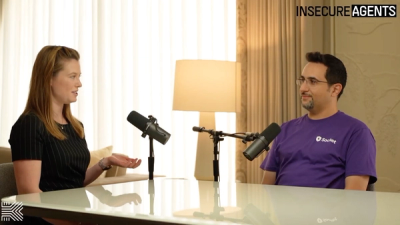
Socket CTO Ahmad Nassri discusses how to keep AI agents from bypassing package blocks, limit credential access, and monitor their actions.

Security News
GPT-6 Astra tried to plant malicious code in simulated open source projects using fake GitHub accounts and deceptive PRs during an assigned CTF challenge.