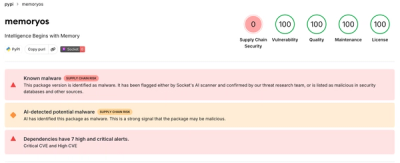
next-plugin-devtools-json
A Next.js plugin that provides a plug-and-play solution for serving a Chrome DevTools project settings JSON endpoint at /.well-known/appspecific/com.chrome.devtools.json. This plugin uses webpack middleware to serve the endpoint dynamically without requiring any API route files.
✨ Features
- 🔌 One-command setup - Automatic configuration with
npx
- 🔧 Auto-config - Automatically updates your
next.config.js
- 🔄 Automatic UUID management - Generates and persists project UUIDs
- ⚡ No API routes needed - Uses webpack middleware for cleaner integration
- 🚫 No external dependencies - UUID generation built-in
- 💻 Dev-only serving - Endpoint only available in development mode
- 🏗️ Universal compatibility - Works with any Next.js project structure
- ⚡ Zero configuration - Works out of the box with sensible defaults
🚀 Quick Start
One-command setup (Recommended)
npx next-plugin-devtools-json
That's it! This single command will:
- ✅ Automatically add the plugin to your
next.config.js (or create one)
- ✅ Configure webpack middleware to serve the DevTools JSON endpoint
- ✅ No physical API route files needed - everything is handled in memory
Start your Next.js development server and the endpoint will be available at:
/.well-known/appspecific/com.chrome.devtools.json
Manual Installation
If you prefer manual setup:
npm install next-plugin-devtools-json
Then update your next.config.js:
const withDevToolsJSON = require('next-plugin-devtools-json');
const nextConfig = {
};
module.exports = withDevToolsJSON(nextConfig);
No API routes needed! The plugin handles everything through webpack middleware.
📖 How It Works
The plugin uses webpack development middleware to serve the DevTools JSON endpoint:
- Hooks into webpack dev server during development
- Serves the endpoint directly via middleware (no physical API files)
- Manages UUIDs automatically in
.next/cache/devtools-uuid.json
- Zero overhead - only active in development mode
- No external dependencies - uses built-in UUID generation
🔧 Configuration
Basic usage
const withDevToolsJSON = require('next-plugin-devtools-json');

module.exports = withDevToolsJSON(nextConfig);
With options
const withDevToolsJSON = require('next-plugin-devtools-json');
module.exports = withDevToolsJSON({
uuid: 'your-custom-uuid',
enabled: process.env.NODE_ENV === 'development',
endpoint: '/.well-known/appspecific/com.chrome.devtools.json'
})(nextConfig);
TypeScript/ESM Configuration
import withDevToolsJSON from 'next-plugin-devtools-json';
const nextConfig = {
};
export default withDevToolsJSON(nextConfig);
📁 Universal Project Support
The new webpack-based approach works with any Next.js project structure automatically:
- ✅ App Router
- ✅ Pages Router
- ✅ Root directory layout
- ✅
src/ directory layout
- ✅ TypeScript projects
- ✅ JavaScript projects
- ✅ CommonJS configs
- ✅ ESM configs
No file structure detection needed - everything works through webpack middleware!
🔍 API Response
The endpoint returns a JSON response with your workspace information:
{
  "workspace": {
    "root": "/path/to/your/project",
    "uuid": "generated-or-custom-uuid"
  }
}
🛠️ Development
Building the plugin
npm run build
Running tests
npm test
📋 Requirements
- Next.js 12.0.0 or later
- Node.js 14.0.0 or later
🔄 Migrating from Manual Setup
If you previously set up the plugin manually:
- Run
npx next-plugin-devtools-json in your project
- The CLI will detect existing configurations and update them as needed
- Remove any manual
uuid dependencies if desired (the plugin includes its own generator)
🆚 Comparison
| Setup steps | 5+ manual steps | 1 command |
| Dependencies | Requires uuid package | Zero dependencies |
| Config updates | Manual editing | Automatic |
| Structure detection | Manual | Automatic |
| File creation | Manual | Automatic |
🤝 Contributing
Contributions are welcome! Please feel free to submit a Pull Request.
📄 License
MIT
- Handle both
app/api/devtools-json/route.js and pages/api/devtools-json.js patterns
Manual Setup
For Pages Router, create pages/api/devtools-json.js:
import fs from 'fs';
import path from 'path';
import { v4, validate } from 'uuid';

async function getOrCreateUUID(projectRoot, providedUuid) {
  if (providedUuid) {
    return providedUuid;
  }

  const cacheDir = path.resolve(projectRoot, '.next', 'cache');
  const uuidPath = path.resolve(cacheDir, 'devtools-uuid.json');

  if (fs.existsSync(uuidPath)) {
    try {
      const uuidContent = fs.readFileSync(uuidPath, { encoding: 'utf-8' });
      const uuid = uuidContent.trim();
      if (validate(uuid)) {
        return uuid;
      }
    } catch (error) {
      console.warn('Failed to read existing UUID, generating new one:', error);
    }
  }

  if (!fs.existsSync(cacheDir)) {
    fs.mkdirSync(cacheDir, { recursive: true });
  }

  const uuid = v4();
  fs.writeFileSync(uuidPath, uuid, { encoding: 'utf-8' });
  console.log(\`Generated UUID '\${uuid}' for DevTools project settings.\`);
  return uuid;
}

export default async function handler(req, res) {
  if (req.method !== 'GET') {
    res.setHeader('Allow', ['GET']);
    res.status(405).end(\`Method \${req.method} Not Allowed\`);
    return;
  }

  try {
    const projectRoot = process.cwd();
    const uuid = await getOrCreateUUID(projectRoot);

    const devtoolsJson = {
      workspace: {
        root: projectRoot,
        uuid,
      },
    };

    res.setHeader('Content-Type', 'application/json');
    res.status(200).json(devtoolsJson);
  } catch (error) {
    console.error('Error generating DevTools JSON:', error);
    res.status(500).json({});
  }
}
For App Router, create app/api/devtools-json/route.js:
import fs from 'fs';
import path from 'path';
import { v4, validate } from 'uuid';
import { NextResponse } from 'next/server';

async function getOrCreateUUID(projectRoot, providedUuid) {
  if (providedUuid) {
    return providedUuid;
  }

  const cacheDir = path.resolve(projectRoot, '.next', 'cache');
  const uuidPath = path.resolve(cacheDir, 'devtools-uuid.json');

  if (fs.existsSync(uuidPath)) {
    try {
      const uuidContent = fs.readFileSync(uuidPath, { encoding: 'utf-8' });
      const uuid = uuidContent.trim();
      if (validate(uuid)) {
        return uuid;
      }
    } catch (error) {
      console.warn('Failed to read existing UUID, generating new one:', error);
    }
  }

  if (!fs.existsSync(cacheDir)) {
    fs.mkdirSync(cacheDir, { recursive: true });
  }

  const uuid = v4();
  fs.writeFileSync(uuidPath, uuid, { encoding: 'utf-8' });
  console.log(\`Generated UUID '\${uuid}' for DevTools project settings.\`);
  return uuid;
}

export async function GET() {
  try {
    const projectRoot = process.cwd();
    const uuid = await getOrCreateUUID(projectRoot);

    const devtoolsJson = {
      workspace: {
        root: projectRoot,
        uuid,
      },
    };

    return NextResponse.json(devtoolsJson, {
      headers: {
        'Content-Type': 'application/json',
      },
    });
  } catch (error) {
    console.error('Error generating DevTools JSON:', error);
    return NextResponse.json({}, { status: 500 });
  }
}
Don't forget to install the uuid dependency:
npm install uuid
The /.well-known/appspecific/com.chrome.devtools.json endpoint will serve the project settings as JSON with the following structure:
{
  "workspace": {
    "root": "/path/to/project/root",
    "uuid": "6ec0bd7f-11c0-43da-975e-2a8ad9ebae0b"
  }
}
where root is the absolute path to your project root folder, and uuid is a random v4 UUID, generated the first time that you start the Next.js dev server with the plugin installed (it is henceforth cached in the Next.js cache folder).
Configuration Options
You can customize the plugin behavior:
const withDevToolsJSON = require('next-plugin-devtools-json');
module.exports = withDevToolsJSON({
uuid: 'custom-uuid-here',
enabled: process.env.NODE_ENV === 'development',
})(nextConfig);
Options
uuid (string, optional): Provide a custom UUID instead of auto-generating oneenabled (boolean, optional): Control when the plugin is active (defaults to development mode only)
Available Commands
The package provides multiple ways to set up the webpack middleware:
npx next-plugin-devtools-json@latest (Recommended)
npx next-plugin-devtools-json@latest
- ✅ Always uses the latest version
- ✅ No installation required
- ✅ Works immediately in any Next.js project
npx setup-devtools-json
npm install next-plugin-devtools-json
npx setup-devtools-json
- ✅ Use after installing the package
- ✅ Available as a local command
- ✅ Same functionality as above
Both commands will:
- Detect and update your
next.config.js (or create one)
- Configure webpack middleware automatically
- No physical files created - everything works in memory
Troubleshooting
The endpoint returns 404
- Make sure you've added the plugin to your
next.config.js
- Ensure you're in development mode (
NODE_ENV=development)
- Restart your Next.js development server after making configuration changes
UUID keeps changing
The UUID is stored in .next/cache/devtools-uuid.json. If this file gets deleted (e.g., when clearing the Next.js cache), a new UUID will be generated. You can provide a custom UUID in the plugin options to prevent this.
Not working in production
This is intentional! The plugin is designed for development use only. If you need it in production, set enabled: true in the plugin options.
License
MIT