

Product
Introducing Manifest Alerts
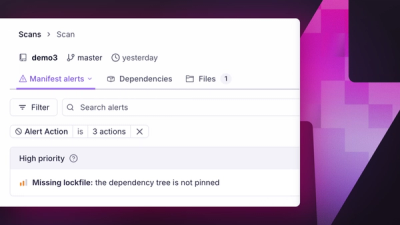
Socket now detects supply chain risks in project manifests, starting with missing lockfiles that can make dependency installs non-reproducible.
By André Staltz, Trevor Norris - Jun 16, 2026
Zero-dependency TypeScript SDK for nitroping push notifications. Send pushes, register devices, verify webhooks. Works in Node, Bun, Deno, Cloudflare Workers, browsers.




Zero-dependency TypeScript SDK for nitroping push notifications. Send pushes, register devices, verify webhooks. Pure ESM — Node, Bun, Deno, Cloudflare Workers, browsers.
📦 Part of the nitroping-sdk monorepo. The npm package name (
nitroping) is unchanged. See the root README for SDKs in other languages.
nitroping is a hosted push notification service that unifies APNs (iOS), FCM (Android), and Web Push behind one API. Send to a single device, a user across all of their devices, or every device in your app with one HTTP call. The service handles fanout, retries, idempotency, quota and outbound webhooks for delivery state — you write the product, not the plumbing.
nitroping-js is the official TypeScript client. It has zero runtime
dependencies, ships as native ESM with full type definitions, and runs
anywhere modern JavaScript runs: Node 18+, Bun, Deno, Cloudflare Workers,
Vercel Edge, and the browser. The whole bundle is small enough to drop into
serverless without thinking about it.
npm install nitroping
# or
pnpm add nitroping
# or
bun add nitroping
# or
yarn add nitroping
import { Nitroping } from "nitroping"

const np = new Nitroping({ apiKey: process.env.NITROPING_API_KEY! })

const result = await np.notifications.send(
  {
    title: "Order #4129 shipped",
    body: "Your package is on its way.",
    deepLink: "https://example.com/orders/4129",
    actions: [
      { id: "track", title: "Track" },
      { id: "view", title: "View order" },
    ],
    target: { userIds: ["user-42"] },
  },
  { idempotencyKey: "order-shipped-4129" },
)

console.log(result.id, result.status) // "abc-...", "queued"
import { subscribeWebPush } from "nitroping/web"

const { device } = await subscribeWebPush({
  publicKey: "pk_live_...",
  appId: "0e1d2c3b-4a59-6877-9876-543210abcdef",
  userId: "user-42",
})

console.log("Subscribed device", device.id)
Then drop a tiny /public/sw.js that handles push:
self.addEventListener("push", (event) => {
  const data = event.data?.json() ?? {}
  event.waitUntil(
    self.registration.showNotification(data.title ?? "Notification", {
      body: data.body,
      icon: data.icon,
      data: { deepLink: data.deep_link },
    }),
  )
})

self.addEventListener("notificationclick", (event) => {
  event.notification.close()
  const url = event.notification.data?.deepLink ?? "/"
  event.waitUntil(self.clients.openWindow(url))
})
import { verifyWebhook } from "nitroping/webhooks"

export async function POST(request: Request) {
  const body = await request.text()
  const signature = request.headers.get("x-nitroping-signature")

  try {
    const event = await verifyWebhook({
      body,
      signature,
      secret: process.env.NITROPING_WEBHOOK_SECRET!,
    })

    if (event.type === "notification.delivered") {
      console.log("delivered", event.data["notification_id"])
    }
  } catch (err) {
    return new Response("signature error", { status: 400 })
  }

  return new Response("ok")
}
Three independent entry points — import only what you need:
import { Nitroping } from "nitroping" // server: send + devices
import { subscribeWebPush } from "nitroping/web" // browser: subscribe + register
import { verifyWebhook } from "nitroping/webhooks" // server: webhook verify
The web and webhooks modules don't pull the HTTP client in, so a server
that only verifies webhooks doesn't ship any request code, and a browser app
that only subscribes doesn't ship anything secret-key-flavored.
new Nitroping(options)Creates a server-side client.
const np = new Nitroping({
  apiKey: "np_live_...", // or omit + set NITROPING_API_KEY env var
  baseUrl: "https://nitroping.dev", // optional, default shown
  timeoutMs: 30_000, // optional, default 30s. 0 = disable.
})
np.notifications.send(input, options?)Sends a notification. Returns { id, status }. Throws NitropingError on
non-2xx with the server's code, message, and per-field details.
await np.notifications.send(
  {
    title: "Welcome!",
    body: "Glad to have you on board.",
    icon: "https://example.com/icon.png",
    image: "https://example.com/hero.png",
    deepLink: "https://example.com/welcome",
    data: { onboarding: true },
    actions: [{ id: "tour", title: "Take the tour" }],
    target: { all: true },
  },
  { idempotencyKey: "welcome-user-42" },
)
target is a discriminated union — exactly one of:
| Selector | Use when |
|---|---|
{ all: true } | Broadcast to every active device |
{ deviceIds: [...] } | Hit specific device rows |
{ userIds: [...] } | Hit every device row a user owns |
Targets: { all: true }, { deviceIds: [...] }, { userIds: [...] }, or
{ tags: [...] }.
np.notifications.get(id)Fetch a previously-enqueued notification by id. Returns the full row
(with counters: total_sent, total_delivered, total_failed, etc).
const n = await np.notifications.get("abc-123")
console.log(n["counters"])
np.notifications.cancel(id)Cancel a scheduled or in-flight notification. Returns
{ id, status: "canceled" }. Throws code: "cannot_cancel" (409) if it
already reached a terminal state.
await np.notifications.cancel("abc-123")
np.devices.register(input)Register a device with the secret API key. Use this for iOS / Android
where you control the server. Returns { id, created } — created is
false when an existing row matched on (token, user_id).
await np.devices.register({
  platform: "ios",
  token: deviceToken, // raw APNs hex token
  userId: "user-42",
  tags: ["beta"],
  metadata: { app_version: "2.4.1" },
})
np.devices.update(id, input)Update a device — currently its tags (used for tag-based targeting).
Returns { id, tags }.
await np.devices.update("device-id", { tags: ["beta", "vip"] })
np.devices.deactivate(id)Sets status = inactive on the device row. Subsequent sends skip it.
await np.devices.deactivate("device-id")
np.track.record(input)Report a delivery/open/click signal (POST /api/v1/track). Identify the
target either by deliveryLogId or by notificationId + deviceToken.
await np.track.record({ deliveryLogId: "log-1", event: "delivered" })
await np.track.record({ notificationId: "n-1", deviceToken: "tok", event: "opened" })
np.events.report(input)Report an engagement event (POST /api/v1/events) — the public,
unauthenticated endpoint a client app calls when a notification is opened
or an action is clicked.
await np.events.report({
  notificationId: "n-1",
  deviceId: "d-1",
  type: "clicked",
  actionId: "reply",
})
subscribeWebPush(options) — nitroping/webBrowser-only. Registers a service worker, asks for permission, fetches the
VAPID public key, calls pushManager.subscribe, and registers the resulting
endpoint with nitroping — all in one call.
import { subscribeWebPush } from "nitroping/web"

const { device, subscription } = await subscribeWebPush({
  publicKey: "pk_live_...", // public, safe to ship in bundles
  appId: "uuid-of-the-app",
  serviceWorkerPath: "/sw.js", // optional, default shown
  serviceWorkerScope: "/", // optional
  userId: "user-42", // optional — enables { userIds: [...] }
})
Idempotent — call on every page load; the server dedupes on
(app_id, token).
verifyWebhook(options) — nitroping/webhooksVerifies the X-Nitroping-Signature header and returns the parsed event.
import { verifyWebhook } from "nitroping/webhooks"

const event = await verifyWebhook({
  body: rawString,
  signature: request.headers.get("x-nitroping-signature"),
  secret: process.env.NITROPING_WEBHOOK_SECRET!,
  tolerance: 300, // optional, seconds. Default 300.
})
The signing scheme is HMAC-SHA256 over "<unix>.<raw body>". The header
ships as t=<unix>, v1=<hex> — same as Polar / Stripe. Use the raw
request body string (not a re-serialized parsed object) or the HMAC won't
match.
import express from "express"
import { verifyWebhook } from "nitroping/webhooks"

const app = express()

app.post(
  "/webhooks/nitroping",
  express.raw({ type: "application/json" }), // keep the raw body
  async (req, res) => {
    try {
      const event = await verifyWebhook({
        body: req.body.toString("utf8"),
        signature: req.header("x-nitroping-signature"),
        secret: process.env.NITROPING_WEBHOOK_SECRET!,
      })
      // ...handle event...
      res.status(200).send("ok")
    } catch {
      res.status(400).send("bad signature")
    }
  },
)
import { Hono } from "hono"
import { Nitroping } from "nitroping"
import { verifyWebhook } from "nitroping/webhooks"

interface Env {
  NITROPING_API_KEY: string
  NITROPING_WEBHOOK_SECRET: string
}

const app = new Hono<{ Bindings: Env }>()

app.post("/send", async (c) => {
  const np = new Nitroping({ apiKey: c.env.NITROPING_API_KEY })
  const result = await np.notifications.send({
    title: "Hello from Workers",
    body: "Running on the edge",
    target: { all: true },
  })
  return c.json(result)
})

app.post("/webhooks", async (c) => {
  const event = await verifyWebhook({
    body: await c.req.text(),
    signature: c.req.header("x-nitroping-signature"),
    secret: c.env.NITROPING_WEBHOOK_SECRET,
  })
  return c.json({ received: event.id })
})

export default app
// app/api/notify/route.ts
import { Nitroping } from "nitroping"

export const runtime = "edge"

export async function POST(request: Request) {
  const np = new Nitroping({ apiKey: process.env.NITROPING_API_KEY! })
  const { title, body } = await request.json()

  const result = await np.notifications.send({
    title,
    body,
    target: { all: true },
  })
  return Response.json(result)
}
// app/api/webhooks/nitroping/route.ts
import { verifyWebhook } from "nitroping/webhooks"

export async function POST(request: Request) {
  const body = await request.text()
  const event = await verifyWebhook({
    body,
    signature: request.headers.get("x-nitroping-signature"),
    secret: process.env.NITROPING_WEBHOOK_SECRET!,
  })

  // event.type: "notification.delivered" | "notification.failed" |
  //             "notification.opened" | "notification.clicked" | "webhook.test"
  return Response.json({ ok: true, type: event.type })
}
Every error thrown by the SDK extends NitropingError. Narrow by instanceof
to handle specific cases:
| Class | When it fires |
|---|---|
NitropingError | Base class. Any non-2xx response, or any internal failure with no more specific subclass. |
NetworkError | fetch rejected (DNS, TLS, offline, abort). Original cause attached via cause. |
InvalidSignatureError | verifyWebhook HMAC mismatch, missing header, malformed header. |
TimestampOutOfRangeError | verifyWebhook signature valid but t= outside the tolerance window. |
WebPushUnsupportedError | subscribeWebPush running where Service Worker / Push API isn't available. |
PermissionDeniedError | subscribeWebPush and the user (or browser policy) blocks notifications. |
import { Nitroping, NitropingError, NetworkError } from "nitroping"

try {
  await np.notifications.send({ title: "Hi", body: "There", target: { all: true } })
} catch (err) {
  if (err instanceof NetworkError) {
    // transient — retry with backoff
  } else if (err instanceof NitropingError && err.code === "quota_exceeded") {
    // surface "upgrade your plan" UI
    console.log(err.details) // { quota, used, resets_at }
  } else {
    throw err
  }
}
Type declarations ship in the package — no separate @types/... install
needed. The SDK targets ESNext with strict mode and avoids any in the
public surface. All public types (SendNotificationRequest,
NotificationTarget, WebhookEvent, etc.) are exported from the main
entry.
| Runtime | Status |
|---|---|
| Node 18 + | Yes |
| Bun 1.0 + | Yes |
| Deno 1.30 + | Yes |
| Cloudflare Workers | Yes |
| Vercel Edge Runtime | Yes |
| Modern browsers | Yes (nitroping/web + nitroping/webhooks) |
nitroping (the server SDK) is also usable in the browser, but you should
not ship the secret np_ key — use nitroping/web with a public pk_
key instead.
MIT — see LICENSE. Copyright (c) 2026 productdevbook.
Built by @productdevbook — nitroping.dev · monorepo · OSS core
FAQs
Zero-dependency TypeScript SDK for nitroping push notifications. Send pushes, register devices, verify webhooks. Works in Node, Bun, Deno, Cloudflare Workers, browsers.
The npm package nitroping receives a total of 1,589 weekly downloads. As such, nitroping popularity was classified as popular.
We found that nitroping demonstrated a healthy version release cadence and project activity because the last version was released less than a year ago. It has 1 open source maintainer collaborating on the project.
Did you know?

Socket for GitHub automatically highlights issues in each pull request and monitors the health of all your open source dependencies. Discover the contents of your packages and block harmful activity before you install or update your dependencies.
Product
Socket now detects supply chain risks in project manifests, starting with missing lockfiles that can make dependency installs non-reproducible.

Research
/Security News
The trojanized extensions use TinyGo-compiled WebAssembly and Solana transaction memos to resolve command-and-control infrastructure.

Security News
Anthropic says the directive cited national security concerns over a narrow jailbreak, but offered no specific technical details.