

Security News
The Code You Didn't Write Is Still Yours to Defend
AI agents are pulling packages into environments no scanner is watching, creating exposure before security teams can see it.
By Brad Arkin - Jun 23, 2026
openinstall-react-native
Advanced tools
openinstall-react-native 是openinstall官方开发的 React Native 插件,使用该插件可以方便快速地集成openinstall相关功能。
在您的项目根目录下执行
npm install openinstall-react-native --save
react-native link
Error: Cannot find module 'asap/raw' 则先执行 npm install 再 react-native link 就好了(1)使用自动集成脚本集成代码和部分配置
npm run openinstall <yourAppKey> <yourScheme>
举例:
npm run openinstall e7iomw rc8tey
(2)xcode配置(只对iOS)
在 iOS 工程中,如果要使用universal links(通用链接)的拉起功能,需要开启 Associated Domains功能,请到苹果开发者网站,选择Certificate, Identifiers & Profiles,选择相应的AppID,开启Associated Domains。注意:当AppID重新编辑过之后,需要更新相应的mobileprovision证书。(详细配置步骤请看openinstall官网后台文档,universal link关联域名从后台获取),如果已经开启过Associated Domains功能,进行下面操作:
Capabilities 标签Associated Domains 开关如果在执行自动集成脚本时发生错误,请使用文档后面提供的手动集成方式。
在 iOS 工程中如果找不到头文件可能要在 TARGETS-> BUILD SETTINGS -> Search Paths -> Header Search Paths 添加如下如路径:
$(SRCROOT)/../node_modules/openinstall-react-native/ios/RCTOpenInstall
如果只需要快速下载功能,无需其它功能(携带参数安装、渠道统计、一键拉起),完成sdk初始化即可(自动集成方式或手动集成方式)
请react native端入口js文件中(例如App.js文件)导入:
import OpeninstallModule from 'openinstall-react-native'
通常在 componentDidMount 中监听
componentDidMount() {
  //该方法用于监听app通过univeral link或scheme拉起后获取唤醒参数
  this.receiveWakeupListener = map => {
     if (map) {
	   //do your work here
     }
   Alert.alert('拉起回调',JSON.stringify(map))
  }
  OpeninstallModule.addWakeUpListener(this.receiveWakeupListener)
}

componentWillUnMount() {
  OpeninstallModule.removeWakeUpListener(this.receiveWakeupListener)//移除监听
}
在需要获取安装参数的位置,导入插件:
import OpeninstallModule from 'openinstall-react-native'
调用如下方法,可重复获取(理论上可在任意位置获取安装参数):
OpeninstallModule.getInstall(10, map => {
  if (map) {
    //do your work here
  }
  Alert.alert('安装回调',JSON.stringify(map))
})
SDK 会自动完成访问量、点击量、安装量、活跃量、留存率等统计工作。
在用户注册成功时,可调用该方法上报注册事件,需要导入'openinstall-react-native'
OpeninstallModule.reportRegister()
两个参数分别为 效果点的ID,string类型,以及 效果点的值,为整型,示例:
OpeninstallModule.reportEffectPoint('effect_test',1)
以下分别为iOS和android的手动集成方式
在 react-native link 之后,打开 iOS 工程。
在 Info.plist 文件中配置 appKey 键值对,如下:
<key>com.openinstall.APP_KEY</key>
<string>从openinstall官网后台获取应用的appkey</string>
对于iOS,为确保能正常跳转,AppID必须开启Associated Domains功能,请到苹果开发者网站,选择Certificate, Identifiers & Profiles,选择相应的AppID,开启Associated Domains。注意:当AppID重新编辑过之后,需要更新相应的mobileprovision证书。(详细配置步骤请看openinstall官网后台文档,universal link从后台获取),如果已经开启过Associated Domains功能,进行下面操作:
Capabilities 标签Associated Domains 开关在 Info.plist 文件中,在 CFBundleURLTypes 数组中添加应用对应的 scheme
 <key>CFBundleURLTypes</key>
 <array>
  <dict>
    <key>CFBundleTypeRole</key>
    <string>Editor</string>
    <key>CFBundleURLName</key>
    <string>openinstall</string>
    <key>CFBundleURLSchemes</key>
    <array>
      <string>"从openinstall官网后台获取应用的scheme"</string>
    </array>
  </dict>
 </array>
(1)AppDelegate.h 中添加如下代码,导入头文件
#import <RCTOpenInstall/RCTOpenInstall.h>
(2)初始化sdk的代码
AppDelegate.m 的 didFinishLaunchingWithOptions 方法里面添加如下代码:
- (BOOL)application:(UIApplication *)application didFinishLaunchingWithOptions:(NSDictionary *)launchOptions
{
 //初始化openinstall sdk
 [OpenInstallSDK initWithDelegate:[RCTOpenInstall allocWithZone:nil]];

 return YES;
}
(3)scheme相关代码 AppDelegate.m 里面添加如下代码:
//iOS9以上,会优先走这个方法
- (BOOL)application:(UIApplication *)application openURL:(NSURL *)url options:(NSDictionary<UIApplicationOpenURLOptionsKey,id> *)options{
 //scheme1
 [OpenInstallSDK handLinkURL:url];
 return YES;
}
//适用目前所有iOS版本
- (BOOL)application:(UIApplication *)application openURL:(NSURL *)url sourceApplication:(NSString *)sourceApplication annotation:(id)annotation{
 //scheme2
 [OpenInstallSDK handLinkURL:url];
 return YES;
}
(4)universal link相关代码 AppDelegate.m 里面添加如下代码:
- (BOOL)application:(UIApplication *)application continueUserActivity:(NSUserActivity *)userActivity restorationHandler:(void (^)(NSArray * _Nullable))restorationHandler{
 //univeral link
 [OpenInstallSDK continueUserActivity:userActivity];
 return YES;
}
在 react-native link 之后,打开 android 工程。
检查 android 项目下的 settings.gradle 配置有没有包含以下内容:
include ':app', ':openinstall-react-native', ':openinstall-react-native'
project(':openinstall-react-native').projectDir = new File(rootProject.projectDir, '../node_modules/openinstall-react-native/android')
检查一下 dependencies 中有没有添加 openinstall-react-native 依赖
dependencies {
    ...
    implementation project(':openinstall-react-native')
}
your react native project/android/app/AndroidManifest.xml
在AndroidManifest.xml的application标签内设置AppKey
<meta-data android:name="com.openinstall.APP_KEY" android:value="OPENINSTALL_APPKEY"/>
在AndroidManifest.xml的拉起页面activity标签中添加intent-filter(一般为MainActivity),配置scheme,用于浏览器中拉起
<activity
    android:name=".MainActivity"
    android:launchMode="singleTask">
    <intent-filter>
        <action android:name="android.intent.action.VIEW"/>
        <category android:name="android.intent.category.DEFAULT"/>
        <category android:name="android.intent.category.BROWSABLE"/>
        <data android:scheme="OPENINSTALL_SCHEME"/>
    </intent-filter>
</activity>
现在重新 sync 一下项目,应该能看到 openinstall-react-native作为 android Library 项目导进来了。
FAQs
openinstall sdk plugin for react-native
The npm package openinstall-react-native receives a total of 129 weekly downloads. As such, openinstall-react-native popularity was classified as not popular.
We found that openinstall-react-native demonstrated a healthy version release cadence and project activity because the last version was released less than a year ago. It has 3 open source maintainers collaborating on the project.
Did you know?

Socket for GitHub automatically highlights issues in each pull request and monitors the health of all your open source dependencies. Discover the contents of your packages and block harmful activity before you install or update your dependencies.
Security News
AI agents are pulling packages into environments no scanner is watching, creating exposure before security teams can see it.

Security News
GitHub Actions checkout now blocks risky pull_request_target checkouts by default to help prevent pwn request supply chain attacks.
Product
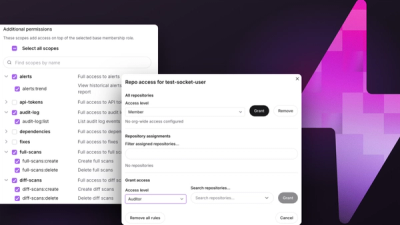
Socket now supports Custom Roles and Repository Access Permissions so organizations can control who can access specific repositories and actions.