
Product
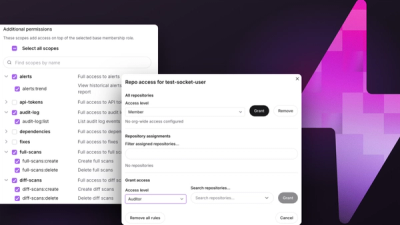
Introducing Repository Access Permissions and Custom Roles
Socket now supports Custom Roles and Repository Access Permissions so organizations can control who can access specific repositories and actions.
By Joe Werle - Jun 19, 2026

Before you can start making requests to Paynow's API, you need to get an integration ID and integration Key from Paynow. See Documentation Generating Integration Key and Viewing integration ID
See the Paynow QuickStart.
This library has a set of prerequisites that must be met for it to work
Install the library using NPM or yarn
$ npm install --save paynow
$ yarn add paynow
const { Paynow } = require("paynow");
Create an instance of the Paynow class optionally setting the result and return url(s)
let paynow = new Paynow("INTEGRATION_ID", "INTEGRATION_KEY");

paynow.resultUrl = "http://example.com/gateways/paynow/update";
paynow.returnUrl = "http://example.com/return?gateway=paynow";

/* The return url can be set at later stages.
You might want to do this if you want to pass data to the return url (like the reference of the transaction) */
The Integration ID and Key can be optionally loaded from PAYNOW_INTEGRATION_ID and PAYNOW_INTEGRATION_KEY environment variables (respectively). An instance of the Paynow class can then be created using the following:
let paynow = new Paynow();
Create a new payment passing in the reference for that payment (e.g invoice id, or anything that you can use to identify the transaction.
let payment = paynow.createPayment("Invoice 35");
You can then start adding items to the payment
// Passing in the name of the item and the price of the item
payment.add("Bananas", 2.5);
payment.add("Apples", 3.4);
Once you're done building up your cart and you're finally ready to send your payment to Paynow, you can use the send method in the paynow object.
// Save the response from paynow in a variable
paynow.send(payment);
The send method will return a Promise<InitResponse>, the InitResponse object being the response from Paynow and it will contain some useful information like whether the request was successful or not. If it was, for example, it contains the url to redirect the user so they can make the payment. You can view the full list of data contained in the response in our wiki
If request was successful, you should consider saving the poll url sent from Paynow in your database
paynow.send(payment).then(response => {
  // Check if request was successful
  if (response.success) {
    // Get the link to redirect the user to, then use it as you see fit
    let link = response.redirectUrl;
  }
});
Mobile Transactions
If you want to send an express (mobile) checkout request instead, the only thing that differs is the last step. You make a call to the sendMobile in the paynow object
instead of the send method.
The sendMobile method unlike the send method takes in two additional arguments i.e The phone number to send the payment request to and the mobile money method to use for the request. Note that currently only Ecocash and OneMoney are supported
paynow.sendMobile(payment, '0777000000', 'ecocash').then(response => {
  // Handle response
});
The response object is almost identical to the one you get if you send a normal request. With a few differences, firstly, you don't get a url to redirect to. Instead you instructions (which ideally should be shown to the user instructing them how to make payment on their mobile phone)
paynow.sendMobile(

    // The payment to send to Paynow
    payment,

    // The phone number making payment
    '0777000000',

    // The mobile money method to use.
    'ecocash'

).then(function(response) {
    if(response.success) {
        // These are the instructions to show the user.
        // Instruction for how the user can make payment
        let instructions = response.instructions // Get Payment instructions for the selected mobile money method

        // Get poll url for the transaction. This is the url used to check the status of the transaction.
        // You might want to save this, we recommend you do it
        let pollUrl = response.pollUrl;

        console.log(instructions)

    } else {
        console.log(response.error)
    }
}).catch(ex => {
    // Ahhhhhhhhhhhhhhh
    // *freak out*
    console.log('Your application has broken an axle', ex)
});
The SDK exposes a handy method that you can use to check the status of a transaction. Once you have instantiated the Paynow class.
// Check the status of the transaction with the specified pollUrl
// Now you see why you need to save that url ;-)
let status = paynow.pollTransaction(pollUrl);

if (status.paid()) {
  // Yay! Transaction was paid for
} else {
  console.log("Why you no pay?");
}
// Require in the Paynow class
const { Paynow } = require("paynow");

// Create instance of Paynow class
let paynow = new Paynow("INTEGRATION_ID", "INTEGRATION_KEY");

// Set return and result urls
paynow.resultUrl = "http://example.com/gateways/paynow/update";
paynow.returnUrl = "http://example.com/return?gateway=paynow";

// Create a new payment
let payment = paynow.createPayment("Invoice 35");

// Add items to the payment list passing in the name of the item and it's price
payment.add("Bananas", 2.5);
payment.add("Apples", 3.4);

// Send off the payment to Paynow
paynow.send(payment).then( (response) => {

    // Check if request was successful
    if(response.success) {
        // Get the link to redirect the user to, then use it as you see fit
        let link = response.redirectUrl;

        // Save poll url, maybe (recommended)?
        let pollUrl = response.pollUrl;
    }

});
Fork this repository and clone to local machine
FAQs
Node.JS SDK for Zimbabwe's Leading Payment Gateway, Paynow
The npm package paynow receives a total of 974 weekly downloads. As such, paynow popularity was classified as not popular.
We found that paynow demonstrated a not healthy version release cadence and project activity because the last version was released a year ago. It has 1 open source maintainer collaborating on the project.
Did you know?

Socket for GitHub automatically highlights issues in each pull request and monitors the health of all your open source dependencies. Discover the contents of your packages and block harmful activity before you install or update your dependencies.
Product
Socket now supports Custom Roles and Repository Access Permissions so organizations can control who can access specific repositories and actions.
Product
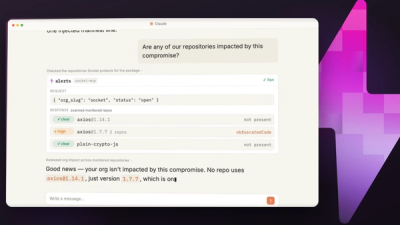
Socket MCP now lets AI assistants review org alerts, investigate threats using the Socket threat feed, and inspect package files in addition to dependency scoring.
Product
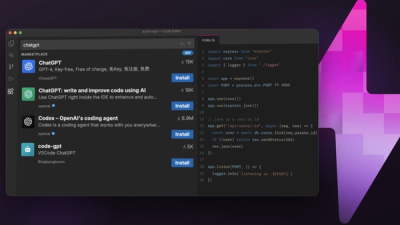
Socket Firewall blocks malicious VS Code and Open VSX extensions before install, protecting developers from compromised editor marketplaces.