

Security News
/Company News
Securing the Financial Frontier: How Capital One Uses Socket for Open Source Security
Capital One is partnering with Socket to proactively secure its open source supply chain.
By Sarah Gooding - Oct 01, 2026
proofread-mcp
Advanced tools
MCP server for proofread.law: check legal citations from Claude, Cursor or the OpenAI Agents SDK
An MCP server for proofread.law. It lets Claude Desktop, Claude Code, Cursor and the OpenAI Agents SDK check US case citations before a draft is filed.
proofread.law checks each citation against an open register of about 10 million court opinions (CourtListener bulk data). Every result says what was checked, what was found, and what the register cannot see.
Eight tools:
| Tool | Input | What comes back |
|---|---|---|
check_citations | text, deep (optional) | The coverage statement, counts per tier, one line per row that needs a human (red first, then orange, then deep-check rows to review), the number of citations found, a report id |
check_document | path to a .pdf, .docx, .txt or .md (up to 10 MB), deep (optional) | The same, for a file on disk |
resolve_citation | one citation string | The register's answer for that citation: found (case, court, date, parallel citations, link), ambiguous (candidates), not in the register, cannot verify, known citation, or no citation recognised; the coverage of that volume; the coverage statement |
resolve_citations | a list of up to 500 citation strings | Counts by status, one line per citation in input order, the coverage statement |
coverage | nothing | The coverage statement and the storage notice |
render_report | a report id from a previous check, or the full report JSON | A markdown diligence report with every row |
sign_up | the account owner's email, a name for the agent | A proofread.law account and an API key (shown once); the server uses it for the rest of the session |
billing_link | payg, solo or firm | A Stripe Checkout link for the account owner; needs an API key |
The compact result of a check is capped at about 12,000 characters; when a long brief has more flagged rows than fit, the text says how many were left out and render_report has them all.
check_citations and check_document read prose: they compare the case name and any quotation with the register. resolve_citation and resolve_citations look the citation string up in the register (the /v1/resolve API) and tell you which case sits there; they do not compare it with the name you have.
Tiers, in the words the tools use:
| Tier | Word | Meaning |
|---|---|---|
| red | check this | The register holds something concrete that disagrees: a different case at that citation, a volume or page that does not match, quoted words not in the opinion |
| orange | cannot verify | Nothing to check against: a Westlaw or Lexis identifier, a volume newer than the register, a reporter the register holds only in part. Not evidence either way |
| green | found | The citation resolves to a case whose caption matches |
| white | deep check | With deep: true only: whether the opinion supports the sentence it is cited for. A review queue, not a verdict |
What it cannot do: resolve Westlaw (WL) or Lexis identifiers, check statutes, regulations or secondary sources, or say whether a case is still good law. Those limits are stated in every tool description and in the coverage statement that comes with every result.
Needs Node 20 or newer. No install step is required; npx fetches proofread-mcp from npm.
Download proofread-mcp-<version>.mcpb from the latest GitHub release and open it with Claude Desktop (double-click, or Settings, Extensions, Install Extension). The bundle carries the server and its dependencies and uses the Node runtime that ships with Claude Desktop, so nothing else has to be installed. The only setting is the optional API key, stored by Claude Desktop as a sensitive value and passed to the server as PROOFREAD_API_KEY.
To build the bundle yourself: scripts/build-mcpb.sh (needs npx @anthropic-ai/mcpb) writes build/proofread-mcp-<version>.mcpb from manifest.json, icon.png and the npm package contents.
Edit claude_desktop_config.json (Settings, Developer, Edit Config):
{
  "mcpServers": {
    "proofread": {
      "command": "npx",
      "args": ["-y", "proofread-mcp"],
      "env": {
        "PROOFREAD_API_KEY": "pl_..."
      }
    }
  }
}
Leave out env to use the free tier.
claude mcp add proofread -- npx -y proofread-mcp
# with an API key:
claude mcp add proofread -e PROOFREAD_API_KEY=pl_... -- npx -y proofread-mcp
Settings, MCP, Add new global MCP server, or write .cursor/mcp.json in the project:
{
  "mcpServers": {
    "proofread": {
      "command": "npx",
      "args": ["-y", "proofread-mcp"],
      "env": { "PROOFREAD_API_KEY": "pl_..." }
    }
  }
}
Start the server with the HTTP transport:
PROOFREAD_API_KEY=pl_... npx proofread-mcp --http --port 3333
# MCP endpoint: http://127.0.0.1:3333/mcp   health: http://127.0.0.1:3333/health
Then connect from the Agents SDK:
from agents import Agent, Runner
from agents.mcp import MCPServerStreamableHttp

# The SDK's default read timeout is 5 s. A check of a long brief takes up to 6 s and a deep check 1 to 2 s per citation,
# so give the session up to 15 minutes (the API's own deep-check limit).
async with MCPServerStreamableHttp(params={"url": "http://127.0.0.1:3333/mcp"}, client_session_timeout_seconds=900) as proofread:
    agent = Agent(name="Drafting assistant", instructions="Check every case citation before you rely on it.", mcp_servers=[proofread])
    result = await Runner.run(agent, "Check the citations in this paragraph: ...")
import { Agent, run, MCPServerStreamableHttp } from "@openai/agents";

const proofread = new MCPServerStreamableHttp({ url: "http://127.0.0.1:3333/mcp", name: "proofread" });
await proofread.connect();
try {
  const agent = new Agent({ name: "Drafting assistant", mcpServers: [proofread] });
  const result = await run(agent, "Check the citations in this paragraph: ...");
} finally {
  await proofread.close();
}
The HTTP server binds to 127.0.0.1 by default and is single-tenant by design: it has no authentication of its own, report ids are shared across sessions, and a key from sign_up is adopted by the whole process. Sessions that stay idle for 30 minutes are closed. To expose it on a network use --host 0.0.0.0 and put it behind something that adds authentication.
stdio: run proofread-mcp. Streamable HTTP: run proofread-mcp --http --port 3333 and point the client at /mcp.
| Variable | Default | Meaning |
|---|---|---|
PROOFREAD_API_KEY | unset | An API key (pl_...), sent as Authorization: Bearer to PROOFREAD_API only. Every plan has keys (free 1, pay as you go 3, solo 3, firm 5); a paid-plan key lifts the free-tier limits. Without it the free tier applies per IP |
PROOFREAD_API | https://proofread.law | Base URL, for a self-hosted or test instance |
An agent can open an account itself: sign_up posts the owner's real email and a name to POST /agent/signup and gets a key back, shown once. The server uses that key for the rest of the session; put it in PROOFREAD_API_KEY to keep it. The owner receives one confirmation email. When a quota is used up (a tool answers "needs the ... plan" or "monthly allowance used"), billing_link returns a Stripe Checkout link for the owner; nothing is charged until they pay. Plans and prices: proofread.law/pricing. The onboarding text the API publishes for agents is at proofread.law/agent/onboarding.md.
Per month, per IP address without a key or per account with a free-tier key:
| Tools | Quota |
|---|---|
check_citations, check_document | 20 checks, of which 3 may be deep checks |
resolve_citation, resolve_citations | 1,000 resolves (each citation in a list counts as one) |
coverage, render_report, sign_up, billing_link | free, not counted |
There is also a limit of 20 requests an hour per IP (more on paid plans). When a limit is reached the tool returns a plain message with the retry time or the upgrade link; nothing is thrown at the protocol level.
.docx upload and unlimited checks need a paid plan. See proofread.law/pricing.
The full policy is at proofread.law/privacy. What applies to this server:
PROOFREAD_API, default https://proofread.law), over HTTPS, in the request that checks it. sign_up sends the account owner's email address and the agent name you give it. Nothing else is sent: no conversation history, no other files, no telemetry.deep: true) is opt-in: the clause before each citation (up to 700 characters) and the cited opinion go to the model judge; that is the only mode in which words from your document leave proofread.law. Sign-in links go through Resend; payments through Stripe, which sees the card and proofread.law does not. Requests pass through Cloudflare's edge in transit.render_report can be called with a short id; they are gone when the process exits. The API key lives in your MCP client's configuration (Claude Desktop stores the extension's key as a sensitive setting); a key from sign_up is held in memory for the session and shown to you once so you can store it. It is sent only to PROOFREAD_API, as an Authorization: Bearer header. If a deep-check stream stops before every citation was judged, the tool answers with an error that says how many were checked; it never presents a partial deep check as a finished one.Every result starts with the coverage statement, for example:
Checked against 10.1 M cases (CourtListener bulk data 2026-06-30, last refreshed 2026-09-19); federal appellate 2019 to 2023 is 10 to 15% incomplete; Westlaw/Lexis identifiers are not resolvable; statutes, regulations and secondary sources are not checked.
Read it. A citation that is not in the register is a register fact with a coverage qualifier, not proof that the case does not exist. A red row says "check this"; the tools say what was checked and what was found, never that a case is invented.
Input:
Title VII forbids discrimination because of sexual orientation. Bostock v. Clayton County, 509 U.S. 644 (2020).
check_citations returns (real output, review instance, 2026-09-20):
Coverage: Checked against 10.1 M cases (CourtListener bulk data 2026-06-30, last refreshed 2026-09-19); federal appellate 2019 to 2023 is 10 to 15% incomplete; Westlaw/Lexis identifiers are not resolvable; statutes, regulations and secondary sources are not checked.
Summary: 1 citation, 1 row. Check this (red): 1. Cannot verify (orange): 0. Found (green): 0.
Flagged rows:
- CHECK THIS: 509 U.S. 644 (Bostock v. Clayton County). Register has Bostock v. Clayton County at 590 U.S. 644. Check the volume. In the register, 509 U.S. 644 is Shaw v. Reno. The case named in the document exists; this citation does not point to it. Register: https://www.courtlistener.com/opinion/4760997/bostock-v-clayton-county/
Found: 0 rows resolved to a case in the register.
Report id: r_1ff74051 (give it to render_report for a markdown report). Elapsed: 0.03 s.
Storage: Nothing you submit is stored. The document is processed in memory and discarded when this report is returned; only counts (citations, tiers, timing) are logged, never text.
npm install
npm run build          # tsc -> dist/
npm test               # vitest, mocked fetch, no network
LIVE=1 npm test -- test/live.test.ts   # three live calls against proofread.law (counts against the free tier)
node scripts/smoke-stdio.mjs           # spawn the stdio server, initialize, tools/list, four live tool calls
node scripts/smoke-stdio.mjs --offline # the same without network
Layout: src/client.ts is the typed HTTP client (/verify, /render, /api/coverage, /v1/resolve single and batch), src/format.ts the compact formatter for checks, src/resolve_format.ts the one for register answers, src/tools/<name>.ts one file per tool, src/server.ts registers them, src/cli.ts picks the transport. The remaining register routes (/v1/extract, /v1/case/{id}, /v1/coverage per reporter) slot in the same way: one method on the client, one file under src/tools/.
See RELEASE.md: npm, the MCP Registry (server.json is in the repository), the Claude Desktop extension bundle (manifest.json, scripts/build-mcpb.sh, attached to each GitHub release) and Anthropic's connector directory.
MIT, Data Alchemy Labs.
FAQs
MCP server for proofread.law: check legal citations from Claude, Cursor or the OpenAI Agents SDK
The npm package proofread-mcp receives a total of 643 weekly downloads. As such, proofread-mcp popularity was classified as not popular.
We found that proofread-mcp demonstrated a healthy version release cadence and project activity because the last version was released less than a year ago. It has 1 open source maintainer collaborating on the project.
Security News
/Company News
Capital One is partnering with Socket to proactively secure its open source supply chain.
Security News
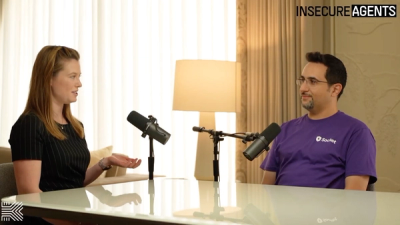
Socket CTO Ahmad Nassri discusses how to keep AI agents from bypassing package blocks, limit credential access, and monitor their actions.

Security News
GPT-6 Astra tried to plant malicious code in simulated open source projects using fake GitHub accounts and deceptive PRs during an assigned CTF challenge.