
Product
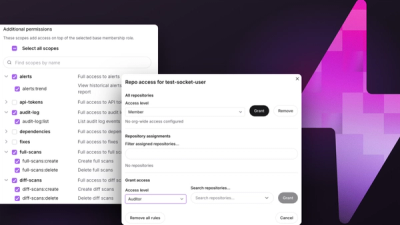
Introducing Repository Access Permissions and Custom Roles
Socket now supports Custom Roles and Repository Access Permissions so organizations can control who can access specific repositories and actions.
By Joe Werle - Jun 19, 2026
qb-utf8-ez
Advanced tools




Easy-to-use UTF-8 encoding and decoding that work in all browsers (except ancient < IE 5.5). Based on tiny implementations (qb-utf8-to-str-tiny and qb-utf8-from-str-tiny), which are tiny and good for small decoding jobs, but not fast for very large files.
Complies with the 100% test coverage and minimum dependency requirements of qb-standard .
install qb-utf8-ez
Functions that take array-like parameters and ranges have been updated to work with terms defined in the glossary. Namely, functions of the form
have been updated to
var utf8 = require('qb-utf8-ez');

var buf = utf8.buffer('hello. 你好');
console.log(buf);
Prints a buffer with UTF-8 code points:
> [ 104, 101, 108, 108, 111, 46, 32, 228, 189, 160, 229, 165, 189 ]
and
var s = utf8.string(buf);
console.log(s);
Prints:
> hello. 你好
same as utf8 (old function name)
Return an array or buffer of UTF-8 encoded bytes for the given value 'v'
v may be:

options:
    ret_type:        (string) 'array', 'buffer', or 'uint8array' - the type to create and return.
    fill_to_length:  (integer) if set, an array of the given length will be returned,
                     filled with encoded values copied from v.
                     Invalid truncated encodings are replaced with the
                     fill_byte.
    fill_byte:       (integer or string) ascii code or single character string used if needed to
                     fill buffer at the end to prevent truncated utf8.
For convenience, value may be:
an unicode code point, such as 0x10400 '𐐀'
an array of code points
a string
... in any case, buffer(value) will return an array.
Convert an array-like object (buffer) to a javascript string.
options
off: index to start at
lim: index to stop before
escape: string expression, single ascii character or integer. (default is '?').
If ascii integer or string, illegal bytes will be replaced 1-for-1 by this value. If expression of the form "!{%H}", then strings of illegal bytes will be prefixed with the value before %H, such as '!{', and suffixed with value after %H, e.g. '}' and bytes will be written as ascii hex between these values.
string() makes use of qb-utf8-illegal-bytes to automatically detect and escape illegal UTF-8 encodings. The default decoding behavior is to replace illegal values with '?':
var utf8 = require('qb-utf8-ez');
utf8.string([... some buffer with four illegal characters *** here *** then ok again.. ]);

> ... some buffer with illegal characters ??? then ok again..
Another option is to use the encode option to substitute bad bytes in situ, keeping
all other buffer contents in place.
utf8.string([...], { encode: '!{%H}' });

> ... some buffer with illegal characters !{F09082} then ok again..
Compare code points of two byte ranges holding UTF8-encoded data. The function works similarly to the sort comparator in javascript.
return
(compare is also available as a separate package with zero dependencies)
Fill up a buffer with a smaller buffer sample which may be a string or array-like object.
options
    off:        index to start at
    lim:        index to stop before ( < lim )
    escape:     handling for illegal bytes (same as string(), above) (default is '?')
Like string.join(), but joins together arrays/buffers of bytes. Joins together buffers
into one buffer with joinbuf as a separator between each.
buffers can
be an array of array-like objects with byte/integer values. joinbuf can value accepted
by the buffer() function such as string or array of code points.
Return a buffer with illegal characters replaced. If a single character or number escape is given,
the buffer will be changed in place and returned. If an escape expression is given, a new
(longer) buffer will be returned copied from the old with the escaped areas.
Options escape, off, and lim work as they
do with string(), above.
Return ranges of illegal UTF-8 encoding. See qb-utf8-illegal-bytes
FAQs
Easy-to-use functions for encoding/decoding UTF-8 in the browser
The npm package qb-utf8-ez receives a total of 24 weekly downloads. As such, qb-utf8-ez popularity was classified as not popular.
We found that qb-utf8-ez demonstrated a not healthy version release cadence and project activity because the last version was released a year ago. It has 1 open source maintainer collaborating on the project.
Did you know?

Socket for GitHub automatically highlights issues in each pull request and monitors the health of all your open source dependencies. Discover the contents of your packages and block harmful activity before you install or update your dependencies.
Product
Socket now supports Custom Roles and Repository Access Permissions so organizations can control who can access specific repositories and actions.
Product
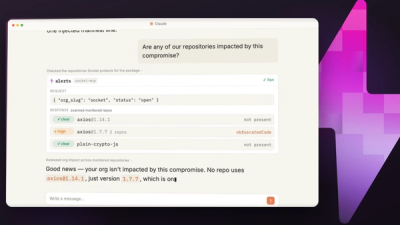
Socket MCP now lets AI assistants review org alerts, investigate threats using the Socket threat feed, and inspect package files in addition to dependency scoring.
Product
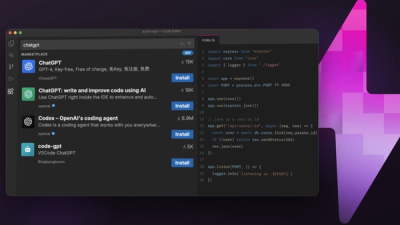
Socket Firewall blocks malicious VS Code and Open VSX extensions before install, protecting developers from compromised editor marketplaces.