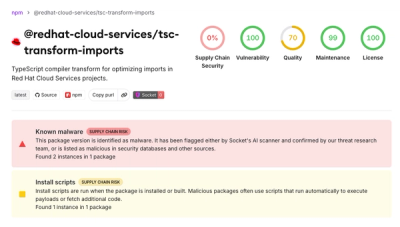
React Native Performance API
This is an implementation of the Performance API for React Native based on the User Timing Level 3 and Performance Timeline Level 2 drafts.
Note: The timestamps used are high resolution (fractions of milliseconds) and monotonically increasing, meaning that they are independent of system clock adjustments. To convert a performance timestamp to a unix epoch timestamp do like this:
const timestamp = Date.now() - performance.timeOrigin + entry.startTime;
Installation
Yarn: yarn add --dev react-native-performance
NPM: npm install --save-dev react-native-performance
Manual integration
If your project is not set up with autolinking you need to link manually.
iOS
Add the following to your Podfile and run pod install:
pod 'react-native-performance', :path => '../node_modules/react-native-performance/ios'
Usage
See examples/vanilla for a demo of the different features.
Basic measure example
Marking timeline events, measuring the duration between them and fetching these entries works just like on the web:
import performance from 'react-native-performance';

performance.mark('myMark');
performance.measure('myMeasure', 'myMark');
performance.getEntriesByName('myMeasure');
-> [{ name: "myMeasure", entryType: "measure", startTime: 98, duration: 123 }]
Meta data
If you want to add some additional details to your measurements or marks, you may pass a second options object argument with a detail entry per the User Timing Level 3 draft:
import performance from 'react-native-performance';

performance.mark('myMark', {
  detail: {
    screen: 'settings',
    ...
  }
});
performance.measure('myMeasure', {
  start: 'myMark',
  detail: {
    category: 'render',
    ...
  }
});
performance.getEntriesByType('measure');
-> [{ name: "myMeasure", entryType: "measure", startTime: 98, duration: 123, detail: { ... } }]
Subscribing to entries
The PerformanceObserver API enables subscribing to different types of performance entries. The handler is called in batches.
Passing buffered: true would include entries produced before the observe() call which is useful to delay handing of measurements until after performance critical startup processing.
import { PerformanceObserver } from 'react-native-performance';
const measureObserver = new PerformanceObserver((list, observer) => {
  list.getEntries().forEach((entry) => {
    console.log(`${entry.name} took ${entry.duration}ms`);
  });
});
measureObserver.observe({ type: 'measure', buffered: true });
Network resources
Resource logging is disabled by default and currently will only cover fetch/XMLHttpRequest uses.
import performance, {
setResourceLoggingEnabled,
} from 'react-native-performance';
setResourceLoggingEnabled(true);
await fetch('https://domain.com');
performance.getEntriesByType('resource');
-> [{
name: "https://domain.com",
entryType: "resource",
startTime: 98,
duration: 123,
initiatorType: "xmlhttprequest",
fetchStart: 98,
responseEnd: 221,
transferSize: 456,
...
}]
Custom metrics
If you want to collect custom metrics not based on time, this module provides an extension of the Performance API called .metric() that produces entries with the type metric.
import performance from 'react-native-performance';

performance.metric('myMetric', 123);
performance.getEntriesByType('metric');
-> [{ name: "myMetric", entryType: "metric", startTime: 98, duration: 0, value: 123 }]
Native marks
This library exposes a set of native timeline events and metrics such as native app startup time, script execution time etc under the entryType react-native-mark.
To install the native iOS dependency required, simply run pod install in ios/ directory and rebuild the project. For android it should be enough by just rebuilding.
If you wish to opt out of autolinking of the native dependency, you may create or alter the react-native.config.js file to look something like this:
module.exports = {
dependencies: {
'react-native-performance': {
platforms: {
android: null,
ios: null,
},
},
},
};
Note that the native marks are not available immediately upon creation of the JS context, so it's best to set up an observer for the relevant end event before making measurements.
import performance, { PerformanceObserver } from 'react-native-performance';

new PerformanceObserver((list, observer) => {
  if (list.getEntries().find((entry) => entry.name === 'runJsBundleEnd')) {
    performance.measure('nativeLaunch', 'nativeLaunchStart', 'nativeLaunchEnd');
    performance.measure('runJsBundle', 'runJsBundleStart', 'runJsBundleEnd');
  }
}).observe({ type: 'react-native-mark', buffered: true });
Custom marks
ephemeral is an optional parameter to mark/metric functions which if set to NO/false will retain the entries when the React Native bridge is (re)loaded.
iOS
#import <react-native-performance/RNPerformance.h>

[RNPerformance.sharedInstance mark:@"myCustomMark"];
[RNPerformance.sharedInstance mark:@"myCustomMark" detail:@{ @"extra": @"info" }];
[RNPerformance.sharedInstance mark:@"myCustomMark" ephemeral:NO];

[RNPerformance.sharedInstance metric:@"myCustomMetric" value:@(123)];
[RNPerformance.sharedInstance metric:@"myCustomMetric" value:@(123) detail:@{ @"unit": @"ms" }];
[RNPerformance.sharedInstance metric:@"myCustomMetric" value:@(123) ephemeral:NO];
Android
import com.oblador.performance.RNPerformance;
RNPerformance.getInstance().mark("myCustomMark");
RNPerformance.getInstance().mark("myCustomMark", false);
Bundle bundle = new Bundle();
bundle.putString("extra", "info");
RNPerformance.getInstance().mark("myCustomMark", bundle);
RNPerformance.getInstance().metric("myCustomMetric", 123);
RNPerformance.getInstance().metric("myCustomMetric", 123, false);
Bundle bundle = new Bundle();
bundle.putString("unit", "ms");
RNPerformance.getInstance().metric("myCustomMetric", 123, bundle);
Supported marks
nativeLaunchStart | Both | Native process initialization started |
nativeLaunchEnd | Both | Native process initialization ended |
downloadStart | Both | Only available in development. Development bundle download started |
downloadEnd | Both | Only available in development. Development bundle download ended |
runJsBundleStart | Both | Not available with debugger. Parse and execution of the bundle started. |
runJsBundleEnd | Both | Not available with debugger. Parse and execution of the bundle ended |
contentAppeared | Both | Initial component mounted and presented to the user. |
bridgeSetupStart | Both | |
bridgeSetupEnd | iOS | |
reactContextThreadStart | Android | |
reactContextThreadEnd | Android | |
vmInit | Android | |
createReactContextStart | Android | |
processCoreReactPackageStart | Android | |
processCoreReactPackageEnd | Android | |
buildNativeModuleRegistryStart | Android | |
buildNativeModuleRegistryEnd | Android | |
createCatalystInstanceStart | Android | |
createCatalystInstanceEnd | Android | |
preRunJsBundleStart | Android | |
createReactContextEnd | Android | |
preSetupReactContextStart | Android | |
preSetupReactContextEnd | Android | |
setupReactContextStart | Android | |
attachMeasuredRootViewsStart | Android | |
createUiManagerModuleStart | Android | |
createViewManagersStart | Android | |
createViewManagersEnd | Android | |
createUiManagerModuleConstantsStart | Android | |
createUiManagerModuleConstantsEnd | Android | |
createUiManagerModuleEnd | Android | |
attachMeasuredRootViewsEnd | Android | |
setupReactContextEnd | Android | |
License
MIT © Joel Arvidsson 2021 – present