

Security News
Federal Audit Finds NIST Wasted Funds With No Plan to Clear NVD Backlog
Federal audit finds NIST lacked a plan to clear the NVD backlog, wasted funds on duplicate work, and delayed use of CISA data.
By Sarah Gooding - Jun 03, 2026




Repogen is meant as an utility for Repo project. It generates repo-manifests from several Git hosts, like GitHub, GitLab and Gitea.
About repo:
Repo is a tool built on top of Git. Repo helps manage many Git repositories, does the uploads to revision control systems, and automates parts of the development workflow. Repo is not meant to replace Git, only to make it easier to work with Git.
Repogen generates manifests that wrap multiple Git repositories and allow them for example to get edited/pulled/pushed all at once. See Google's Repo command reference and Android Development Environment for help and a more detailed example.
$ npm install repogen -g
$ repogen -h

    Usage: repogen [options] [command]

    Options:

        -V, --version               output the version number
        -h, --help                  output usage information

    Commands:

        gitea [options]             Generate manifest from the authenticated gitea user
        github [options] <profile>  Generate manifest from github a given profile
        gitlab [options] <profile>  Generate manifest from a given gitlab profile
The following example shows the process of generating a manifest from my public github profile.
$ repogen github dotwee -o manifest-dotwee.xml
$ cat manifest-dotwee.xml

<manifest>
    <remote
        name="origin"
        fetch="https://github.com/dotWee"/>

    <default
        remote="origin"
        revision="refs/heads/master"
        sync-j="4"/>

    <project name="repogen" path="repogen" remote="origin"/>
    ...

</manifest>
Currently there are three different git-hosts supported:
$ repogen github -h

    Usage: github [options] <profile>

    Generate manifest from github a given profile

    Options:

        -o, --output-file [output_file]  name of the output file
        -t, --token [token]              optional auth-token to include private repositories
        -h, --help                       output usage information
$ repogen gitlab -h

    Usage: gitlab [options] <profile>

    Generate manifest from a given gitlab profile

    Options:

        -t, --token [token]              optional auth-token to include private repositories
        -o, --output-file [output_file]  name of the output file
        -u, --url [url]                  optional url or ip address of running gitlab instance
        -h, --help                       output usage information
$ repogen gitea -h

    Usage: gitea [options]

    Generate manifest from the authenticated gitea user

    Options:

        -a, --access_token <access_token>  required access-token to allow api calls
        -o, --output-file [output_file]    name of the output file
        -u, --url <url>                    required url or ip address of the host
        -h, --help                         output usage information
Standard manifest elements like remote and default can be set using the default.json file inside ./config.
For details and information about their use and possible values, see the official manifest-format document.
The following attributes for the standard remote and default element are supported:
{
  "_remote": {
    "name": "",
    "alias": "",
    "fetch": "",
    "pushurl": "",
    "review": "",
    "revision": ""
  },

  "_default": {
    "remote": "",
    "revision": "",
    "dest-branch": "",
    "upstream": "",
    "sync-j": "",
    "sync-c": "",
    "sync-s": "",
    "sync-tags": ""
  }
}
Also, a default output file can be declared using the key outputFile.
Copyright (c) 2018 Lukas 'dotwee' Wolfsteiner
Licensed under the Do What The Fuck You Want To public license
FAQs
Generate repo manifests from github, gitlab and gitea
We found that repogen demonstrated a not healthy version release cadence and project activity because the last version was released a year ago. It has 1 open source maintainer collaborating on the project.
Did you know?

Socket for GitHub automatically highlights issues in each pull request and monitors the health of all your open source dependencies. Discover the contents of your packages and block harmful activity before you install or update your dependencies.
Security News
Federal audit finds NIST lacked a plan to clear the NVD backlog, wasted funds on duplicate work, and delayed use of CISA data.
Research
/Security News
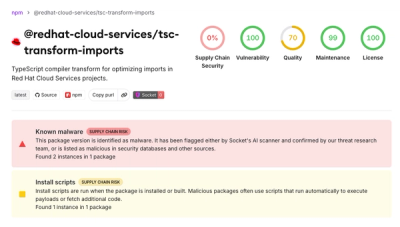
A mini Shai-Hulud campaign compromised Red Hat Cloud Services npm packages to steal developer and CI/CD secrets during installation.

Research
/Security News
The North Korean malware loader hides in a Packagist-listed package and its GitHub branch to fetch and execute remote code in a likely Contagious Interview-style lure.