

Security News
US Government Forces Anthropic to Pull Claude Fable Days After Launch
Anthropic says the directive cited national security concerns over a narrow jailbreak, but offered no specific technical details.
By Sarah Gooding - Jun 13, 2026
a project of 'Second Compiler'.
install by git clone (then npm install)
git clone https://github.com/ivere27/secc.git
cd secc
npm install
make sure you've already installed node.js, npm and (optionally) redis
set PATH and NUMBER_OF_PROCESSORS(-jX)
edit "client" part in 'settings.json' file. set scheduler's address and port.
$ export PATH=/path/to/secc/bin:$PATH
$ export NUMBER_OF_PROCESSORS="8"
$ # then,
$ clang -c test.c
or just use CC, CXX and NUMBER_OF_PROCESSORS env
```sh
$ SECC_ADDRESS=172.17.42.1 SECC_CACHE=1 SECC_CROSS=0 \
CC=/path/to/secc/bin/clang CXX=/path/to/secc/bin/clang++ ./configure
$ SECC_ADDRESS=172.17.42.1 SECC_CACHE=1 SECC_CROSS=0 \
CC=/path/to/secc/bin/clang CXX=/path/to/secc/bin/clang++ make -j8
upload your compiler archive by ./tool/secc-upload-archive.js
$ # for clang
$ node secc-upload-archive.js --clang /path/to/clang /path/to/clang++ archivetool.js http://SCHEDULER:PORT
$ # for gcc
$ node secc-upload-archive.js --gcc /path/to/gcc /path/to/g++ archivetool.js http://SCHEDULER:PORT
in linux case(you can use the specific compiler version),
 node secc-upload-archive.js --gcc /usr/bin/gcc-5 /usr/bin/g++-5 ./secc-create-archive-linux.js http://172.17.42.1:10509

 node secc-upload-archive.js --clang /usr/bin/clang /usr/bin/clang++ ./secc-create-archive-linux.js http://172.17.42.1:10509
edit "daemon" part in 'settings.json' file. set scheduler's address and port.
if you want to use cache, go #Caches section.
run 'node secc-daemon.js' as root for chroot-jail.
sudo DEBUG=secc* node secc-daemon.js
sudo DEBUG=secc* node secc-scheduler.js
MODE 1 - Preprocessed Mode(default) send one preprocessed source to daemon. (cause CPU load)
MODE 2 - Pump Mode send headers and source to daemon. (cause Memory/Bandwidth load)
MODE 3 - Git Mode(not yet supported.)
use DEBUG=* to watch every verbose logs. use DEBUG=secc* to watch only SECC's log.
DEBUG=* SECC_MODE=1 SECC_CACHE=1 /path/to/secc/bin/gcc -c test.c
install REDIS in a daemon computer. then, enable "cache" in "daemon" part of 'settings.json' file.
| Verb | Endpoint | Note |
|---|---|---|
GET | / | Scheduler Monitor(HTML/JS) |
GET | /archive | uploaded archive list |
GET | /archive/{archiveId} | archive information of {archiveId} |
GET | /archive/{archiveId}/file | download the compiler archive file |
DELETE | /archive/{archiveId} | remove {archiveId} archive |
POST | /archive | upload a new archive(used by tool/secc-upload-archive.js) |
GET | /cache | cache metadata list |
DELETE | /cache | clear all caches in Scheduler & Daemons |
GET | /daemon | connected daemon list |
GET | /job | working job list |
GET | /job/new | request new job(used by secc.js client) |
| Verb | Endpoint | Note |
|---|---|---|
GET | /native/system | daemon's native compiler(installed) |
POST | /compile/preprocessed/native | compile a preprocessed source by daemon's native compiler |
POST | /compile/preprocessed/{archiveId} | compile a preprocessed source by {archiveId}(the archive is downloaded from Scheduler) |
POST | /compile/pump/{archiveId}/{projectId}/filecheck | check dependency files whether already uploaded or not. |
POST | /compile/pump/{archiveId}/{projectId} | compile a source with dependencies by {archiveId}(the archive is downloaded from Scheduler) |
GET | /cache/{sourceHash}/{argvHash} | response the stored cache |
MIT
FAQs
Distributed compiler with modern web technology
The npm package secc receives a total of 11 weekly downloads. As such, secc popularity was classified as not popular.
We found that secc demonstrated a not healthy version release cadence and project activity because the last version was released a year ago. It has 1 open source maintainer collaborating on the project.
Did you know?

Socket for GitHub automatically highlights issues in each pull request and monitors the health of all your open source dependencies. Discover the contents of your packages and block harmful activity before you install or update your dependencies.
Security News
Anthropic says the directive cited national security concerns over a narrow jailbreak, but offered no specific technical details.

Security News
A network of 152 Chrome live wallpaper extensions hid ad tracking and made extension-driven traffic look like Google search clicks.
Company News
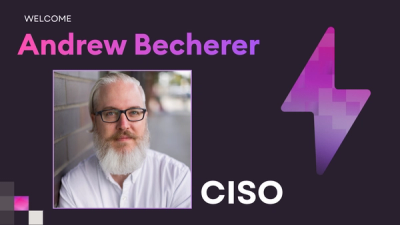
Socket’s first CISO brings deep experience securing high-growth SaaS companies as open source supply chain threats accelerate.