

Security News
US Government Forces Anthropic to Pull Claude Fable Days After Launch
Anthropic says the directive cited national security concerns over a narrow jailbreak, but offered no specific technical details.
By Sarah Gooding - Jun 13, 2026
spec-first
Advanced tools
AI coding workflow CLI for spec-driven engineering, spec-driven development, and harness engineering on Claude Code and Codex

A workflow CLI that feeds LLM structured, provenance-backed context at every stage of the AI coding delivery loop — and governs the full path from ideation to compound learning.
Open-source for Claude Code and Codex. Install once, govern the full delivery loop.
Quick Start • Workflow • CLI • Languages • User Manual (zh) • npm


Most AI coding failures come from degraded LLM decision inputs, not weak models:
| Problem | How spec-first addresses it | Enforcement |
|---|---|---|
| LLM starts from a blank-slate codebase context | graph-bootstrap extracts AST facts and compiles minimal-context with provenance and confidence signals | Code-hard gate at bootstrap / stage0-context runtime |
| Requirements are never made explicit | Brainstorm stage produces a requirements artifact consumed by Plan | SKILL.md contract |
| Plans drift from implementation | Plan artifact is a first-class Work input, and Review Stage 2b cross-checks the Requirements Trace against the diff | SKILL.md contract |
| Reviews are unstructured | 17 reviewer personas (always-on + cross-cutting + stack-specific) plus 2 CE-specific agents, routed by safe_auto / gated_auto / manual / advisory | SKILL.md contract |
| Solved problems are not reused | Compound writes structured learnings to docs/solutions/ with YAML frontmatter for future retrieval | SKILL.md contract |
Suited for:
Not suited for:
Light contract · Explicit boundaries · Let the LLM decide.
Spec-First rests on a single conviction: AI coding quality is bounded by the quality of decision inputs the LLM receives, not by the weight of orchestration. Repository governance (see CLAUDE.md / AGENTS.md) explicitly forbids:
And explicitly prefers:
provenance, freshness, confidence, fallback_reason, and verification_gaps as independent, composable input factsEvery other choice in this README is a consequence of that stance.
Spec-First upgrades what the LLM receives as decision input — it does not replace LLM judgment with a state machine.
graph-bootstrap — the foundation
Codebase → AST graph → fact extraction → minimal-context (provenance + confidence)
        → injection-index (stage-aware routing) → workflow input
graph-bootstrap turns a codebase into structured context before AI starts coding. It typically runs once per project, or incrementally when code changes, and its output is consumed by every downstream workflow stage.
Main workflow — the delivery loop
Ideate → Brainstorm → Plan → Work → Review → Compound
This solves "how does a requirement get AI-engineered end-to-end?" Every stage has explicit input artifacts, output artifacts, and a stage-gate contract.
| Entrypoint | When to use | Produces | Stability |
|---|---|---|---|
/spec:graph-bootstrap · $spec-graph-bootstrap | You want fact-extracted, graph-informed context (Phase 0–4) | Phase 0–4 facts + injection-index.yaml + minimal-context/*.json | Primary Stage-0 entry |
/spec:compound · $spec-compound | You want broader knowledge capture and reusable context synthesis | Context synthesis docs and reusable knowledge artifacts | Complementary Stage-0 path |
Stage-0 entrypoints run a Host Readiness Gate at startup. If MCP setup was skipped or the host was not restarted, they stop with explicit guidance rather than degrade silently.
If you still see an older bootstrap entrypoint in local runtime assets or stale documentation, migrate to /spec:graph-bootstrap or /spec:compound.
Every context artifact carries machine-readable quality metadata. Downstream SKILL.md contracts read these signals and adapt:
| Field | Values | Meaning |
|---|---|---|
data_quality | fact-backed · partial · empty · (absent = legacy manifest, treated as backward-compatible) | How much of the context comes from real code analysis |
provenance | fact-inventory · empty-fallback | Whether content was compiled from extracted facts or from a skeletal default |
confidence | high · medium · low | LLM-consumable trust signal |
fallback_reason | empty_fact_inventory (root cause) · minimal_context_missing (secondary) · workspace_child_partial_degraded · (other runtime-specific values) | Explicit degradation cause when the context is not fact-backed |
When data_quality: empty, the evaluator downgrades to L1 and sets fallback_reason. The LLM gets a clear signal: this context is skeletal, not a real analysis.
L0 — fact-backed context with real AST-derived signals; full-strength Stage-0 input.
L1 — skeletal or degraded context; the evaluator has setfallback_reason, and downstream SKILLs should treat these signals as advisory.
L2 — fixed minimal fallback; used only wheninjection-index.yamlcannot be resolved, falling back to ambient defaults (e.g.00-summary.md,pitfalls/index.md).
Downstream skills are allowed to proceed at any level. The evaluator exposes the level so the LLM can adjust its own confidence, not to block execution.
| Layer | Scope | Type |
|---|---|---|
CLI (doctor / init / clean / stage0-context) | Asset sync, state tracking, manifest validation, Stage-0 context emission | Code-hard, enforced through shell exit code |
| Host Readiness Gate + Stage-0 evaluator L0/L1/L2 | Enforced when graph-bootstrap / stage0-context runs, emitting fallback_reason and degraded level | Runtime signal, emitted by code, consumed by LLM |
Workflow stages (SKILL.md) | Stage contracts, artifact naming, review classes, requirements trace | SKILL contract, followed by LLM |
Context signals (provenance / confidence / fallback_reason) | In-artifact metadata | SKILL contract, consumed by LLM |
Powered by 15 vendored / pinned tree-sitter parsers. All 15 are installed by default — no opt-in required.
| Language | Parser | Notes |
|---|---|---|
| C | tree-sitter-c | |
| C++ | tree-sitter-cpp | |
| C# | tree-sitter-c-sharp | |
| Go | tree-sitter-go | |
| Java | tree-sitter-java | |
| JavaScript | tree-sitter-javascript | CommonJS require() is resolved into imports_from edges |
| Kotlin | tree-sitter-kotlin | |
| Objective-C | tree-sitter-objc (vendored fork) | .m / .mm / heuristic .h routing; extracts @interface/@implementation/@protocol |
| PHP | tree-sitter-php | |
| Python | tree-sitter-python | |
| Ruby | tree-sitter-ruby | |
| Rust | tree-sitter-rust | |
| Scala | tree-sitter-scala | |
| Swift | tree-sitter-swift (vendored fork) | Removes the upstream tree-sitter-cli install-time dependency |
| TypeScript | tree-sitter-typescript | Covers .ts / .tsx / .d.ts |
iOS repositories are auto-detected (Podfile.lock / .xcodeproj) and Pod exclude paths are applied automatically.
| Capability | What it solves |
|---|---|
CLI control plane (doctor / init / clean / stage0-context) | Repeatable install, health checks, cleanup, and Stage-0 context emission — managed assets always stay traceable |
CRG graph engine (spec-first crg *) | Code Review Graph — an embedded Node.js runtime over SQLite + FTS5, covering AST → symbols → resolved edges → PageRank flows → community detection → surprising-connections → god-nodes → review-context |
| graph-bootstrap context engine | LLM gets fact-extracted, confidence-annotated project context instead of a raw codebase |
| Full workflow layer | Ideate → Brainstorm → Plan → Work → Review → Compound, every stage with an explicit artifact contract |
| 17-persona Review stage (+ 2 CE agents) | Produces structured findings routed by safe_auto / gated_auto / manual / advisory, not a single-pass scan |
| Compound / knowledge capture | Solved problems are written to docs/solutions/ for future workflow retrieval |
| Dual platform support | One methodology across Claude Code (/spec:*) and Codex ($spec-*). Claude uses a SessionStart hook + bare-agent rewrite; Codex uses .agents/skills/ discovery + explicit .codex/agents/... path rewrite |
| Capability layer | Bundled source assets ship with 47 skills, 57 agents, and 4 agent support files. Runtime delivery is host-filtered by governance: the current bundle installs 12 commands + 35 skills on Claude, and 34 skills on Codex, with 57 agents + 4 support files on both hosts |
| Runtime governance | Managed assets are tracked in state.json — sync, refresh, recover, and clean safely |

| Stage | Claude Code | Codex | Output Artifact | Enforcement |
|---|---|---|---|---|
| Host Setup | /spec:mcp-setup → restart | $spec-mcp-setup → restart | Host-specific marker: ~/.claude/spec-first/host-setup.json or ~/.codex/spec-first/host-setup.json | Code-hard (bootstrap gate checks this) |
| Stage-0 graph bootstrap | /spec:graph-bootstrap | $spec-graph-bootstrap | Phase 0–4 facts + injection-index.yaml + minimal-context/*.json | Code-hard gate + SKILL.md content |
| Ideate | /spec:ideate | $spec-ideate | docs/ideation/*.md | SKILL.md contract |
| Brainstorm | /spec:brainstorm | $spec-brainstorm | docs/brainstorms/*.md | SKILL.md contract |
| Plan | /spec:plan | $spec-plan | docs/plans/*.md | SKILL.md contract |
| Work | /spec:work | $spec-work | code + tests | SKILL.md contract |
| Review | /spec:review | $spec-review | structured review report | SKILL.md contract (17 reviewer personas + 2 CE agents) |
| Compound | /spec:compound | $spec-compound | docs/solutions/**/*.md | SKILL.md contract |
| Stage | Claude Code | Codex | Purpose |
|---|---|---|---|
| Debug | /spec:debug | $spec-debug | Reproduce and diagnose an existing bug or failure |
| Update | /spec:update | $spec-update | Refresh runtime assets after spec-first upgrades |
| Sessions | /spec:sessions | $spec-sessions | Search and summarize prior coding agent sessions |
| Setup | /spec:setup | $spec-setup | Unified host / environment setup entrypoint |
These /spec:* and $spec-* surfaces are generated runtime workflow entrypoints, not root spec-first subcommands. The root CLI surface is documented below under CLI Commands.
>=20spec-first init reads git config user.name and graph-bootstrap depends on git ls-files, so non-Git directories are not supportednode_modules (15 tree-sitter parsers plus the better-sqlite3 native build)npm install -g spec-first
spec-first -v
postinstallnote: The installer runsbin/postinstall.js, which prints an install confirmation card and then trims nativetree-sitterprebuilds for platforms other than yours. This step only deletes files inside the installednode_modules/tree; it never touches your project files.
spec-first doctor
spec-first doctor --claude   # Claude-only scope
spec-first doctor --codex    # Codex-only scope
If doctor reports legacy managed state, run init again. This is the only supported upgrade path — it performs a managed hard reset before rebuilding the runtime.
doctor --json also exposes workflow verification evidence as structured facts: schema validity, freshness, fallback_reason, and evidence_age_summary (oldest_* / newest_* + max_age_ms) so downstream workflows do not need to infer evidence staleness heuristically.
spec-first init --claude
# or
spec-first init --codex
To set developer identity explicitly:
spec-first init --claude -u <name> --lang <zh|en>
spec-first init --codex -u <name> --lang <zh|en>
Identity resolution order:
-u flag value (when provided)~/.spec-first/.developer (global identity)git config user.name fallbackLanguage resolution order:
--lang flag value (when provided).developer profilezhinit writesinit is not a read-only operation. It mounts spec-first into your project by writing the following:
| Target | What gets written | Removable by clean? |
|---|---|---|
CLAUDE.md / AGENTS.md | <!-- spec-first:lang:* --> language policy block (idempotent marker block) | ❌ Manual removal — clean does not strip the language policy block |
CLAUDE.md / AGENTS.md | using-spec-first instruction bootstrap block | ✅ Removed by clean |
CLAUDE.md / AGENTS.md | <!-- spec-first:coding-guidelines:* --> coding execution guidelines block | ✅ Removed by clean |
.claude/settings.json | Managed SessionStart matcher entry (Claude only) | ✅ Removed by clean |
.claude/hooks/session-start | Managed SessionStart hook script (Claude only) | ✅ Removed by clean |
.claude/commands/spec/** · .claude/skills/** · .claude/agents/** (or Codex equivalents) | Managed runtime assets | ✅ Removed by clean |
.claude/spec-first/.developer / .codex/spec-first/.developer | Host-specific project developer profile | ✅ Removed by clean |
.claude/spec-first/state.json / .codex/spec-first/state.json | Host-specific managed asset tracking state | ✅ Removed by clean |
CHANGELOG.md | Bootstrapped only when missing, with the managed format header and an initial init entry | ❌ User-owned after creation |
spec-first clean --claude # or --codex
init does not overwrite an existing CLAUDE.md / AGENTS.md. On first install, spec-first appends its managed instruction blocks as a footer after any existing user content; on re-init, it only replaces the marker-delimited managed blocks it owns.
clean removes everything marked removable in the table above, then prints which platform's managed assets were removed. Custom assets outside the managed set are left untouched. The language policy block must still be removed manually — search for <!-- spec-first:lang: in CLAUDE.md / AGENTS.md.
Both init --dry-run and clean --dry-run preview file-level operations derived from the same managed operation plans used by real apply paths, which keeps preview/apply drift narrow and testable.
Current runtime delivery is host-specific by governance: Claude writes 12 command files, 35 skill directories, 57 agent files, and 4 agent support files; Codex writes 34 skill directories plus the same 57 agent files and 4 support files, with no command directory.
$ spec-first init --claude

🪝 Installed Claude SessionStart matcher in .claude/settings.json
📦 Generated 12 command file(s) in .claude/commands/spec
🧩 Generated 35 skill directory(ies) in .claude/skills
🤖 Generated 57 agent file(s) in .claude/agents
🧰 Generated 4 agent support file(s) in .claude/agents
🪪 Wrote project developer profile:
  📍 path: .claude/spec-first/.developer
  👤 name: yourname
  🈯 lang: zh
  ⏱ initialized_at: <ISO-8601 timestamp>
  🔖 version: <installed spec-first version>

🔁 Restart Claude Code after generation so it can pick up the new /spec:* commands.
Counts and version reflect the version actually installed at run time. If
CHANGELOG.mddid not exist yet,initalso prints📝 Bootstrapped CHANGELOG.md. The install log is emitted in English regardless of--lang; the--langsetting governs future Claude / Codex response language, not the installer's own output. Codex output differs by design: it does not generate.claude/commands/spec, and it restarts into$spec-*skill entrypoints instead.
| Step | Claude Code | Codex |
|---|---|---|
| Install MCP tools | /spec:mcp-setup | $spec-mcp-setup |
| Restart host | restart Claude Code | restart Codex |
| Build context | /spec:graph-bootstrap or /spec:compound | $spec-graph-bootstrap or $spec-compound |
| Start the workflow | /spec:ideate → /spec:brainstorm → /spec:plan → /spec:work → /spec:review → /spec:compound | $spec-ideate → … → $spec-compound |
graph-bootstrap runs a Host Readiness Gate at startup. If MCP setup was skipped or the host was not restarted, it stops with explicit guidance rather than degrade silently.
┌──────────────────────────────────────────────────────────────┐
│  Entry Layer — spec-first CLI                                │
│  doctor / init / clean / stage0-context / crg <subcommand>   │
│  Enforcement: code-hard (asset sync, state, manifest,        │
│               Stage-0 emission, CRG SQLite pipeline)         │
├──────────────────────────────────────────────────────────────┤
│  Context Layer — graph-bootstrap / CRG module                │
│  AST fact extraction → artifact-manifest (data_quality)      │
│  → minimal-context (provenance + confidence + fallback)      │
│  → injection-index (stage-aware routing)                     │
│  Enforcement: code-hard gate (L0/L1/L2) + SKILL.md content   │
├──────────────────────────────────────────────────────────────┤
│  Workflow Layer — skills                                     │
│  Ideate / Brainstorm / Plan / Work / Review / Compound       │
│  + Debug / Update / Sessions / Setup auxiliaries             │
│  Stage contracts, artifact conventions, review classes       │
│  Enforcement: SKILL.md contracts (LLM-followed)              │
├──────────────────────────────────────────────────────────────┤
│  Capability Layer — agents (6 categories)                    │
│  review/ (17 reviewer personas + CE agents)                  │
│  document-review/ (requirements / plan persona review)       │
│  research/ (session / doc / Feishu / web context readers)    │
│  design/ (UI / design-lens agents)                           │
│  workflow/ (bug-reproduction / lint / pr-comment-resolver)   │
│  docs/ (documentation / onboarding support)                  │
│  Enforcement: convention (LLM-dispatched)                    │
└──────────────────────────────────────────────────────────────┘
Runtime assets under .claude/, .codex/, or .agents/ are generated outputs, not editable source. skills/, agents/, templates/, and docs/ are the source of truth.
| Command | Purpose | Notes |
|---|---|---|
spec-first doctor | Environment check | Verifies platform state, plugin manifest, and managed assets. --claude / --codex scopes to one platform. Reports legacy managed state when init is needed, and --json includes evidence schema/freshness plus evidence_age_summary. |
spec-first init | Initialize the runtime | Syncs commands, skills, agents, runtime hooks, and developer metadata through managed operation plans. Also the only supported legacy upgrade entrypoint — performs a managed hard reset. See What init writes above. |
spec-first clean | Remove managed assets | Removes the given platform's spec-first managed assets through the same operation-plan boundary used by --dry-run; does not migrate legacy state and does not strip the language policy marker block. |
spec-first stage0-context | Emit Stage-0 runtime context | Called by SKILLs such as spec-plan / spec-work / spec-review at stage start. Accepts --stage <plan|work|review>, --workflow <skill-name>, --format json. |
spec-first crg <subcommand>)An embedded Code Review Graph runtime over SQLite + FTS5.
spec-first crg --help
spec-first crg build --repo .
spec-first crg review-context --repo . --changed <ref>
| Subcommand | Purpose |
|---|---|
build | Build or incrementally refresh the graph DB from a repo |
stats | Report node / edge / community counts and unresolved edges |
context | Export a context bundle for a symbol or file |
query | Eight structured lookups: callers_of / callees_of / importers_of / importees_of / dependents_of / dependencies_of / tests_for / similar_to |
impact | Impact-of-change analysis for a file or symbol |
large-functions | Find functions above a size threshold |
search | FTS5 full-text search across symbols / files |
flows | PageRank + BFS flow detection |
flow / affected-flows | Inspect a single flow, or flows affected by a diff |
communities / community | 3-pass community detection, plus single-community inspection |
architecture | High-level architecture summary |
surprising-connections | Cross-community / peripheral-to-hub surprise detector |
god-nodes | High-fan-in hub detection |
detect-changes | SHA-256 incremental change detection |
review-context | Compose a review context bundle from a diff |
postprocess | Recompute communities, flows, graph analysis, and FTS after a build or incremental refresh |
All subcommands accept --repo=<path>. The full list is whatever spec-first crg --help prints for the installed version.
Detailed manuals and implementation docs are currently Chinese-first. Until English translations catch up, English readers can use DeepWiki or Ask ChatGPT as a supplementary entrypoint.
| Document | Language | Description |
|---|---|---|
| Chinese README | zh | Full Chinese README |
| User Manual | zh | Complete user manual index |
| Quick Start | zh | First-time setup walkthrough |
| Core Concepts | zh | Architecture and terminology |
| Full Example | zh | End-to-end delivery walkthrough |
| FAQ | zh | Troubleshooting and common issues |
| Best Practices | zh | Team usage patterns |
| Chinese Architecture Overview | zh | System design for contributors |
| Chinese Development Guide | zh | Contributor standards |
| Chinese Testing Plan | zh | Verification and test strategy |
| CHANGELOG | en / zh mixed | Canonical version history (machine-readable) |
| Chinese Release Notes | zh | Narrative release notes |
git clone https://github.com/sunrain520/spec-first.git
cd spec-first
npm install --legacy-peer-deps
npm test
--legacy-peer-depsis required because the vendoredtree-sitterforks andjest's peer-dependency resolution conflict under stricter resolvers. Omitting it typically fails the firstjestrun.
npm run test:unit           # shell unit tests + jest unit suite (tests/unit/*)
npm run test:smoke          # install-local + CLI smoke
npm run test:integration    # verification-gate jest + e2e shell
npm run test:e2e:crg        # CRG full-command + SQLite audit
npm run test:jest           # jest only
npm run test:crg:gate       # CRG regression gate (benchmarks/regression/*)
npm run test:ai-dev:gate    # AI Dev Quality Gate (light contract check)
npm pack                    # release tarball dry run
npm test itself runs test:unit → test:smoke → test:integration → test:e2e:crg in that order.
Issues and pull requests are welcome.
To report a bug, open an Issue with reproduction steps, environment details, and expected behavior.
To contribute code:
master.master as the only branch that accepts direct updates; main is an automatically synced mirror branch and should not receive direct development or commits.npm install --legacy-peer-deps, then npm test.Recommended reading before contributing: AGENTS.md · User Manual · CHANGELOG
FAQs
AI coding workflow CLI for spec-driven engineering, spec-driven development, and harness engineering on Claude Code and Codex
The npm package spec-first receives a total of 62 weekly downloads. As such, spec-first popularity was classified as not popular.
We found that spec-first demonstrated a healthy version release cadence and project activity because the last version was released less than a year ago. It has 1 open source maintainer collaborating on the project.
Did you know?

Socket for GitHub automatically highlights issues in each pull request and monitors the health of all your open source dependencies. Discover the contents of your packages and block harmful activity before you install or update your dependencies.
Security News
Anthropic says the directive cited national security concerns over a narrow jailbreak, but offered no specific technical details.

Security News
A network of 152 Chrome live wallpaper extensions hid ad tracking and made extension-driven traffic look like Google search clicks.
Company News
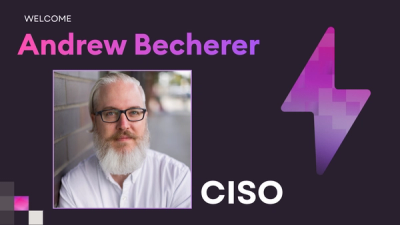
Socket’s first CISO brings deep experience securing high-growth SaaS companies as open source supply chain threats accelerate.