strata-mcp






Persistent memory for AI agents. Agents forget. Context windows roll over and the bug you fixed, the decision you made, and the pattern you found are gone. Strata captures these as structured knowledge while you work and gives them back to the next session — through the Model Context Protocol, the open standard supported by Claude Code, Cursor, Cline, Continue, Claude Desktop, Codex CLI, and Gemini CLI.
81.1% on LongMemEval-500 with the same BM25 + vector + RRF stack documented below — see Benchmarks. Runs locally on SQLite, on Cloudflare Workers + D1, or on Google Cloud Run.
sequenceDiagram
participant A as Claude Code<br/>(today)
participant S as Strata
participant B as Gemini CLI<br/>(3 weeks later)
A->>S: store_memory<br/>"Use bcrypt cost factor 12"
Note over S: Quality gates +<br/>BM25 index +<br/>vector embedding
Note over A,B: context window rolls<br/>session ends<br/>tools change
B->>S: search_history<br/>"password hashing decision"
S-->>B: [HIGH] Use bcrypt cost factor 12
For AI coding assistants: Strata auto-indexes your conversations from Claude Code, Codex CLI, Aider, Cline, and Gemini CLI into a shared knowledge base. Store a decision in Claude Code, recall it from Gemini CLI.
For agents you build: Deploy Strata as memory infrastructure via HTTP or multi-tenant transport. Ingest conversations from any source, search with BM25 + vector hybrid ranking, and give your agents the ability to learn from their own history. Deploy on Cloudflare Workers + D1 or Google Cloud Run.
For game engines (NEW in v2): Drop the REST transport into Unity, Godot, or Unreal for per-NPC memory. Two-tier auth (admin tokens issue player tokens), dialogue-shaped /recall endpoint that returns ready-to-prompt context, world/agent scoping. See Game Engine REST API.
Semantic search included. Add a free Gemini API key to enable hybrid BM25 + vector search with 3072-dimensional embeddings, LLM-powered knowledge extraction, and training data accumulation for local model distillation. Falls back to keyword search without it.
What makes Strata different: Every knowledge entry passes through a quality-gated evaluator pipeline before storage. Actionability, specificity, and relevance are checked deterministically. The result is a knowledge base that stays clean and auditable -- not a growing pile of everything.
No cloud required. No memory caps. Everything stays on your machine -- or deploy anywhere.
Status: Beta. The data model and MCP tool surface are stable; CLI flags and deploy commands may shift between minor versions. Used in production by Kytheros LLC and design partners.
Who builds this: Strata is built and maintained by Kytheros LLC. The community edition (this repo) is Apache 2.0 licensed and free forever — the feature set documented here is committed, not bait-and-switch. A commercial Pro tier is in development; see Pro Edition below for the planned scope.
Support development: polar.sh/kytheros — sponsorships fund the community edition.
Privacy: Strata stores everything locally in ~/.strata/strata.db by default and works fully offline with FTS5 keyword search. If you set GEMINI_API_KEY, queries and stored content are sent to Google's Gemini API for embeddings and extraction (subject to Google's API terms). Local LLM Inference removes the Gemini dependency entirely.
Strata vs. other memory layers
| Integration model | MCP server (any MCP client) | SDK (Python / JS) | LangChain only | DIY |
| Conversation ingestion | Auto-parses Claude / Codex / Aider / Cline / Gemini transcripts | Explicit add() calls | Explicit | DIY |
| Quality control on writes | Evaluator pipeline (3 deterministic gates) | Stores all | Stores all | None |
| Search | BM25 + vector + RRF + recency + decay | Vector | Vector | Vector |
| Embedding storage | Quantized across SQLite / D1 / Postgres (Lloyd-Max + Hadamard + TurboQuant) | Backend-defined | Backend-defined | Backend-specific |
| Local-only mode | ✓ (works fully offline w/o API key) | Hosted-default | Configurable | ✓ |
| Game engine transport | ✓ (REST, per-NPC scoping) | ✗ | ✗ | ✗ |
| License | Apache 2.0 | Apache 2.0 | MIT | Varies |
Mem0 is the right tool when you're embedding memory inside a single application's SDK. Strata is the right tool when you want a memory layer that every MCP-compatible agent on your machine shares — and that you can also deploy as multi-tenant infrastructure.
Why owning the storage matters
Most memory layers wrap a separately-configured vector database — Qdrant, pgvector, Pinecone, LanceDB. That's a sound abstraction, but it means the memory product can never ship features that touch the storage layout: quantization, ranking-fidelity tradeoffs, custom index types, online migration. Strata owns its storage end-to-end across every deployment target — SQLite locally, Cloudflare D1 at the edge, Postgres on GCP Cloud SQL — and ships those as first-class capabilities. That includes TurboQuant scalar quantization, an algorithm that isn't yet standard in any production vector DB.
Quick Start (< 5 minutes)
1. Install
npm install -g strata-mcp
2. Set up your AI tool
Claude Code:
strata init --claude
Gemini CLI:
strata init --gemini
Both (auto-detects installed CLIs):
strata init
This registers the MCP server, installs session hooks, skills, and creates the project context file (CLAUDE.md / GEMINI.md).
3. Restart your CLI
The index builds automatically on first use.
4. Try it
Store a memory, then search for it:
You: "Remember that we use bcrypt with cost factor 12 for password hashing"

  -> store_memory({
       memory: "Use bcrypt with cost factor 12 for password hashing",
       type: "decision",
       tags: ["security", "bcrypt"]
     })
  -> Stored decision: "Use bcrypt with cost factor 12..."

You: "What did we decide about password hashing?"

  -> search_history({ query: "password hashing decision" })
  -> [HIGH] "Use bcrypt with cost factor 12 for password hashing"
Verify
strata status
Strata v2.0.0
Database: ~/.strata/strata.db
Sessions: 142 | Documents: 3847 | Projects: 12
MCP Client Setup
strata init auto-configures Claude Code and Gemini CLI. For other MCP clients, drop the snippet below into the client's MCP settings file:
Claude Desktop — ~/Library/Application Support/Claude/claude_desktop_config.json (macOS) or %APPDATA%\Claude\claude_desktop_config.json (Windows):
{
  "mcpServers": {
    "strata": {
      "command": "strata"
    }
  }
}
Cursor — Settings → MCP → Add Server, or ~/.cursor/mcp.json:
{
  "mcpServers": {
    "strata": {
      "command": "strata",
      "env": {
        "GEMINI_API_KEY": "your-key-here"
      }
    }
  }
}
Cline (VS Code) — Cline → Settings → MCP Servers, or cline_mcp_settings.json:
{
  "mcpServers": {
    "strata": {
      "command": "strata",
      "disabled": false,
      "autoApprove": ["search_history", "find_solutions", "get_project_context"]
    }
  }
}
Continue — ~/.continue/config.yaml:
mcpServers:
  - name: strata
    command: strata
Codex CLI / Aider — both read conversation files Strata already auto-indexes. No MCP wiring needed; just run strata init and they show up in strata status.
Remote / HTTP transport — start Strata as an HTTP server with strata serve --port 3000 and point any MCP-compatible client at http://localhost:3000/mcp. For multi-user deployments, see Deploy on Cloudflare Workers + D1 — the multi-tenant transport requires a verified auth proxy in production.
Python SDK
For agents you build in Python, install strata-memory from PyPI:
pip install strata-memory
from strata import StrataClient
s = StrataClient()
s.add("Use bcrypt with cost factor 12 for password hashing", type="decision")
results = s.search("password hashing")
Framework integrations
Strata ships first-party adapters for the major Python agent frameworks. Install with the matching extra:
LangChain:
pip install strata-memory[langchain]
from strata import StrataClient
from strata.integrations.langchain import StrataRetriever

retriever = StrataRetriever(client=StrataClient(), search_kwargs={"limit": 5})
docs = retriever.invoke("How did we fix auth last time?")
CrewAI:
pip install strata-memory[crewai]
from strata import StrataClient
from strata.integrations.crewai import StrataCrewMemory

memory = StrataCrewMemory(client=StrataClient(), project="research-crew")
LlamaIndex:
pip install strata-memory[llamaindex]
from strata import StrataClient
from strata.integrations.llamaindex import StrataMemoryStore

store = StrataMemoryStore(client=StrataClient(), project="my-index")
The Python SDK is currently alpha (0.1.0). Full reference and Mem0 migration guide at strata-py.
Search and Discovery
search_history | FTS5 full-text search with BM25 ranking, auto-enhanced with vector search when Gemini is configured. Inline filters: project:name, before:7d, after:30d, tool:Bash. |
find_solutions | Solution-biased search -- fix/resolve language scores 1.5x higher. Auto-enhanced with semantic search. |
semantic_search | Hybrid FTS5 + vector cosine similarity via Reciprocal Rank Fusion. Finds results that keyword search misses. Requires GEMINI_API_KEY. |
search_events | Search structured Subject-Verb-Object event tuples extracted from conversations. Bridges vocabulary gaps via lexical aliases. |
list_projects | All indexed projects with session counts, message counts, and date ranges. |
get_session_summary | Structured session summary: metadata, topic, tools used, conversation flow. |
get_project_context | Comprehensive project context with recent sessions, decisions, and patterns. |
get_user_profile | Synthesized user expertise, preferences, workflow patterns, and technology stack from accumulated knowledge. |
find_patterns | Recurring topics, workflow patterns, and repeated issues across sessions. |
Memory Management
store_memory | Store memories with 9 types: decision, solution, error_fix, pattern, learning, procedure, fact, preference, episodic. |
delete_memory | Hard-delete with audit history preservation. |
ingest_document | Extract and store structured insights (findings, metrics, summary) from uploaded documents. |
store_document | Store documents (PDF, text, image) with multimodal embeddings for semantic search. PDFs ≤6 pages use multimodal embedding; longer PDFs fall back to per-page text. Requires GEMINI_API_KEY. |
Reasoning
reason_over_query | Multi-step agent loop that iteratively searches history to answer complex questions (counting, temporal, comparison). Requires an LLM API key. |
get_search_procedure | Classify a question type and return the recommended search procedure without LLM calls. |
How It Works
Conversation files  -->  Parsers  -->  SQLite + FTS5 index
                                             |
                                    Knowledge Pipeline
                                    (evaluate -> score -> dedup -> store)
                                             |
                              Decisions / Solutions / Fixes / Patterns
                                             |
                                      15 MCP Tools
                                             |
                                     Your AI Assistant
Every extracted knowledge entry passes through three quality gates before storage:
- Actionability -- contains usable patterns (use, avoid, when...then, rate limits, error fixes)
- Specificity -- has 2+ concrete details (numbers, versions, URLs, error codes, API refs)
- Relevance -- about operational/technical topics (not weather, sports, humor)
Entries that fail any gate are rejected. This keeps the knowledge base clean and searchable. See Evaluator Pipeline for the full specification with examples.
Automatic Memory via Hooks
When you run strata init, Strata registers hooks into your AI assistant's lifecycle. These run automatically -- no manual MCP tool calls needed:
| Error recovery | Tool fails | Searches past sessions for the same error and feeds the fix back to your assistant |
| Prompt context | You type a message | Detects error patterns, recall language, and debugging questions -- injects relevant past context |
| Compaction survival | Context compacts | Re-injects key decisions and active work so they survive context window compression |
| Knowledge extraction | Session ends | Parses the transcript, extracts decisions/solutions/patterns, stores for future recall |
| Change tracking | File edited/created | Logs which files were changed as searchable events |
| Agent awareness | Sub-agent spawns | Injects Strata tool awareness so agents proactively use memory |
| Agent idle save | Teammate goes idle | Saves agent work context so it's findable in future sessions |
All hooks are silent when they have nothing to contribute. Zero latency on the happy path.
See Hooks and Skills for the full configuration reference.
Deploy on Cloudflare Workers + D1
Strata ships a pluggable storage layer with a Cloudflare D1 adapter. Deploy Strata as a serverless MCP server on Cloudflare's global edge — zero ops, infinite scale, $0 idle cost.
npm install strata-mcp @modelcontextprotocol/sdk
import { WebStandardStreamableHTTPServerTransport } from "@modelcontextprotocol/sdk/server";
import { createD1Storage } from "strata-mcp/d1";
import { createServer } from "strata-mcp/server";

export default {
  async fetch(request: Request, env: { STRATA_DB: D1Database }): Promise<Response> {
    const url = new URL(request.url);
    const match = url.pathname.match(/^\/strata\/([a-f0-9-]+)\/mcp$/);
    if (!match) return new Response("Not found", { status: 404 });

    const storage = await createD1Storage({ d1: env.STRATA_DB, userId: match[1] });
    const { server } = createServer({ storage });
    const transport = new WebStandardStreamableHTTPServerTransport({ sessionIdGenerator: undefined });
    await server.connect(transport);
    return transport.handleRequest(request);
  },
};
Full-text search (FTS5) works out of the box. Add a GEMINI_API_KEY secret for semantic search with 3072-dim embeddings — same quality as the local SQLite path.
See the full deployment guide at kytheros.dev/docs/cloudflare-workers-d1.
Storage Backends
| SQLite (default) | Local CLI, single user | npm install -g strata-mcp |
| D1 | Cloudflare Workers, multi-tenant | strata deploy cloudflare |
| SQLite + Litestream | GCP Cloud Run, single-user | strata deploy gcp |
| Postgres | GCP Cloud Run + Cloud SQL, multi-tenant | strata deploy gcp --multi-tenant |
All backends support the same MCP tools, full-text search, and semantic search. The storage layer is pluggable via the StorageContext interface -- pass it to createServer({ storage }).
Deploy on GCP Cloud Run
Deploy Strata to Google Cloud Platform with a single command. Two tiers available:
- Single-user -- Cloud Run + Litestream (SQLite backed up to GCS). ~$40-65/mo.
- Multi-tenant -- Cloud Run + Cloud SQL (Postgres). ~$90+/mo, scales horizontally.
Prerequisites
- Google Cloud SDK (
gcloud CLI)
- A GCP project with billing enabled
- Authenticated:
gcloud auth login
Single-user deployment
strata deploy gcp
Deploys a Cloud Run service with Litestream continuously replicating your SQLite database to a GCS bucket. Automatic restore on cold start. CPU always-on for background workers.
Multi-tenant deployment
strata deploy gcp --multi-tenant
Deploys Cloud Run with a managed Cloud SQL (Postgres 17) instance. Row-level tenant isolation, auto-scaling from 1 to 10+ instances, Cloud SQL Auth Proxy for secure connections.
Both modes use the same search pipeline (BM25 full-text + vector cosine similarity via RRF). Add a GEMINI_API_KEY secret for semantic search.
Multi-tenant auth model
Read this before exposing a multi-tenant deployment to untrusted clients.
Strata identifies the calling user via the X-Strata-User HTTP header (a UUID) and routes the request to that user's isolated SQLite database. The header alone is trust-the-header — Strata has no way to prove the caller actually owns the UUID they claim. For any deployment where untrusted clients can reach the port, you must front Strata with an auth proxy and require it to vouch for every request:
STRATA_REQUIRE_AUTH_PROXY=1
STRATA_AUTH_PROXY_TOKEN=$(openssl rand -hex 32)
The upstream proxy (Cloudflare Worker, Kong, Envoy, nginx + auth_request, etc.) is responsible for authenticating the caller, mapping them to a Strata user UUID, and vouching for the request:
sequenceDiagram
    autonumber
    participant Client
    participant Proxy as Auth Proxy<br/>(Worker / Kong / nginx)
    participant Strata as Strata<br/>(multi-tenant)
    participant DB as User DB<br/>(isolated SQLite)

    Client->>Proxy: Request + JWT / cookie / mTLS
    Note over Proxy: Authenticate caller<br/>Resolve user UUID
    Proxy->>Strata: POST /mcp<br/>X-Strata-User: <uuid><br/>X-Strata-Verified: <token>
    Note over Strata: Constant-time compare<br/>X-Strata-Verified vs<br/>STRATA_AUTH_PROXY_TOKEN
    alt token missing or mismatched
        Strata-->>Client: 401 Unauthorized
    else verified
        Strata->>DB: route to user's isolated DB
        DB-->>Strata: result
        Strata-->>Client: MCP response
    end
Without STRATA_REQUIRE_AUTH_PROXY=1, the backend assumes it's behind a private network boundary — fine for localhost and single-user self-hosted deployments, not safe to expose publicly.
The REST transport (strata serve --rest) has a separate token model: it signs player bearer tokens with HMAC and refuses to start unless STRATA_TOKEN_SECRET is set. See Game Engine REST API for the two-tier admin/player flow.
Deploy on AWS (Fargate + Aurora + Cognito)
Full-stack enterprise deploy: ECS Fargate, Aurora PostgreSQL Serverless v2, ElastiCache Redis, API Gateway with Cognito JWT auth, CloudWatch dashboards, and cost guardrails. Designed for portfolio demos, enterprise self-hosting, and AI coding assistant teams that need per-tenant memory isolation on AWS.
The deploy ships with a working demo app — AWS Concierge — that uses Strata for cross-session memory and Claude Sonnet 4.6 with read-only AWS SDK tools to answer operator questions about the live deployment ("what's running?", "any alarms firing?", "what did this cost last week?"). Useful as both a self-aware introspection agent and a reference for wiring Strata into a Next.js + Cognito app.
See docs/DEPLOYMENT.md#aws for setup instructions and the design spec at specs/2026-04-25-strata-deploy-aws-design.md for the full architecture.
Local-config setup is required after cloning — this template intentionally keeps the operator's AWS account ID, S3 backend bucket, and email allowlist out of the repo. Copy each .example file to its real name and fill in your values before task dev:up. Full checklist in templates/aws/README.md.
| Bootstrap only (persistent) | ~$0 |
| Fully deployed, idle | ~$361 |
| 8 hr/wk active cadence | ~$16 |
task bootstrap:up
task dev:up
task dev:down
The template lives in templates/aws/. See templates/aws/README.md for prerequisites and the full operating cadence.
Want a guided walkthrough? Request a demo — we run live tours of Strata on AWS, with GCP and Cloudflare demos coming.
Search Intelligence
Every search result is scored through multiple ranking signals, all empirically optimized via AutoResearch:
- BM25 full-text ranking via SQLite FTS5 with Porter stemming (
k1=1.2, b=0.75)
- Vector cosine similarity via Gemini
gemini-embedding-001 (3072-dim) with code-optimized task types
- Reciprocal Rank Fusion (
k=40) -- merges keyword and vector results for best-of-both retrieval
- Dual-list bonus (
0.3x) -- results appearing in both keyword and vector lists get a score boost
- Vector similarity tiebreaker (
0.005) -- restores magnitude information that RRF rank-based scoring discards
- Recency boosts -- last 7 days: 1.1x, last 30 days: 1.05x
- Project match boost -- results from the current project: 1.3x
- Importance scoring -- composite heuristic across type (0.35), frequency (0.35), language cues (0.20), explicit storage (0.10)
- Memory decay -- auto-indexed entries older than 90 days: 0.85x, older than 180 days: 0.7x (explicit memories exempt)
- Confidence bands -- results normalized to [0, 1] and bucketed into HIGH/MED/LOW
- Chunking -- 1600-token chunks with 50-token overlap for optimal context preservation
Vector search uses CODE_RETRIEVAL_QUERY task type for queries and RETRIEVAL_DOCUMENT for stored entries, optimizing Gemini's attention for code retrieval patterns.
All ranking parameters are centralized in src/config.ts and were validated against frozen eval suites (search retrieval: 30/30, chunking: 25/25, RRF fusion: 58/58).
TIR+QDP early access: see docs/upgrade-guide.md to opt in to turn-level retrieval ahead of the default-on flip.
Backup and Multi-Device Continuity
Strata stores everything in a single SQLite file (~/.strata/strata.db). Back it up to any S3-compatible provider — AWS S3, Cloudflare R2, Backblaze B2, or a self-hosted MinIO instance — with three commands:
strata backup push s3://my-bucket/my-machine.db
strata backup pull s3://my-bucket/my-machine.db
strata backup status s3://my-bucket/my-machine.db
Credentials come from the standard AWS environment variables (AWS_ACCESS_KEY_ID, AWS_SECRET_ACCESS_KEY, AWS_REGION). For non-AWS providers, also set AWS_ENDPOINT_URL:
export AWS_ENDPOINT_URL=https://<account-id>.r2.cloudflarestorage.com
strata backup push s3://my-bucket/strata.db
To skip repeating the URI, add a default to ~/.strata/backup.json:
{ "uri": "s3://my-bucket/my-machine.db" }
Then strata backup push (no argument) reads it automatically. Use --force to skip the overwrite confirmation on pull.
Local LLM Inference (Gemma 4)
Strata's extraction, conflict resolution, and summarization pipeline can run
entirely on local hardware via Gemma 4 and Ollama. Zero per-call API cost,
no data leaving the machine.
strata distill setup
strata distill test
See docs/local-inference.md for the full guide
including troubleshooting and performance benchmarks.
Local Model Distillation
Fine-tune a private model from your own coding sessions. When GEMINI_API_KEY is set, Strata captures (input, output) training pairs from every LLM-powered extraction and summarization. Once you have enough data (~1,000 pairs), export and train a local model that runs entirely offline.
strata distill status
strata distill export-data
strata distill activate
strata distill deactivate
The training pipeline uses parameter-efficient fine-tuning (QLoRA) to produce a local model that handles knowledge extraction and summarization without any API calls. Available via the Python SDK: pip install strata-memory[distill].
Supported AI Tools
| Claude Code | ~/.claude/projects/ |
| Codex CLI | ~/.codex/sessions/ |
| Aider | .aider.chat.history.md (per-project) |
| Cline | VS Code globalStorage/saoudrizwan.claude-dev/tasks/ |
| Gemini CLI | ~/.gemini/tmp/ |
Run strata status to see which tools are detected on your system.
Pro Edition
Status: In development. Pro is on the roadmap and not yet released. The features below describe the planned scope; there is no buy link, license activation flow, or download artifact available to the public yet. Sign up for updates at polar.sh/kytheros.
Planned scope — audit trails, entity intelligence, multi-provider LLM extraction, local dashboard, and cross-machine sync.
memory_history | Full audit trail of every knowledge mutation (add/update/delete) |
update_memory | Partial updates with change tracking |
find_procedures / store_procedure | Step-by-step workflow capture and search |
search_entities | Cross-session entity graph (libraries, services, tools, frameworks) |
ingest_conversation | Push conversations from any agent into the extraction pipeline |
get_analytics | Local usage analytics -- search patterns, tool usage, trends |
list_evidence_gaps | Knowledge blind spots -- topics searched but never answered |
| Multi-provider extraction | LLM-powered extraction with Anthropic, OpenAI, and Gemini (community gets Gemini with API key; Pro adds provider choice) |
| Local dashboard | Browser-based UI for knowledge exploration, settings, and maintenance |
| Pre-trained base models | Skip months of training data accumulation with Pro-only base models for distillation |
Configuration
GEMINI_API_KEY | Gemini API key for semantic search and embeddings. Get one free. Also reads from ~/.strata/config.json. | (FTS5 only) |
STRATA_DATA_DIR | Database directory | ~/.strata/ |
STRATA_LICENSE_KEY | Pro license key | (free tier) |
STRATA_DEFAULT_USER | Default user scope | default |
STRATA_EXTRA_WATCH_DIRS | Additional watch directories | (none) |
NO_COLOR | Disable colored CLI output | (unset) |
STRATA_TOKEN_SECRET | Required for strata serve --rest. HMAC signing key for player tokens. Generate with openssl rand -hex 32. | (REST refuses to start) |
STRATA_ALLOW_INSECURE_DEV_SECRET | Opt into a publicly-known dev fallback secret for --rest. Local dev only. | unset |
STRATA_REST_TOKEN | Admin token for the REST transport (alternative to --rest-token flag). | (unset) |
STRATA_REQUIRE_AUTH_PROXY | Set to 1 to enforce verified auth proxy for multi-tenant /mcp. Required in production multi-tenant deployments. | unset |
STRATA_AUTH_PROXY_TOKEN | Shared secret (≥32 chars) the upstream auth proxy must send as X-Strata-Verified. | (required when above is set) |
STRATA_ADMIN_TOKEN | Bearer token gating /admin/pool debug route in multi-tenant mode. If unset, the route is disabled. | (disabled) |
You can also set the Gemini key in ~/.strata/config.json instead of an environment variable:
{
  "geminiApiKey": "AIzaSy..."
}
CLI
strata | Start MCP server on stdio |
strata init | Auto-detect CLIs and set up integration (hooks, skills, config) |
strata init --gemini | Set up Gemini CLI integration only |
strata init --claude | Set up Claude Code integration only |
strata serve | Start single-tenant HTTP MCP server on port 3000 (or $PORT) |
strata serve --rest | Start REST API server for game engines (requires STRATA_TOKEN_SECRET) |
strata serve --multi-tenant | Start multi-tenant HTTP MCP server (use STRATA_REQUIRE_AUTH_PROXY=1 in production) |
strata search <query> | Search from the terminal |
strata store-memory <text> --type <t> | Store a memory |
strata status | Print index statistics |
strata world-migrate | Migrate pre-v2 installation to world-scoped REST layout (required before serve --rest) |
strata rest-migrate | REST-transport-specific migration |
strata update | Update strata installation in place |
strata deploy cloudflare | Deploy to Cloudflare Workers + D1 |
strata deploy gcp | Deploy to GCP Cloud Run (+ Litestream or Cloud SQL) |
strata backup push <s3-uri> | Upload ~/.strata/strata.db to S3-compatible bucket |
strata backup pull <s3-uri> | Restore DB from bucket (prompts before overwriting newer local file) |
strata backup status <s3-uri> | Compare local vs. remote size and last-modified |
strata activate <key> | Activate a Pro license |
strata license | Show current license status |
strata --help | Full usage |
Network Access
Strata runs fully local by default. The SQLite database, FTS5 index, and BM25 search engine never leave your machine. Outbound network calls are made only when you explicitly opt in to one of the following integrations:
| Gemini embeddings + extraction | generativelanguage.googleapis.com | GEMINI_API_KEY set |
| OpenAI reasoning | api.openai.com | OPENAI_API_KEY set + reason_over_query called |
| Anthropic reasoning | api.anthropic.com | ANTHROPIC_API_KEY set + reason_over_query called |
| Cohere reranking | api.cohere.com | COHERE_API_KEY set + reranker enabled |
| S3-compatible bucket | <your-bucket> | strata backup push/pull invoked |
With no API keys set, Strata makes zero outbound calls — you can run it on an air-gapped machine. The optional Ollama integration (local LLM via strata distill) is also fully on-device.
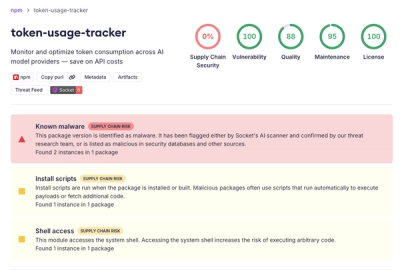
We use native fetch for all HTTP calls (no axios, got, or other third-party HTTP clients) per the project's supply-chain hardening policy. Socket's "module accesses the network" alert flags these fetch call sites; they are intentional and documented above.
Requirements
No other system dependencies. SQLite is bundled via better-sqlite3. For Cloudflare Workers deployment, the D1 adapter has no native dependencies.
Documentation
Full documentation at kytheros.dev/docs.
| Game Engine REST API | REST transport for Unity, Godot, Unreal — auth model, 22 routes, migration |
| Cloudflare Workers + D1 Guide | Deploy Strata as a serverless MCP server |
| Architecture | System design, storage model, retrieval pipeline |
| Evaluator Pipeline | Quality gates, accepted/rejected examples, importance scoring |
| Provenance & Audit | knowledge_history table, tracing entries to origin |
| Benchmarks | Retrieval quality metrics and methodology |
| Claude Code Integration | Setup, tools, workflows |
| MCP Client Integration | stdio and HTTP transport, SDK examples |
| Hooks and Skills | Hook setup, skill definitions, agent integration |
| Multi-Tool Support | Claude Code, Codex, Aider, Cline, Gemini CLI |
| Configuration | Environment variables, config constants |
| Deployment | stdio, HTTP, Docker, Cloud Run, AWS |
Why I Built This
I'm a senior systems analyst by day, but I've been a builder for as long as I can remember. It started with character design and animation in high school, chasing the dream of making games. The early 2000s didn't have much of an indie game scene, so I pivoted -- television broadcast engineering, then IT contracting, and eventually a senior systems analyst role where I spend most of my time helping business units bring their SOPs into Jira. The dream of building things never went away, it just changed shape.
When AI coding tools started getting serious, I leaned in hard. GPT-3.5 felt fundamentally different from anything before it. I started building with every model I could get my hands on -- chat, code, image, video. In August 2025, I decided to go deep on the MCP protocol. To learn it properly, I built an Atlassian MCP server covering every product and endpoint you'd need to manage projects across the entire ecosystem. Four to six weeks later I had 275 working tools. Part of me kept thinking this shouldn't be possible -- and yet there it was.
That changed how I thought about what a single builder could do. I started working on a model harness -- managing context, tool calls, memory -- the full agent orchestration stack. And that's where the frustration hit. Even with great sub-agents, skills, and hooks, my agents kept forgetting things. They didn't know we'd already fixed this bug, already made this decision, already built something similar in another project. The context window would roll and everything was gone.
The memory system I'd built for the harness was already working. So I asked: what if we used this to track our own development process -- the decisions, the fixes, the gaps, the knowledge? That became Strata. And pretty quickly I realized it wasn't just for my workflow. Any AI agent that runs across sessions has the same problem. Strata grew from a personal tool into memory infrastructure for any agent that needs to remember.
Where Strata Is Going
Today, Strata is the best memory layer for AI coding assistants and game engines. Install it and your AI coding assistant remembers across sessions, projects, and tools; deploy strata serve --rest and your game's NPCs accumulate memory across player conversations. That's the product.
The architecture extends in three directions. Storage backends (SQLite, D1, Postgres + Cloud Run) let you run Strata wherever your agents live. The HTTP and REST transports cover MCP-aware coding assistants and game engines respectively. Pluggable retrieval (BM25 + vector + RRF + per-NPC profile decay) adapts to whatever knowledge surface you point at it.
What's next: a first-party Unity package (strata#2), deeper reasoning over the accumulated graph, and richer per-NPC memory primitives for game engines. The community edition is free and open source, forever.
Contributing
Pull requests welcome. See CONTRIBUTING.md for development setup, the test command, and the PR conventions we follow.
We use the Developer Certificate of Origin — sign off your commits with git commit -s. No CLA. By contributing, you agree to license your contributions under Apache 2.0 (the project license).
This project follows the Contributor Covenant Code of Conduct. Reports go to conduct@kytheros.dev.
Acknowledgements
Strata stands on a stack of excellent open-source work:
- Model Context Protocol — the open standard that makes Strata speakable to any AI agent
- better-sqlite3 — synchronous SQLite bindings; the foundation of the local index
- Litestream — continuous SQLite replication for the Cloud Run single-user deploy
- Ollama + Gemma — local inference path for extraction and summarization
- Cloudflare Workers + D1 — serverless edge runtime and SQLite-compatible storage
- Google Gemini API — embeddings (
gemini-embedding-001) and frontier extraction
Trademarks
"Strata" and "Kytheros" are trademarks of Kytheros LLC. The Apache 2.0 license grants you broad rights to use, modify, and distribute this software, but it does not grant trademark rights — please don't use the names or logos in ways that imply endorsement or affiliation that doesn't exist. Forks are welcome; please rename them.
License
Apache 2.0 — see LICENSE for details. Contributions are licensed under the same terms (see Contributing above).