
Company News
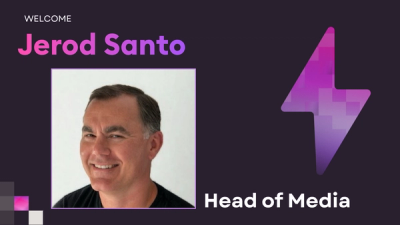
Jerod Santo Joins Socket as Head of Media
Allow myself to introduce... myself.
By Jerod Santo - Sep 14, 2026
superpowers-mcp
Advanced tools
Superpowers skills library (TDD, debugging, collaboration workflows) as an MCP server for VSCode and Antigravity


This document summarizes the information and usage instructions for packaging the Superpowers skills and autonomous workflow system into an independent, high-performance, and secure Model Context Protocol (MCP) server.
| Protocol Feature | Items / Capabilities | Description |
|---|---|---|
| Tools | list_skills, read_skill | Discover and load any of the 14 Superpowers skills on demand. |
| Prompts | session-start, sdd-implementer, sdd-task-reviewer, sdd-re-review, spec-reviewer, plan-reviewer | Ready-to-use adversarial review and subagent orchestrator prompts in your IDE prompt list. |
| Resources | skill://superpowers/<skill-name> | Direct URI-based skill access for MCP-compliant hosts. |
Once installed or configured, your AI Agent will automatically discover and invoke Superpowers Skills and Prompts.
Example prompts to your agent:
Add the following settings to your IDE (e.g., Cursor, Antigravity, or VSCode MCP settings).
This is the easiest way as it handles path resolution automatically.
{
  "superpowers": {
    "command": "bunx",
    "args": ["-y", "superpowers-mcp"]
  }
}
{
  "superpowers": {
    "command": "npx",
    "args": ["-y", "superpowers-mcp"]
  }
}
| Skill Name | Community Recommended Scenario | Core Value |
|---|---|---|
brainstorming | Before starting a new feature, exploring requirements and design. | Prevents the AI from jumping straight into writing code. |
writing-plans | Before multi-file refactoring or complex migrations. | Establishes a clear execution blueprint. |
systematic-debugging | When encountering any errors or abnormal behavior. | Enforces "root cause analysis" instead of guessing. |
test-driven-development | When implementing logically challenging features. | Ensures code is accompanied by tests, achieving Red-Green-Refactor. |
verification-before-completion | Before claiming "it's fixed" or "it's done". | Evidence-based completion confirmation. |
To help you choose the right skill, we've categorized them into 6 logical phases of software development:
brainstorming: Software design and requirements analysis process
writing-plans: Creating detailed implementation plansexecuting-plans: Executing created implementation planstest-driven-development: TDD (Test-Driven Development) workflowsystematic-debugging: Systematic debugging and root cause analysisverification-before-completion: Evidence-based verification before completionrequesting-code-review: Initiating pre-checks for code reviewsreceiving-code-review: Receiving and addressing code review feedbackfinishing-a-development-branch: Finalizing and integrating feature branchesusing-git-worktrees: Managing multiple branches using Git WorktreesThese skills are designed for orchestrating complex meta-execution patterns within supported IDEs (like Antigravity or Cursor).
subagent-driven-development: Driving sub-agents to execute tasks
.superpowers/sdd/<plan>/), the controller rules on conflicts and records them in the ledger instead of stopping, and small same-shape tasks are batched into a single dispatch.dispatching-parallel-agents: Dispatching tasks to parallel agents
using-superpowers: Guidelines and self-checks for using Superpowerswriting-skills: Writing and expanding new custom skillsskills/writing-plans/SKILL.md introduces the Two Plan Shapes router (task-by-task default vs skeleton-first alternative) to determine architecture upfront.skills/writing-plans/skeleton-first-plans.md defines the Walking Skeleton pattern (Task 1 builds the thinnest running end-to-end slice across all subsystems), Task Contracts (strict interfaces and observable behaviors without code scripts), and deliberate Tier: mechanical | judgment tagging..worktrees/task-<N> worktrees, with sequential plan-order merges and automatic rebase-to-fix loops on merge conflict or test regression.Plan holds / Amendment: check line, ensuring in-flight tasks complete cleanly while downstream tasks inherit updated plan contracts.implementer-prompt.md respect task Tier: markings (mechanical → fastest/cheapest tier; judgment → standard tier), saving tokens without redundant re-adjudication.render-graphs.js):
execSync shell execution with direct execFileSync('dot', ['-Tsvg'], ...) to eliminate shell injection risks. Added 10MB buffer limits, Windows CRLF support (\r?\n), and Windows winget installation guidance.sdd-workspace (Bash) and sdd-workspace.ps1 (PowerShell) now manage plan-scoped workspaces using plan-path markers with canonical physical path normalization (pwd -P and dynamic pwd detection). Same-basename plans (e.g. docs/alpha/plan.md vs docs/beta/plan.md) safely disambiguate into distinct .superpowers/sdd/ workspaces, preventing artifact and ledger overwrites.review-package and review-package.ps1 now enforce git merge-base --is-ancestor BASE HEAD and git rev-list --count BASE..HEAD > 0 (exiting with code 3 on error) to reject invalid or empty commit ranges and prevent false-pass review approvals.task-brief and review-package invoke sdd-workspace via explicit "${BASH:-bash}", surviving environments where execution bits (+x) are stripped during archive extraction.skills/test-driven-development/SKILL.md explicitly defines "green" as passing the entire repository test suite (e.g., bare npm test, pytest, cargo test) before declaring a task complete.skills/requesting-code-review/SKILL.md now anchors multi-commit review BASE_SHA to git merge-base origin/main HEAD to prevent phantom deletions when origin/main advances.skills/brainstorming/SKILL.md adds a proactive tooling inquiry (linter, formatting, unit/e2e tests, fuzzing) during the Design Presentation phase for new projects, recording choices into the spec's Global Constraints.tests/sdd/test-sdd-workspace.sh (11 assertions) and expanded PowerShell suites (70 assertions across 5 files). Full test suites passing 100%.spike / bounded / architectural up front; the ceremony scales with the task but the approval gate never does. Hidden complexity upgrades the path mid-task — never downgrades.Ruling: ...) instead of parking the session on a human; only four named conditions stop execution. Pre-flight conflict scans produce a ledgered table, small same-shape tasks batch into one dispatch, subagent waits use bounded stretches, and all three prompts carry the no-subagents contract.hermes-tools.md reference maps skill actions to Hermes tools (delegate_task, skill_view, …).followup_task fix-round resume, and event-subscription wait_agent guidance.Spec: field.--force on your own initiative.sdd-workspace.ps1 slug derivation matches basename on all platforms (PLAN.MD stays PLAN.MD).O_NOFOLLOW reads, nonce CSP, and the local brand SVG) — this package keeps its hardened server; upstream's .ps1 deletions and plugin-only restructuring also don't apply to this MCP server layout.--project-dir, the companion now persists its session key to .superpowers/brainstorm/.last-token (owner-only, gitignored) alongside .last-port and reuses it across restarts — an already-open browser tab stays connected after a restart, no URL re-sharing needed. Ephemeral /tmp sessions keep rotating the key per invocation, and an explicit BRAINSTORM_TOKEN env var still wins and is never persisted. Delete .last-token (server stopped) to force a fresh key.readPrivateFile): symlinked or multi-link .last-token files are rejected instead of being adopted as the session key, with the read performed through an O_NOFOLLOW fd whose identity is re-checked and tightened to 0600 — closing the asymmetry with the already-hardened write path (found by independent security review).Failed to write private token file: instead of silently degrading to per-start key rotation.--project-dir) launch no longer inherits a stale project key/port from the invoking pwsh session..last-token matches the served key.server.cjs): the local loopback-only HTTP+WebSocket server is crash-resistant against filesystem races (a deleted content dir or a screen vanishing mid-read degrades to the waiting page / 404 instead of killing the process), and its watcher self-heals after the content dir is deleted and recreated (Linux inotify + macOS FSEvents). WebSocket handshakes are validated against RFC 6455 (version/upgrade/connection/key), control-frame payloads are capped at 125 bytes, clients have idle/partial-frame deadlines, and the oldest connection is evicted when the cap is full. Security headers now include nosniff and a nonce CSP; generated keys rotate per invocation; screen, skill, event, and user-event reads/logs are size-capped and state files are private.server-info URL./files/ double-writeHead crash fixed (found by subagent review): files are read before headers are sent, and reads use O_NOFOLLOW + fd-based fstat + size cap, closing the check-then-read TOCTOU.start-server.sh/.ps1 now prove a PID is a live brainstorm server of this session (server-instance-id + cmdline check, same as stop-server) before signalling it; stop-server.sh resolves paths canonically before deleting temp sessions so /tmp/../ tricks can't escape the temp root; relative --project-dir is resolved up front; server-instance-id is written without BOM so cross-shell identity checks work on Windows PowerShell 5.1.O_NOFOLLOW on POSIX (symlink-swap TOCTOU); a failed rescan returns the last-good cache instead of poisoning it; skill names containing consecutive dots (e.g. a..b) are now findable — lookups are map-only and never touch the filesystem.InvalidRequest (-32600) instead of leaking an internal error.hono to 4.13.0, @hono/node-server to 2.0.11, and fast-uri to 4.1.2 (resolving the relevant advisories). npm audit: 0 vulnerabilities.npm test builds first and runs the JavaScript edge-case/security, MCP server flow, and companion-server regression suites. The 63-assertion PowerShell suite runs separately with tests/powershell/run-tests.sh and skips gracefully when pwsh is unavailable.SkillsManager.readSkillContent() now canonicalizes paths with fs.realpath before checking boundaries, preventing symlink-based arbitrary file reads; getSafeSkillsPath also blocks dangerous system-directory prefixes.tests/edge_cases_test.js covers these security and cache behaviors.tests/powershell/ with 63 assertions across 5 suites for sdd-workspace.ps1, task-brief.ps1, review-package.ps1, find-polluter.ps1, and the brainstorm start-server.ps1/stop-server.ps1 lifecycle. Run with tests/powershell/run-tests.sh; it skips gracefully when pwsh is unavailable.Get-CimInstance Win32_Process is Windows-only; the script now uses ps on Unix so the server-id check works correctly on macOS/Linux.skills/using-superpowers/references/copilot-tools.md, an orphaned reference file already pruned upstream..superpowers/sdd/<plan>/) so concurrent plans can never read or overwrite each other's artifacts. Resume-based review-fix loop with a five-round circuit breaker, plus a new scoped re-review-prompt.md for re-reviews after fixes.testing-anti-patterns.md replaced by upstream writing-good-tests.md.SKILL.md files, reducing prompt token footprint.visual-companion.md gains a Gemini CLI launch section..ps1 scripts ported to the new plan-scoped PLAN_FILE interfaces; find-polluter.ps1 gained the ./-prefix and **/ collapse fixes from the bash version.Write-Error under $ErrorActionPreference = "Stop" swallowing the intended exit codes — validation failures now correctly exit 2 and a missing task exits 3, matching the bash scripts.sdd-workspace.ps1 slug derivation: Strips only a trailing .md (matching bash basename), instead of any file extension.package.json, package-lock.json, and the MCP server handshake version are now consistent at 6.2.0.cp.exec() with cp.execFile() in the brainstorming Visual Companion server (server.cjs) for the BRAINSTORM_OPEN_CMD launcher path. The old code concatenated the env var with the URL via the shell; the new code passes arguments as an argv array, eliminating shell metacharacter injection regardless of env var content.overrides block in package.json enforcing minimum versions for transitive dependencies:
@hono/node-server: 1.19.14 → 2.0.11 — fixes Windows path traversal in serve-static via encoded backslash (GHSA-frvp-7c67-39w9)fast-uri: 3.1.2 → 4.1.1 — fixes host confusion via IDN canonicalization (GHSA-4c8g-83qw-93j6) and literal backslash authority delimiter (GHSA-v2hh-gcrm-f6hx)body-parser: 2.2.2 → 2.3.0 — fixes DoS when invalid limit value silently disables size enforcement (GHSA-v422-hmwv-36x6)find-polluter.sh: Now accepts ./-prefixed paths (not just bare paths) and supports top-level test files by collapsing **/ in the patternfinishing-a-development-branch/SKILL.md: Captures WORKTREE_PATH before Step 5 changes directory, fixing a cleanup regression. Added detached HEAD push variant for Option 2Modular Refactoring & Performance Upgrades:
src/skills-manager.ts, leaving src/server.ts purely focused on MCP protocol handling.readdirSync, readFileSync) with promises and Promise.all concurrent execution, unlocking high-throughput performance.Security Hardening:
/^[a-zA-Z0-9-_]+$/) on skill name inputs to prevent traversal attacks.SKILLS_PATH to actively reject potentially hostile system root folders.McpError payloads.chmodSync platform checks in esbuild.js and skipped Symlinks in copy-skills.js to prevent recursive file copy loops.Upstream Security Cherry-Picks: Applied security hardening from obra/superpowers v6.1.1:
MAX_FRAME_PAYLOAD_BYTES (10 MB) check in decodeFrame() to prevent oversized frame attacks (CWE-789). Dual protection — BigInt extended-length and general post-resolution guard.stat.nlink !== 1 check in isRegularFileInsideContentDir() prevents path traversal via hardlinks.escapeHtmlText() extraction: Extracted inline escHtml closure into a reusable named function for consistent HTML escaping.pathnameOf() and queryKey() helpers, reducing duplicate inline URL logic in handleRequest().review-package Path Resolution Fix: Fixed sdd-workspace invocation to use absolute path resolution ($(cd "$(dirname "$0")" && pwd)) instead of relative path, fixing CWD-dependent failures.
Windows Native Helper Scripts: Added PowerShell wrappers for Visual Companion startup/shutdown, SDD review/task helpers, and systematic-debugging polluter detection.
Skill Documentation Enhancements:
subagent-driven-development: Added plan-mandated review guidance for handling plan conflicts.writing-skills: Strengthened prohibition vs. recipe guidance with empirical evidence from wording tests.test-driven-development: Fixed table formatting for clarity.writing-skills/anthropic-best-practices: Updated image CDN URLs.helper.js Comment Alignment: Added 4 clarifying inline comments to align with upstream documentation without changing behavior. DOM-safe showTombstone() preserved (no innerHTML regression).
Cleanup: Removed obsolete walkthrough.md (v5.1.0 upgrade guide).
skills/brainstorming/scripts/server.cjs. The bootstrapPage() function was called with the user-supplied keyFromQuery parameter (even though validated via timingSafeEqualStr). Changed to use the server-side TOKEN constant instead, eliminating user-tainted data from the HTML response sink. Zero behavior change (the validated value is identical).antigravity-tools.md, pi-tools.md) and updated codex-tools.md for cleaner multi-environment support.Record<string,string> cast in server.ts with proper typeof guard. Replaced remaining innerHTML with safe DOM methods. Removed redundant checks and verbose comments across the codebase.innerHTML usage in skills/brainstorming/scripts/helper.js, replacing it with safe DOM creation methods — now zero innerHTML in the entire codebase.hono from 4.12.23 to 4.12.26 to patch 5 advisories including CORS origin reflection, Lambda body-limit bypass, and Set-Cookie header merging..gitignore rules to prevent potential secret leaks.helper.js) by replacing unsafe innerHTML usage with secure DOM APIs. Upgraded path-to-regexp to 8.4.2 to resolve a high-severity ReDoS vulnerability.esbuild to 0.28.1.brainstorming and writing-plans with lightweight inline self-review checklists, significantly improving efficiency by eliminating subagent overhead.using-git-worktrees and finishing-a-development-branch with a detect-and-defer mechanism, natively supporting AI editors' (like Claude Code) built-in worktree tools while safely falling back to git CLI commands.Integration sections from all skills, reducing prompt token footprints.code-reviewer agent directly into requesting-code-review.This project is a fork and adaptation of the original Superpowers project by obra. We are grateful for their work in defining the agentic skills framework and software development methodology that powers this MCP server.
FAQs
Superpowers skills library (TDD, debugging, collaboration workflows) as an MCP server for VSCode and Antigravity
The npm package superpowers-mcp receives a total of 907 weekly downloads. As such, superpowers-mcp popularity was classified as not popular.
We found that superpowers-mcp demonstrated a healthy version release cadence and project activity because the last version was released less than a year ago. It has 1 open source maintainer collaborating on the project.
Company News
Allow myself to introduce... myself.

Research
/Security News
A Twitch browser extension on Chrome and Firefox forwards users’ live OAuth session tokens through proxies controlled by a Russian bot service.

Security News
Anthropic found biased reasoning and recklessness drove Claude Mythos 5 to publish malware on PyPI and compromise a security vendor.