
Product
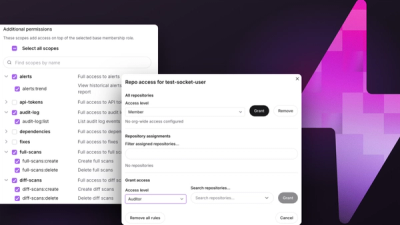
Introducing Repository Access Permissions and Custom Roles
Socket now supports Custom Roles and Repository Access Permissions so organizations can control who can access specific repositories and actions.
By Joe Werle - Jun 19, 2026
Teleman is a minimalist wrapper around the native fetch API. It weighs ~2 kB (gzipped) yet adds everything you miss in vanilla fetch:
json(), text(), or raw Response).2xx responses reject the promise.npm i teleman
import Teleman from "teleman";

const api = new Teleman({
  base: "https://api.example.com", // optional base URL
});

// GET /articles/123?draft=false
const article = await api.get("/articles/:id", {
  id: 123,
  draft: false,
});

// POST /articles  (Content-Type: application/json)
await api.post("/articles", {
  title: "Hello",
  content: "# Hello",
});

// POST /upload  (Content-Type: multipart/form-data)
await api.post("/upload", new FormData(document.forms[0]));
For tiny scripts you do not have to create an instance:
import { teleman } from "teleman";

const data = await teleman.get("https://example.com/data.json");
new Teleman(options?: {
  base?: string;               // Base URL – defaults to document.baseURI in browsers
  headers?: HeadersInit;       // Default headers for every request
});
instance.fetch<T>(path, options?) : Promise<T>Complete control – all shortcut methods ultimately call fetch().
interface FetchOptions {
  method?: "GET" | "POST" | "PUT" | "PATCH" | "DELETE" | "HEAD" | "PURGE";
  base?: string;                      // Overrides instance.base for this call only
  headers?: HeadersInit;              // Extra headers (merged with instance headers)
  query?: URLSearchParams | string | Record<string, Primitive> | Array<[string, Primitive]>;
  params?: Record<string, string | number | boolean>; // URL path parameters
  body?: BodyInit | SerializableData; // Serialised automatically when necessary
  use?: Middleware[];                 // Extra middleware for *this* request
  // ...any additional fields you attach to the middleware context
}
fetch() returns a promise that resolves to:
response.json() if the server replies with Content-Type: application/json.response.text() for any text/* response.Response object otherwise.The promise rejects when response.ok === false and resolves to the decoded body otherwise – you do not have to check the status code yourself.
instance.get<T>(path, query?, options?)
instance.post<T>(path, body?, options?)
instance.put<T>(path, body?, options?)
instance.patch<T>(path, body?, options?)
instance.delete<T>(path, query?, options?)
instance.head<T>(path, query?, options?)
instance.purge<T>(path, query?, options?)
All shortcut methods forward to fetch() with the corresponding HTTP verb.
Teleman borrows the elegant middleware pattern from Koa. A middleware is an async function receiving a context object and a next() callback:
import type { MiddlewareCtx, Middleware } from "teleman";

const logger: Middleware = async (ctx: MiddlewareCtx, next) => {
  const start = Date.now();
  const data = await next();               // wait for the request to finish
  const ms = Date.now() - start;
  console.info(`${ctx.options.method} ${ctx.url.href} – ${ms}ms`);
  return data;                             // you may also transform the data
};

api.use(logger);
ctx contains:
interface MiddlewareCtx {
  url: URL;               // fully resolved URL (after params & query)
  options: {
    method: string;
    headers: Headers;
    body: BodyInit | null;
  };
  response?: Response;    // attached after await next()
  // plus any custom fields you passed through options
}
Within middleware you may mutate ctx.url / ctx.options to influence the outgoing request or inspect & transform the decoded response.
The package exports two helpers that are also used internally. They can be handy when you need stand-alone conversions:
import { createURLSearchParams, createFormData } from "teleman";

const qs   = createURLSearchParams({ foo: 1, bar: "baz" });
const form = createFormData({ file: myBlob, name: "avatar.png" });
Teleman uses modern Web APIs (fetch, Headers, URL). It runs in all evergreen browsers and Node ≥ 18. No transpilation is required, but you may transpile/ponyfill fetch to target legacy environments.
FAQs
A browser and node.js fetch API wrapper.
We found that teleman demonstrated a healthy version release cadence and project activity because the last version was released less than a year ago. It has 1 open source maintainer collaborating on the project.
Did you know?

Socket for GitHub automatically highlights issues in each pull request and monitors the health of all your open source dependencies. Discover the contents of your packages and block harmful activity before you install or update your dependencies.
Product
Socket now supports Custom Roles and Repository Access Permissions so organizations can control who can access specific repositories and actions.
Product
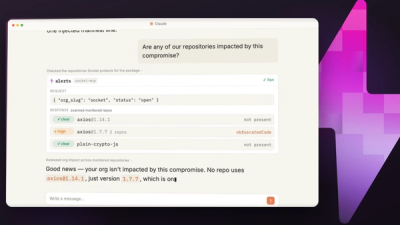
Socket MCP now lets AI assistants review org alerts, investigate threats using the Socket threat feed, and inspect package files in addition to dependency scoring.
Product
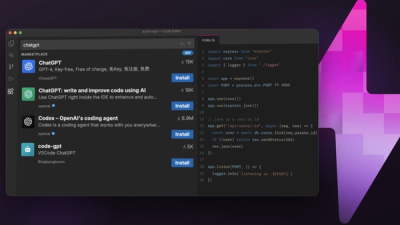
Socket Firewall blocks malicious VS Code and Open VSX extensions before install, protecting developers from compromised editor marketplaces.