Product
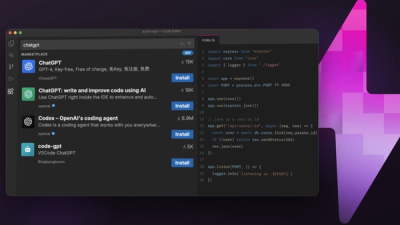
Socket Firewall Now Blocks Malicious VS Code and Open VSX Extensions
Socket Firewall blocks malicious VS Code and Open VSX extensions before install, protecting developers from compromised editor marketplaces.
Just another assertion library with interesting features
is.not.equal)is.true) that could deliver false positives on a typographic error.const assert = require('xassert')
const result = 'banana'
assert(result).isEqualTo('banana')
const assert = require('xassert')
assert(obj)
.hasOwnProperty('a').andIt
.hasOwnProperty('b', it => it.isEqualTo('john'))
// CommonJS
const assert = require('xassert')
const { Assertion, AssertionError } = assert
// Or
import assert, { Assertion, AssertionError } from xassert
// Add a new method
Assertion.prototype.isABanana = function isABanana () {
if (this.ref !== banana) throw new AssertionError('It not a banana')
return this
}
const banana = 'I am a banana!'
const apple = 'I am an apple'
assert(banana).isABanana()
assert(() => assert(apple).isABanana()).throwsAn(AssertionError)
FAQs
xassert is just another assertion library
The npm package xassert receives a total of 3 weekly downloads. As such, xassert popularity was classified as not popular.
We found that xassert demonstrated a not healthy version release cadence and project activity because the last version was released a year ago. It has 1 open source maintainer collaborating on the project.
Did you know?

Socket for GitHub automatically highlights issues in each pull request and monitors the health of all your open source dependencies. Discover the contents of your packages and block harmful activity before you install or update your dependencies.

Product
Socket Firewall blocks malicious VS Code and Open VSX extensions before install, protecting developers from compromised editor marketplaces.

Research
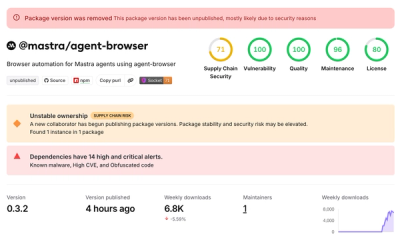
More than 140 Mastra npm packages were compromised in a supply chain attack that used a typosquatted dependency to deliver a cross-platform infostealer during installation.

Research
/Security News
A new npm package tests AI malware scanners with prompt injection, safety-triggering comments, context flooding, and obfuscated JavaScript.