
Product
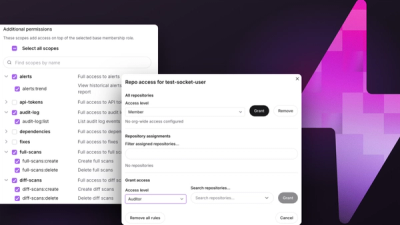
Introducing Repository Access Permissions and Custom Roles
Socket now supports Custom Roles and Repository Access Permissions so organizations can control who can access specific repositories and actions.
By Joe Werle - Jun 19, 2026
pytest-delta
Advanced tools
A pytest plugin that runs only the tests affected by your code changes. Instead of running your entire test suite every time, pytest-delta uses content hashing and AST-based dependency analysis to figure out which tests actually need to run.
On the first run, all tests execute normally. pytest-delta builds a dependency graph by parsing imports across your Python files and saves a snapshot (file hashes + graph) to a .delta.msgpack file.
On subsequent runs, it compares current file hashes against the snapshot to detect changes. Using the reverse dependency graph, it identifies all files transitively affected by those changes and runs only the corresponding tests.
If a conftest.py changes, all tests in its directory and subdirectories are re-run (conservative approach).
The delta file is only updated when all tests pass. If tests fail, the previous snapshot is preserved so those tests run again next time.
pip install pytest-delta
Or with Poetry:
poetry add pytest-delta
Enable the plugin with the --delta flag:
# First run: executes all tests, creates .delta.msgpack
pytest --delta

# Second run: no changes detected, exits 0 immediately
pytest --delta

# After modifying src/utils.py: only affected tests run
pytest --delta
Use --delta-debug to see what the plugin is doing:
pytest --delta --delta-debug
[pytest-delta] Plugin enabled
[pytest-delta] Loaded delta: 42 files tracked
[pytest-delta] Changed: 1, New: 0, Deleted: 0
[pytest-delta] Affected test files: 3
[pytest-delta]   tests/test_api.py
[pytest-delta]   tests/test_models.py
[pytest-delta]   tests/test_utils.py
[pytest-delta] Selected: 12, Deselected: 85
| Option | Description |
|---|---|
--delta | Enable delta-based test filtering |
--delta-file PATH | Custom delta file path (default: .delta.msgpack) |
--delta-rebuild | Force rebuild the dependency graph from scratch |
--delta-no-save | Don't save the delta file after the run (read-only mode) |
--delta-debug | Print debug information about filtering decisions |
Force specific tests to always run regardless of changes:
import pytest

@pytest.mark.delta_always
def test_smoke():
    """This test runs every time, even if nothing changed."""
    assert app.health_check() == "ok"
A typical workflow:
pytest --delta locally. Tests pass, .delta.msgpack is updated.pytest --delta. Since the delta file reflects the already-validated state, no tests need to run and CI exits 0 immediately.For CI pipelines where you want to prevent accidental delta file updates:
pytest --delta --delta-no-save
pytest-delta uses content hashing (SHA-256) to detect changes. This means:
The plugin builds a dependency graph by parsing Python AST import statements:
import pkg.mod, from pkg.mod import func)from .utils import helper, from ..core import Base)__init__.py as implicit dependencies of package modulesLimitations:
.py files (non-Python config/data files are ignored)importlib.import_module()) are not detectedAdd .delta.msgpack to your .gitignore if you don't want to share the delta file across developers, or commit it if you want the CI optimization described above.
# Uncomment to exclude from version control
# .delta.msgpack
MIT
FAQs
Run only tests impacted by your code changes (delta-based selection) for pytest.
We found that pytest-delta demonstrated a healthy version release cadence and project activity because the last version was released less than a year ago. It has 1 open source maintainer collaborating on the project.
Did you know?

Socket for GitHub automatically highlights issues in each pull request and monitors the health of all your open source dependencies. Discover the contents of your packages and block harmful activity before you install or update your dependencies.
Product
Socket now supports Custom Roles and Repository Access Permissions so organizations can control who can access specific repositories and actions.
Product
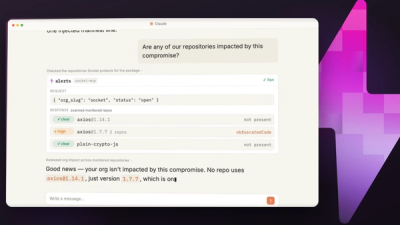
Socket MCP now lets AI assistants review org alerts, investigate threats using the Socket threat feed, and inspect package files in addition to dependency scoring.
Product
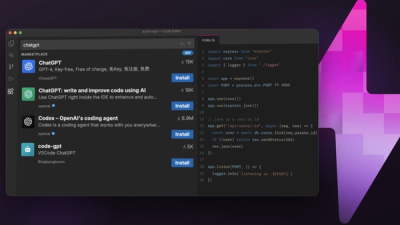
Socket Firewall blocks malicious VS Code and Open VSX extensions before install, protecting developers from compromised editor marketplaces.