
Product
Introducing Repository Access Permissions and Custom Roles
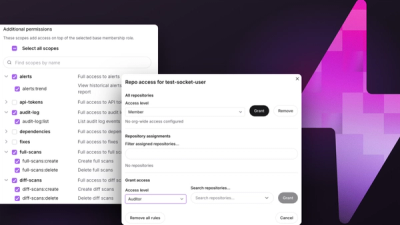
Socket now supports Custom Roles and Repository Access Permissions so organizations can control who can access specific repositories and actions.
By Joe Werle - Jun 19, 2026
@agent-native/dispatch
Advanced tools
Dispatch — workspace control plane for agent-native apps. Vault, integrations, destinations, scheduled jobs, and cross-app delegation, shipped as a single drop-in package.
Don't choose between rich user interfaces and autonomous agents. Every Agent-Native app is both.
The agent and the UI are equal citizens of the same system. Every action works both ways — click it or ask for it.
Agent-Native is an open-source framework for building robust agents that can act inside real apps, not just chat next to them.
It gives you primitives for product-grade agentic software: shared actions, SQL-backed state, identity, tools, skills, jobs, observability, and UI surfaces that all work together.
Backend agnostic: bring your own database, hosting provider, model stack, and app code.
// One action powers UI, agent, HTTP, MCP, A2A, and CLI.
export default defineAction({
schema: z.object({
emailId: z.string(),
body: z.string(),
}),
run: async ({ emailId, body }) => {
await db.insert(replies).values({ emailId, body });
},
});
Agent-Native primitives let you choose how much UI to put around an agent without rebuilding the agent contract:
| Shape | What you ship | Same primitives underneath |
|---|---|---|
| Headless | Call the agent and actions from code, CLI, HTTP, MCP, or A2A. | defineAction, auth, skills, memory, jobs, observability |
| Rich chat | A standalone or embedded chat with native tables, charts, approvals, setup flows, and tool results. | Shared chat runtime, BYO runtime adapters, action-declared native renderers |
| Whole app | A full SaaS/product UI where chat can start central, move to the sidebar, and stay synced with app state. | SQL state, actions, context awareness, deep links, live sync |
Protocols come with the framework instead of becoming separate integrations per feature. Today that means A2A, MCP, MCP Apps, standard remote MCP OAuth, MCP clients, HTTP/CLI action calls, native chat widgets, AgentChatRuntime adapters, standard OpenAI, AG-UI, Claude Agent SDK, and Vercel AI SDK chat runtime connectors, and deep links all hang off the same action surface. ACP is best understood as the coding-agent/editor interoperability protocol, not the general BYO app-chat runtime.
For the full decision guide — headless, rich chat on the built-in agent, rich chat on your own agent, embedded sidecar, or full app — see Agent Surfaces.
To connect Claude, ChatGPT, Codex, Cursor, OpenCode, GitHub Copilot / VS Code, or another MCP host to your hosted app, see the External Agents guide.
Don't want to scaffold a whole app yet? Add visual planning and PR recaps to Claude Code, Codex, Cursor, Pi, OpenCode, GitHub Copilot / VS Code, and similar agents with one command:
npx @agent-native/core@latest skills add visual-plan
You get two slash commands that upgrade how your agent plans and reports its work:
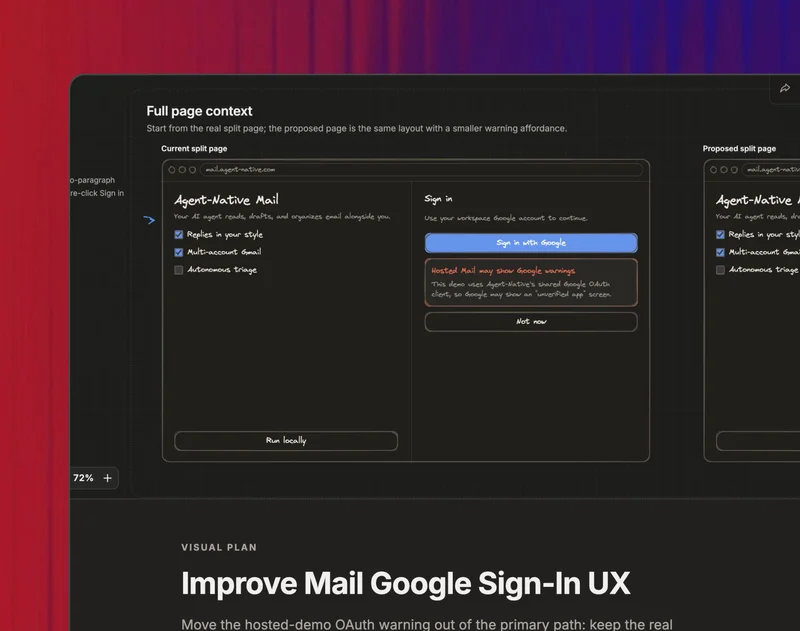
/visual-plan — before the agent writes code, it opens a structured, reviewable plan document instead of a wall of text: inline diagrams, UI wireframes and prototypes, file-by-file implementation maps, and annotations you can comment on and approve./visual-recap — after changes land, it turns a PR or git diff into a high-altitude visual recap: schema, API, and file changes rendered as grounded before/after blocks with a shareable review link, instead of scrolling a raw diff.See the Skills Guide for more skills and local installs.
Start with a full featured template. Each one is a complete, 100% free and open-source SaaS app — cloneable, not scaffolded — except you own the code and can customize everything.
|
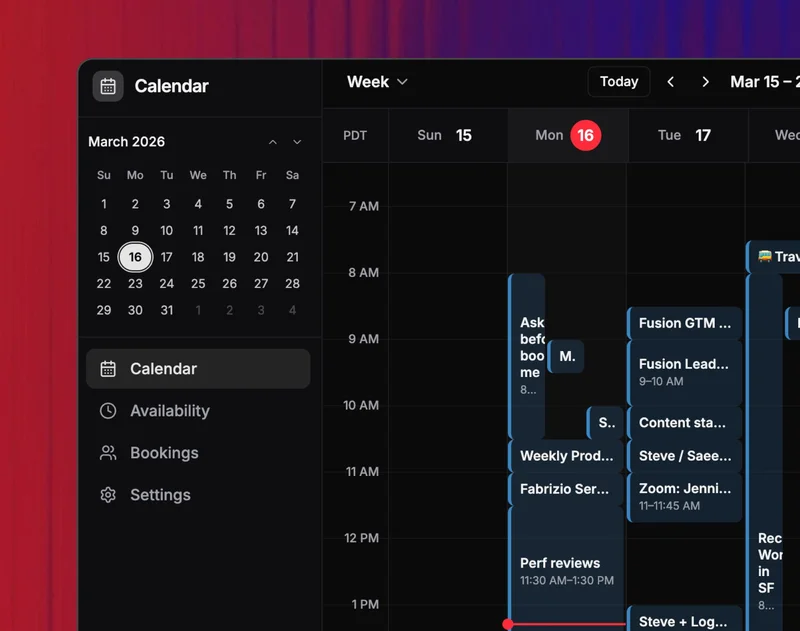
Calendar Agent-Native Google Calendar, Calendly Manage events, sync with Google Calendar, and share a public booking page with AI scheduling. |
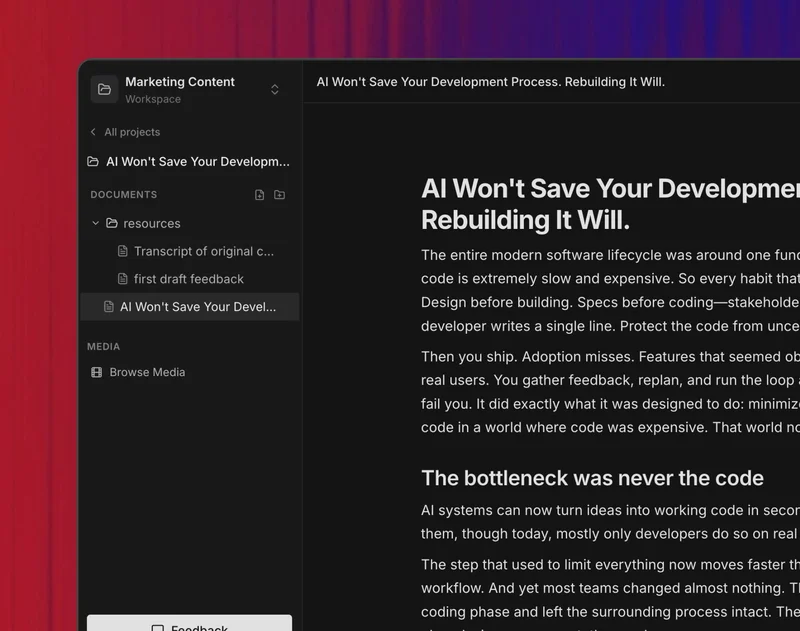
Content Open-source Obsidian for MDX Edit local Markdown/MDX files, generate rich interactive custom blocks, and draft, rewrite, or publish with an agent. |
Plans Visual plan mode for coding agents Install |
|
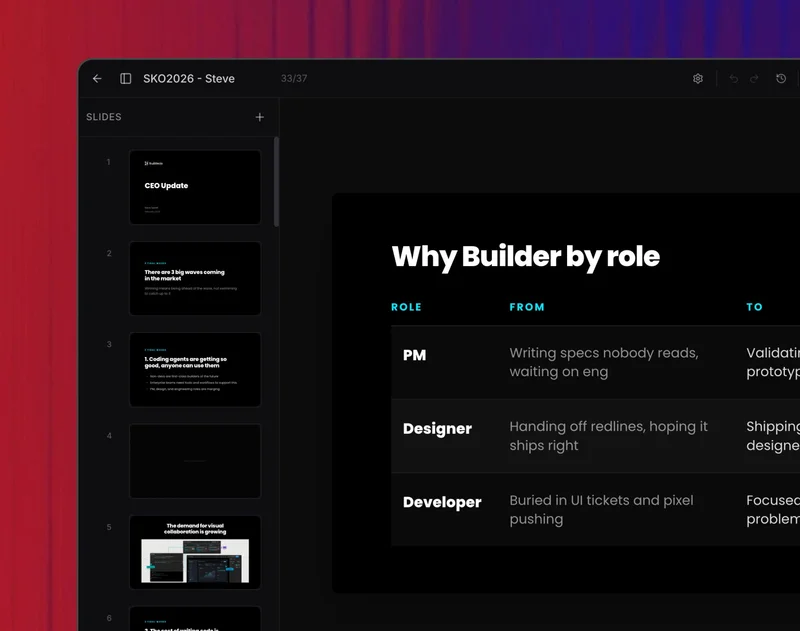
Slides Agent-Native Google Slides, Pitch Generate and edit React-based presentations via prompt or point-and-click. |
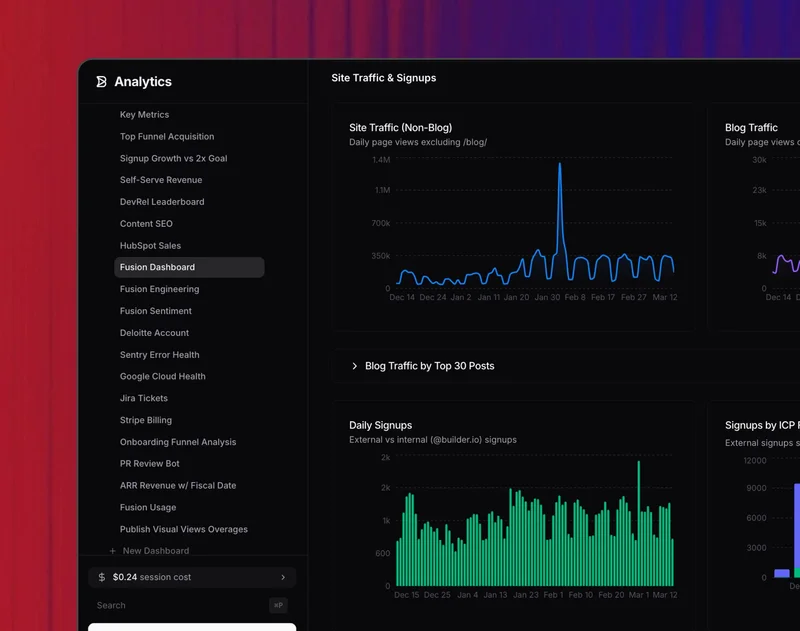
Analytics Agent-Native Amplitude, Mixpanel Connect analytics data sources, prompt for real charts, and build reusable dashboards. Shared workspace connections can provide provider credentials, while Analytics still owns metrics, source-of-truth choices, and saved analyses. |
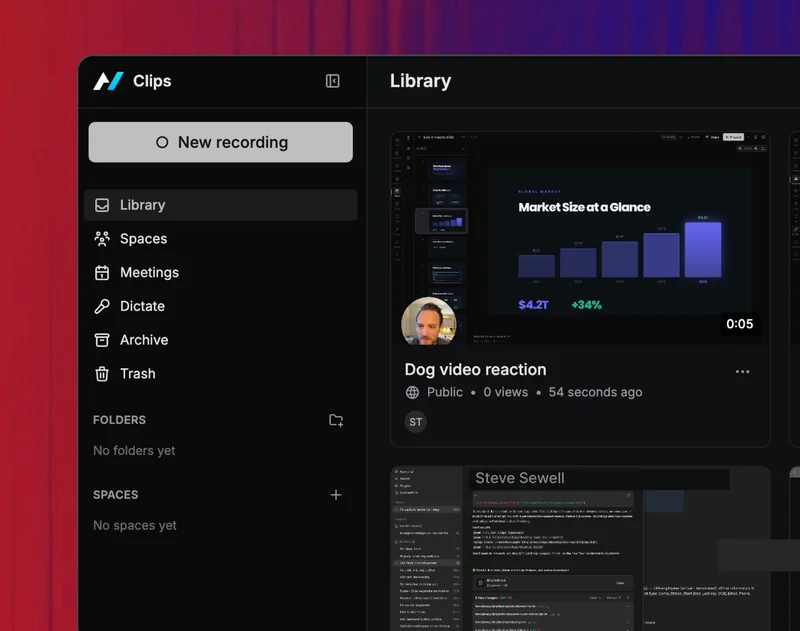
Clips Agent-Native Loom Record your screen with auto-transcripts, shareable links, and an agent that summarizes, captions, and edits clips on demand. |
Every template is a complete cloneable SaaS — fork it, customize it with the agent, own it. Try them with example data before connecting your own sources.
View the full template gallery at agent-native.com/templates.
One command to fork a template and start building locally.
npx @agent-native/core@latest create my-platform
cd my-platform
pnpm install
pnpm dev
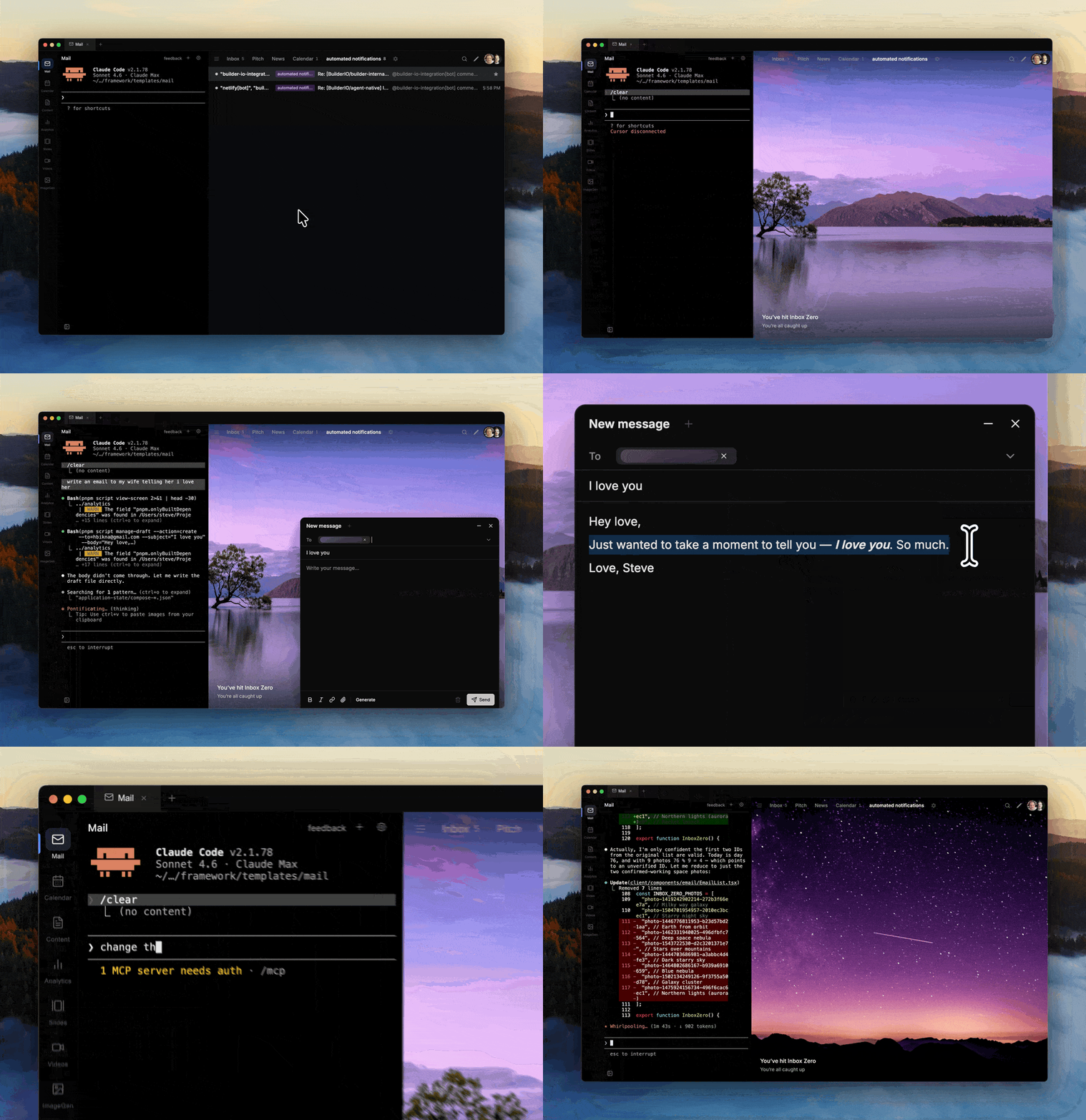
The CLI shows a multi-select picker so you can include as many templates as you want in one workspace. Pick Mail + Calendar + Forms and you get all three apps wired up and sharing auth in one go. Or browse the template gallery for live demos.
Want a single app, no monorepo? Use --standalone:
npx @agent-native/core@latest create my-app --standalone --template mail
A workspace is the default shape of an agent-native project. Every app sits under apps/, and packages/shared/ is available for the small amount of code, instructions, skills, or branding that should truly apply to every app.
my-platform/
├── package.json                   # declares `agent-native.workspaceCore`
├── pnpm-workspace.yaml
├── .env                           # shared secrets: ANTHROPIC_API_KEY, BUILDER_PRIVATE_KEY, A2A_SECRET, ...
├── packages/
│   └── shared/                    # optional shared custom code
└── apps/
    ├── mail/
    ├── calendar/
    └── forms/
Add another app later:
npx @agent-native/core@latest add-app notes --template content
Deploy every app behind one origin:
npx @agent-native/core@latest deploy
# https://your-agents.com/mail/*       → mail
# https://your-agents.com/calendar/*   → calendar
# https://your-agents.com/forms/*      → forms
Same-origin deploy means a shared login session across every app and zero-config cross-app A2A — tag @mail from the calendar's agent chat and it just works (no JWT signing, no CORS). Full details at agent-native.com/docs/multi-app-workspace.
| SaaS Tools | Raw AI Agents | Internal Tools | Agent-Native | |
|---|---|---|---|---|
| UI | Polished but rigid | None | Mixed quality | Full UI, fork & go |
| AI | Bolted on | Powerful | Shallowly connected | Agent-first, integrated |
| Customization | Can't | Instructions and skills | Full, but high maintenance | Agent modifies the app |
| Ownership | Rented | Somewhat yours | You own the code | You own the code |
Join the Discord to ask questions, share what you're building, and get help.
Full documentation at agent-native.com.
MIT
FAQs
Dispatch — workspace control plane for agent-native apps. Vault, integrations, destinations, scheduled jobs, and cross-app delegation, shipped as a single drop-in package.
The npm package @agent-native/dispatch receives a total of 1,053 weekly downloads. As such, @agent-native/dispatch popularity was classified as popular.
We found that @agent-native/dispatch demonstrated a healthy version release cadence and project activity because the last version was released less than a year ago. It has 1 open source maintainer collaborating on the project.
Did you know?

Socket for GitHub automatically highlights issues in each pull request and monitors the health of all your open source dependencies. Discover the contents of your packages and block harmful activity before you install or update your dependencies.
Product
Socket now supports Custom Roles and Repository Access Permissions so organizations can control who can access specific repositories and actions.
Product
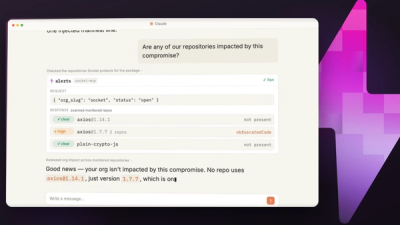
Socket MCP now lets AI assistants review org alerts, investigate threats using the Socket threat feed, and inspect package files in addition to dependency scoring.
Product
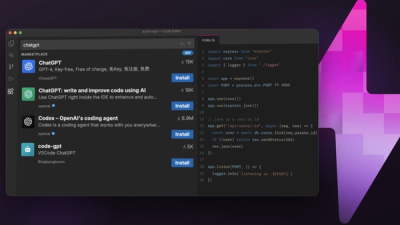
Socket Firewall blocks malicious VS Code and Open VSX extensions before install, protecting developers from compromised editor marketplaces.