Agent-Native
Agentic applications you own.
Don't choose between structured user flows and autonomous agents. Every Agent-Native app is both.
Agents and UIs — Fully Connected
The agent and the UI are equal citizens of the same system. Every action works both ways — click it or ask for it.
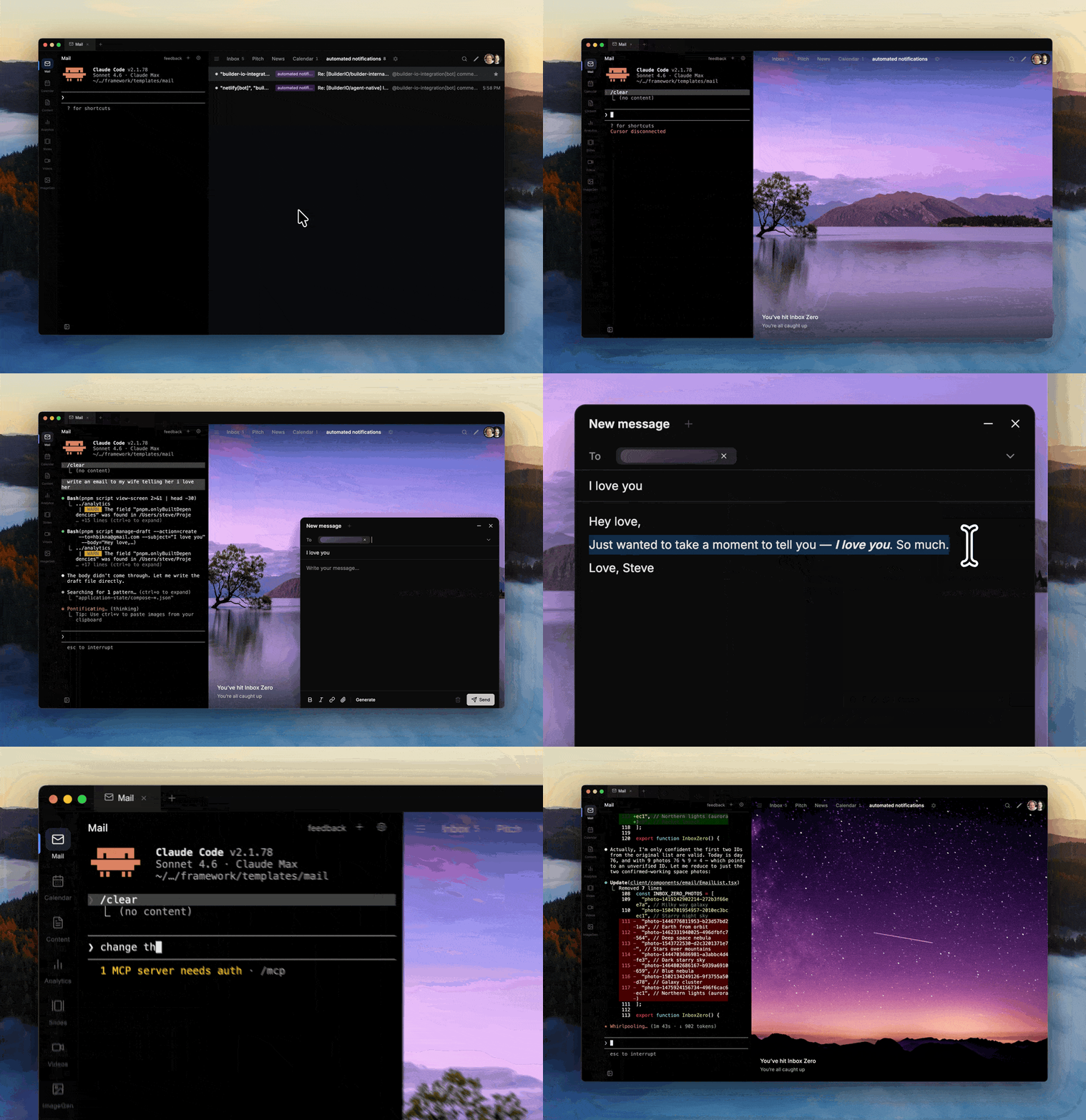
- Everything syncs — Agent and UI share one database and one state. Changes from either side show up instantly on the other.
- Context-aware — The agent knows what you're looking at. Select text, hit Cmd+I, and tell it what to do.
- Per-user workspace — Skills, memory, instructions, sub-agents, and MCP servers — SQL-backed, customizable per user. Claude-Code-level flexibility, SaaS-grade economics.
- Agents call agents — Tag another agent from any app. They discover each other over A2A and take action across your stack.
- Apps that improve themselves — Your apps get better on their own. The agent can add features, fix bugs, and refine the UI over time.
- Any database, any host — Any SQL database Drizzle supports. Any hosting target Nitro supports. No lock-in.
- Any AI agent — Claude Code, Codex, Gemini CLI, OpenCode, or Builder.io. Use whichever agent you prefer.
Templates
Start from a complete, production-grade SaaS app — cloneable, not scaffolded. Each one replaces tools you're paying for, except you own everything and can customize it however you want. Not demos; products.
|
Mail
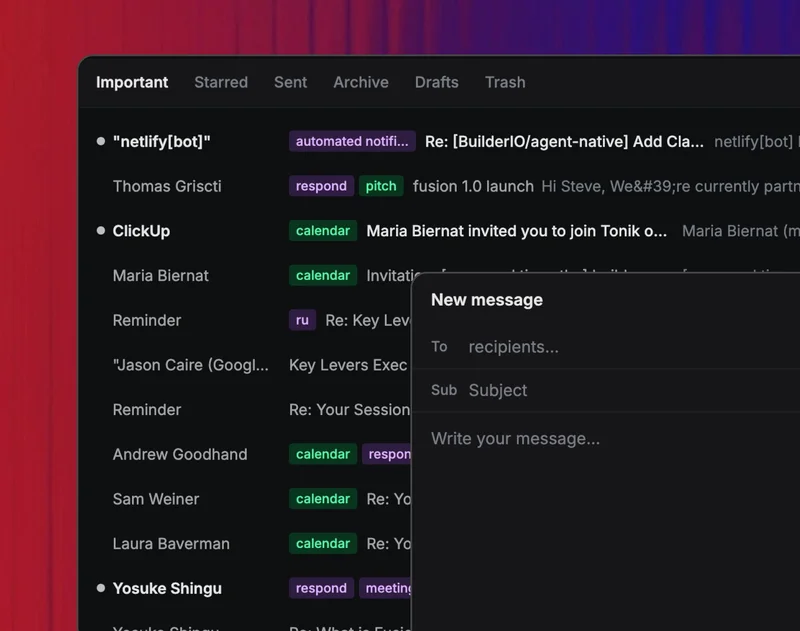
Agent-Native Mail, Superhuman
Superhuman-style email client with keyboard shortcuts, AI triage, and a fully customizable inbox you own.
|
Calendar
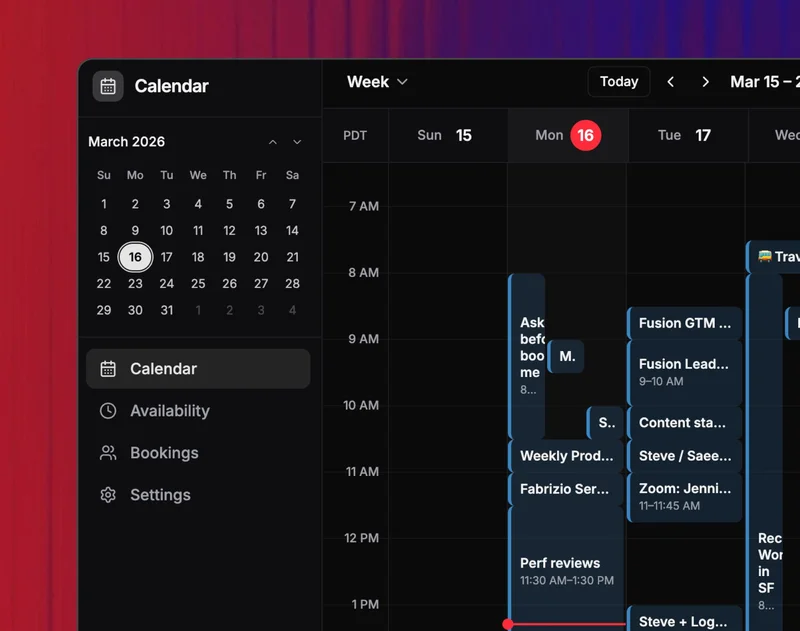
Agent-Native Google Calendar, Calendly
Manage events, sync with Google Calendar, and share a public booking page with AI scheduling.
|
Content
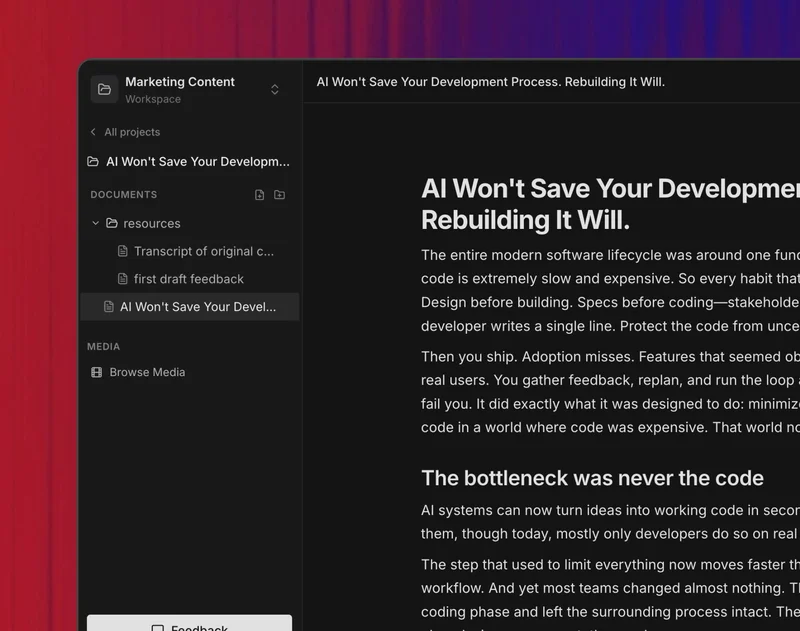
Agent-Native Notion, Google Docs
Write and organize content with an agent that knows your brand and publishing workflow.
|
|
Slides
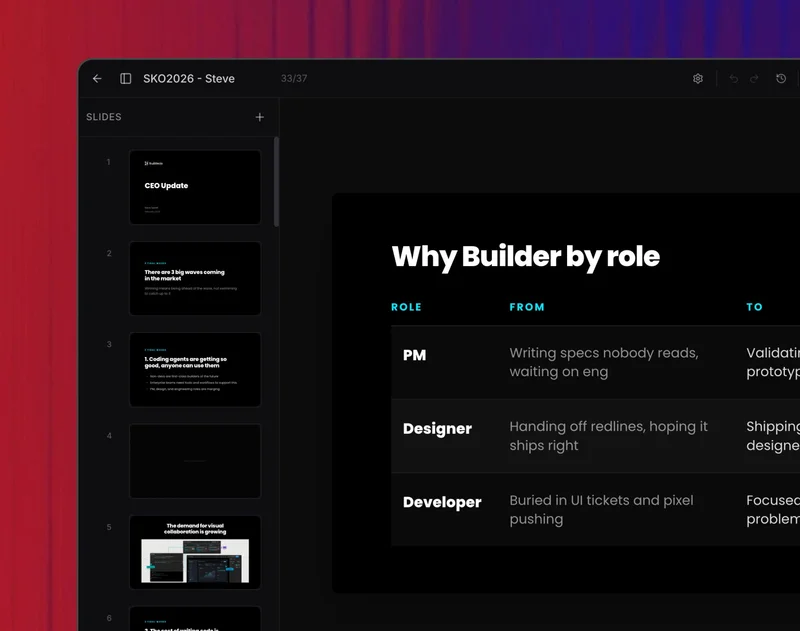
Agent-Native Google Slides, Pitch
Generate and edit React-based presentations via prompt or point-and-click.
|
Video
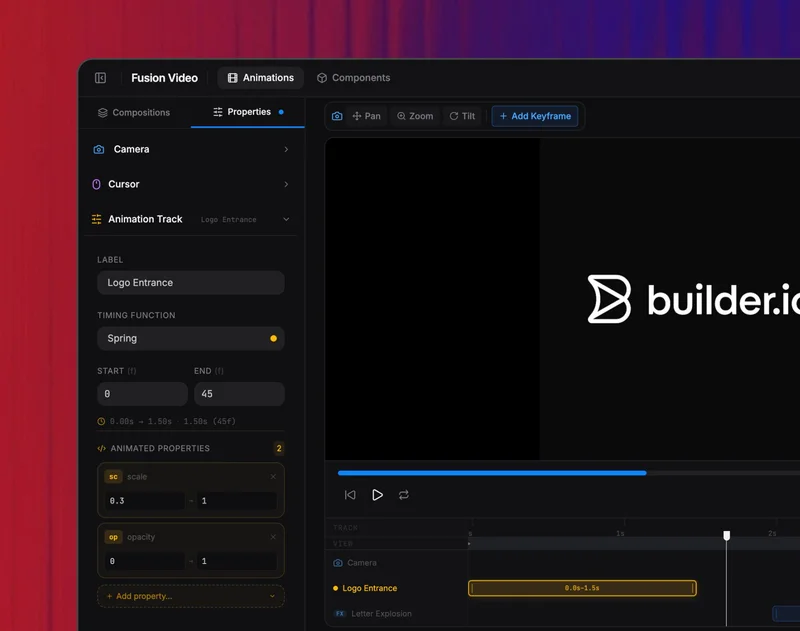
Agent-Native video editing
Create and edit Remotion video compositions with agent assistance.
|
Analytics
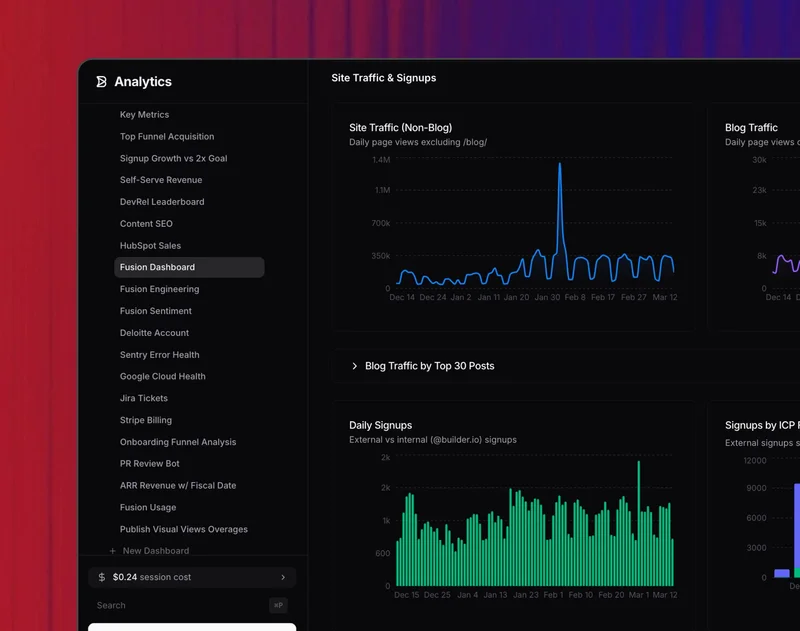
Agent-Native Amplitude, Mixpanel
Connect any data source, prompt for any chart. Build reusable dashboards, not throwaway Q&A.
|
|
Clips
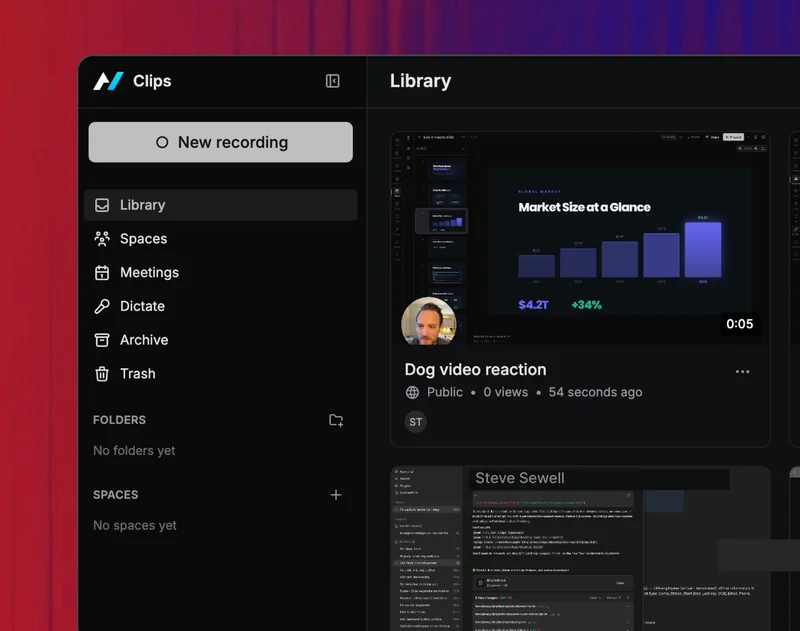
Agent-Native Loom
Record your screen with auto-transcripts, shareable links, and an agent that summarizes, captions, and edits clips on demand.
|
Design
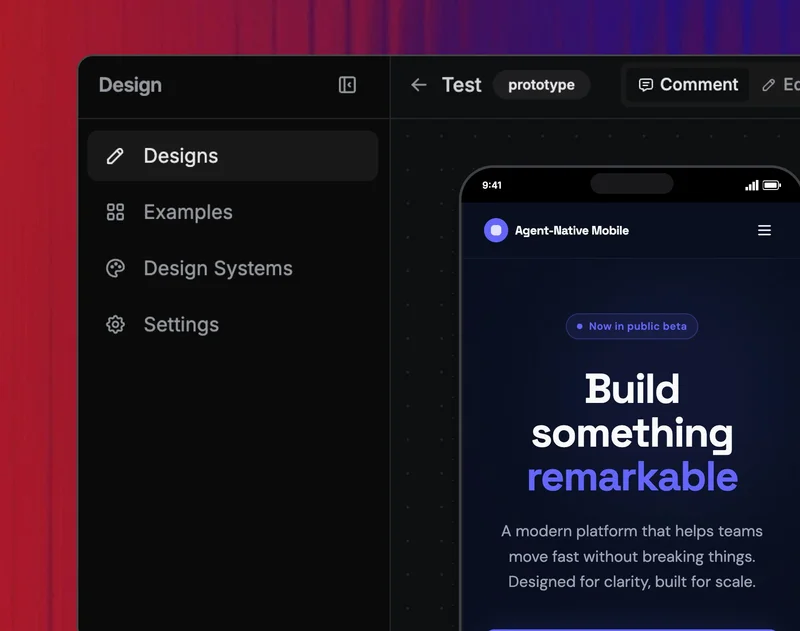
Agent-Native Figma, Canva
Create and edit visual designs by prompt or by hand, with the agent as your co-designer.
|
Dispatch
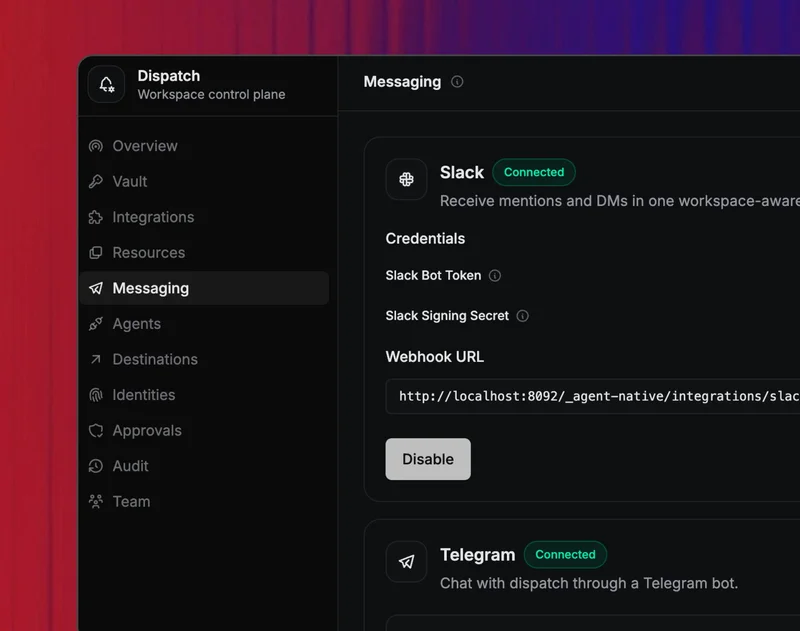
Mission control for agent-native apps
Message, manage, and delegate to agents from Slack, Telegram, or the web, with routing, memory, and approvals built in.
|
|
Forms
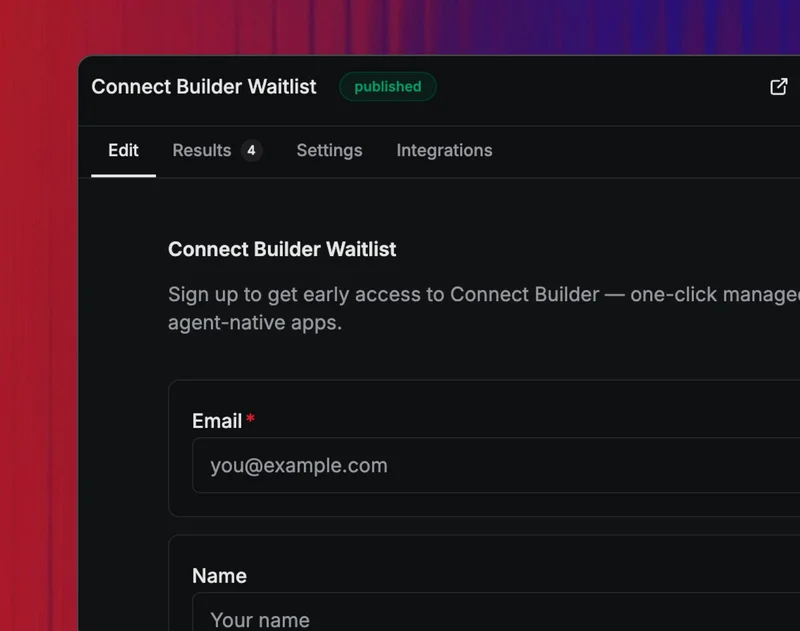
Agent-Native Typeform
Generate forms from a prompt, branch logic with the agent, and own every response in your own database.
| | |
Every template is a complete cloneable SaaS — fork it, customize it with the agent, own it. Try them with example data before connecting your own sources.
Quick Start
npx @agent-native/core create my-platform
cd my-platform
pnpm install
pnpm dev
The CLI shows a multi-select picker so you can include as many templates as you want in one workspace. Pick Mail + Calendar + Forms and you get all three apps wired up and sharing auth in one go. Or browse the template gallery for live demos.
Want a single app, no monorepo? Use --standalone:
npx @agent-native/core create my-app --standalone --template mail
Need a coding agent workspace? agent-native or agent-native code opens an open-source Claude Code/Codex-like Code workspace with no prompt required. From there, type a task, run slash goals interactively, or call them directly from your shell:
npx @agent-native/core@latest
npx @agent-native/core@latest "fix the failing auth tests"
npx @agent-native/core@latest code
npx @agent-native/core@latest code "fix the failing auth tests"
npx @agent-native/core@latest code exec "fix the failing auth tests"
npx @agent-native/core@latest code -p "fix the failing auth tests"
npx @agent-native/core@latest code --plan "explain the auth test failures"
npx @agent-native/core@latest code --auto "fix the failing auth tests"
npx @agent-native/core@latest code /migrate ./my-next-app --out ../migrated-app
npx @agent-native/core@latest code /migrate ./my-next-app --emit ../migration-dossier
npx @agent-native/core@latest code list
npx @agent-native/core@latest code attach --last
npx @agent-native/core@latest code logs --last
npx @agent-native/core@latest code approve --last
npx @agent-native/core@latest code resume --last
npx @agent-native/core@latest code --continue "check the auth edge cases next"
npx @agent-native/core@latest code resume --last "check the auth edge cases next"
Slash goals can run from the interactive shell or directly from the command line, and agent-native code goals shows the goals registered in your checkout. A bare prompt starts a local coding-agent session, streams work, records transcript/status/tool events, and accepts follow-up prompts; /migrate is one specialized capability inside that general Code workspace. Project-specific slash commands live in .agents/commands/*.md, so teams can add prompts such as /release-check or /migrate-commerce without changing the framework. Bare agent-native launches the Code workspace in builds with the top-level entrypoint, while a bare prompt such as agent-native "fix tests" starts an Agent-Native Code task directly.
The Code workspace is adding the familiar Codex/Claude-style session loop: pick a previous session, list runs, attach to live output, print logs, resume with context, and continue the same run from Desktop or CLI. The primary modes are intentionally simple:
- Plan mode (
--plan) inspects, explains, and proposes without writing files.
- Auto mode (
--auto, default) edits files, runs checks, and only pauses for genuinely destructive file, git, publish, or data operations.
agent-native migrate still works as a direct shortcut; code /migrate is the Agent-Native Code entrypoint for the migration goal. By default it creates an Agent-Native Code session and portable migration dossier, not a scaffolded app/template. resume --last reopens the latest run handoff; adding a quoted prompt records it as a follow-up transcript event for that run so the next active coding agent can pick it up. If a high-risk command is paused for approval, code approve --last runs that one pending command and then points you back to resume the session. Use --app-surface only when you want the legacy hidden migration detail app for assessment, approval, tasks, artifacts, and verification.
Use --emit when you want only the portable dossier for Codex, Claude Code, Cursor, or another coding agent.
Agent-Native Code also includes lightweight goals such as /audit:
npx @agent-native/core@latest code /audit --url https://example.com
Workspaces (Monorepo)
A workspace is the default shape of an agent-native project. Every app sits under apps/, and packages/shared/ is available for the small amount of code, instructions, skills, or branding that should truly apply to every app.
my-platform/
├── package.json                   # declares `agent-native.workspaceCore`
├── pnpm-workspace.yaml
├── .env                           # shared secrets: ANTHROPIC_API_KEY, BUILDER_PRIVATE_KEY, A2A_SECRET, ...
├── packages/
│   └── shared/                    # optional shared custom code
└── apps/
    ├── mail/
    ├── calendar/
    └── forms/
Add another app later:
npx @agent-native/core add-app notes --template content
Deploy every app behind one origin:
agent-native deploy
Same-origin deploy means a shared login session across every app and zero-config cross-app A2A — tag @mail from the calendar's agent chat and it just works (no JWT signing, no CORS). Full details at agent-native.com/docs/multi-app-workspace.
The Best of Both Worlds
| UI | Polished but rigid | None | Mixed quality | Full UI, fork & go |
| AI | Bolted on | Powerful | Shallowly connected | Agent-first, integrated |
| Customization | Can't | Instructions and skills | Full, but high maintenance | Agent modifies the app |
| Ownership | Rented | Somewhat yours | You own the code | You own the code |
Join the Discord to ask questions, share what you're building, and get help.
Docs
Full documentation at agent-native.com.
License
MIT