
Product
Introducing Repository Access Permissions and Custom Roles
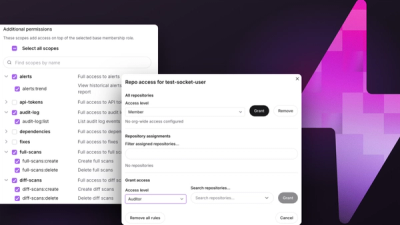
Socket now supports Custom Roles and Repository Access Permissions so organizations can control who can access specific repositories and actions.
By Joe Werle - Jun 19, 2026
@connectai/selfhost
Advanced tools
One-command self-host installer for ConnectAI. Takes a clean machine (only Docker + Node) to a running, health-checked company-brain in one command, with no source clone and no local image build: `npx @connectai/selfhost run`. Bundles the image-based dock
One-command self-host installer for ConnectAI. Takes a clean machine (only Docker + Node) to a running, health-checked company-brain in one command, with no source clone and no local image build.
npx @connectai/selfhost run
# or:
npm i -g @connectai/selfhost && connectai run
That is the entire happy path. The CLI pulls prebuilt images, writes a hardened .env, boots the stack, and prints the console URL + your single next step. It does not bundle or pull Ollama.
run does~/.connectai, override --dir): BackendEngineer's canonical image-based docker-compose.selfhost.images.yml, .env.example, and the boot scripts. You never fetch source..env: copies the example, then fills the secrets with a CSPRNG (crypto.randomBytes): INFISICAL_*, ENCRYPTION_SECRET (32 bytes / 64 hex), and a strong POSTGRES_PASSWORD (with DATABASE_URL updated to match). Written chmod 600. Idempotent: it never overwrites a value you already set, and a second run is a no-op. Secrets are local-only: never logged, never transmitted.up.sh, which docker compose pulls the prebuilt GHCR images (default tag v0.1.1), brings up Infisical, provisions the vault identity, brings up the full stack, and waits for the API /health + the console.--inference-url; if you also provide --inference-api-key, the installer wires that endpoint as a hosted OpenAI-compatible provider. Without a key, it treats the endpoint as Ollama and defaults to http://host.docker.internal:11434 unless you already set OLLAMA_BASE_URL. --model sets the chat-model slug for the endpoint you supply. --no-pull still brings up db + api + console only, so the brain is reachable while you finish inference setup.| Command | What it does |
|---|---|
run (default) | the full install + boot above |
down | stop the stack (down -v also removes volumes / wipes the brain) |
logs | tail stack logs (e.g. connectai logs api) |
token | print the one-time first-run setup token (from the api logs) |
help / version | usage / version |
| Flag | Meaning |
|---|---|
--dir <path> | working directory (default ~/.connectai) |
--inference-url <url> | inference endpoint URL |
--inference-api-key <key> | hosted endpoint API key; when set, the installer wires hosted/BYO inference |
--inference-chat-model, --inference-embed-model | model slugs for the endpoint |
--model <name> | legacy alias for the chat-model slug (default qwen2.5:1.5b) |
--no-pull | skip the loop worker (brings up db + api + console only) |
--tag <tag> | GHCR image tag to run (default: the pinned bundled tag; also CONNECTAI_IMAGE_TAG) |
--yes, -y | non-interactive (already the default; accepted for CI) |
Inference is external by design. The installer ships no Ollama image and downloads no models.
--inference-url http://host.docker.internal:11434, or omit it and let the installer seed that default when OLLAMA_BASE_URL is still unset.--inference-url ... --inference-api-key ... and, optionally, the model slugs. The installer derives the internal BYO wiring from the presence of the key; you do not need a separate mode flag.Under either mode, docker images shows no ollama/ollama, because the installer never declares an Ollama service.
npx).http://localhost:4000. The canonical compose ships a runtime API-base seam (the console entrypoint writes /config.js from CONSOLE_API_BASE_URL at container start and prefers it over the baked value), so a remote origin is a config change, not a rebuild; full remote serving is the documented follow-up.up.sh boot engine and the canonical docker-compose.selfhost.images.yml; it does not re-implement orchestration or fork the compose. The bundled compose is BackendEngineer's file verbatim (CON-130), consumed through the ${CONNECTAI_IMAGE_TAG} / ${CONNECTAI_ENV_FILE} seams.BUSL-1.1. Development, testing, and evaluation use need no license; production use requires a commercial license. The self-host runtime guard fail-closes at run time, so a public image gives nothing away.
FAQs
One-command self-host installer for ConnectAI. Takes a clean machine (only Docker + Node) to a running, health-checked company-brain in one command, with no source clone and no local image build: `npx @connectai/selfhost run`. Bundles the image-based dock
The npm package @connectai/selfhost receives a total of 1,705 weekly downloads. As such, @connectai/selfhost popularity was classified as popular.
We found that @connectai/selfhost demonstrated a healthy version release cadence and project activity because the last version was released less than a year ago. It has 2 open source maintainers collaborating on the project.
Did you know?

Socket for GitHub automatically highlights issues in each pull request and monitors the health of all your open source dependencies. Discover the contents of your packages and block harmful activity before you install or update your dependencies.
Product
Socket now supports Custom Roles and Repository Access Permissions so organizations can control who can access specific repositories and actions.
Product
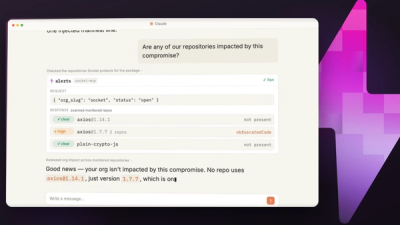
Socket MCP now lets AI assistants review org alerts, investigate threats using the Socket threat feed, and inspect package files in addition to dependency scoring.
Product
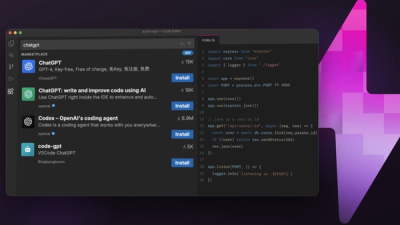
Socket Firewall blocks malicious VS Code and Open VSX extensions before install, protecting developers from compromised editor marketplaces.