
Product
Introducing Repository Access Permissions and Custom Roles
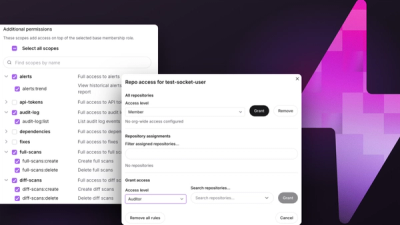
Socket now supports Custom Roles and Repository Access Permissions so organizations can control who can access specific repositories and actions.
By Joe Werle - Jun 19, 2026
@crbroughton/recul
Advanced tools
Stay N versions behind the latest published release of your npm dependencies to avoid supply chain attacks.
Stay N versions behind the latest published release of your npm dependencies to avoid supply chain attacks.
recul is not a replacement for typical auditing via npm audit or third party security tools; it is a complementary layer that reduces the attack surface without requiring active effort on every release cycle.
Given a lag of N, the target version is versions[latest_index - N]. Only stable releases are counted; pre-release versions (configurable, defaults to -alpha, -beta, -rc, -next, -canary, -dev) are excluded. If a package has fewer releases than the lag value, recul pins to the oldest available stable version.
Packages already older than the lag target are left alone by default. The invariant is "never be too new", not "be exactly N behind".
npm i -D @crbroughton/recul
# or
pnpm add -D @crbroughton/recul
# Create a config file in the current directory
recul init

# Audit your dependencies
recul
Commit a recul.config.jsonc to standardise settings across the team.
{
  // How many versions to stay behind the latest published release.
  // Counted in releases, not semver increments.
  //
  //   1  →  days to weeks   (fast-moving projects, minimal buffer)
  //   2  →  weeks           (balanced default, recommended)
  //   3  →  weeks to months (cautious teams, slower release cadences)
  //   5+ →  months          (regulated environments, high-security contexts)
  "lag": 2,

  // Package manager: "npm" | "pnpm"
  "packageManager": "pnpm",

  // Path to the package.json to audit, relative to this config file.
  "packageFile": "package.json",

  // How to handle packages already older than the lag target.
  //   "ignore"  →  treat as ok, no output (default)
  //   "report"  →  surface them with a safe upgrade-to-target command
  "behindBehavior": "ignore",

  // Version prefix used in generated install commands.
  //   "exact"  →  1.3.4    (recommended; audits are reliable)
  //   "caret"  →  ^1.3.4   (allows minor/patch drift)
  //   "tilde"  →  ~1.3.4   (allows patch drift only)
  //
  // Per-package map also supported:
  //   { "default": "exact", "react": "tilde" }
  "rangeSpecifier": "exact",

  // Packages to skip entirely.
  "ignore": [],

  // Minimum days a version must have been published before it is eligible
  // as a lag target. Combines with "lag" for defence-in-depth.
  // Omit or set to 0 to disable.
  "minimumReleaseAge": 3,

  // Version strings containing any of these substrings are treated as
  // pre-releases and excluded from the candidate list.
  "preReleaseFilter": ["-alpha", "-beta", "-rc", "-next", "-canary", "-dev"],

  // Restrict the candidate list to the same major as the currently declared version.
  // Prevents resolving a target across major version lines (e.g. axios 0.x vs 1.x).
  // Can be a per-package map: { "default": true, "axios": false }
  "sameMajor": true
}
A config file is required; run recul init if you do not have one.
recul  staying 2 versions behind latest

settings
  lag       2           ;  stay 2 versions behind latest
  pm        pnpm        ;  the chosen package manager
  behind    ignore      ;  ignore packages behind target
  range     exact       ;  pin exact versions
  minAge    3           ;  skip versions published within the last 3 days

package              declared          → target          latest            status
────────────────────────────────────────────────────────────────────────────────
express              ^4.19.2           4.17.3            4.19.2            ↓ will pin back
react                ^18.3.1           18.1.0            18.3.1            ↓ will pin back
typescript           5.4.5             5.4.5             5.4.5             ✓ ok

to pin back:
  pnpm add express@4.17.3 react@18.1.0
| Status | Meaning |
|---|---|
✓ ok | At or behind the lag target |
↓ will pin back | Ahead of the lag target; install command shown |
↑ safe to upgrade | Behind the target (only shown when behindBehavior: report) |
✗ unresolved | Registry fetch failed or no stable versions found |
A ⚠ declared <specifier> warning is appended when a package is declared with a different range prefix than rangeSpecifier; this means the audited version may differ from what is actually installed.
When using pnpm workspaces with a catalogs block in pnpm-workspace.yaml, recul reads catalog entries to resolve catalog: and catalog:<name> references in package.json.
Violations in catalog-managed packages are reported with the catalog entry to update rather than an install command. Pass --fix to apply the updates directly to pnpm-workspace.yaml.
When a lockfile is present, recul reads the installed version from it and uses that for comparison rather than the declared range. This gives accurate results for packages declared with ^ or ~.
| Package manager | Lockfile |
|---|---|
| npm | package-lock.json (v3) |
| pnpm | pnpm-lock.yaml (v6+) |
Add recul to your CI pipeline to fail the workflow when dependencies are ahead of their lag target:
- uses: actions/checkout@v4
- uses: actions/setup-node@v4
  with:
    node-version: 20
- uses: CRBroughton/recul@v1
| Input | Default | Description |
|---|---|---|
working-directory | . | Directory containing recul.config.jsonc and package.json |
fail-on-violations | true | Set to false for informational runs that never fail |
| Code | Meaning |
|---|---|
0 | All packages are within their lag target |
1 | One or more packages need pinning, are unresolved, or (when behindBehavior: report) are behind target |
FAQs
Stay N versions behind the latest published release of your npm dependencies to avoid supply chain attacks.
The npm package @crbroughton/recul receives a total of 22 weekly downloads. As such, @crbroughton/recul popularity was classified as not popular.
We found that @crbroughton/recul demonstrated a healthy version release cadence and project activity because the last version was released less than a year ago. It has 1 open source maintainer collaborating on the project.
Did you know?

Socket for GitHub automatically highlights issues in each pull request and monitors the health of all your open source dependencies. Discover the contents of your packages and block harmful activity before you install or update your dependencies.
Product
Socket now supports Custom Roles and Repository Access Permissions so organizations can control who can access specific repositories and actions.
Product
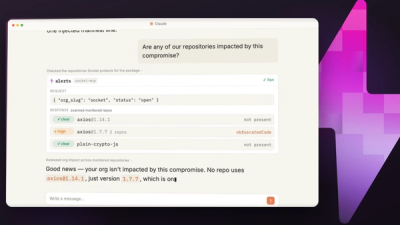
Socket MCP now lets AI assistants review org alerts, investigate threats using the Socket threat feed, and inspect package files in addition to dependency scoring.
Product
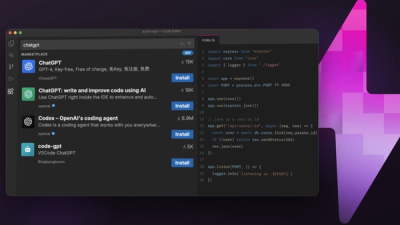
Socket Firewall blocks malicious VS Code and Open VSX extensions before install, protecting developers from compromised editor marketplaces.