

Product
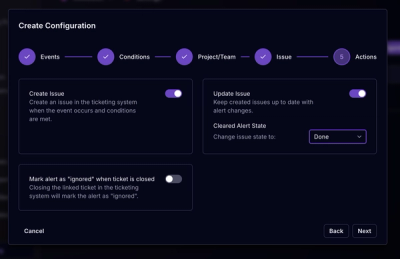
Socket for Jira Is Now Available
Socket for Jira lets teams turn alerts into Jira tickets with manual creation, automated ticketing rules, and two-way sync.
By Jeppe Hasseriis - Apr 20, 2026
@dashevo/blockchain-spv
Advanced tools

[
 ](https://david-dm.org/dashevo/blockchain-spv
Stores blockchain headers and verifies transactions with SPV
npm install @dashevo/blockchain-spv
// import blockchain parameters for Dash
var params = require('webcoin-dash').blockchain

// create a LevelUp database where the block data should be stored
var db = levelup('dash.chain', { db: require('memdown') })

// create blockchain
var Blockchain = require('@dashevo/blockchain-spv')
var chain = new Blockchain(params, db)

// wait for the blockchain to be ready
chain.on('ready', function () {
  // use the blockchain
}
Blockchain stores and verifies block headers, and does SPV (lite client) verification. It is compatible with Dash and Bitcoin-derived blockchains.
new Blockchain(params, db)Creates an SPV Blockchain which stores and verifies block headers.
params should be the blockchain parameters for the blockchain you wish to use. Parameters for Dash are available at require('webcoin-dash').blockchain. For more info about params you can use, see the Parameters section.
db should be a LevelUp instance where block data will be stored. The db should not be shared with another Blockchain (if you need to, use level-sublevel to create a sub-section of your db).
Make sure to wait for the ready event before using the blockchain.
chain.addHeaders(headers, callback)Adds block headers to the chain. headers should be an array of contiguous, ascending block headers. The headers will be verified (checked to make sure the expected amount of work was done, the difficulty was correct, etc.). The callback will be called with cb(err, header) where header is an invalid header if there was a validation error.
chain.createWriteStream()Returns a writable stream that takes in arrays of block headers and adds them to the chain. This is essentially just a stream wrapper for chain.addHeaders(), making it easier to get headers from a HeaderStream (from the bitcoin-net module).
chain.createReadStream([opts])Returns a readable stream that outputs blocks from the blockchain (in order). The stream will stay open even when it reaches the chain tip, and will output new blocks as they are received (this means you don't have to think about whether the chain is done syncing or not).
If a reorg happens (blocks that have been emitted are now on an invalid fork), the stream will emit the now-invalid blocks again in descending order (so that each can be un-processed). Each block has a boolean add property which is false if it is being removed from the chain. NOTE: It is important to always check the value of block.add and un-process blocks when they are invalidated.
opts may contain the following options:
from Buffer (default: null) - start the stream at the block with this hash (exclusive). If from is null, the stream will start at the genesis block.chain.getBlock(hash, callback)Gets a block in the chain with hash hash. hash must be a Buffer. The callback is called with cb(err, block).
chain.getBlockAtHeight(height, callback)Gets a block in the chain with height height. The callback is called with cb(err, block).
Note that this requires the blockchain to be traversed (from the tip or genesis block, whichever is closest), so it runs in O(N/2) time.
chain.getBlockAtTime(time, callback)Gets the highest block with a time that comes before or on time. time should be in Unix time measured in seconds (not milliseconds as returned by Date.now()). The callback is called with cb(err, block).
Note that this requires the blockchain to be traversed (from the tip or genesis block, whichever is closest), so it runs in O(N) time.
chain.getTip()Returns the highest block added to the chain.
chain.getPath(from, to, callback)Gets the path of blocks between from and to. This is useful to know which blocks to process or unprocess when getting from one part of a chain to another (including going across forks). Calls the callback with cb(err, path) where path is the following:
{
  add: Array,
  // an array of Blocks which should be processed

  remove: Array,
  // an array of Blocks which should be unprocessed

  fork: Block
  // the first block of the fork (if any)
}
Examples:
[a]<-[b]<-[c]<-[d]

'getPath(a, d)' results in:
{
  add: [ b, c, d ],
  remove: [],
  fork: undefined
}

'getPath(d, a)' results in:
{
  add: [],
  remove: [ d, c, b ],
  fork: undefined
}
[a]<-[b]<-[c]<-[d]
  \
  [e]<-[f]

'getPath(f, d)' results in:
{
  remove: [ f, e ],
  add: [ b, c, d ],
  fork: e
}
chain.getPathToTip(from, callback)A convenience method for chain.getPath(from, chain.getTip(), cb).
Parameters specify blockchain rules and constants for different cryptocurrencies and blockchains. Parameters should contain the following:
{
  // REQUIRED

  // the data used in the header of the genesis block for this blockchain
  genesisHeader: {
    version: Number,
    prevHash: Buffer,
    merkleRoot: Buffer,
    time: Number,
    bits: Number,
    nonce: Number
  },

  // called to check if we should recalculate the difficulty this block
  // should call the callback with `cb(err, retarget)`
  // where `retarget` is a boolean
  shouldRetarget: function (block, callback) { ... },

  // called to calculate the expected difficulty for `block`
  // should call the callback with `cb(err, target)`,
  // where `target` is a Buffer containing the target hash
  calculateTarget: function (block, blockchain, callback) { ... },

  // called to compute the hash of the header used to verify mining
  // should call the callback with `cb(err, hash)`,
  // where `hash` is a Buffer
  miningHash: function (header, callback) { ... },

  // OPTIONAL

  // an array of blocks to use to speed up initial blockchain sync,
  // or as an extra source of data for verifying headers received from peers.
  // any number of blocks can be provided, and they should be sorted ascending by height
  checkpoints: [
    {
      height: Number,
      header: {
        version: Number,
        prevHash: Buffer,
        merkleRoot: Buffer,
        time: Number,
        bits: Number,
        nonce: Number
      }
    }
  ]
}
For some examples, see these parameter repos:
FAQs
Stores blockchain headers and verifies transactions with SPV
We found that @dashevo/blockchain-spv demonstrated a not healthy version release cadence and project activity because the last version was released a year ago. It has 11 open source maintainers collaborating on the project.
Did you know?

Socket for GitHub automatically highlights issues in each pull request and monitors the health of all your open source dependencies. Discover the contents of your packages and block harmful activity before you install or update your dependencies.
Product
Socket for Jira lets teams turn alerts into Jira tickets with manual creation, automated ticketing rules, and two-way sync.

Company News
Socket won two 2026 Reppy Awards from RepVue, ranking in the top 5% of all sales orgs. AE Alexandra Lister shares what it's like to grow a sales career here.

Security News
NIST will stop enriching most CVEs under a new risk-based model, narrowing the NVD's scope as vulnerability submissions continue to surge.