
Product
Introducing Repository Access Permissions and Custom Roles
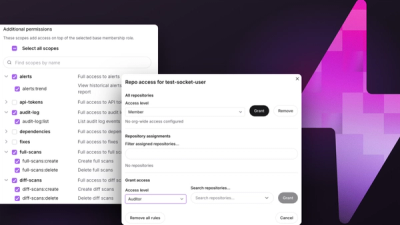
Socket now supports Custom Roles and Repository Access Permissions so organizations can control who can access specific repositories and actions.
By Joe Werle - Jun 19, 2026
@fluojs/config
Advanced tools
Configuration loading, merging, validation, and typed runtime access for Fluo applications.
English 한국어
Configuration loading, merging, validation, and typed runtime access for fluo applications.
npm install @fluojs/config
The package supports Node.js 20.16.0 or newer. Env-file loading, default .env loading, and watch mode resolve Node filesystem, path, and crypto builtins lazily through the host runtime boundary, requiring process.getBuiltinModule(...); when that API is present but direct filesystem/path/crypto lookup is unavailable, a published-ESM-compatible node:module fallback is used. In-memory use of ConfigService and loadConfig({ defaults, processEnv, runtimeOverrides }) does not require env-file access, but it is still distributed under the package-level Node.js 20.16.0 engine contract.
Use this package when you need to:
.env files plus an explicit processEnv snapshot.ConfigService.The ConfigModule handles loading and validating your configuration during bootstrap.
import { Module } from '@fluojs/core';
import { ConfigModule } from '@fluojs/config';
import { z } from 'zod';

const EnvSchema = z.object({
  DATABASE_URL: z.string().url(),
  PORT: z.coerce.number().default(3000),
});

@Module({
  imports: [
    ConfigModule.forRoot({
      envFile: '.env',
      processEnv: {
        DATABASE_URL: process.env.DATABASE_URL,
      },
      defaults: { PORT: '3000' },
      schema: EnvSchema,
    }),
  ],
})
class AppModule {}
Use envFilePath when the env file lives at an absolute or pre-resolved path, or parse when you need a custom flat-file parser instead of the default dotenv parser.
Once registered, you can inject ConfigService to access your values:
import { Inject } from '@fluojs/core';
import { ConfigService } from '@fluojs/config';

@Inject(ConfigService)
class MyService {
  constructor(private readonly config: ConfigService) {
    const port = this.config.get('PORT');
    const dbUrl = this.config.getOrThrow('DATABASE_URL');
  }
}
Configuration is merged in the following order (highest precedence wins):
runtimeOverrides.processEnv option..env file (or custom path).defaults option.@fluojs/config does not scan ambient environment variables automatically. Pass an explicit processEnv snapshot at the bootstrap boundary when process-backed values should participate in precedence.
envFilePath overrides envFile, and parse lets callers replace dotenv parsing with a custom parser for flat key/value files. Empty load/module options preserve the default <cwd>/.env behavior for loadConfig({}) and ConfigModule.forRoot(). Missing env files are treated as empty input during load; watch mode also observes the parent directory so creating the file later can trigger a reload.
Importing the root @fluojs/config package is safe for in-memory consumers that only need ConfigService, option types, or loadConfig(...) with explicit in-memory inputs: Node filesystem, path, and crypto builtins are resolved lazily only when env-file loading or watch mode actually runs. loadConfig({ defaults, processEnv, runtimeOverrides }) does not resolve process.cwd(), a default .env path, or Node filesystem/path/crypto builtins. Because the published package engine is Node.js 20.16.0 or newer, Node.js 20.0.0 through 20.15.x and non-Node runtimes are outside the supported package contract for env-file, default .env, and watch execution paths.
Plain objects are deep-merged by key. Arrays and primitive values from higher-precedence sources completely replace lower-precedence ones.
The schema option accepts a synchronous Standard Schema-compatible validator such as Zod, Valibot, or ArkType. The schema runs after all sources are merged but before the application starts. Its validated value becomes the final config snapshot, and reported issues fail bootstrap/load/reload with INVALID_CONFIG.
@fluojs/config keeps loading and reload APIs synchronous. Async Standard Schema results are rejected with INVALID_CONFIG; use a synchronous schema for config validation.
ConfigService.get('a.b.c') resolves dot-path keys by walking each path segment, so lookup cost is proportional to path depth. When get(), getOrThrow(), or snapshot() returns an object-like value, the returned value is a detached clone; clone cost is proportional to the returned subtree size so caller mutations cannot affect the active config snapshot.
ConfigReloadManager.reload() serializes reload work. If another reload is requested while the current reload is notifying listeners, the follow-up reload is queued and applied after the active notification finishes; if the active notification fails, the previous snapshot is restored and the queued reload is discarded. The same serialization and rollback contract applies to createConfigReloader(...).reload(), including manual reloads queued during watch-triggered notifications.
Module registration and reloader creation snapshot caller-owned options before storing them. Later mutations to objects passed to ConfigModule.forRoot(...), ConfigReloadModule.forRoot(...), or createConfigReloader(...) do not affect bootstrap, manual reloads, or watch reloads. When ConfigModule.forRoot({ watch: true, ... }) is used, the module starts an env-file watcher during application bootstrap, first aligns the injected ConfigService with the watch reloader baseline, and then updates the same injected ConfigService instance after successful watch reloads. Pass onReloadError when the application needs ownership of automatic watch reload failures from ConfigModule. In watch mode, the parent directory is watched for both existing and missing env files, so creating or atomically replacing the env file can trigger reload. Watch reloads compare the final env file content with the last committed watch baseline before reloading, so unchanged saves and change-then-revert bursts do not replace the in-process config snapshot.
ConfigReloadModule is the explicit injectable reload layer, not a standalone config source. Pair it with ConfigModule or another ConfigService provider when callers need CONFIG_RELOADER for manual reloads or subscriptions. Watchers created by ConfigModule or ConfigReloadModule are created only when watch: true, and they are closed during module shutdown. Enable watch: true on one layer for a given env file: use ConfigModule for automatic ConfigService updates, or ConfigReloadModule when callers need the injected reloader contract for subscriptions/manual reloads.
| Class/Helper | Description |
|---|---|
ConfigModule | Module for registering configuration globally or locally. |
ConfigReloadModule | Registers the reload manager and exports the shared CONFIG_RELOADER token for dependency injection. |
ConfigReloadManager | Coordinates reloads for the injected ConfigService, preserving service identity while replacing snapshots through the reload path. |
CONFIG_RELOADER | Injection token for the shared config reloader contract. |
ConfigService | Read-only service for typed access to configuration values. Snapshot replacement stays inside the config reload path. |
loadConfig(options) | Functional entry point for loading configuration manually. |
createConfigReloader(options) | Creates a reloader for dynamic configuration updates. |
The package also exports option and subscription types such as ConfigModuleOptions, ConfigLoadOptions, ConfigReloadSubscription, and ConfigReloadReason.
ConfigReloadManager.reload() updates the existing ConfigService instance so consumers keep their injected service identity while observing the new snapshot. If a reload listener throws, the manager restores the previous snapshot and rethrows the listener error. createConfigReloader(...).reload() follows the same listener serialization and rollback behavior for its standalone reloader snapshot.
@fluojs/runtime: Calls loadConfig internally during application bootstrap.schema option.packages/config/src/load.tspackages/config/src/service.tspackages/config/src/load.test.tspackages/config/src/reload-module.tsdocs/architecture/config-and-environments.mddocs/architecture/dev-reload-architecture.mdFAQs
Configuration loading, merging, validation, and typed runtime access for Fluo applications.
The npm package @fluojs/config receives a total of 324 weekly downloads. As such, @fluojs/config popularity was classified as not popular.
We found that @fluojs/config demonstrated a healthy version release cadence and project activity because the last version was released less than a year ago. It has 1 open source maintainer collaborating on the project.
Did you know?

Socket for GitHub automatically highlights issues in each pull request and monitors the health of all your open source dependencies. Discover the contents of your packages and block harmful activity before you install or update your dependencies.
Product
Socket now supports Custom Roles and Repository Access Permissions so organizations can control who can access specific repositories and actions.
Product
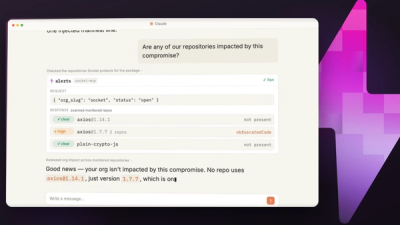
Socket MCP now lets AI assistants review org alerts, investigate threats using the Socket threat feed, and inspect package files in addition to dependency scoring.
Product
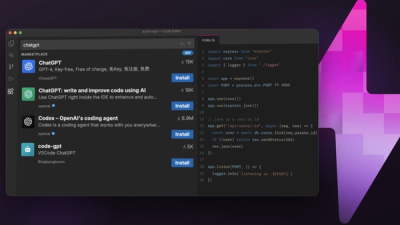
Socket Firewall blocks malicious VS Code and Open VSX extensions before install, protecting developers from compromised editor marketplaces.