
Product
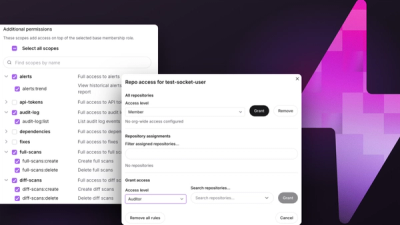
Introducing Repository Access Permissions and Custom Roles
Socket now supports Custom Roles and Repository Access Permissions so organizations can control who can access specific repositories and actions.
By Joe Werle - Jun 19, 2026
@fluojs/drizzle
Advanced tools
Drizzle ORM integration for Fluo with ALS transaction context, async module factory, and optional dispose hook.
English 한국어
Node.js-only Drizzle ORM integration for fluo with a transaction-aware database wrapper and an optional dispose hook.
npm install @fluojs/drizzle drizzle-orm
# Install the driver for your Drizzle adapter as well, for example:
npm install pg
The root @fluojs/drizzle package is currently a Node.js 20+ integration. It imports Node's node:async_hooks module to maintain the ambient transaction context and the package manifest declares engines.node >=20.0.0.
Drizzle ORM itself can target drivers such as Bun SQL or Cloudflare D1, but those driver runtimes are outside this fluo wrapper until a non-Node transaction-context adapter is documented.
Non-Node runtimes should not import the root package. For Bun, Deno, Cloudflare Workers, or other non-Node Drizzle drivers, register the raw Drizzle driver handle behind application-owned fluo providers such as { provide, useFactory } or { provide, useValue }, then inject that application token into repositories. The canonical package chooser/surface docs and the Bun/Cloudflare book chapters show those raw-provider patterns.
current() seam that switches between the root handle and the active transaction handleimport { ConfigService } from '@fluojs/config';
import { Module } from '@fluojs/core';
import { DrizzleModule } from '@fluojs/drizzle';
import { drizzle } from 'drizzle-orm/node-postgres';
import { Pool } from 'pg';
@Module({
imports: [
DrizzleModule.forRootAsync({
inject: [ConfigService],
useFactory: async (config: ConfigService) => {
const pool = new Pool({
connectionString: config.getOrThrow<string>('DATABASE_URL'),
});
return {
database: drizzle(pool),
dispose: async () => {
await pool.end();
},
};
},
}),
],
})
export class AppModule {}
The @Transaction() decorator is the recommended way to define transaction boundaries in your service layer. It ensures that all repository calls made within the decorated method share the same Drizzle transaction.
import { Transaction, DrizzleDatabase, type DrizzleDatabaseFacade } from '@fluojs/drizzle';
import { drizzle } from 'drizzle-orm/node-postgres';
import { users, profiles } from './schema';

type AppDatabase = ReturnType<typeof drizzle>;

export class UserService {
  constructor(private readonly repo: UserRepository) {}

  @Transaction()
  async onboardUser(dto: any) {
    const user = await this.repo.create(dto);
    await this.repo.initProfile(user.id);
    return user;
  }
}

export class UserRepository {
  constructor(private readonly db: DrizzleDatabaseFacade<AppDatabase>) {}

  async create(data: any) {
    // The facade type exposes standard Drizzle methods.
    // When called inside @Transaction(), they automatically participate in the ambient transaction.
    return this.db.insert(users).values(data);
  }

  async initProfile(userId: string) {
    return this.db.insert(profiles).values({ userId });
  }
}
Calls to @Transaction() methods are reentrant. If a decorated method calls another decorated method, they share the same underlying Drizzle transaction.
By default, @Transaction() selects its target with a small host-object heuristic: it first checks this.db, then direct properties on the decorated instance, then a nested .db property on those values, and uses the first value that exposes a transaction(...) method. This keeps common constructor(private readonly db: DrizzleDatabase<...>) services concise, but services with more than one Drizzle wrapper should not rely on property order. Pass an explicit accessor such as @Transaction((self) => self.ordersDb) or @Transaction((self) => self.analyticsDb, options) whenever the decorated host owns multiple transaction-capable clients or wraps a repository that also exposes .db.
The DrizzleDatabase provides a current() method that returns the active transaction handle if inside a transaction scope, or the root handle otherwise. Use this as an escape hatch when you need to pass the handle to external utilities or perform advanced manual transaction plumbing.
import { DrizzleDatabase } from '@fluojs/drizzle';
import { drizzle } from 'drizzle-orm/node-postgres';
import { users } from './schema';

type AppDatabase = ReturnType<typeof drizzle>;

export class AdvancedRepository {
  constructor(private readonly db: DrizzleDatabase<AppDatabase>) {}

  async customOperation() {
    const tx = this.db.current();
    // Use tx for operations that fluo doesn't automatically wrap,
    // or when passing to an external utility that expects a Drizzle database handle.
    return tx.select().from(users);
  }
}
Use db.transaction() for manual transaction blocks:
await this.db.transaction(async () => {
  const current = this.db.current();

  await current.insert(users).values(user);
  await current.insert(profiles).values(profile);
});
Nested calls reuse the active transaction boundary. If a nested call passes transaction options while a boundary is already active, the package rejects those nested options instead of silently changing the existing transaction.
When database.transaction(...) is unavailable and strictTransactions is false (the default), transaction() and requestTransaction() intentionally fail open (fail-open fallback) by running the callback directly against the root handle. This is useful for local fakes, read-only adapters, or gradual migrations, but it is not atomic and should not be treated as a real database transaction. Set strictTransactions: true in production paths that require rollback guarantees; startup and readiness diagnostics then surface missing database.transaction(...) support and transaction helpers throw instead of silently running without a transaction. Request-scoped fallback still honors AbortSignal, so a cancelled request can stop before or during direct execution even though no Drizzle transaction runner exists.
Prefer service-level @Transaction() for business operations. If you are migrating a NestJS controller/interceptor pattern where an entire request must be transactional, call requestTransaction(...) explicitly at the controller, route adapter, or request orchestration boundary and pass the request AbortSignal when one is available:
import { Controller, Post } from '@fluojs/http';
import { DrizzleDatabase } from '@fluojs/drizzle';
import { drizzle } from 'drizzle-orm/node-postgres';

type AppDatabase = ReturnType<typeof drizzle>;

@Controller('/checkout')
export class CheckoutController {
  constructor(
    private readonly db: DrizzleDatabase<AppDatabase>,
    private readonly checkout: CheckoutService,
  ) {}

  @Post()
  create(input: CheckoutInput, requestSignal?: AbortSignal) {
    return this.db.requestTransaction(
      () => this.checkout.createOrder(input),
      requestSignal,
    );
  }
}
There is no Drizzle *TransactionInterceptor export to import. Existing NestJS interceptor designs should move most transaction boundaries to services and reserve explicit requestTransaction(...) for rare controller-level compatibility cases where all request work, not just a service method, must share the same boundary.
During application shutdown, DrizzleDatabase aborts any still-active request transaction, waits for open request and manual transaction callbacks to settle or roll back, and only then runs the optional dispose(database) hook. This ordering lets drivers finish commit/rollback/cleanup work before pools or externally managed resources are closed.
Nested requestTransaction(...) calls opened inside an existing request boundary observe the ambient request abort signal while still reusing the active Drizzle transaction. Nested requestTransaction(...) calls opened inside an existing manual transaction boundary also join shutdown settlement tracking without opening a second Drizzle transaction, and their settlement handle remains tracked until the outer manual transaction settles so shutdown drains that outer boundary before dispose(database) runs. The platform status activity count is intentionally shorter lived: once the nested request callback settles, details.activeRequestTransactions is decremented even if the outer manual transaction continues running.
New transaction(...) and requestTransaction(...) calls are rejected once shutdown begins, so disposal cannot overtake a late transaction that starts after the shutdown boundary is crossed.
If the request signal aborts after the request callback has completed but before the underlying Drizzle transaction runner finishes committing or rolling back, requestTransaction(...) waits for that runner to settle first and then rejects with the abort reason. This keeps Drizzle cleanup serialized with request cancellation while making the late request abort visible to the caller instead of returning the completed callback result.
createDrizzlePlatformStatusSnapshot(...) and DrizzleDatabase.createPlatformStatusSnapshot() expose the same contract to diagnostics surfaces:
readiness.status is not-ready while Drizzle is shutting down or stopped, and when strictTransactions is enabled without database.transaction(...) support.health.status is degraded while request transactions are draining during shutdown and unhealthy after disposal.details.activeRequestTransactions, details.lifecycleState, details.strictTransactions, and details.supportsTransaction describe the current request transaction and transaction-capability state.details.transactionContext: 'als' identifies the async-local transaction context used by request and service transaction boundaries.ownership.externallyManaged: true and ownership.ownsResources: false mean the package runs your configured dispose hook but does not claim ownership of the underlying driver resources.Use DrizzleModule.forRoot(...) / forRootAsync(...) to register Drizzle. When you need to compose Drizzle support inside a custom defineModule(...) registration, import the module entrypoint there as well.
import { defineModule } from '@fluojs/runtime';
import { DrizzleModule } from '@fluojs/drizzle';

const database = {
  transaction: async <T>(callback: (tx: typeof database) => Promise<T>) => callback(database),
};

class ManualDrizzleModule {}

defineModule(ManualDrizzleModule, {
  imports: [DrizzleModule.forRoot({ database })],
});
DrizzleModule.forRoot(options) / DrizzleModule.forRootAsync(options)DrizzleDatabaseDrizzleDatabaseFacade<TDatabase>TransactionDRIZZLE_DATABASE, DRIZZLE_DISPOSE, DRIZZLE_HANDLE_PROVIDER, DRIZZLE_OPTIONSDrizzleDatabase.createFacade(...) (compatibility-only provider wiring helper; prefer DrizzleModule.forRoot(...) / forRootAsync(...) for application registration)createDrizzlePlatformStatusSnapshot(...)DrizzleDatabaseLikeDrizzleModuleOptionsDrizzleHandleProviderDRIZZLE_HANDLE_PROVIDER is an alias token for the lifecycle-aware DrizzleDatabase wrapper. Health integrations such as @fluojs/terminus use this token to read createPlatformStatusSnapshot() before falling back to raw database pings.
Use DrizzleDatabase<TDatabase> when a provider only needs wrapper methods such as current(), transaction(...), requestTransaction(...), or createPlatformStatusSnapshot(). Use DrizzleDatabaseFacade<TDatabase> for repository injections that call Drizzle query methods directly; the facade forwards those calls to the active transaction handle when one exists and to the root handle otherwise. DrizzleDatabase.createFacade(...) is retained as a low-level compatibility helper for module-provider wiring; application code should prefer DrizzleModule.forRoot(...) / forRootAsync(...).
Transaction is a standard TC39 method decorator for service-layer transaction boundaries. It resolves a transaction-capable target from the decorated host by checking this.db, then direct properties, then nested .db properties, accepts an accessor for explicit client selection, and can forward Drizzle transaction options to the outer boundary.
DrizzleModuleDrizzleModule.forRoot(options) / DrizzleModule.forRootAsync(options)forRootAsync(...) accepts DI-aware Drizzle options whose factory returns the database/dispose/transaction settings; pass global on the top-level async registration when the providers should be visible globally.forRootAsync(...) resolves options once per application container. Reusing the same module definition across tests or multi-app processes creates isolated database/dispose results for each container instead of sharing a memoized factory result.strictTransactions: true to throw if transaction support is missing.database must be a concrete object/function handle for both sync and async registration; missing handles are rejected during module registration or async bootstrap.@fluojs/runtime: owns module startup and shutdown sequencing@fluojs/http: provides request lifecycle primitives that can be paired with explicit requestTransaction(...) boundaries@fluojs/prisma and @fluojs/mongoose: alternate ORM/ODM integrations with the same fluo runtime modelpackages/drizzle/src/vertical-slice.test.tspackages/drizzle/src/module.test.tspackages/drizzle/src/public-api.test.tsFAQs
Drizzle ORM integration for Fluo with ALS transaction context, async module factory, and optional dispose hook.
We found that @fluojs/drizzle demonstrated a healthy version release cadence and project activity because the last version was released less than a year ago. It has 1 open source maintainer collaborating on the project.
Did you know?

Socket for GitHub automatically highlights issues in each pull request and monitors the health of all your open source dependencies. Discover the contents of your packages and block harmful activity before you install or update your dependencies.
Product
Socket now supports Custom Roles and Repository Access Permissions so organizations can control who can access specific repositories and actions.
Product
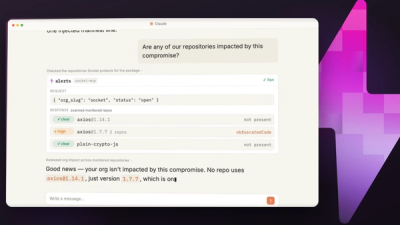
Socket MCP now lets AI assistants review org alerts, investigate threats using the Socket threat feed, and inspect package files in addition to dependency scoring.
Product
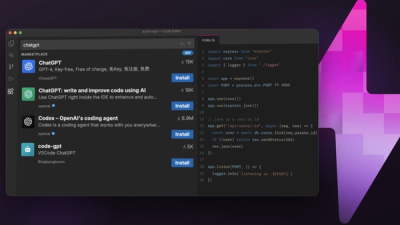
Socket Firewall blocks malicious VS Code and Open VSX extensions before install, protecting developers from compromised editor marketplaces.