
Product
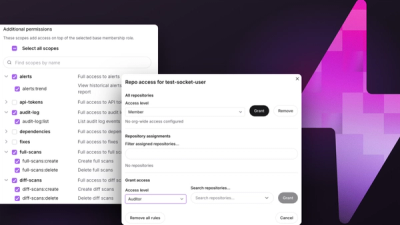
Introducing Repository Access Permissions and Custom Roles
Socket now supports Custom Roles and Repository Access Permissions so organizations can control who can access specific repositories and actions.
By Joe Werle - Jun 19, 2026
@fluojs/event-bus
Advanced tools
In-process event publishing and handler discovery for Fluo applications.
English 한국어
In-process event publishing and subscription for fluo. It features decorator-based handler discovery and support for external transport adapters like Redis Pub/Sub for cross-process communication.
npm install @fluojs/event-bus
Create an event class and a handler method decorated with @OnEvent.
import { OnEvent } from '@fluojs/event-bus';

export class UserSignedUpEvent {
  constructor(public readonly email: string) {}
}

export class NotificationService {
  @OnEvent(UserSignedUpEvent)
  async notify(event: UserSignedUpEvent) {
    console.log(`Sending welcome email to: ${event.email}`);
  }
}
Import EventBusModule and inject EventBusLifecycleService to publish events.
Use EventBusModule.forRoot(...) to wire the in-process event bus.
import { Module, Inject } from '@fluojs/core';
import { EventBusModule, EventBusLifecycleService } from '@fluojs/event-bus';

@Inject(EventBusLifecycleService)
export class UserService {
  constructor(private readonly eventBus: EventBusLifecycleService) {}

  async signUp(email: string) {
    // Logic to save user...
    await this.eventBus.publish(new UserSignedUpEvent(email));
  }
}

@Module({
  imports: [EventBusModule.forRoot()],
  providers: [NotificationService, UserService],
})
export class AppModule {}
publish(event, options?) supports signal, timeoutMs, and waitForHandlers. waitForHandlers defaults to true; awaited local handlers and awaited transport publishes share the same timeout and cancellation bounds. When those bounds settle the caller-facing publish promise before the underlying handler or transport work finishes, shutdown still tracks that underlying awaited work until it settles or the shutdown drain bound expires. When waitForHandlers is set to false, publishing returns immediately and skips timeout bounds. During shutdown, the event bus drains in-flight awaited publish and inbound transport handler work before closing the transport, ignores new publish calls after the lifecycle has started stopping, and ignores inbound transport callbacks that arrive after shutdown begins. Shutdown drain is bounded by EventBusModule.forRoot({ shutdown: { drainTimeoutMs } }), which defaults to 5000ms; if active dispatch work is still stuck after the bound, the bus records a degraded status diagnostic, logs a warning, and continues transport cleanup instead of hanging application close indefinitely.
Extend the event bus to other processes by plugging in a transport adapter.
import { RedisEventBusTransport } from '@fluojs/event-bus/redis';

EventBusModule.forRoot({
  transport: new RedisEventBusTransport({
    publishClient: redis,
    subscribeClient: redisSubscriber
  }),
})
Redis Pub/Sub is a fan-out transport, not a durable work queue. When multiple application instances subscribe to the same event channel, each instance can see the same published fact. Handlers that mutate state, send notifications, or call external systems should therefore be idempotent: carry a stable event identifier or business key in the payload, record which reactions have already been applied, and make repeat deliveries converge to the same result instead of performing the side effect twice.
Keep @OnEvent(...) handlers small and bounded. They are a good fit for fast local projections, cache invalidation, lightweight notifications, and other reactions that can finish within the publish timeout and shutdown drain window. If a reaction is slow, failure-prone, retryable, or needs operator-visible dead-letter handling, hand off a durable job to @fluojs/queue from the event handler instead of doing the work inline. Use an application-owned unique claim for the handoff, then mark the handoff as enqueued only after queue.enqueue(...) succeeds; if enqueue fails, release the pending claim so a later duplicate event can retry safely.
The this.reactions helper in the example below represents an application-owned claim store, not an API from @fluojs/event-bus or @fluojs/queue. Back it with storage that can atomically claim a business key and recover stale pending claims according to your application's retry policy.
import { Inject } from '@fluojs/core';
import { OnEvent } from '@fluojs/event-bus';
import { QueueLifecycleService } from '@fluojs/queue';

export class GenerateInvoiceJob {
  constructor(public readonly orderId: string) {}
}

@Inject(QueueLifecycleService)
export class BillingEventsHandler {
  constructor(private readonly queue: QueueLifecycleService) {}

  @OnEvent(OrderPlacedEvent)
  async enqueueInvoice(event: OrderPlacedEvent) {
    const handoffKey = `${event.orderId}:invoice`;

    if (!(await this.reactions.claimPending(handoffKey))) {
      return;
    }

    try {
      await this.queue.enqueue(new GenerateInvoiceJob(event.orderId));
      await this.reactions.markEnqueued(handoffKey);
    } catch (error) {
      await this.reactions.releasePending(handoffKey);
      throw error;
    }
  }
}
Use the event bus to state that a business fact happened. Use Queue when the reaction needs retry, backoff, workload isolation, or dead-letter inspection. If the process can crash while a claim is pending, make the application-owned claim store recover stale pending records according to your application's retry policy.
Use static eventKey to ensure stable channel names regardless of class minification or renames.
class UserRegisteredEvent {
  static readonly eventKey = 'user.registered.v1';
}
Handlers are discovered from singleton providers and controllers across imported modules. Discovery keeps distinct singleton provider identities even when multiple providers share the same implementation class; duplicate registration of the same provider token and handler method is invoked only once. Each handler receives an isolated cloned payload, and class inheritance is supported through instanceof matching. With an external transport configured, publishing a subclass event fans out to the subclass channel and every inherited event channel in its prototype chain, even when the publisher process has no matching local handlers for those types. A subclass uses its own static eventKey only when it declares one directly; otherwise its class name remains the subclass channel while base classes keep their own stable keys.
EventBusModule.forRoot(...): Main entry point for event bus registration.EventBusLifecycleService: Primary service for publishing events (publish(event, options?)) and creating platform status snapshots.@OnEvent(EventClass): Decorator to mark a method as an event handler.EVENT_BUS: Compatibility injection token for the publish facade.createEventBusPlatformStatusSnapshot(...): Status snapshot helper used by diagnostics and health surfaces.EventBusTransport: Contract for implementing external transport adapters.EventBus, EventPublishOptions, EventBusModuleOptions, EventType: Type-only contracts for publishing, defaults, transports, and stable event keys.EventBusLifecycleState, EventBusStatusAdapterInput, EventBusPlatformStatusSnapshot: Status snapshot contracts.Transport bootstrap subscribes once per unique event channel. eventKey controls the transport channel name when present. If a later transport subscription fails during bootstrap, the event bus closes the transport to roll back any channels that were already opened before rethrowing the subscription error. Invalid JSON transport messages are ignored, and inbound transport messages that arrive after shutdown starts are ignored before local handler dispatch.
| Concern | Subpath | Exports |
|---|---|---|
| Redis Pub/Sub transport | @fluojs/event-bus/redis | RedisEventBusTransport, RedisEventBusTransportOptions |
RedisEventBusTransport stays on the explicit @fluojs/event-bus/redis subpath so the root @fluojs/event-bus entrypoint remains focused on module registration, local publishing, decorators, and type-only contracts. The transport unsubscribes the channels it registered and detaches its message listener during shutdown, but it does not disconnect caller-owned Redis clients.
@fluojs/cqrs: Built on top of the event bus for more formal architectural patterns.@fluojs/redis: Provides the clients required for RedisEventBusTransport.packages/event-bus/src/module.test.ts: Handler discovery and publish/subscribe tests.packages/event-bus/src/public-surface.test.ts: Public API contract verification.packages/event-bus/src/status.test.ts: Status snapshot semantics.packages/event-bus/src/transports/redis-transport.test.ts: Redis transport behavior.FAQs
In-process event publishing and handler discovery for Fluo applications.
We found that @fluojs/event-bus demonstrated a healthy version release cadence and project activity because the last version was released less than a year ago. It has 1 open source maintainer collaborating on the project.
Did you know?

Socket for GitHub automatically highlights issues in each pull request and monitors the health of all your open source dependencies. Discover the contents of your packages and block harmful activity before you install or update your dependencies.
Product
Socket now supports Custom Roles and Repository Access Permissions so organizations can control who can access specific repositories and actions.
Product
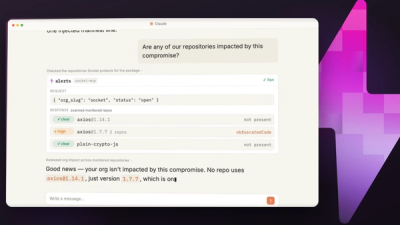
Socket MCP now lets AI assistants review org alerts, investigate threats using the Socket threat feed, and inspect package files in addition to dependency scoring.
Product
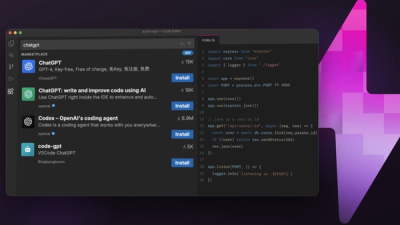
Socket Firewall blocks malicious VS Code and Open VSX extensions before install, protecting developers from compromised editor marketplaces.