
Product
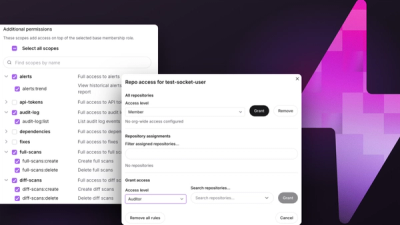
Introducing Repository Access Permissions and Custom Roles
Socket now supports Custom Roles and Repository Access Permissions so organizations can control who can access specific repositories and actions.
By Joe Werle - Jun 19, 2026
@fluojs/passport
Advanced tools
Strategy-agnostic authentication guard wiring and strategy registry for Fluo.
English 한국어
Strategy-agnostic auth execution layer for fluo. It routes any AuthStrategy through a generic AuthGuard into the request context, populating requestContext.principal.
npm install @fluojs/passport
Define your strategies and register them using PassportModule.forRoot(...).
import { Inject, Module } from '@fluojs/core';
import type { GuardContext } from '@fluojs/http';
import { DefaultJwtVerifier, JwtModule } from '@fluojs/jwt';
import { AuthenticationRequiredError, PassportModule, type AuthStrategy } from '@fluojs/passport';

@Inject(DefaultJwtVerifier)
export class BearerJwtStrategy implements AuthStrategy {
  constructor(private readonly verifier: DefaultJwtVerifier) {}

  async authenticate(context: GuardContext) {
    const authorization = context.requestContext.request.headers.authorization;
    const [scheme, token] = typeof authorization === 'string' ? authorization.split(' ') : [];

    if (scheme !== 'Bearer' || !token) {
      throw new AuthenticationRequiredError('Bearer access token is required.');
    }

    return this.verifier.verifyAccessToken(token);
  }
}

@Module({
  imports: [
    JwtModule.forRoot({
      algorithms: ['HS256'],
      audience: 'my-app',
      issuer: 'my-api',
      secret: 'your-secure-secret',
    }),
    PassportModule.forRoot(
      { defaultStrategy: 'jwt' },
      [{ name: 'jwt', token: BearerJwtStrategy }],
    ),
  ],
  providers: [BearerJwtStrategy],
})
export class AuthModule {}
JWT-based passport strategies require both pieces of module wiring: JwtModule.forRoot(...) registers DefaultJwtVerifier, and PassportModule.forRoot(...) registers the named strategy that @UseAuth('jwt') resolves. Returning the DefaultJwtVerifier.verifyAccessToken(...) result preserves the normalized principal contract (subject, claims, issuer, audience, roles, and scopes) that AuthGuard writes to requestContext.principal.
Use @UseAuth() and @RequireScopes() to enforce authentication.
import { Controller, Get, type RequestContext } from '@fluojs/http';
import { UseAuth, RequireScopes } from '@fluojs/passport';

@Controller('/profile')
export class ProfileController {
  @Get('/')
  @UseAuth('jwt')
  @RequireScopes('profile:read')
  async getProfile(input: never, ctx: RequestContext) {
    return { user: ctx.principal };
  }
}
Easily adapt any standard Passport.js strategy (like passport-google-oauth20) to work with fluo's DI and async lifecycle.
const googleBridge = createPassportJsStrategyBridge('google', GoogleStrategy, {
  mapPrincipal: ({ user }) => ({ subject: user.id, claims: user }),
});
The bridge settles each Passport.js strategy execution exactly once. A strategy must call one of the bound Passport actions (success, fail, redirect, pass, or error); promise rejections, promise completion without an action, and callback-style executions that exceed the bounded action timeout become authentication failures instead of leaving the request unresolved. Custom mapPrincipal functions must return a valid fluo Principal with a non-empty subject and object claims.
Use CookieAuthModule.forRoot(...) when your app authenticates requests from HTTP cookies.
import { Module } from '@fluojs/core';
import { JwtModule } from '@fluojs/jwt';
import {
  CookieAuthModule,
  CookieAuthStrategy,
  COOKIE_AUTH_STRATEGY_NAME,
  PassportModule,
} from '@fluojs/passport';

@Module({
  imports: [
    CookieAuthModule.forRoot(),
    JwtModule.forRoot({
      algorithms: ['HS256'],
      secret: 'your-secure-secret',
    }),
    PassportModule.forRoot(
      { defaultStrategy: COOKIE_AUTH_STRATEGY_NAME },
      [{ name: COOKIE_AUTH_STRATEGY_NAME, token: CookieAuthStrategy }],
    ),
  ],
})
export class AuthModule {}
Import CookieAuthModule.forRoot(...), JwtModule.forRoot(...), and PassportModule.forRoot(...) together when you want cookie-auth support in an application module. The cookie preset provides CookieAuthStrategy and cookie options; JWT verification still comes from @fluojs/jwt, and the passport registry still comes from PassportModule.forRoot(...).
CookieAuthStrategy preserves the normalized JWT principal contract from @fluojs/jwt, including subject, claims, issuer, audience, roles, and scopes.
Cookie access tokens must be non-empty strings. Missing cookies can resolve to { authenticated: false } only when requireAccessToken: false; malformed present cookie values always fail authentication before JWT verification.
CookieManager appends access-token and refresh-token Set-Cookie values without overwriting cookies that were already placed on the response, even when the underlying adapter stores the existing header with different casing such as set-cookie.
Protected routes must keep using @UseAuth(...). If you configure requireAccessToken: false, a missing cookie resolves to an explicit unauthenticated result instead of an anonymous principal, so protected routes still reject the request.
Use @UseOptionalAuth(...) only on routes that intentionally support both signed-in and guest callers:
import { Controller, Get, type RequestContext } from '@fluojs/http';
import { UseOptionalAuth } from '@fluojs/passport';

@Controller('/session')
export class SessionController {
  @Get('/')
  @UseOptionalAuth('cookie')
  getSession(_input: never, ctx: RequestContext) {
    return { subject: ctx.principal?.subject ?? null };
  }
}
The package provides a built-in RefreshTokenStrategy plus the RefreshTokenModule and RefreshTokenService contract for secure token rotation and revocation.
import { Module } from '@fluojs/core';
import { Controller, Post, type RequestContext } from '@fluojs/http';
import {
  PassportModule,
  REFRESH_TOKEN_STRATEGY_NAME,
  RefreshTokenModule,
  RefreshTokenStrategy,
  UseAuth,
} from '@fluojs/passport';

@Module({
  imports: [
    RefreshTokenModule.forRoot(MyRefreshTokenService),
    PassportModule.forRoot(
      { defaultStrategy: REFRESH_TOKEN_STRATEGY_NAME },
      [{ name: REFRESH_TOKEN_STRATEGY_NAME, token: RefreshTokenStrategy }],
    ),
  ],
  providers: [MyRefreshTokenService],
})
export class AuthModule {}

@Controller('/auth')
export class AuthController {
  @Post('/refresh')
  @UseAuth('refresh-token')
  async refresh(input: never, ctx: RequestContext) {
    return ctx.principal; // Contains new token pair
  }
}
Import RefreshTokenModule.forRoot(...) alongside PassportModule.forRoot(...) so the refresh-token strategy and shared REFRESH_TOKEN_SERVICE alias are available in the same module wiring.
RefreshTokenStrategy reads tokens from body.refreshToken, Authorization: Bearer ..., or x-refresh-token; malformed non-string tokens fail authentication. After rotation, it trusts the normalized access-token principal subject returned by @fluojs/jwt. JwtRefreshTokenAdapter requires a secret and a backing store; store: 'memory' is for development and single-instance deployments only, and rotation detects reuse through the store consume contract.
Use createConservativeAccountLinkPolicy(...) and resolveAccountLinking(...) to model identity-link decisions. The default conservative policy links one unambiguous existing account link or user-confirmed matches, reports multiple existing links as conflicts, and otherwise creates, skips, rejects, or reports conflicts deterministically.
createPassportPlatformStatusSnapshot(...) and createPassportPlatformDiagnosticIssues(...) expose readiness/health diagnostics for registered strategies, default strategy configuration, presets, and refresh-token store readiness.
@UseAuth(strategyName): Attaches AuthGuard and sets the active strategy.@UseOptionalAuth(strategyName): Attaches AuthGuard but allows routes without scopes to continue when the strategy reports missing credentials.@RequireScopes(...scopes): Enforces specific scope requirements.PassportModule: Module entry point for passport strategy wiring.AuthGuard: The HTTP guard that executes the strategy chain and enforces required scopes.PassportModuleOptions, AuthStrategyRegistration, AuthStrategyRegistry, AuthGuardContract: Strategy registry and guard wiring contracts.AuthStrategy: The contract for implementing custom authentication logic.AuthRequirement: Route-level metadata for the selected strategy, optional-auth mode, and required scopes.AuthStrategyResult, AuthOptionalResult, AuthHandledResult: Strategy return variants for principals, intentionally missing credentials, and fully handled responses.AuthStrategyResolutionError, AuthenticationRequiredError, AuthenticationFailedError, AuthenticationExpiredError: Public errors used by guards and strategy adapters for registry misses, missing credentials, invalid credentials, and expired credentials.defineAuthRequirement(...), getOwnAuthRequirement(...), getAuthRequirement(...): Public helpers for reading and writing auth requirement metadata when integrating custom decorators or tooling with AuthGuard.@RequireScopes(...); lower-level scope normalization helpers remain internal and are not part of the package root export.CookieAuthModule: Module entry point for the built-in cookie-auth preset.CookieAuthStrategy, COOKIE_AUTH_STRATEGY_NAME, COOKIE_AUTH_OPTIONS, DEFAULT_COOKIE_AUTH_OPTIONS, DEFAULT_COOKIE_OPTIONS: Cookie strategy wiring tokens, preset defaults, and response-cookie defaults.CookieAuthOptions, CookieAuthPresetConfig, CookieManagerConfig, CookieOptions, SetCookieOptions: Cookie strategy and response cookie configuration types.CookieManager: Utility for setting and clearing HttpOnly access/refresh token cookies.createCookieAuthPreset, createCookieAuthStrategyRegistration, createCookieManager, normalizeCookieAuthOptions.RefreshTokenModule: Module entry point for the built-in refresh-token preset.RefreshTokenStrategy, REFRESH_TOKEN_STRATEGY_NAME, REFRESH_TOKEN_SERVICE: Refresh-token strategy and service alias wiring.RefreshTokenService, RefreshTokenInput, RefreshTokenAuthResult: Application service contract and exchange payload shapes.JwtRefreshTokenAdapter: Bridges @fluojs/jwt refresh logic to the passport interface.REFRESH_TOKEN_MODULE_OPTIONS, RefreshTokenModuleOptions: JWT-backed refresh-token adapter configuration token and options, including the required secret and store contract.createRefreshTokenStrategyRegistration.createPassportJsStrategyBridge(...): Adapts Passport.js strategies to fluo AuthStrategy.PassportJsAuthStrategy, PassportJsStrategyLike, PassportJsPrincipalMapperInput, PassportJsPrincipalMapper, PassportJsAuthStrategyOptions, PassportJsStrategyBridge: Bridge strategy, mapper, configuration, and provider bundle contracts.ACCOUNT_LINKING_POLICY: DI token for registering an account-linking policy implementation.createConservativeAccountLinkPolicy(...), resolveAccountLinking(...): Conservative default policy and resolver for identity-link decisions.AccountIdentity, AccountLinkCandidate, AccountLinkAttempt, AccountLinkContext, AccountLinkPolicy, AccountLinkPolicyDecision, AccountLinkingOptions, AccountLinkingResolution: Account-linking input, policy, and result contracts.AccountLinkConflictError, AccountLinkRejectedError: Errors raised for ambiguous or rejected account-linking attempts.createPassportPlatformStatusSnapshot(...): Creates a runtime platform snapshot for strategy registry, preset readiness, ownership, and telemetry labels.createPassportPlatformDiagnosticIssues(...): Emits diagnostic issues for empty registries, missing default strategies, cookie preset readiness, and refresh-token backing store readiness.PassportPlatformStatusSnapshot, PassportStatusAdapterInput: Status helper input/output contracts.UseOptionalAuth only bypasses missing credentials when no scopes are required; scoped routes still need a principal. Passport.js bridge redirect() commits the response and skips the protected handler, while pass() and strategy completion without a Passport action are authentication failures. Refresh-token backing store status and diagnostic surfaces redact secret-like reason strings before exposing readiness, health, details, or diagnostic causes.
@fluojs/jwt: The underlying token core for JWT-based strategies.@fluojs/http: Provides the routing and guard infrastructure.packages/passport/src/guard.test.ts: Guard execution and scope enforcement patterns.packages/passport/src/adapters/passport-js.ts: Implementation of the Passport.js bridge.examples/auth-jwt-passport/src/auth/bearer.strategy.ts: JWT strategy implementation.FAQs
Strategy-agnostic authentication guard wiring and strategy registry for Fluo.
We found that @fluojs/passport demonstrated a healthy version release cadence and project activity because the last version was released less than a year ago. It has 1 open source maintainer collaborating on the project.
Did you know?

Socket for GitHub automatically highlights issues in each pull request and monitors the health of all your open source dependencies. Discover the contents of your packages and block harmful activity before you install or update your dependencies.
Product
Socket now supports Custom Roles and Repository Access Permissions so organizations can control who can access specific repositories and actions.
Product
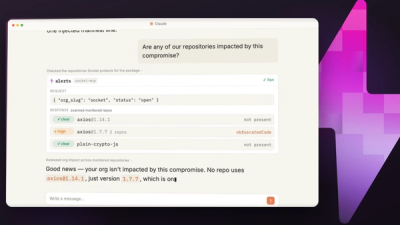
Socket MCP now lets AI assistants review org alerts, investigate threats using the Socket threat feed, and inspect package files in addition to dependency scoring.
Product
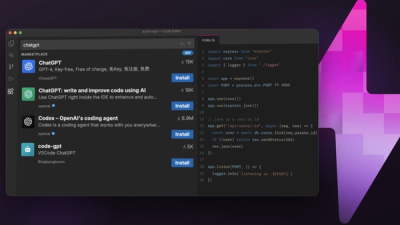
Socket Firewall blocks malicious VS Code and Open VSX extensions before install, protecting developers from compromised editor marketplaces.