
Product
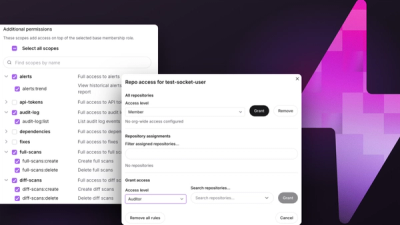
Introducing Repository Access Permissions and Custom Roles
Socket now supports Custom Roles and Repository Access Permissions so organizations can control who can access specific repositories and actions.
By Joe Werle - Jun 19, 2026
@fluojs/platform-fastify
Advanced tools
English 한국어
Fastify-backed HTTP adapter for the fluo runtime.
npm install @fluojs/platform-fastify fastify
Use this package when you need a high-performance HTTP adapter for your fluo application. Fastify is known for its low overhead and efficient request handling, making it the recommended choice for production fluo applications requiring high throughput and concurrency.
import { createFastifyAdapter } from '@fluojs/platform-fastify';
import { fluoFactory } from '@fluojs/runtime';
import { AppModule } from './app.module';

const app = await fluoFactory.create(AppModule, {
  adapter: createFastifyAdapter({ port: 3000 }),
});

await app.listen();
createFastifyAdapter() defaults to port 3000 and does not read process.env.PORT; invalid explicit numeric options such as port, maxBodySize, retryDelayMs, retryLimit, and shutdownTimeoutMs throw during adapter setup. maxBodySize and shutdownTimeoutMs are non-negative integer byte/time limits, so 0 is valid: maxBodySize: 0 allows only empty request bodies, and shutdownTimeoutMs: 0 asks Fastify to close on the next timer turn.
The Fastify adapter includes built-in support for multipart form-data and raw body parsing via internal Fastify plugins, exposed through the standard fluo request interface. When rawBody: true is enabled, FrameworkRequest.rawBody preserves the original request bytes for non-multipart requests so webhook signature verification and other byte-sensitive flows can replay the exact payload. When you construct the adapter directly, pass multipart limits as the second argument. bootstrapFastifyApplication(...) and runFastifyApplication(...) accept the same multipart settings under options.multipart.
Raw-body capture is skipped for multipart requests, including mixed-case Content-Type media values such as Multipart/Form-Data. When multipart.maxTotalSize is omitted, it defaults to maxBodySize so size limits stay portable across HTTP adapters.
const adapter = createFastifyAdapter(
  {
    port: 3000,
    rawBody: true,
  },
  {
    maxTotalSize: 10 * 1024 * 1024,
  },
);
Fastify provides a server-backed capability that allows @fluojs/websockets to attach directly to the underlying Node.js HTTP server.
@WebSocketGateway({ path: '/ws' })
export class MyGateway {}
Fastify-backed response streams support the shared fluo stream contract used by SSE and other streaming writers. response.stream.waitForDrain() settles when the underlying response emits drain, close, or error, so writers do not hang when a client disconnects or the stream closes before backpressure clears.
CORS is handled via bootstrap options. fluo manages the underlying CORS logic rather than relying on a separate Fastify plugin.
// Simple origin string
await bootstrapFastifyApplication(AppModule, {
  cors: 'https://my-frontend.com',
  port: 3000,
});

// Fine-grained control
await bootstrapFastifyApplication(AppModule, {
  cors: {
    origin: ['https://a.com', 'https://b.com'],
    methods: ['GET', 'POST', 'PUT', 'DELETE'],
  },
  port: 3000,
});

// Explicitly disabled
await bootstrapFastifyApplication(AppModule, {
  cors: false,
  port: 3000,
});
Configure a global routing prefix and exclude specific paths like health checks.
await bootstrapFastifyApplication(AppModule, {
  globalPrefix: '/api',
  globalPrefixExclude: ['/health'],
  port: 3000,
});
fluo uses its own logging system. The adapter creates the Fastify instance with its native logger disabled, and bootstrapFastifyApplication(...) / runFastifyApplication(...) select the framework console logger by default so startup and shutdown diagnostics stay consistent with the active runtime. Pass logger when a test harness or host application needs to capture those diagnostics through an injected ApplicationLogger instead of the default console logger.
You can register runtime-level middleware that runs before the request reaches the handlers. Note that these are standard MiddlewareLike functions, not Fastify-specific plugins.
await bootstrapFastifyApplication(AppModule, {
  middleware: [myCustomMiddleware],
  port: 3000,
});
When fluo route metadata can be translated directly, the adapter registers Fastify-native per-route handlers for explicit GET, POST, PUT, PATCH, DELETE, and HEAD routes instead of sending every request through a single wildcard route. For semantically safe unversioned routes, those native handlers hand a pre-matched descriptor and params to the shared fluo dispatcher so duplicate route matching is skipped without changing framework-owned guards, interceptors, observers, SSE, multipart, raw body, streaming, or error handling.
When multiple routes share the same method and normalized param shape (for example /:id and /:slug), use @All(...), depend on non-URI versioning, or arrive through duplicate-slash / trailing-slash variants, the adapter intentionally leaves those requests on the wildcard fallback path so Fastify registration cannot boot-fail or narrow fluo's matching semantics. If app middleware rewrites the framework request method or path after a native handoff was attached, the dispatcher ignores that stale handoff and rematches the rewritten request.
The adapter keeps a wildcard fallback route for unmatched paths and portability-sensitive cases, and enables Fastify trailing-slash / duplicate-slash normalization so native selection stays aligned with fluo's documented route path contract. CORS handling remains owned by fluo's shared middleware path rather than Fastify plugins, and unsupported methods such as OPTIONS continue through the fallback dispatcher path unless a fluo route explicitly owns them.
fluo's Fastify adapter significantly outperforms the raw Node.js adapter in high-concurrency scenarios.
| Adapter | Requests/sec | Avg Latency |
|---|---|---|
| Raw Node.js Adapter | ~31,000 | 4.0ms |
| Fastify Adapter | ~58,000 | 2.1ms |
Measured using wrk on a standard /health endpoint.
packages/platform-fastify/src/adapter.test.ts is the package-local regression target for the documented Fastify adapter contract. It runs the shared createHttpAdapterPortabilityHarness(...) checks for malformed cookie preservation, JSON/text raw-body capture, byte-exact raw-body capture, multipart raw-body exclusion, multipart total-size defaults, SSE framing, response stream drain settlement, host and HTTPS startup logging, and shutdown signal listener cleanup.
The same file also covers Fastify-specific native route registration with wildcard fallback, duplicate shape route fallback, middleware/guard/interceptor/observer ordering, CORS ownership, global prefix behavior, malformed cookie preservation, response serialization parity, raw-body pre-parsing behavior, case-insensitive multipart detection, and multipart limit handling. Keep README example pointers aligned with that test file and the custom adapter book chapter when changing startup, routing, or adapter portability behavior.
createFastifyAdapter(options, multipartOptions?): Recommended factory for the Fastify adapter. The optional second argument configures multipart limits such as maxFileSize, maxFiles, and maxTotalSize for direct adapter construction.bootstrapFastifyApplication(module, options): advanced bootstrap without implicit listening.runFastifyApplication(module, options): Quick-start helper with lifecycle management. On timeout/failure it reports the condition through logging and process.exitCode, while leaving final process termination to the surrounding host.isFastifyMultipartTooLargeError(error): Detects multipart limit errors across Fastify error shapes.FastifyHttpApplicationAdapter: The core adapter implementation.FastifyAdapterOptions, BootstrapFastifyApplicationOptions, RunFastifyApplicationOptions, CorsInput, FastifyApplicationSignal.cors bootstrap option. Since Fastify's native CORS plugin is not registered, only the fluo-managed CORS logic applies.middleware option accepts runtime-level MiddlewareLike[] functions. These are not Fastify plugins and follow the standard middleware interface used across fluo adapters.runFastifyApplication and bootstrapFastifyApplication select the framework console logger by default and accept logger for hosts or tests that need an injected ApplicationLogger.globalPrefixExclude to prevent the prefix from being applied to internal routes or health check endpoints.@fluojs/runtime: Core framework runtime.@fluojs/platform-express: Alternative Express-based adapter.@fluojs/websockets: Real-time gateway support.packages/platform-fastify/src/adapter.test.tsexamples/minimal/src/main.tsexamples/realworld-api/src/main.tsFAQs
Fastify-based HTTP adapter for the Fluo runtime.
We found that @fluojs/platform-fastify demonstrated a healthy version release cadence and project activity because the last version was released less than a year ago. It has 1 open source maintainer collaborating on the project.
Did you know?

Socket for GitHub automatically highlights issues in each pull request and monitors the health of all your open source dependencies. Discover the contents of your packages and block harmful activity before you install or update your dependencies.
Product
Socket now supports Custom Roles and Repository Access Permissions so organizations can control who can access specific repositories and actions.
Product
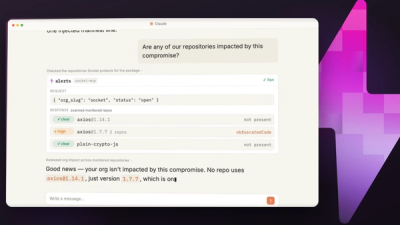
Socket MCP now lets AI assistants review org alerts, investigate threats using the Socket threat feed, and inspect package files in addition to dependency scoring.
Product
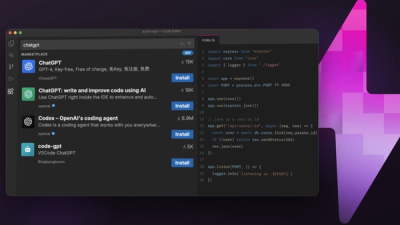
Socket Firewall blocks malicious VS Code and Open VSX extensions before install, protecting developers from compromised editor marketplaces.