
Product
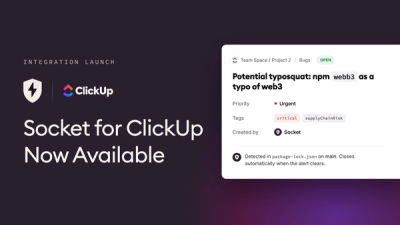
Socket for ClickUp Is Now Available
Create ClickUp tasks from Socket alerts, automate ticketing with custom rules, and keep alert and task status synchronized.
By Jeppe Hasseriis - Aug 26, 2026
@fozikio/cortex-engine
Advanced tools
Portable cognitive engine for AI agents — storage, embeddings, memory, FSRS, and MCP server




Persistent memory for AI agents. Open source, LLM-agnostic, works with any MCP client.

Most AI agents forget everything when the session ends. cortex-engine fixes that — it gives agents a persistent memory layer that survives across sessions, models, and runtimes.
goal_set creates desired future states that generate forward prediction error, biasing consolidation and exploration toward what mattersCortexStore interface — see docs/storage-backends.mdwithTransaction(fn) primitive composes multi-step writes. SQLite uses BEGIN IMMEDIATE with a per-store mutex; Firestore uses runTransaction with a write-routing proxy. See docs/concurrency.mdfozikio migrate --from <url> --to <url> clones between any pair of backends. ID-preserving, checkpointed, resumable, fails-loud on schema mismatchcategory + whenToUse + doNotUse metadata so LLMs disambiguate cleanly. Browse with fozikio tools or GET /tools. Auto-generated reference at docs/tools-reference.mdstrategy: long-context to run edge discovery and abstraction in a single large LLM pass instead of N² pairwise calls; surfaces transitive patterns and cross-domain connections that the sequential approach missesagent_invoke lets your agent spawn cheap, cortex-aware sub-tasks using any configured LLM. Knowledge compounds across sessions.query, observe, believe, wander, dream, goal_set, agent_invoke, thread_create, journal_write, evolve, etc.) over the Model Context ProtocolThe result: personality and expertise emerge from accumulated experience, not system prompts. An agent with 200 observations about distributed systems doesn't need to be told "you care about distributed systems." It just knows.
Works with Claude Code, Cursor, Windsurf, or any MCP-compatible client. Runs locally (SQLite) or in the cloud (Firestore + Cloud Run).
The engine includes defense-in-depth protections for deployed environments:
crypto.timingSafeEqual to prevent timing side-channel attacksforget, dream, evolve, resolve, thread_resolve) are blocked from the generic REST endpoint; they remain available via MCP for direct agent access| Module | Role |
|---|---|
core | Foundational types, config, and shared utilities |
engines | Cognitive processing: memory consolidation, FSRS, graph traversal |
stores | Persistence layer — SQLite (local), Firestore (cloud), JSON (backup/migration). All implement the shared CortexStore interface |
tools | All 57 cognitive tool implementations (one file per tool) |
mcp | MCP server, tool registry, and plugin loader |
cognitive | Higher-order cognitive operations (dream, wander, validate) |
triggers | Scheduled and event-driven triggers |
bridges | Adapters for external services and APIs |
providers | Embedding and LLM provider implementations |
bin | Entry points: serve.js (HTTP + MCP), cli.js (admin CLI) |
public | Built-in web dashboard (served automatically with --rest) |
npm install @fozikio/cortex-engine
npx fozikio init my-agent
cd my-agent
npx fozikio serve   # starts MCP server
Your agent now has 57 cognitive tools. The generated .mcp.json is version-pinned and platform-aware (Windows cmd /c wrapper handled automatically).
See the Quick Start guide for the full 5-minute setup.
npx fozikio agent add researcher --description "Research agent"
npx fozikio agent add trader --description "Trading signals"
npx fozikio agent generate-mcp   # writes .mcp.json with scoped servers
Each agent gets isolated memory via namespaces. See the Architecture section for details.
The fastest path: open an AI agent in an empty directory and say "set up a cortex workspace." The agent runs npx fozikio init, reads the generated files, and is immediately productive. See the Agent-First Setup guide for the full walkthrough.
cortex-engine ships with a built-in web dashboard. Start the REST server and open the URL in your browser:
npx fozikio serve --rest --port 3000
# open http://localhost:3000
The dashboard shows your agent's stats, threads, ops log, memories, concepts, and observations — no separate install required. It auto-detects its API from the same origin it's served from.
If auth is enabled (CORTEX_API_TOKEN), the dashboard loads without auth but API calls require a token. Set it via localStorage:
localStorage.setItem("cortex-settings", JSON.stringify({ token: "your-token" }));
Source: fozikio-dashboard
npx fozikio serve                          # start MCP server
npx fozikio health                         # memory health report
npx fozikio vitals                         # behavioral vitals and prediction error
npx fozikio wander                         # walk through the memory graph
npx fozikio wander --from "auth"           # seeded walk from a topic
npx fozikio maintain fix                   # scan and repair data issues
npx fozikio report                         # weekly quality report
npx fozikio tools                          # browse the cognitive tool catalogue
npx fozikio tools --category memory        # filter to a category
npx fozikio migrate --from sqlite:./cortex.db --to json:./backup.json --verify
All read-only commands honour --namespace <ns> and --agent <name> flags. When called from a workspace with .fozikio/agent.yaml, the agent's default_namespace is picked up automatically — no flag needed.
npm run dev       # tsc --watch
npm test          # vitest run
npm run test:watch
| Variable | Required | Description |
|---|---|---|
CORTEX_API_TOKEN | Optional | Used by the cortex-telemetry hook to send retrieval feedback to the cortex API. Not required to run the MCP server. |
MOONSHOT_API_KEY | Optional | Required when llm: kimi is set. Get one from platform.moonshot.cn. |
OPENAI_API_KEY | Optional | Required when llm: openai is set, or when using any OpenAI-compatible provider without an explicit API key. |
Additional variables are required depending on which providers you enable (Firestore, Vertex AI, etc.). See docs/ for provider-specific configuration.
fozikio init automatically installs safety rules, skills, and agent definitions from the fozikio.json manifest into the target workspace.
cortex-engine ships with Reflex rules — portable YAML-based guardrails that work across any agent runtime, not just Claude Code.
| Rule | Event | What It Does |
|---|---|---|
cognitive-grounding | prompt_submit | Nudges the agent to call query() before evaluation, design, review, or creation work |
observe-first | file_write / file_edit | Warns if writing to memory directories without calling observe() or query() first |
note-about-doing | prompt_submit | Suggests capturing new threads of thought with thread_create() |
Rules live in reflex-rules/ as standard Reflex YAML. They're portable — use them with Claude Code, Cursor, Codex, or any runtime with a Reflex adapter. See @fozikio/reflex for the full rule format and tier enforcement.
Claude Code users also get platform-specific hooks (in hooks/) for telemetry, session lifecycle, and project board gating. These are runtime adapters, not rules — they handle side effects that the declarative rule format doesn't cover.
To customize: Edit the YAML rule files directly, or set allow_disable: true and disable them via Reflex config.
Skills are invocable workflows that agents can use via /skill-name.
| Skill | When to Use | What It Provides |
|---|---|---|
cortex-memory | Query, record, and review work | Full memory workflow — query/observe patterns, belief tracking, memory-grounded code review, session patterns |
| Agent | Description |
|---|---|
cortex-researcher | Deep research agent that queries cortex before external sources, observes novel findings back into memory |
fozikio init reads fozikio.json from the package rootAs of v1.0.0, all 57 cognitive tools are built into cortex-engine core — no separate plugin installs needed. Previously these were separate @fozikio/tools-* packages; they've been absorbed into the engine.
| Capability | Tools |
|---|---|
| Memory | observe, query, recall, wander, forget, retrieve |
| Beliefs & Reasoning | believe, belief, contradict, speculate, validate, predict |
| Threads | thread_create, thread_update, thread_resolve, threads_list |
| Journaling | journal_write, journal_read |
| Identity | evolve, evolution_list |
| Social | social_read, social_update, social_draft, social_score |
| Graph | neighbors, suggest_links, suggest_tags, link, graph_report |
| Maintenance | dream, digest, reflect, find_duplicates, retrieval_audit, consolidation_status |
| Vitals | vitals_get, vitals_set, sleep_pressure |
| Reasoning | surface, ruminate, notice, intention, resolve |
| Content | content_create, content_list, content_update |
| Ops | ops_append, ops_query, ops_update |
| Goals | goal_set |
| Agents | agent_invoke |
| Stats | stats |
The plugin system is still available for custom extensions — see Plugin Docs.
withTransaction contract, single-process invariant, SQLite vs Firestore semanticsMIT — see LICENSE
FAQs
Portable cognitive engine for AI agents — storage, embeddings, memory, FSRS, and MCP server
The npm package @fozikio/cortex-engine receives a total of 29 weekly downloads. As such, @fozikio/cortex-engine popularity was classified as not popular.
We found that @fozikio/cortex-engine demonstrated a healthy version release cadence and project activity because the last version was released less than a year ago. It has 1 open source maintainer collaborating on the project.
Product
Create ClickUp tasks from Socket alerts, automate ticketing with custom rules, and keep alert and task status synchronized.
Product
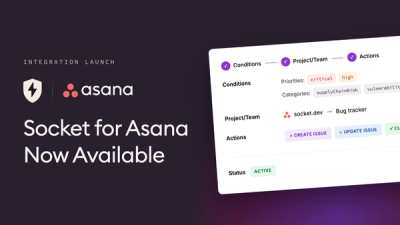
Create and manage Asana tasks directly from Socket alerts, with manual task creation, automated ticketing rules, and two-way sync.

Security News
Open VSX has removed three extension IDs from its malicious-extension list as the legitimate publishers they impersonated move to claim the names for themselves.