
Product
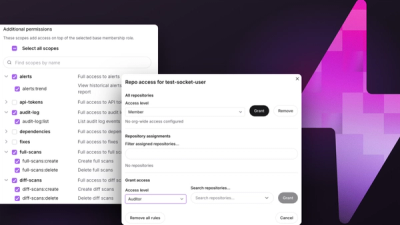
Introducing Repository Access Permissions and Custom Roles
Socket now supports Custom Roles and Repository Access Permissions so organizations can control who can access specific repositories and actions.
By Joe Werle - Jun 19, 2026
@guardianforge/destiny-data-utils
Advanced tools
Destiny Data Utils is a library designed to make building third party applications around Destiny 2 easier. This project is an iteration on the front end code built for GuardianForge to download manifest data, assist with caching, and massage the data int
Destiny Data Utils is a library designed to make building third party applications around Destiny 2 easier. This project is an iteration on the front end code built for GuardianForge to download manifest data, assist with caching, and massage the data into a more developer-friendly format. More info coming soon.
⚠️ This project is in VERY early development and is likely to change frequently over the coming weeks.
Below are the various components included with this library:
| Utility | Description |
|---|---|
| BungieApiService | A wrapper around the Bungie.net API |
| ManifestService | Contains logic on how to download and optionally cache the Destiny 2 Manifest |
| IManifestCache | An interface used by ManifestSevice to cache the manifest |
| IndexedDbService | An implementation of IManifestCache that will cache the manifest to the browser's IndexedDb datastore |
This example is taken directly from the main GuardianForge.net repo.
// Define the database name & version for the IndexedDbService
const DB_NAME = "destinybuilds.gg"
const DB_VERSION = 5
let dbService = new IndexedDbService(DB_NAME, DB_VERSION)
// Create an instance of the BungieApiService, which the ManifestService uses to connect to Bungie's API.
let bungieApiService = new BungieApiService(config.bungieApiKey)
// Create the ManifestService, passing in both objects from above.
let manifestService = new ManifestService(bungieApiService, dbService)
// Calling 'init' on the ManifestService executes the logic to download the current manifest data and cache it. If the implementation of IManifestCache (IndexedDbService in this example) contains a copy of the manifest data that matches the version pulled from the metadata, the cached version will be loaded instead.
await manifestService.init()
If you only need a subset of the manifest, you can pass in a list of components like so. This saves time on minimizing the number of network calls to download the components.
// If you only need a subset of the manifest, you can optionally pass in an array of component names.
const components = [
  "DestinyInventoryItemDefinition",
  "DestinySocketTypeDefinition",
  "DestinySocketCategoryDefinition",
  "DestinyDamageTypeDefinition",
  "DestinyStatDefinition",
  "DestinyInventoryBucketDefinition",
  "DestinyTalentGridDefinition",
  "DestinyActivityDefinition",
  "DestinyActivityTypeDefinition",
  "DestinyActivityModeDefinition",
  "DestinyActivityGraphDefinition",
  "DestinyEnergyTypeDefinition"
]
let manifestService = new ManifestService(bungieApiService, dbService, components)
FAQs
Destiny Data Utils is a library designed to make building third party applications around Destiny 2 easier. This project is an iteration on the front end code built for GuardianForge to download manifest data, assist with caching, and massage the data int
The npm package @guardianforge/destiny-data-utils receives a total of 6 weekly downloads. As such, @guardianforge/destiny-data-utils popularity was classified as not popular.
We found that @guardianforge/destiny-data-utils demonstrated a not healthy version release cadence and project activity because the last version was released a year ago. It has 1 open source maintainer collaborating on the project.
Did you know?

Socket for GitHub automatically highlights issues in each pull request and monitors the health of all your open source dependencies. Discover the contents of your packages and block harmful activity before you install or update your dependencies.
Product
Socket now supports Custom Roles and Repository Access Permissions so organizations can control who can access specific repositories and actions.
Product
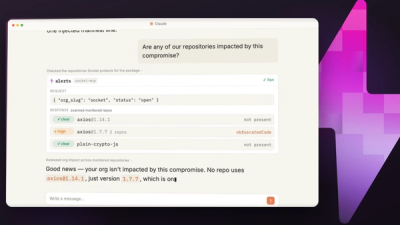
Socket MCP now lets AI assistants review org alerts, investigate threats using the Socket threat feed, and inspect package files in addition to dependency scoring.
Product
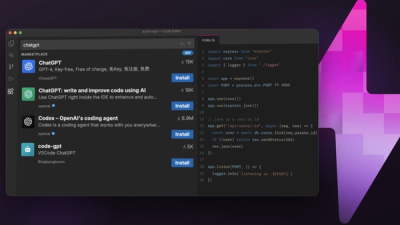
Socket Firewall blocks malicious VS Code and Open VSX extensions before install, protecting developers from compromised editor marketplaces.