
Product
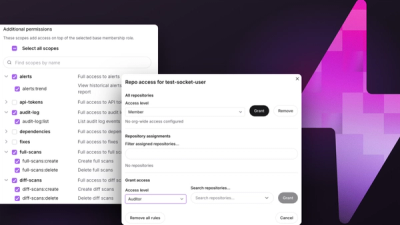
Introducing Repository Access Permissions and Custom Roles
Socket now supports Custom Roles and Repository Access Permissions so organizations can control who can access specific repositories and actions.
By Joe Werle - Jun 19, 2026
@janus-validator/core
Advanced tools
A combinator library for defining validators that validate objects and provide examples
Core validation library for Janus Validator - composable validators that can both validate data and generate valid examples. Perfect for testing, API validation, and form handling.
Or, Seq, and O are automatically wrapped in Constant# Core + DSL package (recommended)
npm install @janus-validator/core @janus-validator/dsl
# Or just core (DSL available via @janus-validator/core/DSL)
npm install @janus-validator/core
// Option 1: Import from DSL package
import { O, U, I, B, R, Or, oneOrMore } from '@janus-validator/dsl';

import { Generator } from '@janus-validator/core';

// Define a validator
const userValidator = O({
  name: S(1, 100),
  age: I(0, 150),
  email: R(/^[\w.]+@[\w.]+\.\w+$/),
  active: B(),
});

// Validate data
const result = userValidator.validate({
  name: 'Alice',
  age: 30,
  email: 'alice@example.com',
  active: true,
});

if (result.valid) {
  console.log('Valid:', result.value);
} else {
  console.log('Error:', result.error);
  console.log('Example:', result.example); // Auto-generated valid example
}

// Generate test data
const generator = new Generator({ random: Math.random });
const testUser = generator.generate(userValidator);
// { name: 'Alice', age: 42, email: 'test@example.com', active: true }
| Function | Description | Example |
|---|---|---|
B() | Boolean | B() |
S(min?, max?) | String with length range | S(1, 100) |
I(min?, max?) | Integer in range | I(0, 150) |
N(min?, max?) | Float in range | N(-273.15, 1000) |
L(min?, max?) | 64-bit BigInt | L(0n, 1000n) |
R(pattern) | Regex pattern | R(/^\d{3}-\d{4}$/) |
Bytes(min?, max?) | Binary data (Uint8Array) | Bytes(16, 32) |
// Object schema - primitives are auto-wrapped in Constant
const config = O({
  version: 1,               // Auto-wrapped: C(1)
  env: 'production',        // Auto-wrapped: C('production')
  debug: false,             // Auto-wrapped: C(false)
  port: I(1, 65535),        // Validator passed through
});

// Nested objects
const user = O({
  name: S(1, 50),
  age: I(0, 150),
  address: O({
    street: S(1, 200),
    city: S(1, 100),
    zip: R(/^\d{5}$/),
  }),
});
| Function | Description |
|---|---|
Null() | Matches null |
Undefined() | Matches undefined |
C(value) | Constant value |
Enum(enumObj) | TypeScript enum |
Inf() | Positive infinity |
NInf() | Negative infinity |
NaN() | Not-a-Number |
The Or, Seq, and O combinators automatically wrap primitive values (strings, numbers, booleans) in Constant validators. This makes schemas more concise:
// Before: explicit wrapping required
const status = Or(C('pending'), C('active'), C('completed'));
const config = O({ version: C(1), env: C('production') });

// After: primitives auto-wrapped
const status = Or('pending', 'active', 'completed');
const config = O({ version: 1, env: 'production' });
Use Enum() to create a validator directly from a TypeScript enum:
import { Enum, O, S } from '@janus-validator/core/DSL';

// String enum
enum Status {
  Pending = 'pending',
  Active = 'active',
  Completed = 'completed',
}

const statusValidator = Enum(Status);
// Equivalent to: Or('pending', 'active', 'completed')

statusValidator.validate('pending');   // ✓
statusValidator.validate('invalid');   // ✗

// Numeric enum
enum Direction { Up, Down, Left, Right }
const dirValidator = Enum(Direction);  // Or(0, 1, 2, 3)

// Use in object schemas
const task = O({
  name: S(1, 100),
  status: Enum(Status),
});
// String or number - type is automatically inferred as Validator<string | number>
const id = Or(S(10, 36), I(1, 1000000));

// Nullable string - type is Validator<string | null>
const optionalName = Or(S(1, 100), Null());

// Enum-like constants - primitives auto-wrapped!
const status = Or('pending', 'active', 'completed');
// Type: Validator<'pending' | 'active' | 'completed'>

// Mix validators and primitives
const responseCode = Or(200, 201, 204, 404, 500);
// Type: Validator<200 | 201 | 204 | 404 | 500>

const flexible = Or('auto', I(1, 100));
// Type: Validator<'auto' | number>
// One or more items
const tags = oneOrMore(S(1, 20));

// Zero or more items
const comments = zeroOrMore(S(1, 500));

// Optional (0 or 1)
const nickname = optional(S(1, 30));

// Exactly N items
const coordinates = exactly(N(), 2);

// Between min and max
const scores = between(I(0, 100), 1, 5);

// At least N items
const required = atLeast(S(), 3);
// Fixed-length heterogeneous array with automatic tuple type inference
const point = Seq(N(), N());           // Validator<[number, number]>
const person = Seq(S(), I(), B());     // Validator<[string, number, boolean]>

// Primitives are auto-wrapped!
const header = Seq('START', I(), 'END');
// Type: Validator<['START', number, 'END']>

const record = Seq(1, S(1, 10), true);
// Type: Validator<[1, string, true]>

// Types are properly inferred in results
const result = person.validate(['Alice', 30, true]);
if (result.valid) {
  const [name, age, active] = result.value; // name: string, age: number, active: boolean
}
Use Typed<T>() or As<T>() to explicitly assert the output type of a validator, perfect for integrating with your existing interfaces:
import { O, S, I, Typed, As } from '@janus-validator/core/DSL';

// Define your interfaces
interface User {
  name: string;
  age: number;
}

interface Address {
  street: string;
  city: string;
}

// Create typed validators
const AddressValidator = Typed<Address>()(O({
  street: S(1, 200),
  city: S(1, 100),
}));

// As is an alias for Typed. Does not cast,
// but typechecks that the object matches the interface.
const UserValidator = As<User>()(O({
  name: S(1, 100),
  age: I(0, 150),
}));

// Result is properly typed
const result = UserValidator.validate({ name: 'Alice', age: 30 });
if (result.valid) {
  const user: User = result.value; // No casting needed!
}
Validate Uint8Array or Buffer data with length constraints:
import { Bytes } from '@janus-validator/core/DSL';

// Variable length binary (0-1024 bytes)
const data = Bytes();

// Fixed length (exactly 16 bytes, e.g., UUID)
const uuid = Bytes(16, 16);

// Range (32-64 bytes)
const hash = Bytes(32, 64);
For 64-bit integers that exceed JavaScript's Number.MAX_SAFE_INTEGER:
import { L } from '@janus-validator/core/DSL';

// Default: full 64-bit signed range
const bigId = L();

// Custom range
const positiveId = L(0n, 1000000000000n);

// Accepts bigint, number (if safe), or string representation
bigId.validate(9007199254740993n);  // ✓
bigId.validate('9007199254740993'); // ✓ (auto-converted)
For validating matching values (like password confirmation):
const { capture, ref, context } = createCaptureGroup();

const registrationForm = O({
  password: capture('pwd', S(8, 100)),
  confirmPassword: ref('pwd'),
});

// Valid: passwords match
registrationForm.validate({
  password: 'secret123',
  confirmPassword: 'secret123',
}); // { valid: true }

// Invalid: passwords don't match
registrationForm.validate({
  password: 'secret123',
  confirmPassword: 'different',
}); // { valid: false, error: "Value does not match captured 'pwd'" }
Generate realistic test data:
import {
  FirstName, LastName, FullName,
  RealisticEmail, CorporateEmailPreset,
  RealisticUSPhone,
  RealisticStreetAddress, RealisticCity, RealisticState, RealisticZipCode,
  CompanyName, ProductName,
  RecentDate, FutureDate,
  RealisticPrice,
} from '@janus-validator/core/lib';

const customer = O({
  name: FullName(),           // "Alice Smith"
  email: RealisticEmail(),    // "alice.smith@gmail.com"
  phone: RealisticUSPhone(),  // "(555) 123-4567"
  address: O({
    street: RealisticStreetAddress(), // "1234 Oak St"
    city: RealisticCity(),            // "New York"
    state: RealisticState(),          // "NY"
    zip: RealisticZipCode(),          // "10001"
  }),
});

const testCustomer = generator.generate(customer);
Override default generation with custom logic:
import { fromValues, templateGenerator, withGenerator } from '@janus-validator/core/combinators';

// Generate from a fixed list
const country = fromValues(R(/^[A-Z]{2}$/), ['US', 'CA', 'GB', 'DE', 'FR']);

// Template-based generation
const sku = templateGenerator(S(10, 20), (pick, rng) => {
  const categories = ['ELEC', 'FURN', 'CLTH'];
  const num = Math.floor(rng.random() * 10000).toString().padStart(4, '0');
  return `${pick(categories)}-${num}`;
});
// Generates: "ELEC-0042", "FURN-1337", etc.

// Custom generation function
const userId = withGenerator(I(1, 1000000), (rng) => {
  return Math.floor(rng.random() * 1000000) + 1;
});
All DSL validators automatically include valid examples in error messages:
const age = I(18, 100);
const result = age.validate('not a number');

// result = {
//   valid: false,
//   error: 'Expected number, got string',
//   example: 42  // Auto-generated valid example
// }
const createUserRequest = O({
  username: R(/^[a-zA-Z][a-zA-Z0-9_]{2,19}$/),
  email: R(/^[a-zA-Z0-9._%+-]+@[a-zA-Z0-9.-]+\.[a-zA-Z]{2,}$/),
  password: S(8, 128),
  profile: O({
    firstName: S(1, 50),
    lastName: S(1, 50),
    age: Or(I(13, 150), Null()),
  }),
});

// In your API handler
const result = createUserRequest.validate(req.body);
if (!result.valid) {
  return res.status(400).json({ error: result.error });
}
const { capture, ref, context } = createCaptureGroup();

const signupForm = O({
  email: R(/^[a-zA-Z0-9._%+-]+@[a-zA-Z0-9.-]+\.[a-zA-Z]{2,}$/),
  password: capture('pwd', S(8, 100)),
  confirmPassword: ref('pwd'),
  acceptTerms: true, // Must be true (auto-wrapped)
});

function validateForm(data: unknown) {
  context.clear();
  return signupForm.validate(data);
}
const orderItem = O({
  productId: S(10, 50),
  name: S(1, 200),
  quantity: I(1, 100),
  unitPrice: N(0.01, 100000),
});

const order = O({
  orderId: R(/^ORD-\d{8}$/),
  customerId: I(1, 1000000),
  items: oneOrMore(orderItem),
  subtotal: N(0, 1000000),
  tax: N(0, 100000),
  total: N(0, 1100000),
  status: Or('pending', 'processing', 'shipped', 'delivered'), // Auto-wrapped!
  createdAt: R(/^\d{4}-\d{2}-\d{2}T\d{2}:\d{2}:\d{2}/),
});
import { Generator } from '@janus-validator/core';

const rng = { random: Math.random };
const generator = new Generator(rng);

// Generate 100 test users
const testUsers = Array.from({ length: 100 }, () =>
  generator.generate(userValidator)
);

// Use in tests
describe('UserService', () => {
  it('should create users', () => {
    const user = generator.generate(userValidator);
    const created = userService.create(user);
    expect(created.id).toBeDefined();
  });
});
interface Validator<T> {
  validate(input: unknown): ValidationResult<T>;
  domain: Domain<T>;
}

type ValidationResult<T> =
  | { valid: true; value: T }
  | { valid: false; error: string; example?: T };
Helper types for working with validators:
import {
  InferValidatorType,   // Extract T from Validator<T>
  UnionOfValidators,    // [Validator<A>, Validator<B>] => A | B
  TupleOfValidators,    // [Validator<A>, Validator<B>] => [A, B]
  ValidatorSchema,      // { [key: string]: Validator<any> }
  InferSchemaType,      // { a: Validator<A> } => { a: A }
} from '@janus-validator/core';

// Example: Infer type from any validator
type UserType = InferValidatorType<typeof userValidator>;
class Generator {
  constructor(rng: RNG);
  generate<T>(validator: Validator<T>): T;
}

interface RNG {
  random(): number; // Returns 0-1
}
MIT
FAQs
A combinator library for defining validators that validate objects and provide examples
The npm package @janus-validator/core receives a total of 3 weekly downloads. As such, @janus-validator/core popularity was classified as not popular.
We found that @janus-validator/core demonstrated a healthy version release cadence and project activity because the last version was released less than a year ago. It has 1 open source maintainer collaborating on the project.
Did you know?

Socket for GitHub automatically highlights issues in each pull request and monitors the health of all your open source dependencies. Discover the contents of your packages and block harmful activity before you install or update your dependencies.
Product
Socket now supports Custom Roles and Repository Access Permissions so organizations can control who can access specific repositories and actions.
Product
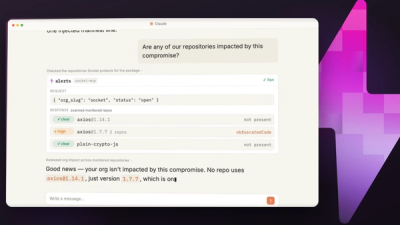
Socket MCP now lets AI assistants review org alerts, investigate threats using the Socket threat feed, and inspect package files in addition to dependency scoring.
Product
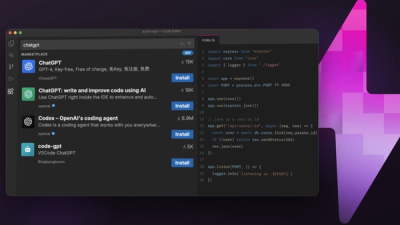
Socket Firewall blocks malicious VS Code and Open VSX extensions before install, protecting developers from compromised editor marketplaces.