
Product
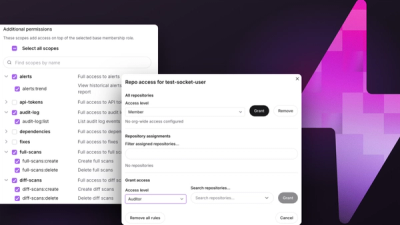
Introducing Repository Access Permissions and Custom Roles
Socket now supports Custom Roles and Repository Access Permissions so organizations can control who can access specific repositories and actions.
By Joe Werle - Jun 19, 2026
@kesplus/set-value
Advanced tools




Set nested properties on an object using dot notation.
Please consider following this project's author, Jon Schlinkert, and consider starring the project to show your :heart: and support.
Install with npm (requires Node.js >=11.0):
$ npm install --save set-value
Please update to version 3.0.1 or later, a critical bug was fixed in that version.
const set = require('set-value');

const obj = {};
set(obj, 'a.b.c', 'd');

console.log(obj);
//=> { a: { b: { c: 'd' } } }
Signature:
set(object, property_path, value[, options]);
object {Object}: The object to set value onpath {String|Symbol|Array}: The path of the property to set.value {any}: The value to set on obj[prop]options {Object}: See all available optionsYou may pass a string, symbol, or array of strings or symbols. By default, when a string is passed this library will split the string on . or a custom separator It's useful to pass an array
Escaping with backslashes
Prevent set-value from splitting on a dot by prefixing it with backslashes:
console.log(set({}, 'a\\.b.c', 'd'));
//=> { 'a.b': { c: 'd' } }

console.log(set({}, 'a\\.b\\.c', 'd'));
//=> { 'a.b.c': 'd' }
Do not split properties that include a /. By default, set-value assumes that properties with a / are not intended to be split. This option allows you to disable default behavior.
Note that this option cannot be used if options.separator is set to /.
Type: boolean
Default: true
Example
console.log(set({}, 'https://github.com', true));
//=> { 'https://github.com': true }

console.log(set({}, 'https://github.com', true, { preservePaths: false }));
//=> { 'https://github': { com: true } }
Custom separator to use for splitting object paths.
Type: string
Default: .
Example
console.log(set(obj, 'auth/userpass/users/bob', '*****', { separator: '/' }));
//=> { auth: { userpass: { users: { bob: '*****' } } } }
Custom .split() function to use.
Allows you to update plain object values, instead of overwriting them.
Type: boolean|function - A custom merge function may be defined if you need to deep merge. Otherwise, when merge is true, a shallow merge will be performed by Object.assign().
Default: undefined
Example
const obj = { foo: { bar: { baz: 'qux' } } };
set(obj, 'foo.bar.fez', 'zzz', { merge: true });
//=> { foo: { bar: { baz: 'qux', fez: 'zzz' } } }
Benchmarks were run on a MacBook Pro 2.5 GHz Intel Core i7, 16 GB 1600 MHz DDR3.
# deep (194 bytes)
  deep-object x 823,287 ops/sec ±1.00% (90 runs sampled)
  deep-property x 1,787,990 ops/sec ±0.82% (92 runs sampled)
  deephas x 840,700 ops/sec ±0.95% (93 runs sampled)
  dot-prop x 1,249,663 ops/sec ±0.89% (90 runs sampled)
  dot2val x 2,067,212 ops/sec ±1.08% (91 runs sampled)
  es5-dot-prop x 1,668,806 ops/sec ±0.92% (92 runs sampled)
  lodash-set x 1,286,725 ops/sec ±0.82% (90 runs sampled)
  object-path-set x 1,261,242 ops/sec ±1.63% (90 runs sampled)
  object-set x 285,369 ops/sec ±0.91% (90 runs sampled)
  set-value x 2,076,931 ops/sec ±0.86% (93 runs sampled)

  fastest is set-value, dot2val (by 203% avg)

# medium (98 bytes)
  deep-object x 5,811,161 ops/sec ±1.12% (90 runs sampled)
  deep-property x 4,075,885 ops/sec ±0.91% (90 runs sampled)
  deephas x 1,508,136 ops/sec ±0.82% (92 runs sampled)
  dot-prop x 2,809,838 ops/sec ±1.16% (87 runs sampled)
  dot2val x 4,600,890 ops/sec ±0.76% (91 runs sampled)
  es5-dot-prop x 3,263,790 ops/sec ±0.97% (91 runs sampled)
  lodash-set x 3,486,628 ops/sec ±1.20% (90 runs sampled)
  object-path-set x 3,729,018 ops/sec ±0.90% (92 runs sampled)
  object-set x 973,961 ops/sec ±0.80% (92 runs sampled)
  set-value x 6,941,474 ops/sec ±1.24% (90 runs sampled)

  fastest is set-value (by 206% avg)

# shallow (101 bytes)
  deep-object x 9,416,410 ops/sec ±1.19% (89 runs sampled)
  deep-property x 5,108,536 ops/sec ±0.98% (93 runs sampled)
  deephas x 1,706,979 ops/sec ±0.98% (86 runs sampled)
  dot-prop x 4,045,902 ops/sec ±1.10% (92 runs sampled)
  dot2val x 5,862,418 ops/sec ±0.88% (91 runs sampled)
  es5-dot-prop x 4,439,646 ops/sec ±1.18% (90 runs sampled)
  lodash-set x 9,303,292 ops/sec ±1.19% (89 runs sampled)
  object-path-set x 5,657,479 ops/sec ±0.95% (93 runs sampled)
  object-set x 2,020,041 ops/sec ±0.92% (91 runs sampled)
  set-value x 11,272,227 ops/sec ±1.36% (88 runs sampled)

  fastest is set-value (by 213% avg)
Clone this library into a local directory:
$ git clone https://github.com/jonschlinkert/set-value.git
Then install devDependencies and run benchmarks:
$ npm install && node benchmark
These are just a few of the duplicate libraries on NPM.
this being used improperly in the methods. I was able to patch it by binding the (plain) object to the methods, but it still fails 17 of 26 unit tests.Others that do the same thing, but use a completely different API
split function to be passed on the options.If there are any regressions please create a bug report. Thanks!
Pull requests and stars are always welcome. For bugs and feature requests, please create an issue.
Running and reviewing unit tests is a great way to get familiarized with a library and its API. You can install dependencies and run tests with the following command:
$ npm install && npm test
(This project's readme.md is generated by verb, please don't edit the readme directly. Any changes to the readme must be made in the .verb.md readme template.)
To generate the readme, run the following command:
$ npm install -g verbose/verb#dev verb-generate-readme && verb
You might also be interested in these projects:
| Commits | Contributor |
|---|---|
| 87 | jonschlinkert |
| 4 | doowb |
| 2 | mbelsky |
| 1 | dkebler |
| 1 | GlennKintscher |
| 1 | petermorlion |
| 1 | abetomo |
| 1 | zeidoo |
| 1 | ready-research |
| 1 | wtgtybhertgeghgtwtg |
Jon Schlinkert
Copyright © 2021, Jon Schlinkert. Released under the MIT License.
This file was generated by verb-generate-readme, v0.8.0, on September 12, 2021.
FAQs
Set nested properties on an object using dot notation.
The npm package @kesplus/set-value receives a total of 99 weekly downloads. As such, @kesplus/set-value popularity was classified as not popular.
We found that @kesplus/set-value demonstrated a not healthy version release cadence and project activity because the last version was released a year ago. It has 1 open source maintainer collaborating on the project.
Did you know?

Socket for GitHub automatically highlights issues in each pull request and monitors the health of all your open source dependencies. Discover the contents of your packages and block harmful activity before you install or update your dependencies.
Product
Socket now supports Custom Roles and Repository Access Permissions so organizations can control who can access specific repositories and actions.
Product
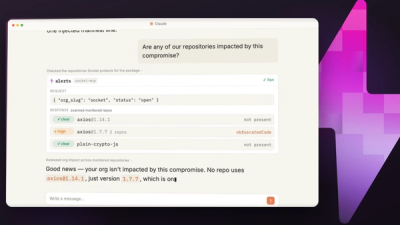
Socket MCP now lets AI assistants review org alerts, investigate threats using the Socket threat feed, and inspect package files in addition to dependency scoring.
Product
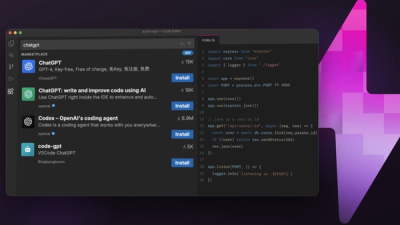
Socket Firewall blocks malicious VS Code and Open VSX extensions before install, protecting developers from compromised editor marketplaces.