
Product
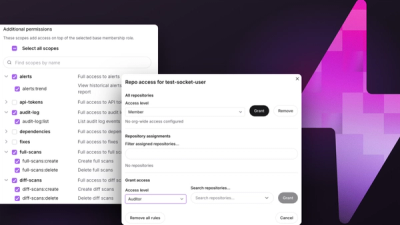
Introducing Repository Access Permissions and Custom Roles
Socket now supports Custom Roles and Repository Access Permissions so organizations can control who can access specific repositories and actions.
By Joe Werle - Jun 19, 2026
@limrun/cli
Advanced tools
The official command-line interface for Limrun — create and control cloud mobile sandboxes for Android, iOS, and Xcode.
# npm
npm install -g @limrun/cli
# npx (no install)
npx @limrun/cli <command>
# Log in via browser (stores API key in ~/.lim/config.yaml)
lim login

# Or provide an API key directly
lim --api-key <YOUR_KEY> android list

# Or use an environment variable
export LIM_API_KEY=<YOUR_KEY>
lim android list

# Log out (removes stored API key)
lim logout
The CLI stores configuration in ~/.lim/config.yaml. This file is compatible with the Go-based lim CLI — if you've already logged in with the Go version, the TypeScript CLI will use the same credentials.
Every command supports these flags:
| Flag | Description |
|---|---|
--api-key <value> | API key (also reads LIM_API_KEY env var) |
--json | Output as JSON instead of human-readable tables |
--help | Show help for any command |
Commands are organized by resource (noun-first), so you can discover everything available for a platform with --help:
lim ios --help       # All iOS commands
lim android --help   # All Android commands
lim xcode --help     # All Xcode commands
lim asset --help     # All asset commands
Instance ID is optional on interaction commands. When omitted, the CLI uses the last created instance of the matching type:
lim ios create                  # Creates ios_abc123, remembers it
lim ios screenshot -o test.png  # Uses ios_abc123 automatically
lim ios tap 100 200             # Still uses ios_abc123
lim session start               # Starts session for ios_abc123
You can always provide an ID explicitly to target a specific instance:
lim ios screenshot ios_def456 -o test.png
Top-level shortcuts are available for common actions — the platform is auto-detected from the instance ID prefix:
lim screenshot ios_abc123   # Works for both iOS and Android
lim tap 100 200 ios_abc123  # Auto-detects platform from ID prefix
lim delete ios_abc123       # Auto-detects resource type from ID prefix
lim ios create          # Create a new iOS instance
lim ios list            # List all ready iOS instances
lim ios list <ID>       # Get details of a specific instance
lim ios delete <ID>     # Delete an instance
# Basic
lim ios create

# With specific device model
lim ios create --model ipad --rm

# With pre-installed app from asset storage
lim ios create --install-asset my-app.ipa

# With Xcode sandbox enabled
lim ios create --xcode

# Full options
lim ios create --region us-west --display-name "CI Test" --label env=ci --rm
Flags for ios create:
| Flag | Description |
|---|---|
--rm | Auto-delete the instance on exit (Ctrl+C) |
--model <iphone|ipad|watch> | Simulator device model |
--xcode | Attach a Xcode build sandbox to the iOS instance |
--region <value> | Region for the instance (e.g. us-west) |
--display-name <value> | Human-readable name |
--label <key=value> | Labels (repeatable). Used for filtering and reuse |
--hard-timeout <duration> | Max lifetime (e.g. 1m, 10m, 3h). Default: none |
--inactivity-timeout <duration> | Idle timeout. Default: 3m |
--reuse-if-exists | Reuse an existing instance with matching labels/region |
--install <file> | Local file to install (auto-uploads, repeatable) |
--install-asset <name> | Asset name to install (repeatable) |
lim ios list                                   # Ready instances
lim ios list --all                             # All states
lim ios list --state creating                  # Filter by state
lim ios list --region us-west                  # Filter by region
lim ios list --label-selector env=prod         # Filter by labels
lim ios list --json                            # JSON output
All interaction commands accept an optional [ID] as the last argument. When omitted, the last created iOS instance is used.
# Screenshots
lim ios screenshot -o screenshot.png
lim ios screenshot                      # Output base64 to stdout

# Tapping
lim ios tap 100 200
lim ios tap-element --label "Submit"
lim ios tap-element --accessibility-id btn_ok

# Text input
lim ios type "Hello World"
lim ios type "search query" --press-enter
lim ios press-key enter
lim ios press-key a --modifier shift

# Scrolling
lim ios scroll down --amount 500

# UI inspection
lim ios element-tree
lim ios element-tree | jq '.'

# Open URLs / deep links
lim ios open-url https://example.com
lim ios open-url myapp://settings
# Install an app (local file auto-uploads, or use URL)
lim ios install-app ./MyApp.ipa
lim ios install-app https://example.com/app.ipa

# Launch / terminate
lim ios launch-app com.example.myapp
lim ios launch-app com.example.myapp --mode RelaunchIfRunning
lim ios terminate-app com.example.myapp

# List installed apps
lim ios list-apps
# Tail recent logs
lim ios log com.example.myapp --lines 50

# Stream logs continuously (Ctrl+C to stop)
lim ios log com.example.myapp -f
lim ios record start
lim ios record start --quality 8
lim ios record stop -o recording.mp4
# Sync/build use the current directory if no path is provided; pass instance IDs with --id (requires --xcode on create)
lim ios sync ./MyProject
lim ios build --scheme MyApp --workspace MyApp.xcworkspace
lim android create       # Create a new Android instance
lim android list         # List all ready Android instances
lim android list <ID>    # Get details of a specific instance
lim android delete <ID>  # Delete an instance
# Basic (with ADB tunnel and scrcpy streaming)
lim android create

# With apps pre-installed
lim android create --install ./my-app.apk --install ./another.apk

# Without streaming
lim android create --no-stream

# Full options
lim android create --region us-west --display-name "CI Test" --label env=ci --rm
Android-specific flags:
| Flag | Description |
|---|---|
--[no-]connect | Start ADB tunnel (default: true) |
--[no-]stream | Launch scrcpy for visual control (default: true) |
--adb-path <path> | Path to adb binary (default: adb) |
All interaction commands accept an optional [ID] as the last argument. When omitted, the last created Android instance is used.
# Screenshots
lim android screenshot -o screenshot.png

# Tapping
lim android tap 100 200
lim android tap-element --resource-id com.example:id/button
lim android tap-element --text "Sign In"

# Text input
lim android type "Hello World"
lim android press-key enter

# Scrolling
lim android scroll down --amount 500

# UI inspection
lim android element-tree

# Install app
lim android install-app ./app.apk

# Open URL
lim android open-url https://example.com

# Video recording
lim android record start
lim android record stop -o recording.mp4
Connect to a running Android instance for direct adb access:
lim android connect
lim android connect android_abc123 --adb-path /usr/local/bin/adb
The tunnel stays open until you press Ctrl+C. While connected, you can use adb commands in another terminal.
Standalone Xcode build sandboxes for remote compilation.
lim xcode create          # Create a new Xcode sandbox
lim xcode list            # List all ready Xcode instances
lim xcode list <ID>       # Get details of a specific instance
lim xcode delete <ID>     # Delete an instance
# Create with options
lim xcode create --rm --region us-west --hard-timeout 1h

# Sync and build
lim xcode sync ./MyProject
lim xcode build --scheme MyApp --workspace MyApp.xcworkspace

# Build and upload artifact
lim xcode build --scheme MyApp --upload my-app-build
Assets are files (APKs, IPAs, configs, etc.) stored in Limrun's cloud storage for use with instances.
# Upload a file
lim asset push ./my-app.apk
lim asset push ./my-app.ipa -n custom-name

# Download a file
lim asset pull asset_abc123
lim asset pull my-app.apk
lim asset pull asset_abc123 -o ./downloads

# List assets
lim asset list
lim asset list --name my-app
lim asset list --download-url

# Get a specific asset
lim asset list asset_abc123

# Delete an asset
lim asset delete asset_abc123
Sessions keep a persistent WebSocket connection to an instance in the background, making all interaction commands near-instant (~50ms instead of ~2s per command).
Without a session, every command creates a new connection:
lim ios screenshot              # ~2s (connect + auth + screenshot + disconnect)
lim ios tap 100 200             # ~2s (connect + auth + tap + disconnect)
lim ios element-tree            # ~2s (connect + auth + fetch + disconnect)
# Total: ~6s for 3 commands
With a session, the connection is created once and reused:
lim session start               # ~2s (one-time connection setup)
lim ios screenshot              # ~50ms (reuses connection)
lim ios tap 100 200             # ~50ms (reuses connection)
lim ios element-tree            # ~50ms (reuses connection)
lim session stop                # instant cleanup
# Total: ~2.15s for 3 commands
This makes sessions essential for interactive workflows, AI agent loops, and any scenario where you run multiple commands against the same instance.
# Start a session (defaults to last created instance)
lim session start

# Or specify an instance explicitly
lim session start ios_abc123

# Multiple sessions can run simultaneously
lim session start ios_abc123
lim session start android_def456

# Check all active sessions
lim session status
lim session status --json

# Stop a specific session
lim session stop ios_abc123

# Stop all sessions at once
lim session stop --all
If only one session is active, lim session stop (no ID) stops it automatically.
Each lim session start spawns an independent background daemon that:
/tmp/lim-sessions/<instance-id>/lim ios create --model iphone
lim session start
# Fast interaction loop — each command takes ~50ms
lim ios launch-app com.example.myapp
lim ios element-tree | jq '.tree'
lim ios tap-element --label "Login"
lim ios type "user@example.com"
lim ios tap-element --label "Submit"
lim ios screenshot -o after-login.png
lim session stop
lim ios delete ios_abc123
# Create two instances and start sessions for both
lim ios create --model iphone
lim ios create --model ipad
lim session start ios_phone_123
lim session start ios_tablet_456

# Agent controls both devices in parallel — ~50ms per command
lim ios launch-app com.example.myapp ios_phone_123
lim ios launch-app com.example.myapp ios_tablet_456

lim ios screenshot ios_phone_123 -o phone.png
lim ios screenshot ios_tablet_456 -o tablet.png

lim ios tap 200 400 ios_phone_123
lim ios element-tree ios_tablet_456 --json > tablet-tree.json

# Clean up all sessions
lim session stop --all
lim ios delete ios_phone_123
lim ios delete ios_tablet_456
# Spin up devices, start sessions, run tests, tear down
DEVICES=("iphone" "ipad")
IDS=()

for model in "${DEVICES[@]}"; do
  ID=$(lim ios create --model $model --json | jq -r '.metadata.id')
  lim session start $ID
  IDS+=($ID)
done

# Run tests against all devices
for ID in "${IDS[@]}"; do
  lim ios launch-app com.example.myapp $ID
  lim ios screenshot $ID -o "test_${ID}.png"
done

# Tear down
lim session stop --all
for ID in "${IDS[@]}"; do
  lim delete $ID
done
Build and test iOS apps remotely using cloud Xcode sandboxes. The sync and build commands work with both standalone Xcode instances and iOS instances that have Xcode sandbox enabled.
This gives you a simulator and a build environment in one instance — the built app is automatically installed on the simulator.
# 1. Create iOS instance with Xcode sandbox
lim ios create --xcode
# Output:
#   Instance ID: ios_abc123
#   Xcode Sandbox: https://...limrun.net/v1/sandbox_.../xcode
#   (sandbox URL is cached locally for sync/build to use)

# 2. Sync your project code to the Xcode sandbox
lim ios sync ./MyProject

# 3. Build — the app is auto-installed on the simulator
lim ios build --scheme MyApp --workspace MyApp.xcworkspace

# 4. Start a session for fast device interaction
lim session start

# 5. Test the built app on the simulator (~50ms per command)
lim ios launch-app com.example.myapp
lim ios element-tree | jq '.'
lim ios screenshot -o built-app.png

# 6. Clean up
lim session stop
lim ios delete ios_abc123
Note: The Xcode sandbox URL is only returned when the instance is created — not on subsequent
listcalls. The CLI caches it locally at~/.lim/instances/so thatsyncandbuildcan find it. This meanssync/buildmust run on the same machine whereios create --xcodewas executed.
Use this when you only need to build (no simulator needed), or when you want to attach a simulator separately.
# 1. Create a standalone Xcode instance
lim xcode create --rm

# 2. Sync and build
lim xcode sync ./MyProject
lim xcode build --scheme MyApp --workspace MyApp.xcworkspace

# 3. Upload build artifact
lim xcode build --scheme MyApp --upload my-app-build

# 4. Download the artifact
lim asset pull my-app-build -o ./build-output
# Sync the current directory
lim ios sync

# Watch mode (re-syncs on file changes)
lim ios sync ./MyProject --watch

# One-shot sync (default)
lim ios sync ./MyProject

# Explicitly disable watch mode
lim ios sync ./MyProject --no-watch

# Sync without installing
lim ios sync ./MyProject --no-install
The sync automatically ignores build artifacts (build/, DerivedData/, .build/), dependency folders (Pods/, Carthage/Build/, .swiftpm/), and user-specific files (xcuserdata/, .dSYM/).
The CLI reads configuration from multiple sources (in order of precedence):
--api-key)LIM_API_KEY, LIM_API_ENDPOINT, LIM_CONSOLE_ENDPOINT)~/.lim/config.yaml)Config file keys:
| Key | Default | Description |
|---|---|---|
api-key | — | Your Limrun API key |
api-endpoint | https://api.limrun.com | API base URL |
console-endpoint | https://console.limrun.com | Console URL (for login) |
All commands support --json for machine-readable output, making the CLI suitable for scripting and AI agent automation:
# Get instance details as JSON
lim ios list ios_abc123 --json

# Parse with jq
lim android list --json | jq '.[].metadata.id'

# Use in scripts
INSTANCE_ID=$(lim ios create --json | jq -r '.metadata.id')
lim ios screenshot -o test.png
lim delete $INSTANCE_ID
# Create instance and start session for fast commands
lim ios create --install ./build/MyApp.ipa
lim session start

# Verify — each command takes ~50ms with session
lim ios launch-app com.example.myapp
sleep 2
lim ios element-tree | grep "Welcome"
lim ios screenshot -o test-result.png

# Clean up
lim session stop
lim delete ios_abc123
# Create instance
INSTANCE=$(lim ios create --model iphone --json)
ID=$(echo $INSTANCE | jq -r '.metadata.id')

# Start session — all commands now run in ~50ms
lim session start

# Agent can interact at high speed
lim ios tap 200 400
lim ios type "test@example.com"
lim ios tap-element --label "Sign In"
lim ios screenshot -o result.png
lim ios element-tree --json > ui-state.json

# Tail logs (non-streaming works through session too)
lim ios log com.example.myapp --lines 20

# Clean up
lim session stop
lim delete $ID
# Single instance: Xcode sandbox + iOS simulator
ID=$(lim ios create --xcode --json | jq -r '.metadata.id')

# Sync, build, and test
lim ios sync ./MyiOSProject
lim ios build --scheme MyApp --workspace MyApp.xcworkspace

# Verify the built app on the simulator
lim session start
lim ios launch-app com.example.myapp
sleep 2
lim ios element-tree | grep "Welcome"
lim ios screenshot -o test-result.png
lim session stop

lim delete $ID
lim xcode create --rm --reuse-if-exists --label project=myapp

lim xcode sync ./MyiOSProject
lim xcode build --scheme MyApp --workspace MyApp.xcworkspace --upload myapp-latest
lim asset pull myapp-latest -o ./build-output
cd packages/cli
npm install
npm run build
# After making changes, rebuild and run
npm run build && node bin/run.js <command>

# Or use watch mode in one terminal, run in another
npx tsc --watch           # Terminal 1
node bin/run.js ios list   # Terminal 2
npm link

# Now `lim` works anywhere on your machine
lim --help
lim android list

# Unlink when done
npm unlink -g @limrun/cli
FAQs
Use remote XCode, iOS Simulator, Android Emulator and more to build and test apps from Linux, Windows or macOS.
The npm package @limrun/cli receives a total of 40 weekly downloads. As such, @limrun/cli popularity was classified as not popular.
We found that @limrun/cli demonstrated a healthy version release cadence and project activity because the last version was released less than a year ago. It has 4 open source maintainers collaborating on the project.
Did you know?

Socket for GitHub automatically highlights issues in each pull request and monitors the health of all your open source dependencies. Discover the contents of your packages and block harmful activity before you install or update your dependencies.
Product
Socket now supports Custom Roles and Repository Access Permissions so organizations can control who can access specific repositories and actions.
Product
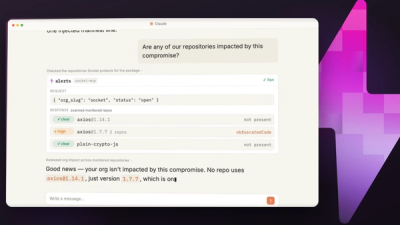
Socket MCP now lets AI assistants review org alerts, investigate threats using the Socket threat feed, and inspect package files in addition to dependency scoring.
Product
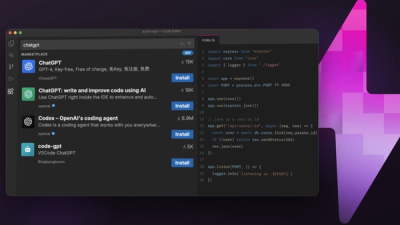
Socket Firewall blocks malicious VS Code and Open VSX extensions before install, protecting developers from compromised editor marketplaces.