
Product
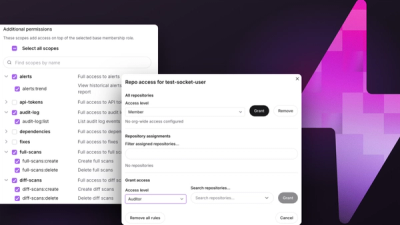
Introducing Repository Access Permissions and Custom Roles
Socket now supports Custom Roles and Repository Access Permissions so organizations can control who can access specific repositories and actions.
By Joe Werle - Jun 19, 2026
@powforge/captcha-mcp
Advanced tools
Stop your MCP server returning 429 to agents. PoW puzzle (free, ~5s CPU) or Lightning invoice — machine-readable backoff an agent can satisfy without an account. Three tools: challenge, verify, status. Stdio + HTTP transports, stdlib only.
Stop your MCP server returning 429 to agents. Hand them a proof-of-work puzzle (free, ~5s of CPU) or a 3-sat Lightning invoice instead — both are machine-readable backoff signals an autonomous agent can satisfy without an account, email, or API key.
OpenAI's Sora API does not let you charge per call. Anthropic's billing does not pass through to your tools. If you ship an MCP server today and an autonomous agent finds it, you eat the bill. When it hits your rate limit, it crashes with a 429 and no way to back off gracefully.
This is the gate. Three tools over stdio or HTTP. Stdlib only.
npx -y @powforge/captcha-mcp
That is it. No install, no config, no API key. The server starts on stdio and waits for an MCP client.
To wire it into Claude Code, Cursor, or any MCP-compatible host, add to your config:
{
  "mcpServers": {
    "powforge-captcha": {
      "command": "npx",
      "args": ["-y", "@powforge/captcha-mcp"]
    }
  }
}
Or run npx @powforge/captcha-mcp --install to print the config block.
Wraps the PowForge pow-captcha service (captcha.powforge.dev) as three MCP tools:
| Tool | Purpose |
|---|---|
challenge | Request a fresh proof-of-work puzzle. Returns {id, salt, difficulty, signature}. |
verify | Submit a solved nonce. Returns a 5-minute HMAC-signed access token. |
status | Server health, lifetime stats, L402 endpoint metadata. |
The free tier costs the agent ~5-10 seconds of CPU time (SHA-256, default 14 leading zero bits). The paid tier costs 3 sats over Lightning via L402 (RFC 7235 + bolt11 invoice in WWW-Authenticate).
| Approach | Per-call cost | Account required | Self-hosted | Agent-friendly |
|---|---|---|---|---|
| API keys | $0 | yes | n/a | no |
| OAuth | $0 | yes | n/a | no |
| Stripe metering | high overhead | yes | n/a | no |
| Managed MCP auth platform | 100–2000 sats | no | no | yes |
| PoW + L402 (this) | seconds or 3 sats | no | yes | yes |
Agents do not have email addresses. They do not click confirmation links. They do not enter credit cards. PoW + Lightning is the only auth primitive that works for fully autonomous callers.
Managed MCP auth platforms work, but they charge 100–2000 sats per call on vendor infrastructure — your revenue flows through their rails. This package runs on your server, your Lightning node, your keys. You keep the sats.
Set CAPTCHA_URL to point at a different captcha backend. Default is http://localhost:3077 so you can run the full stack locally for development. Production deployments point it at https://captcha.powforge.dev.
CAPTCHA_URL=https://captcha.powforge.dev npx @powforge/captcha-mcp
Hosted MCP clients (Smithery, browser-based hosts) need HTTP, not stdio. Pass --http or set HTTP_MODE=1:
HTTP_MODE=1 PORT=3200 npx @powforge/captcha-mcp
# or
npx @powforge/captcha-mcp --http
The server then listens on:
| Endpoint | Method | Purpose |
|---|---|---|
/mcp | POST | Single JSON-RPC request, single JSON-RPC response. Notifications return 202. |
/mcp | GET | SSE stream for server-pushed notifications (kept open with a 25s heartbeat). |
/health | GET | Liveness probe — returns {ok, server, transport}. Not part of MCP. |
Stateless. No session ids. CORS open (Access-Control-Allow-Origin: *) so browser clients work. Stdio mode is unchanged and remains the default — npx @powforge/captcha-mcp with no flag still talks JSON-RPC over stdin/stdout.
Smoke test the HTTP transport:
HTTP_MODE=1 PORT=3200 node src/server.js &
curl -X POST http://localhost:3200/mcp \
  -H "Content-Type: application/json" \
  -d '{"jsonrpc":"2.0","id":1,"method":"initialize","params":{"protocolVersion":"2024-11-05","capabilities":{},"clientInfo":{"name":"test","version":"1"}}}'
Returns {jsonrpc:"2.0", id:1, result:{protocolVersion:"2024-11-05", capabilities:{tools:{}}, serverInfo:{...}}}.
Clone the captcha widget repo or run the public service. The MCP server only needs HTTP access to the captcha endpoints listed under status.
git clone https://github.com/zekebuilds-lab/captcha-mcp
cd captcha-mcp
node src/server.js
It prints ready to stderr and waits for JSON-RPC on stdin.
Smoke-test the protocol manually:
echo '{"jsonrpc":"2.0","id":1,"method":"initialize","params":{"protocolVersion":"2024-11-05","capabilities":{},"clientInfo":{"name":"test","version":"1"}}}' | node src/server.js
You should see a JSON response with serverInfo: { name: "@powforge/captcha-mcp", version: "0.1.0" }.
When an agent submits a token to your service, verify it without trusting the agent:
curl -X POST https://captcha.powforge.dev/api/token/verify \
  -H "Content-Type: application/json" \
  -d '{"token":"<token-from-verify-tool>"}'
Returns {valid: true, method, issued_at, expires_at} or {valid: false, reason}.
@powforge/captcha — the browser widget for the same service.@powforge/mcp-l402-gate — Express middleware to gate any MCP server with L402 + Depth-of-Identity scoring.@powforge/mcp-identity — agent reputation oracle. Pair with this gate for first-call abuse protection.A side-by-side breakdown against x402-mcp, @agentauth/mcp, and Cloudflare ARC/ACT is published at powforge.dev/mcp/compare/x402-mcp. Short version: captcha-mcp is the only entrant that ships a free PoW tier alongside a Lightning paid skip on an MCP transport. The other three price every call (USDC) or require platform-issued credentials.
MIT
FAQs
Replace MCP 429 errors with PoW challenges or Lightning micropayments. Drop-in rate control for MCP servers — no accounts, free fallback, self-hosted. Three tools: challenge, verify, status. Stdio + HTTP transports, stdlib only.
The npm package @powforge/captcha-mcp receives a total of 37 weekly downloads. As such, @powforge/captcha-mcp popularity was classified as not popular.
We found that @powforge/captcha-mcp demonstrated a healthy version release cadence and project activity because the last version was released less than a year ago. It has 1 open source maintainer collaborating on the project.
Did you know?

Socket for GitHub automatically highlights issues in each pull request and monitors the health of all your open source dependencies. Discover the contents of your packages and block harmful activity before you install or update your dependencies.
Product
Socket now supports Custom Roles and Repository Access Permissions so organizations can control who can access specific repositories and actions.
Product
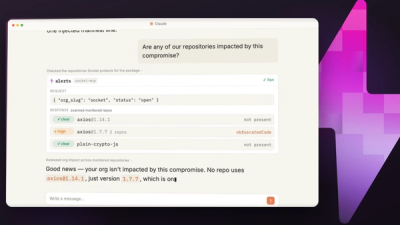
Socket MCP now lets AI assistants review org alerts, investigate threats using the Socket threat feed, and inspect package files in addition to dependency scoring.
Product
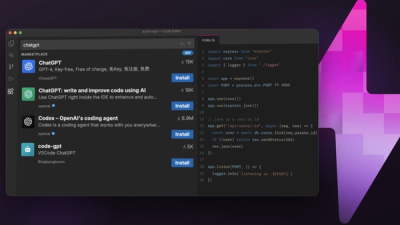
Socket Firewall blocks malicious VS Code and Open VSX extensions before install, protecting developers from compromised editor marketplaces.