
Product
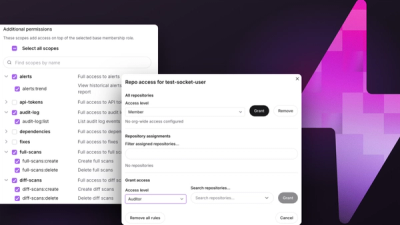
Introducing Repository Access Permissions and Custom Roles
Socket now supports Custom Roles and Repository Access Permissions so organizations can control who can access specific repositories and actions.
By Joe Werle - Jun 19, 2026
@prisma-next/extension-pgvector
Advanced tools
PostgreSQL pgvector extension pack for Prisma Next.
This extension pack adds support for the vector data type and vector similarity operations (e.g., cosine distance) for PostgreSQL databases with the pgvector extension installed.
pg/vector@1 mapping to number[] at runtime, and a Vector<N> type for dimensioned typing in contract.d.tscosineDistance) for use in queriesprisma-next.config.ts configuration/pack entrypoint for TypeScript contract authoring without runtime filesystem accessvector Postgres extension (CREATE EXTENSION IF NOT EXISTS vector) when the extension is composed into an application@prisma-next/cli: CLI config types and extension descriptor interface@prisma-next/sql-operations: SQL operation signature types@prisma-next/sql-relational-core: Codec registry and AST typesarktype: Schema validation for manifest structurepnpm add @prisma-next/extension-pgvector
The pgvector extension ships an on-disk baseline migration in its contract space; applying that migration installs pgvector with CREATE EXTENSION IF NOT EXISTS vector. When the extension is composed into an application via extensionPacks, prisma-next db init and prisma-next db update apply the baseline (and any subsequent migrations) automatically.
For manual database setup, the equivalent DDL is:
CREATE EXTENSION IF NOT EXISTS vector;
Ensure the baseline migration (or equivalent DDL) has been applied before running workloads that use vector columns.
Add the extension to your prisma-next.config.ts:
import { defineConfig } from '@prisma-next/cli/config-types';
import postgresAdapter from '@prisma-next/adapter-postgres/control';
import sql from '@prisma-next/family-sql/control';
import postgres from '@prisma-next/target-postgres/control';
import pgvector from '@prisma-next/extension-pgvector/control';

export default defineConfig({
  family: sql,
  target: postgres,
  adapter: postgresAdapter,
  extensionPacks: [pgvector],
});
Add vector columns to your contract and enable the namespace via pack refs:
import { int4Column, textColumn } from '@prisma-next/adapter-postgres/column-types';
import sqlFamily from '@prisma-next/family-sql/pack';
import { defineContract, field, model } from '@prisma-next/sql-contract-ts/contract-builder';
import { vector } from '@prisma-next/extension-pgvector/column-types';
import pgvector from '@prisma-next/extension-pgvector/pack';
import postgres from '@prisma-next/target-postgres/pack';

export const contract = defineContract({
  family: sqlFamily,
  target: postgres,
  extensionPacks: { pgvector },
  models: {
    Post: model('Post', {
      fields: {
        id: field.column(int4Column).id(),
        title: field.column(textColumn),
        // Dimensioned vector — `field.embedding` resolves to `Vector<1536>`.
        embedding: field.column(vector(1536)).optional(),
      },
    }).sql({ table: 'post' }),
  },
});
The vector(N) factory is registered through the unified CodecDescriptor<{ length: number }> shape — paramsSchema validates the dimension at the contract boundary, renderOutputType: ({ length }) => 'Vector<' + length + '>' produces the column's TS type for contract.d.ts, and the curried factory materializes the runtime codec at context construction. See ADR 208 — Higher-order codecs for parameterized types for the descriptor model. Every pgvector column must declare an explicit dimension via vector(N); the runtime codec is constructed against { length: N }, so an undimensioned form has no honest descriptor signature.
Register the extension when creating your execution stack:
import { instantiateExecutionStack } from '@prisma-next/framework-components/execution';
import { createExecutionContext, createSqlExecutionStack } from '@prisma-next/sql-runtime';
import postgresAdapter from '@prisma-next/adapter-postgres/runtime';
import postgresTarget from '@prisma-next/target-postgres/runtime';
import pgvector from '@prisma-next/extension-pgvector/runtime';

const stack = createSqlExecutionStack({
  target: postgresTarget,
  adapter: postgresAdapter,
  extensionPacks: [pgvector],
});
const context = createExecutionContext({ contract, stack });
const stackInstance = instantiateExecutionStack(stack);
Use vector similarity operations in your queries:
import { sql, tables } from '../prisma/query';
import { param } from '@prisma-next/sql-query/param';
import type { ResultType } from '@prisma-next/sql-query/types';

const queryVector = [0.1, 0.2, 0.3, /* ... */];

const plan = sql
  .from(tables.post)
  .select({
    id: tables.post.columns.id,
    title: tables.post.columns.title,
    distance: tables.post.columns.embedding.cosineDistance(param('queryVector')),
  })
  .orderBy(tables.post.columns.embedding.cosineDistance(param('queryVector')).asc())
  .limit(10)
  .build({ params: { queryVector } });

type Row = ResultType<typeof plan>;
The extension provides:
CodecTypes mapping the pg/vector@1 type ID to number[] (runtime representation)Vector<N> type for dimensioned vector typing in emitted contract.d.ts and schema result types when the contract includes dimension metadataimport type { CodecTypes, Vector } from '@prisma-next/extension-pgvector/codec-types';
// CodecTypes['pg/vector@1']['output'] = number[]
// Vector<1536> is a branded number[] type used for dimensioned typing
The extension provides an OperationTypes export for vector operations:
import type { OperationTypes } from '@prisma-next/extension-pgvector/operation-types';

// OperationTypes['pg/vector@1']['cosineDistance'] = (rhs: number[] | vector) => number
// OperationTypes['pg/vector@1']['cosineSimilarity'] = (rhs: number[] | vector) => number
Computes the cosine distance between two vectors.
Signature: cosineDistance(rhs: number[] | vector): number
SQL: Uses the pgvector <=> operator: vector1 <=> vector2
Example:
const distance = tables.post.columns.embedding.cosineDistance(param('queryVector'));
Computes the cosine similarity between two vectors (1 minus cosine distance).
Signature: cosineSimilarity(rhs: number[] | vector): number
SQL: Uses the pgvector <=> operator: 1 - (vector1 <=> vector2)
Example:
const similarity = tables.post.columns.embedding.cosineSimilarity(param('queryVector'));
The extension declares the following capabilities:
pgvector.cosine: Indicates support for cosine distance and similarity operationsAfter changing the contract source, run pnpm migrations:regen from the repo root to keep migration metadata, refs/head.json, and end-contract.* consistent with the freshly-built src/contract.json; it is also wired into pnpm fixtures:emit automatically.
See ADR 212 — Contract spaces ("Contract-space package layout") for the layout and rationale.
Pack refs (@prisma-next/extension-pgvector/pack) are pure data objects generated from the hydrated manifest (src/core/manifest.ts), so TypeScript contract builders can enable the pgvector namespace in both emit and no-emit workflows without touching the filesystem.
FAQs
PostgreSQL pgvector extension pack for Prisma Next.
The npm package @prisma-next/extension-pgvector receives a total of 3,341 weekly downloads. As such, @prisma-next/extension-pgvector popularity was classified as popular.
We found that @prisma-next/extension-pgvector demonstrated a healthy version release cadence and project activity because the last version was released less than a year ago. It has 3 open source maintainers collaborating on the project.
Did you know?

Socket for GitHub automatically highlights issues in each pull request and monitors the health of all your open source dependencies. Discover the contents of your packages and block harmful activity before you install or update your dependencies.
Product
Socket now supports Custom Roles and Repository Access Permissions so organizations can control who can access specific repositories and actions.
Product
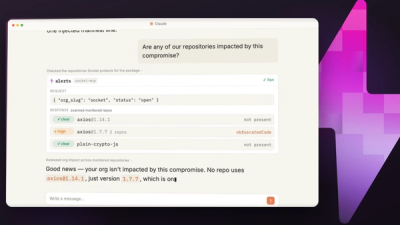
Socket MCP now lets AI assistants review org alerts, investigate threats using the Socket threat feed, and inspect package files in addition to dependency scoring.
Product
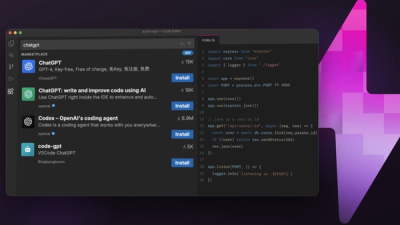
Socket Firewall blocks malicious VS Code and Open VSX extensions before install, protecting developers from compromised editor marketplaces.