

Product
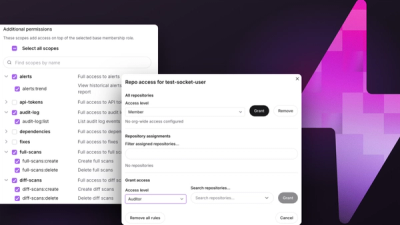
Introducing Repository Access Permissions and Custom Roles
Socket now supports Custom Roles and Repository Access Permissions so organizations can control who can access specific repositories and actions.
By Joe Werle - Jun 19, 2026
@templatical/editor
Advanced tools
Vue 3 visual drag-and-drop email editor — drop into any web app with one function call.

The visual editor for Templatical — an open-source drag-and-drop email editor with JSON templates and MJML output.
--tpl-user-* CSS variables, dark mode, custom fontsnpm install @templatical/editor
@templatical/renderer is an optional peer — install it only if you need to convert templates to MJML. The two common cases are:
editor.toMjml() to export from the user's session.npm install @templatical/renderer
If you call editor.toMjml() without the renderer installed, it throws a clear error naming the missing package.
import { init } from '@templatical/editor';
import '@templatical/editor/style.css';

const editor = await init({
  container: '#editor',
  onChange(content) {
    // content is JSON — store/version/sync however you want
  },
});

// Render to MJML when sending email — async; requires @templatical/renderer
const mjml = await editor.toMjml();

// Always unmount when removing the editor (cleans up listeners + DOM)
editor.unmount();
<div id="editor" style="height: 100vh"></div>
First-class examples for React, Vue, Svelte, Angular, and vanilla JS are in the installation guide.
The editor mounts inside an open shadow root attached to your container. Host page CSS — including resets like * { color: red !important } — cannot cascade into editor elements, and editor utility classes cannot leak out.
// Shadow DOM is on by default — no extra config
const editor = await init({ container: "#editor" });

// Opt out for light-DOM mount (older browsers, host-side document.querySelector access)
const editor = await init({ container: "#editor", shadowDom: false });
Theme via :host-style CSS variables — set --tpl-user-* on the container (or any ancestor) and the value inherits across the shadow boundary:
#editor {
  --tpl-user-primary: oklch(65% 0.2 280);
  --tpl-user-radius: 14px;
}
See the Shadow DOM guide for trade-offs, opt-out semantics, and browser-support tiers.
For AI rewrite, real-time collaboration, comments, snapshots, and saved modules, use initCloud() instead. See the Cloud guide.
Full docs at docs.templatical.com.
FSL-1.1-MIT — free for any non-competing commercial use, automatically converts to MIT after 2 years per release. License FAQ.
FAQs
Vue 3 visual drag-and-drop email editor powered by Templatical
The npm package @templatical/editor receives a total of 2,042 weekly downloads. As such, @templatical/editor popularity was classified as popular.
We found that @templatical/editor demonstrated a healthy version release cadence and project activity because the last version was released less than a year ago. It has 1 open source maintainer collaborating on the project.
Did you know?

Socket for GitHub automatically highlights issues in each pull request and monitors the health of all your open source dependencies. Discover the contents of your packages and block harmful activity before you install or update your dependencies.
Product
Socket now supports Custom Roles and Repository Access Permissions so organizations can control who can access specific repositories and actions.
Product
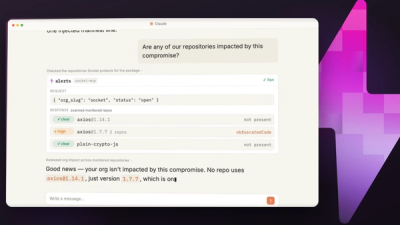
Socket MCP now lets AI assistants review org alerts, investigate threats using the Socket threat feed, and inspect package files in addition to dependency scoring.
Product
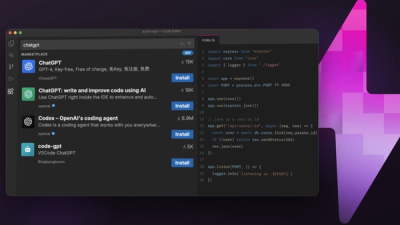
Socket Firewall blocks malicious VS Code and Open VSX extensions before install, protecting developers from compromised editor marketplaces.